Finding a UK Venue That Understands Bangladeshi Multi-Day Weddings
If you’ve been on three venue viewings and every coordinator has asked “so, what’s the date?”, you’ll know the problem. A Bangladeshi wedding isn’t one date. It can be a holud, a nikah, a reception and a bou bhat, with turmeric, a stage, a dhol, prayer times and several hundred guests. This guide shows you how to find a UK venue that can actually handle that, what to compare, and the questions that separate the ones that understand from the ones that just say yes.
The short answer
Describe the wedding, not just the date. Tell every venue which events you’re planning, how many guests each one has, and what will happen in the room. Then compare venues on the things that matter for a multi-day Bangladeshi wedding: capacity once the stage and buffet are in, catering (in-house halal or your own caterer), multi-event bookings, prayer and changing space, parking, finish times, and the rules on turmeric, fire and music. Book the main venue early. Wedvisa’s guide puts popular venues at 12 to 18 months ahead.
What “understands” actually means
A venue that understands a Bangladeshi wedding will ask you the right questions before you ask them. You’re looking for signs like these:
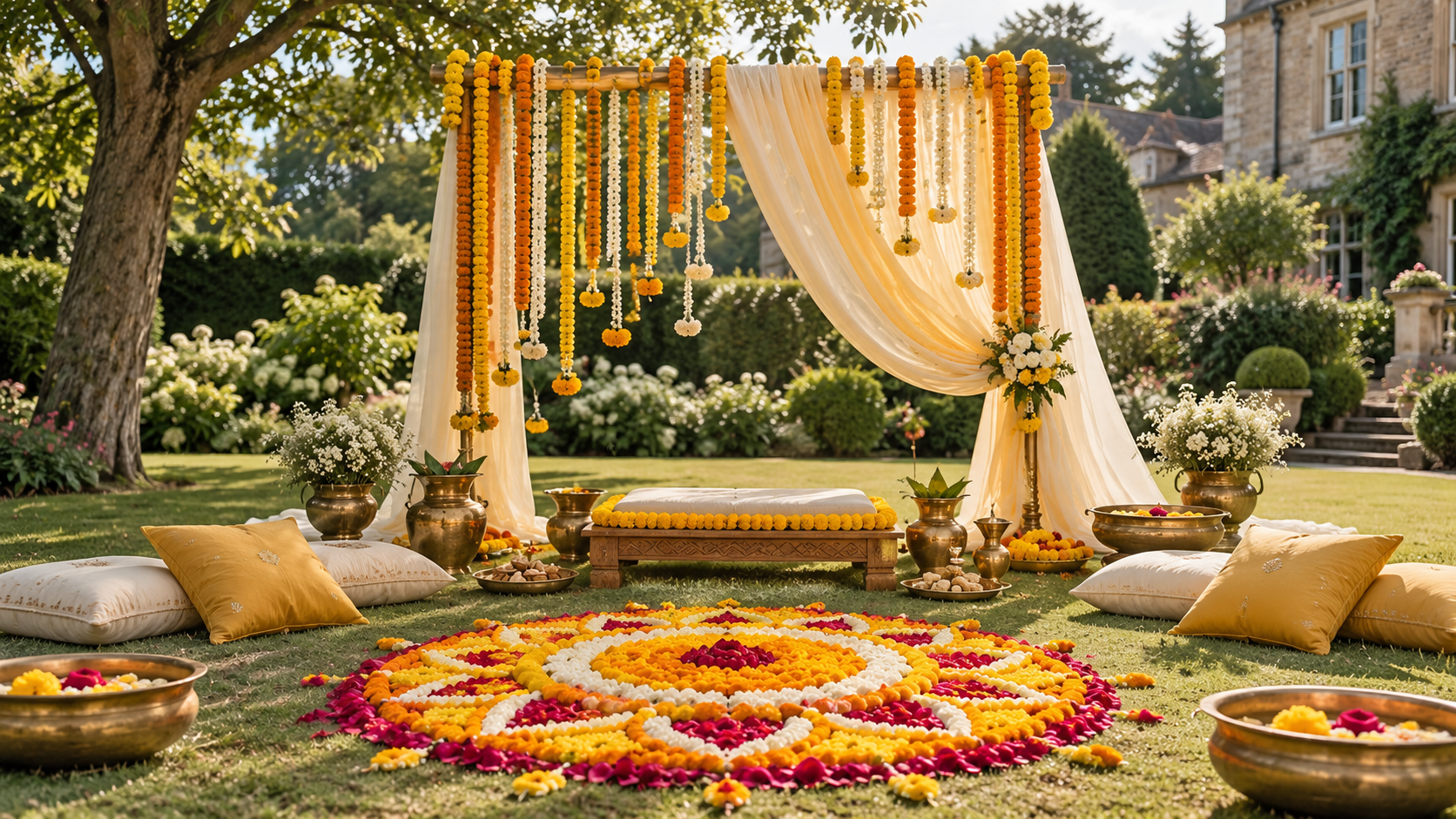
- It hosts more than one event. One east London venue, for example, says it can host the gaye holud, a nikah or Hindu ceremony “depending on your family’s faith”, and the bou bhat reception, across separate days or in different spaces on the same day.
- It knows the events by name. The Ponsbourne in Hertfordshire lists its ballroom for wedding receptions and “Bou Bhaat celebrations”.
- It plans for prayer and preparation. White Abbey Ballroom in Bradford lists prayer and wudhu facilities; De Montfort University’s Leicester venue lists a storage or prayer room; Pinewood Hotel near Slough lists a suite for preparation and makeup.
- It’s flexible on catering. Some offer halal catering in-house; others welcome your own caterer. Pinewood, for example, offers Asian catering on site and also welcomes dry hire and external caterers.
Your planning flow: first, second, next
- Write the event map. Each event, its date, its guest count, and what happens in the room.
- Decide the shape. One venue for everything, one venue across separate days, or different venues for different events.
- Set your must-haves. Capacity, catering, prayer space, parking, location for the elders, finish time.
- Shortlist and view. Take the event map with you and ask the same questions everywhere.
- Get written quotes for your actual plan. Not the brochure package: your events, your numbers, your hours.
- Check the legal side. If the ceremony needs to be legal at the venue, check that the room is approved or the building is registered.
- Book, then build everything around it. Put the venue’s times into the wedding day timeline and its costs into the budget calculator.
A rough timeline
Use these as working dates; the venue’s diary sets the real ones.
- 12 to 18 months out: event map agreed; shortlist and view; book the main venue.
- 9 to 12 months out: book the caterer if the venue doesn’t provide one. Confirm any second venue.
- 6 months out: confirm room layouts, decor access and the running order with the venue.
- 2 to 4 weeks out: final numbers and the final floor plan.
- The week of: supplier arrival times confirmed with the venue team.
The three shapes of a multi-day wedding
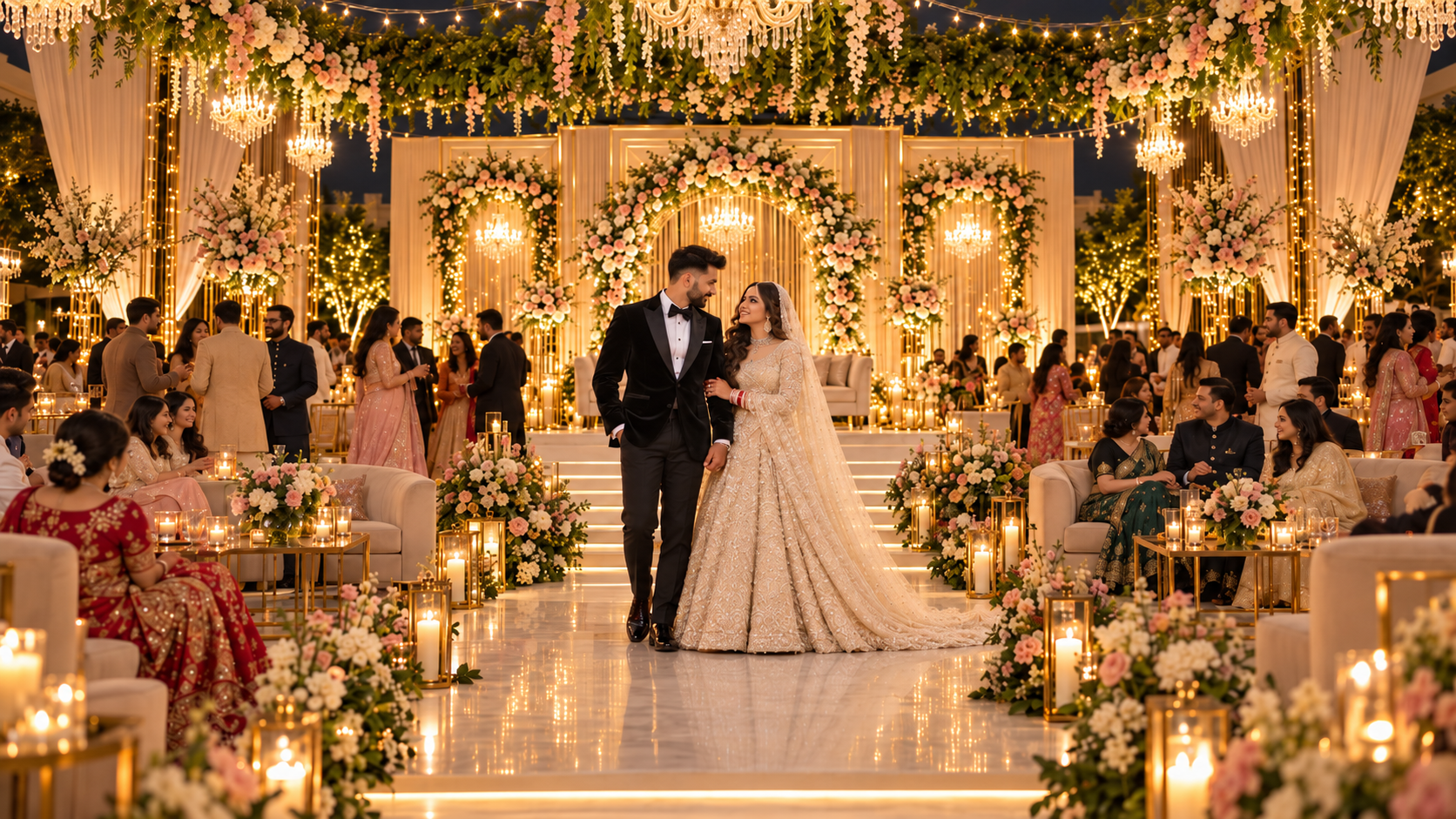
One venue, separate days. Fewer suppliers to brief and a venue team that gets to know your family. Ask whether decor can stay up overnight and whether setup, hire or staffing are charged again for each day.
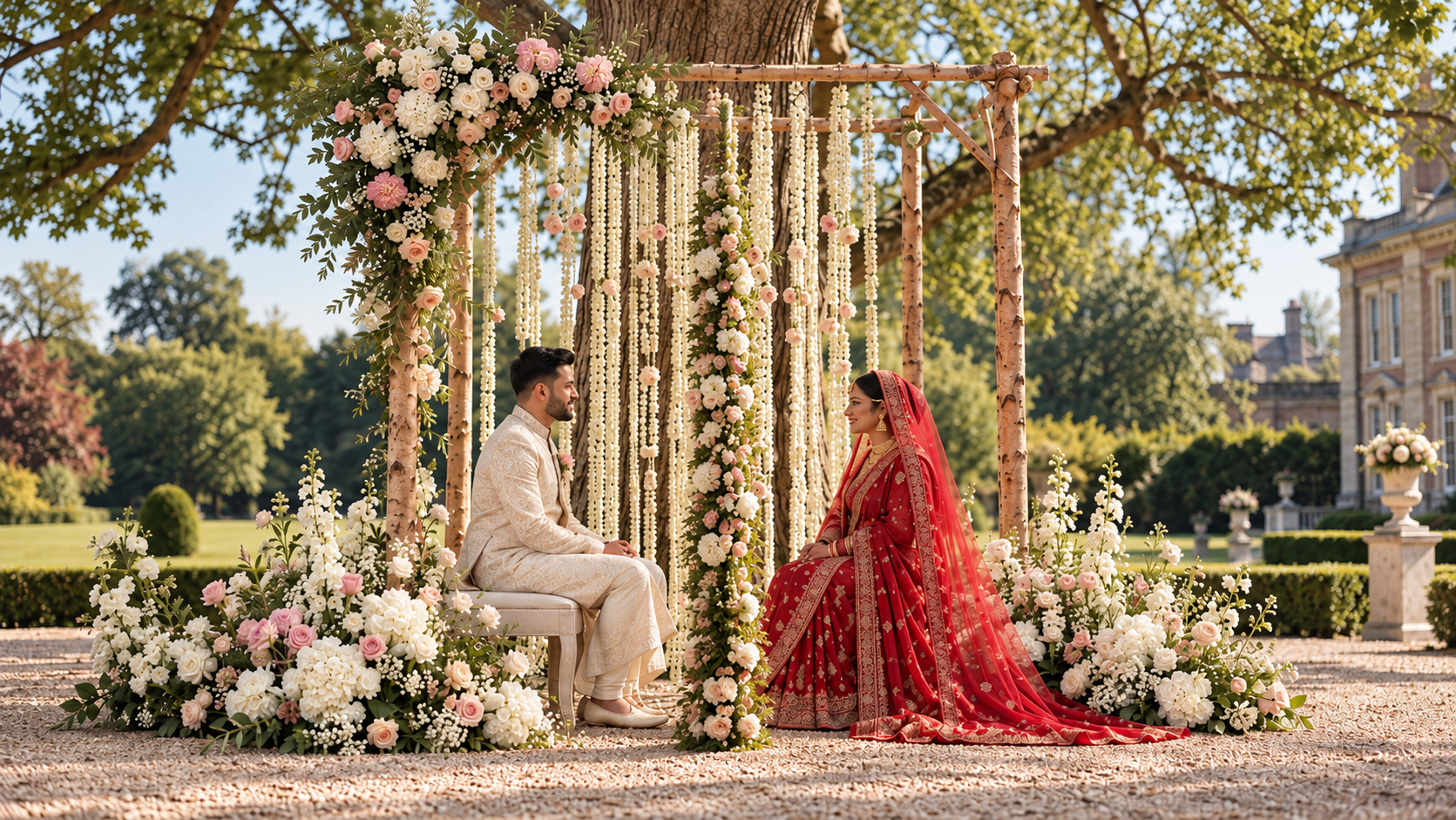
One venue, one day, different rooms. Guests stay put and nobody drives across town in a lehenga. Ask when guests can get into each room, where they wait during changeovers and who moves the flowers. The Willows, for example, says it can prepare for a bou bhat in a separate space without breaking down the main event overnight.
Different venues. A holud at home, a nikah at the mosque and a reception at a banqueting hall can each suit its own crowd. Budget for travel between them, and give every venue the same master schedule.
What to compare
Capacity and layout
The headline capacity isn’t your number. Ask for the seated capacity once the stage, buffet, dance floor and children’s area are in. A few published examples: Meridian Grand in London seats 200 to 800 in a pillar-free ballroom; White Abbey lists space for up to 500; De Montfort University’s main room holds up to 500 and can be reduced for a smaller gathering. Ask for a floor plan showing the stage, the head table, the buffet and the fire exits, and check it against your numbers per event in Wedvisa’s guest list manager.
Catering
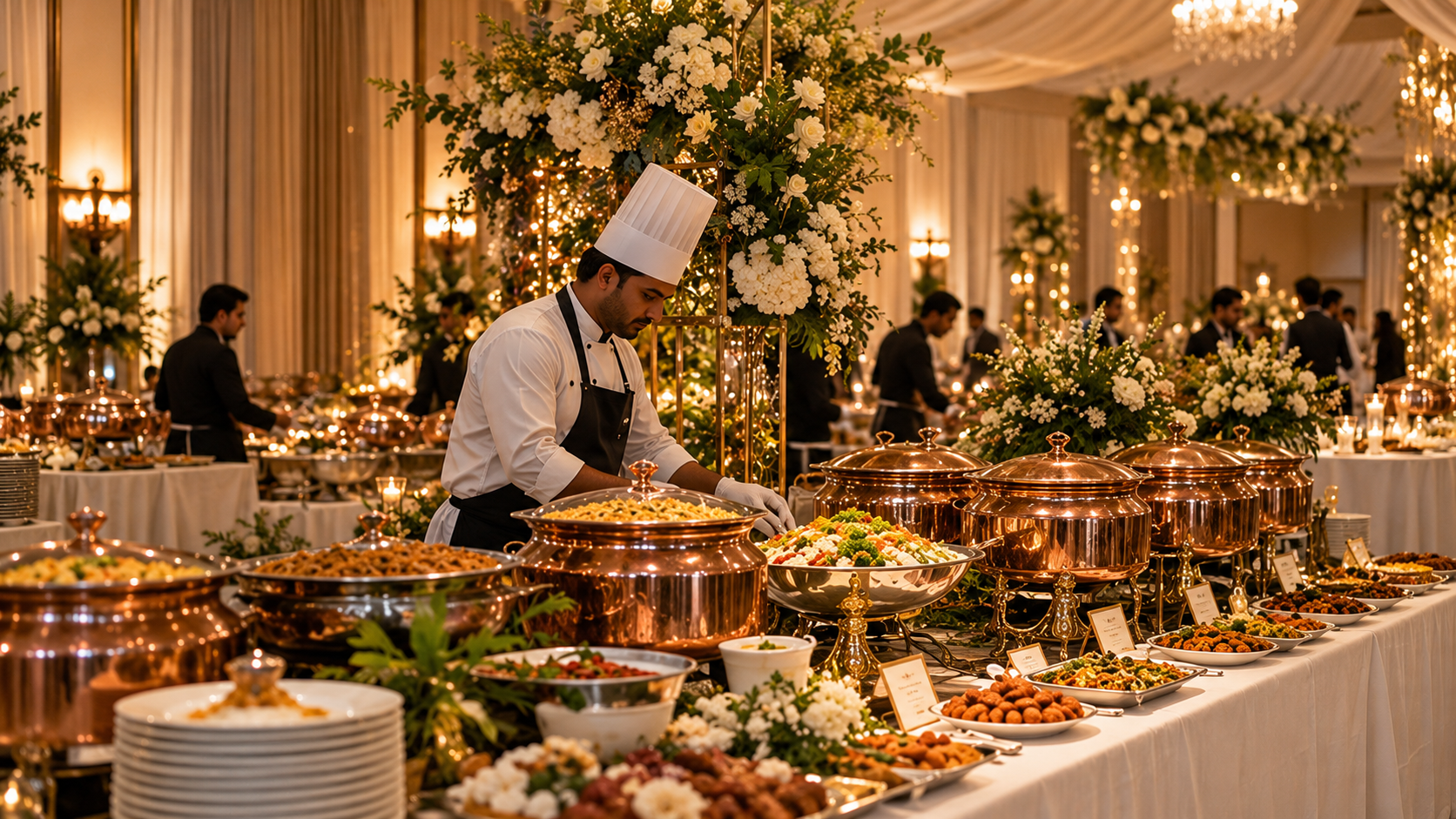
Decide early whether you want in-house catering or your own caterer. If in-house, ask for a Bengali menu tasting, and check halal certification if that matters to your families. De Montfort University says its catering partner can cater for Bengali markets; Pinewood’s menus start from £40 per person. If you’re bringing your own caterer, ask whether there’s a kitchen they can use, any charge for using it, and what happens to leftovers.
Price and what’s included
Ask what the price covers: room hire only, dry hire, food, staff, tables and chairs, staging, decor, cleaning and VAT. A published example: De Montfort University lists room hire at £3,000 for a Saturday full day and £4,500 for a Sunday full day. Ask how much the deposit is, when the balance is due, and what happens if you move the date.
Prayer, preparation and access
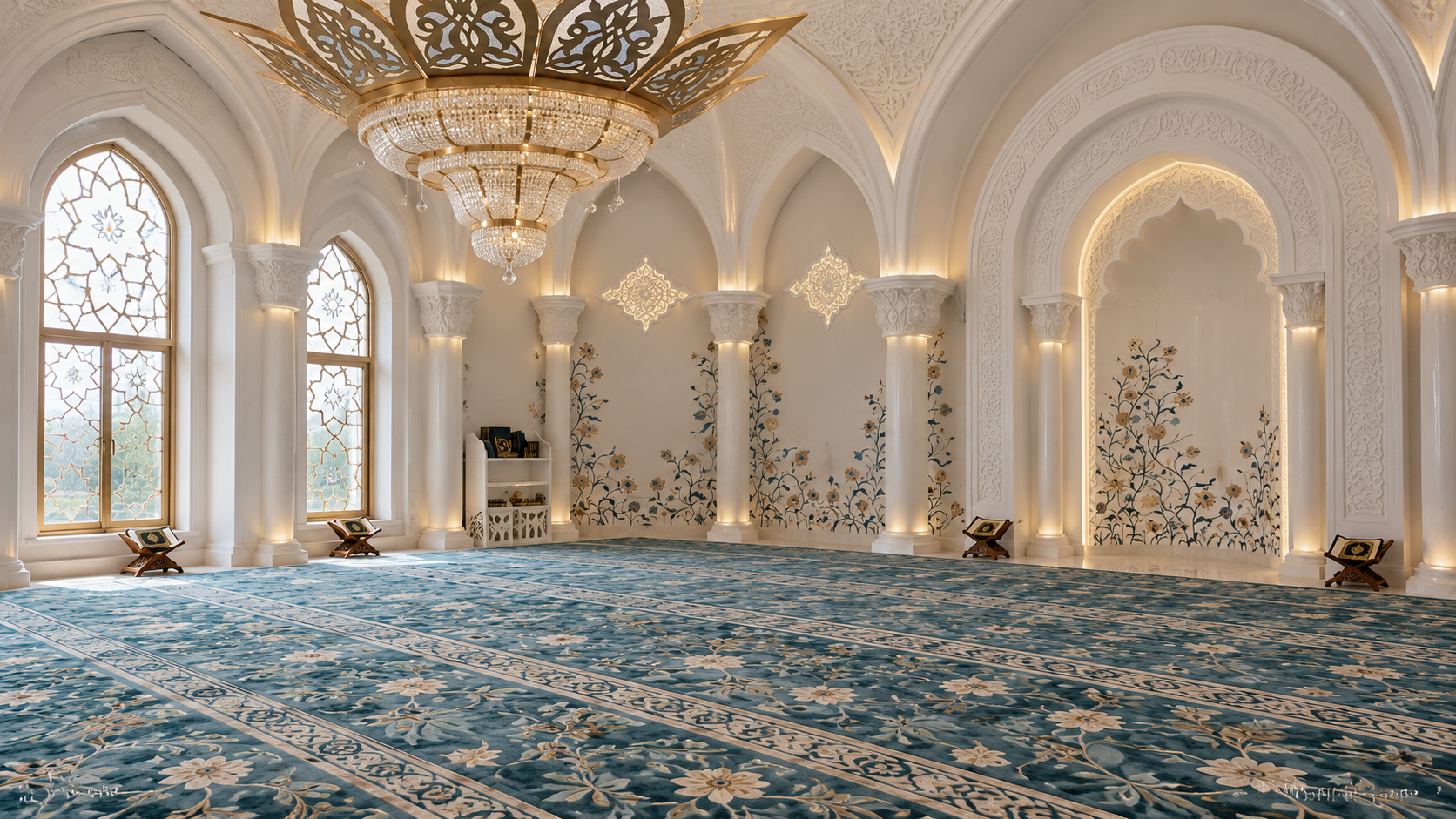
Ask about a prayer room and wudhu facilities, a private room for the bride to get ready, step-free access, toilets near the main room, and somewhere quiet for elders. These details help you judge whether a venue can support the plan you’ve written down.
Parking, transport and location
Check parking spaces against your guest count: White Abbey, for example, lists 140 parking spaces. Think about where most guests live, how the elders will get there, and where the bor jatri convoy can pull up. If guests are travelling far, ask about nearby rooms. Pinewood lists 50 bedrooms and suites on site.
The rules that matter for a Bangladeshi wedding
Ask every venue, and get the answers in writing:
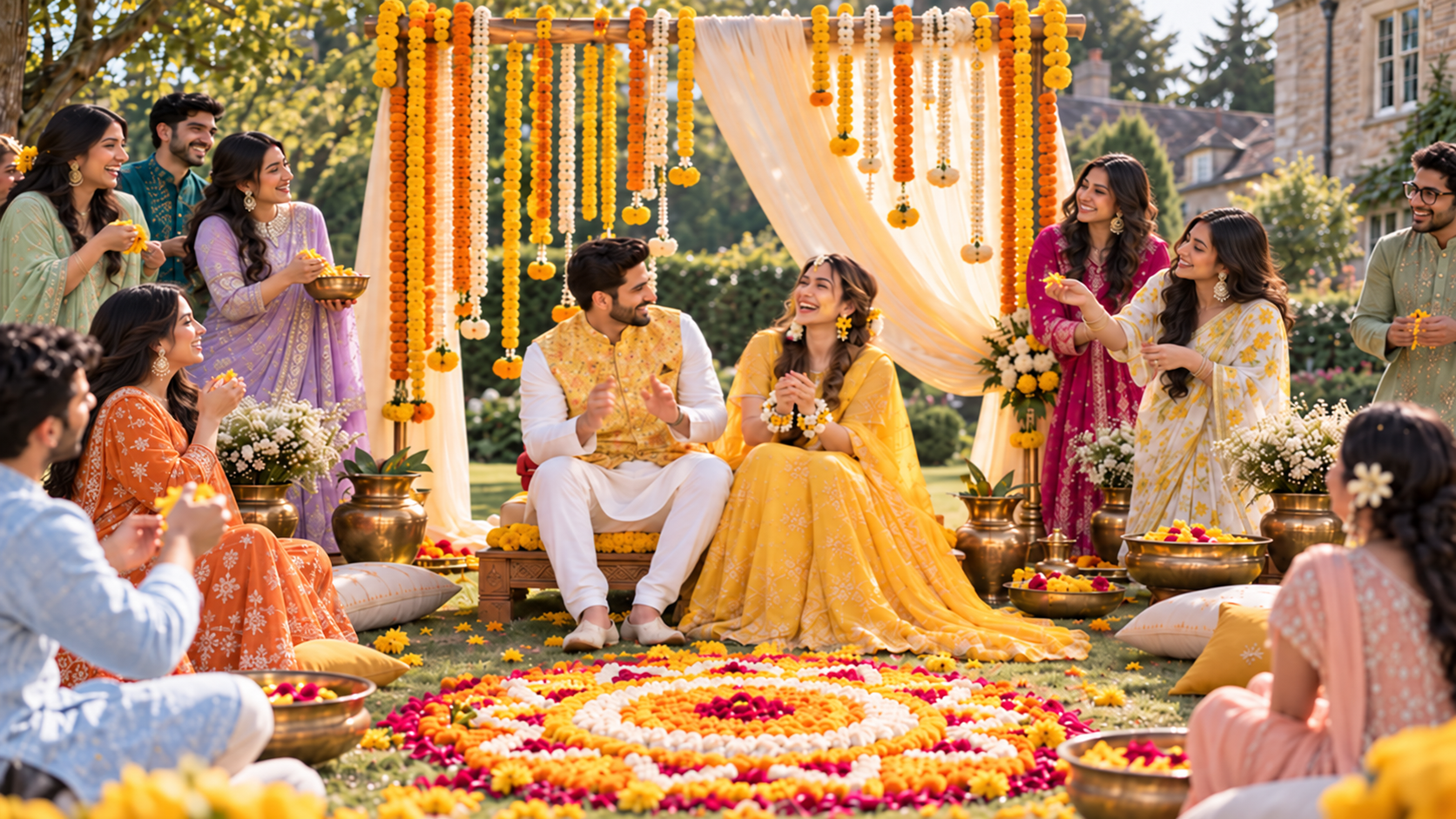
- Turmeric: can the holud happen in the room, and who pays if anything stains?
- Fire and smoke: candles, a Hindu ceremony’s flame, coloured smoke or fireworks? Pinewood, for example, permits fireworks only from its nominated supplier.
- Music: is there a sound limit, can a dhol play, and what time must the music stop?
- Outside food and sweets: can family bring pithas or sweets, and where are they stored?
- Decor: what time can decorators get in, and when must everything be cleared?
The legal side, in brief
If you want the legal ceremony at a civil venue in England or Wales, check that the actual room is approved. A council can attach its own conditions to an approval, such as car-parking space. If the nikah is at a mosque, GOV.UK publishes a list of places of worship registered for marriage, which is updated regularly.8Our Nikah and Walima guide covers the full legal route.
Signs to watch for at a viewing
Good signs. The coordinator asks how many events you’re having before quoting. They show you photos of a stage set up for a wedding like yours. They answer the turmeric and dhol questions without hesitating. They put the room layout, timings and inclusions in the quote without being asked. They tell you plainly what isn’t allowed.
Warning signs. A price that’s only per head with no detail on what’s included. Vague answers on finish times or sound limits. “We can probably sort that” on prayer space or a bridal room. A capacity that doesn’t change when you mention a stage and a buffet. Pressure to pay a deposit on the day of the viewing. None of these rules a venue out, but each one is a question to settle in writing before you sign.
Quick answers
Should we use one venue for everything? It’s simpler for suppliers and guests if the venue has the space and the dates. If the events have very different sizes, a mix of home, mosque and hall may suit you better.
How far ahead should we book? For a popular date, Wedvisa’s guide suggests 12 to 18 months for the venue. Less popular days and months may give you more room.
What if the venue says no to turmeric? Hold the holud at home or in a hall that allows it, and keep the main venue for the reception. Our Gaye Holud guide covers both options.
Family decisions, extra guests and money
If different sides are paying for different events, decide whether one venue for everything still makes sense or whether each host books their own. If the guest list grows after booking, check the seated capacity again before saying yes to anyone. And if relatives have a favourite hall from past weddings, add it to the shortlist, but view it with the same questions as everywhere else.
Questions to take to every viewing
- What’s the seated capacity with our stage, buffet and dance floor?
- Can we hold more than one event here, on the same day or across days?
- In-house catering, our own caterer, or both? Is there a kitchen?
- Is there a prayer room, wudhu facilities and a bridal room?
- What are the rules on turmeric, flames, smoke, music and finish times?
- What’s included in the price, and is VAT included?
- How many parking spaces, and where can a convoy stop?
- What’s the deposit, the payment schedule and the cancellation policy?
Venue checklist
- Event map written, with guest numbers per event
- Shape chosen: one venue, separate days, or several venues
- Must-haves listed
- Shortlist viewed with the same questions
- Written quotes for your actual plan
- Rules on turmeric, fire, music and outside food in writing
- Legal room approval or mosque registration checked
- Deposit and payment schedule agreed
- Venue times in the day timeline
Tick these off in Wedvisa’s wedding checklist.
Your venue search at a glance
| Start with | An event map: each event, its guests and what happens in the room |
|---|---|
| Book | The main venue 12–18 months ahead for popular dates |
| Compare | Seated capacity, catering, prayer and bridal rooms, parking, finish times |
| Ask in writing | Turmeric, fire and smoke, music, outside food, decor access |
| Price check | What’s included, VAT, deposit, payment dates |
| Legal | Approved room or registered building, if the ceremony is to be legal there |
| Wedvisa tools | Day timeline, budget calculator, checklist |