Pakistani Mehndi Night in the UK: Venue, Dhol & Licensing Questions
If you’re planning a mehndi night for a British Pakistani Muslim wedding in the UK and your venue has mentioned the dhol, the volume or the finish time, this guide covers those questions and the licensing, henna and food questions that follow.
 Hamza Qureshi
·
Updated November 2026
The short answer
Your venue’s own terms set the limits on dhol, volume and finish time. Six UK venues publish different rules for dhol, sound limits and finish times, from a 110 decibel limiter to no limiter at all. For late music in England and Wales, the venue’s licence or a Temporary Events Notice may also matter. This guide sets no order of events, because the two sources we found that give one, covered near the end, name different events and different places.
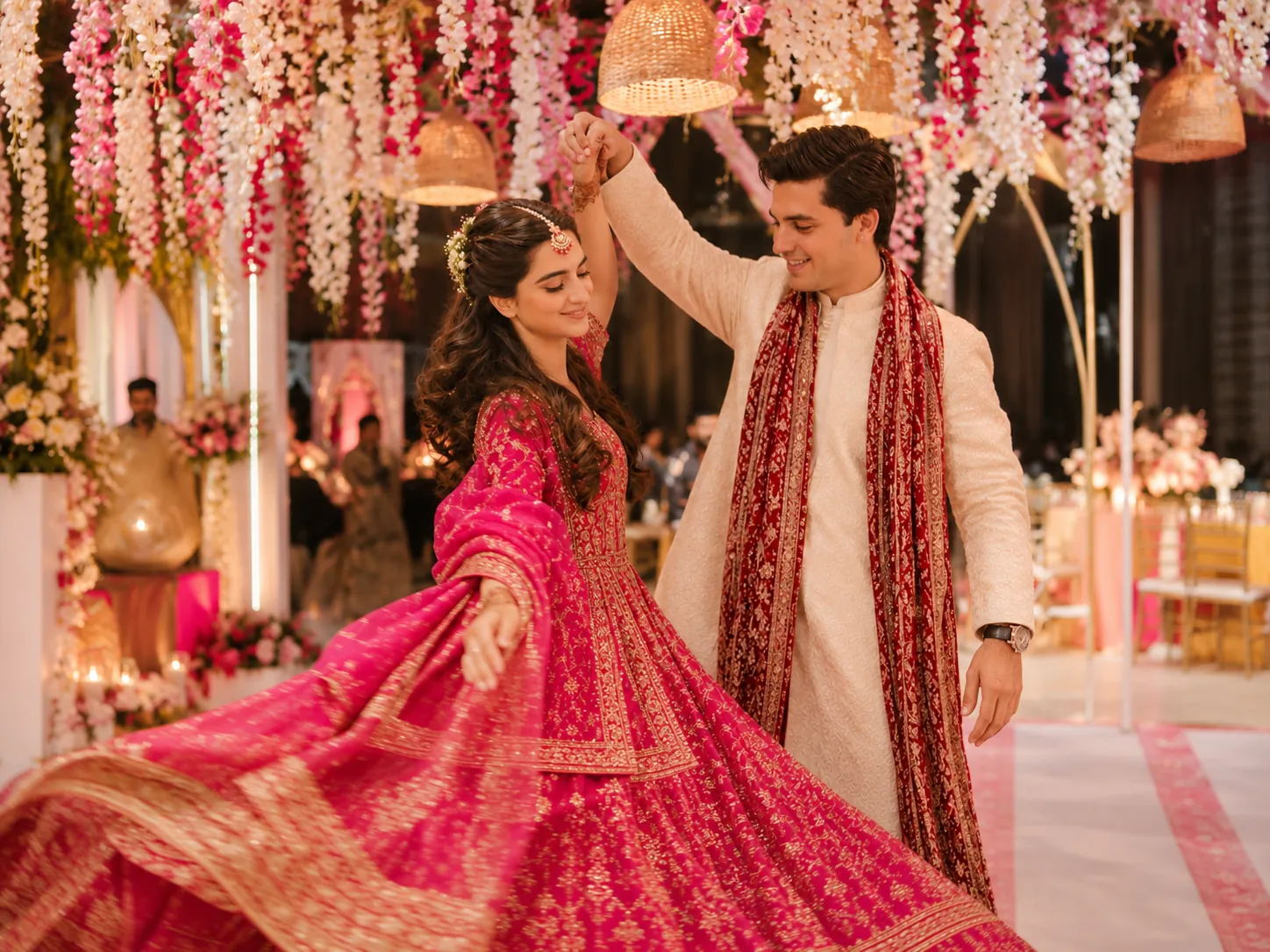
Dhol, volume and finish times
The venue, licensing, noise, henna and food pages in the sections that follow are general UK sources, not Pakistani-specific ones. Each venue below states its own terms for its own hire, so none of them is a UK rule. Ask whether the same terms apply on the night of your mehndi.
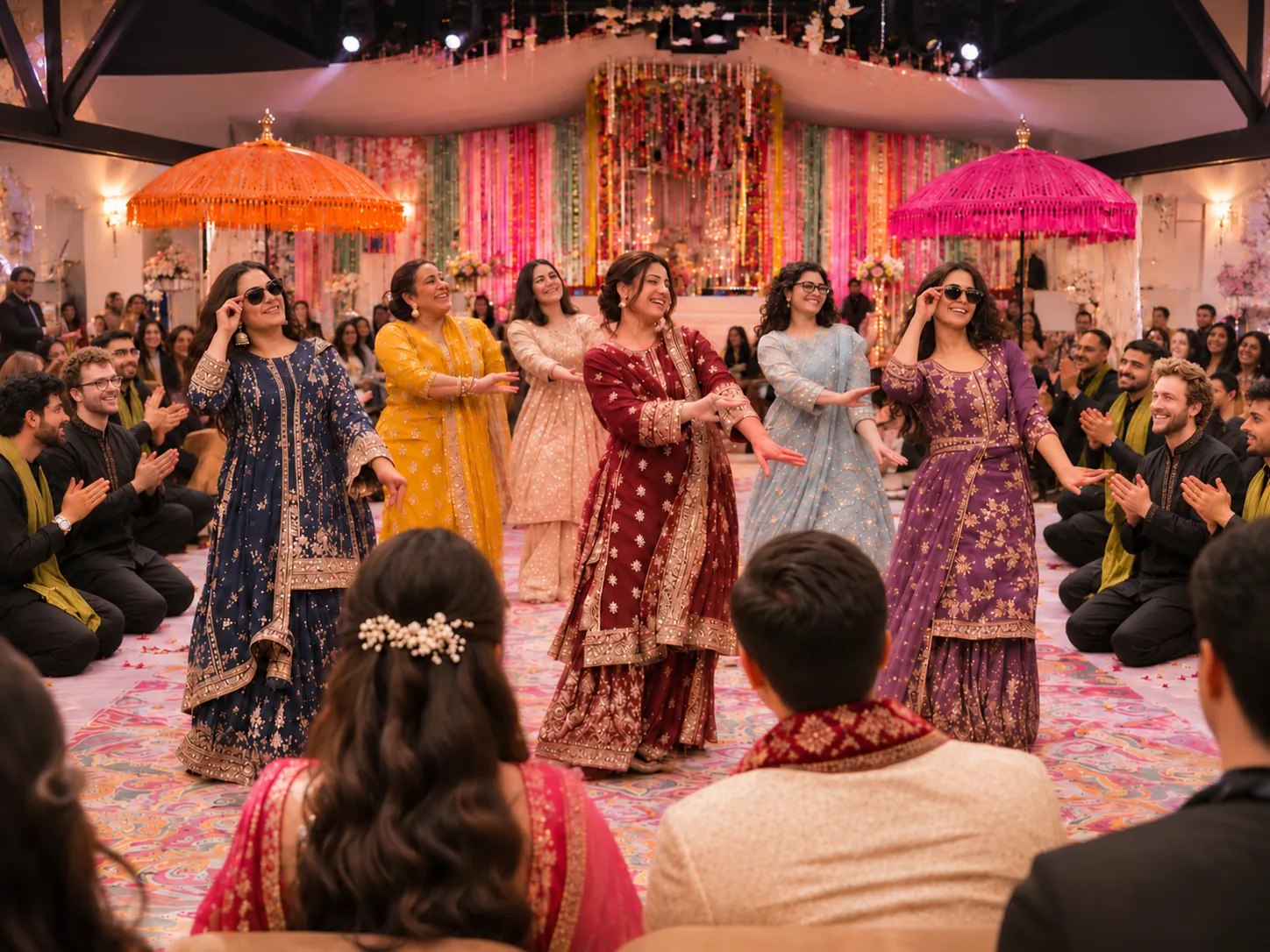
- Northbrook Park says dhol drumming is permitted between 10am and 7pm, for a maximum of 20 minutes per performance, and that dhol in the Orangery before 7pm cannot be played alongside other amplified music. It operates a sound limiter set at 92 decibels and does not permit amplified music outdoors at any time. Its wedding hire runs from 12pm until midnight.
- Froyle Park says dhol drums are permitted between 11:00am and 6:00pm for up to 10 minutes and must be pre-booked by the venue on your behalf. It says Baja Beats is its exclusive nominated dhol provider and no other dhol providers are permitted. It sets its limiter at 92 decibels, which it says the local council mandates as part of its music licence.
- North Mymms Park says only two dhol players are permitted until 10:00pm at evening receptions in the Pavilion, where the sound limit is 95dB.
- The Mandolay Hotel in Guildford says it permits dhol drums inside the venue, has a 110dB limiter and can host until 1:00am under a late licence. It restricts live music at 10pm out of consideration for its residential neighbours.
- Meridian Grand in London says dhol is welcomed at full volume with no sound limiter; its page gives no licence hours.
- LUXE VENUE in Birmingham says music ends at 10pm with guests leaving by 11pm for every event, and that it welcomes live dhol performances.
Two of these dhol windows close by 7pm, so ask what applies if your mehndi runs into the evening. Ask, too, where the venue’s limiter and finish time come from, and what happens when the dhol and a DJ share the room.
If your venue lets you bring your own player, ask the player for a price per set and how long a mehndi set runs. The Willows in Hainault, London, says dry hire lets you bring your own dhol player, band or DJ. Froyle Park, above, permits only its nominated provider. Ask your venue whether you may bring your own player or must use its supplier.
Licensing, notices and noise
Ask the venue first whether its own licence already covers your night. The paragraphs below set out what each government page says.
Guidance from the Department for Culture, Media and Sport on the Licensing Act 2003 says a licence may be required by anyone that provides any entertainment between 11PM and 8AM. It says no licence is required to stage live music or play recorded music if, among other conditions, it takes place between 8AM and 11PM at alcohol on-licensed premises with an audience of no more than 500 people. The page does not name a country. The Home Office’s statutory guidance to licensing authorities, which is for England and Wales, says events held in private are not licensable unless those attending are charged for the entertainment with a view to making a profit.9 That is guidance, not the law itself, and a venue’s own licence conditions can still apply.
If an activity is not covered by an existing licence, GOV.UK says you need a Temporary Events Notice, and gives holding a wedding reception at a community centre as an example. It lists providing entertainment, such as music, dancing or indoor sporting events, as covered. For England and Wales, GOV.UK says you must apply at least 10 clear working days before your event, and its listed fee was £21 on 20 October 2026 (the page is undated). The event must have fewer than 500 people at all times, including staff running it.
On noise, Defra says councils may issue warning notices in response to complaints about noise above permitted levels from 11pm to 7am. It lists loud music from premises, including gardens, as an example of a statutory nuisance a council may deal with. Defra’s page applies to England only. The GOV.UK notice page and Defra’s page do not cover Scotland or Northern Ireland, so in each, ask the venue and the local council what covers your night.
One evening or two, and which room
The Willows says a Mehndi and Sangeet can be combined into one evening or held on separate nights. Meridian Grand offers the Eternity Suite or Infinity Suite for an intimate Mehndi the night before, or the Grand Ballroom if the guest list runs longer. The White Abbey Ballroom in Bradford says its dedicated Mehndi space is completely separate from its reception hall. Whether your families want one evening or two, and one room or two, is a decision for them, and each choice may change which of the terms above apply.
Henna: where the artist sits and what is in the paste
The Willows says its spaces can be laid out with dedicated seating areas for henna artists alongside the main dancing and celebration space. The Hive London in Edgware says its dedicated Mehndi area is designed to offer both the bride and the artists a tranquil environment. Ask any venue where the artists will sit, and who else will pass through that space.
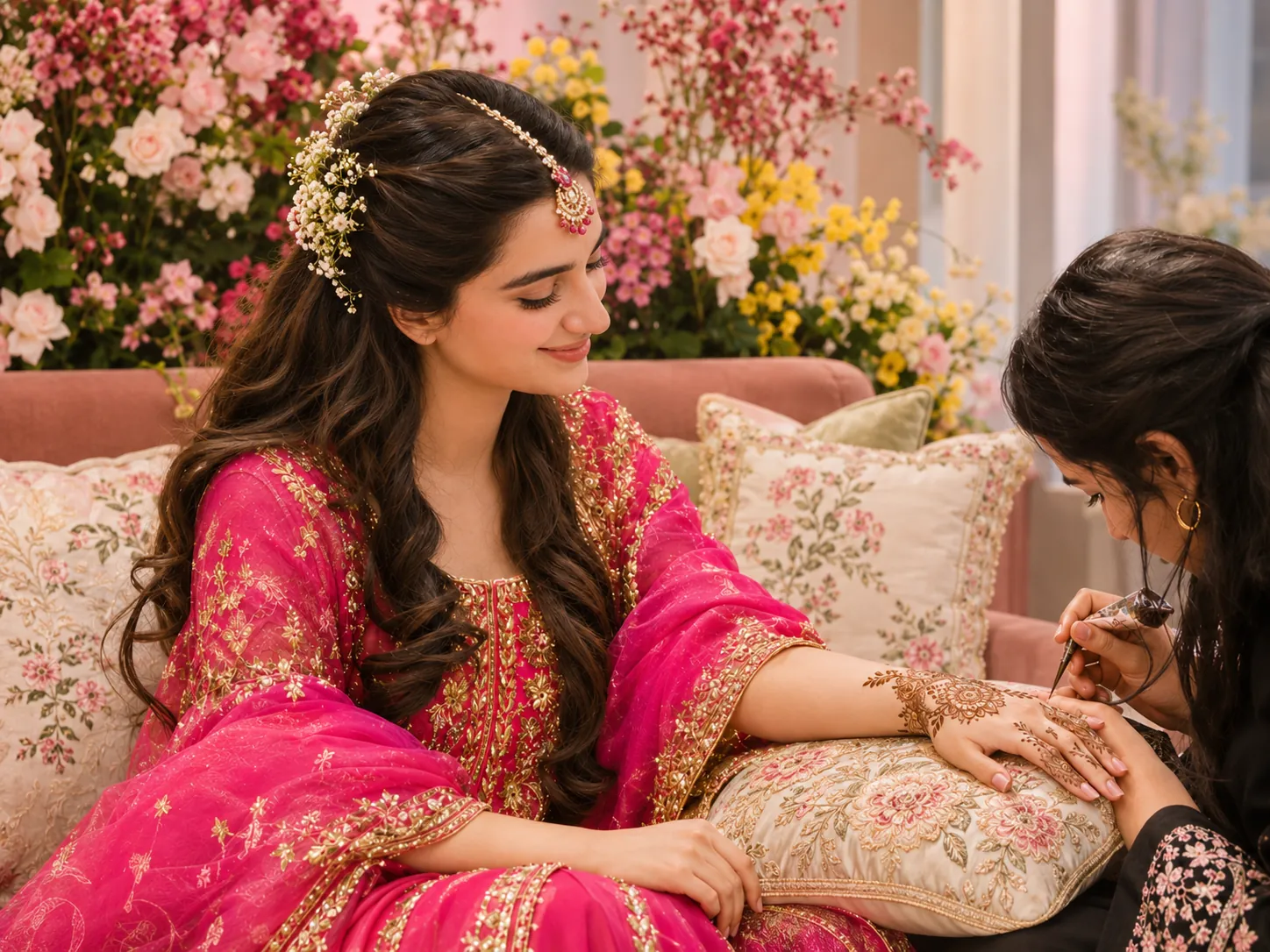
Two artists publish their own rates. Piya Designs in Reading says its party and event henna starts from £50 an hour, and Tiara Mehndi lists event henna at £50 an hour for one light strip per person. Each is one artist’s listing, read on 20 October 2026. Ask what a rate covers and whether travel is extra.
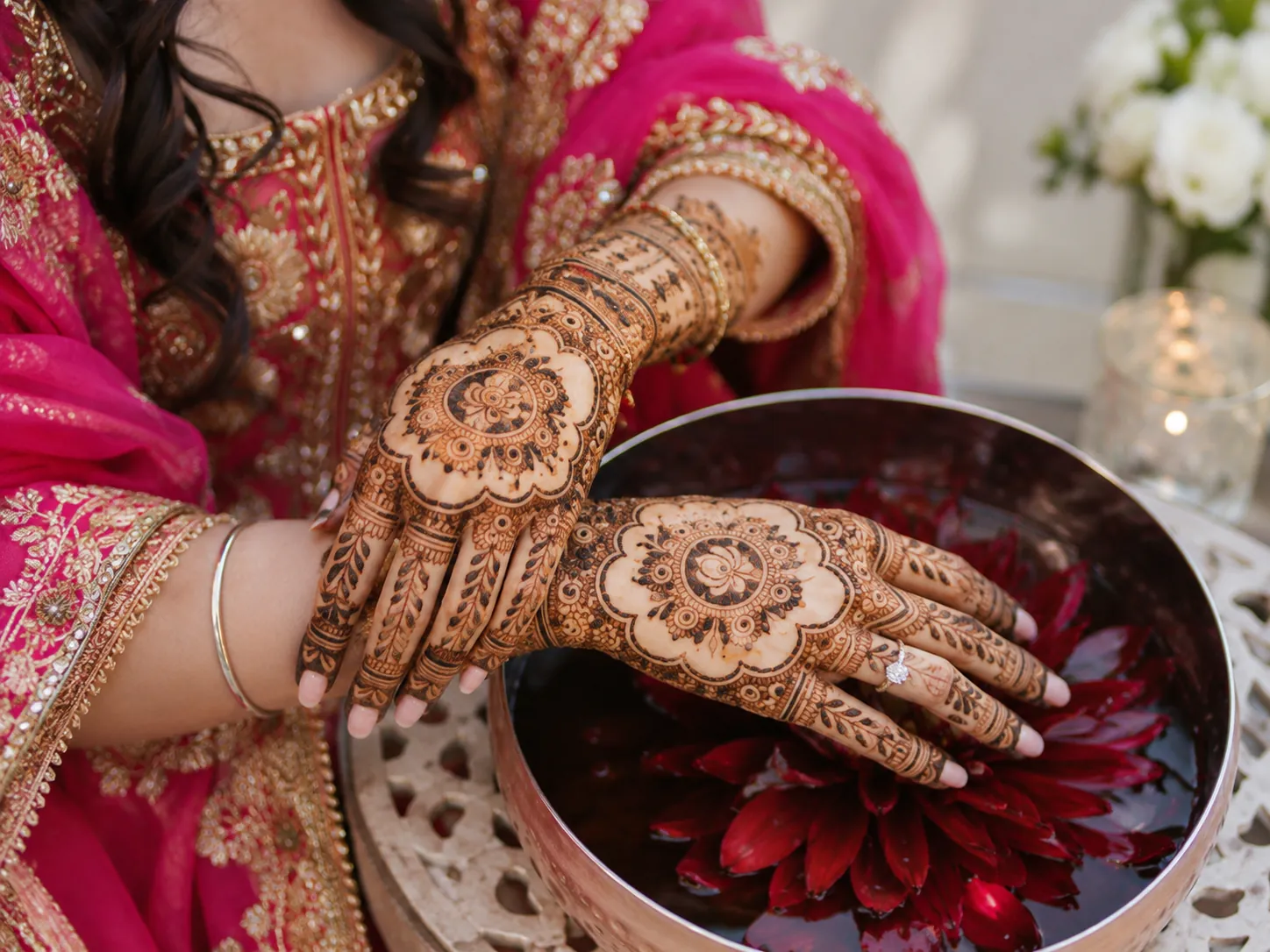
The NHS says the paste used for black henna tattoos contains high levels of para-phenylenediamine (PPD), and that having one can increase the risk of an allergic reaction next time you use anything that contains PPD, including hair dye. The British Skin Foundation says real henna is orange or brown, while the majority of “black henna” temporary tattoos are not based on henna at all, and that PPD used on the skin can cause blistering, painful skin burns and may lead to scarring. We did not find a GOV.UK or legislation page on the UK legal status of PPD in temporary tattoos, and we found no henna artist who publishes how long each guest takes, how much space an artist needs or whether they patch test. Ask your artist what is in their paste, whether it contains PPD, and how many guests they can do in an evening.
Food and stage effects
The Food Standards Agency’s guidance for food businesses says that if you offer food as a buffet, you need to provide allergen information for each food item separately. The page covers England, Northern Ireland and Wales, not Scotland, and is written for food businesses, so ask your caterer how they will do it.
If you are planning a stage entrance, Froyle Park says dry ice and cold sparks must be administered by a professional company with a safety certificate emailed beforehand, and that haze is not permitted because it triggers the fire alarms. It says fireworks are not permitted because it is in a conservation area, and sparklers must be concluded by 9.30pm. Other venues will have their own rules, so ask about smoke, sparks and sparklers before you book.
What the words mean, and what we could not find
A 2006 article on British Pakistani transnational marriage says menhdi is henna used to decorate the bride’s hands and feet, and also the name for the most popular of the pre-wedding festivities. The same article describes the festivity as an occasion for women to gather, play the dholki (a small drum), dance and sing. That is the article’s outline of a typical Pakistani-Punjabi wedding for couples who both live in Pakistan, which its author calls an idealised portrayal, adding that marriage customs vary. The author’s fieldwork was with people of predominantly Punjabi background in the Pakistani Punjab and in Bristol.
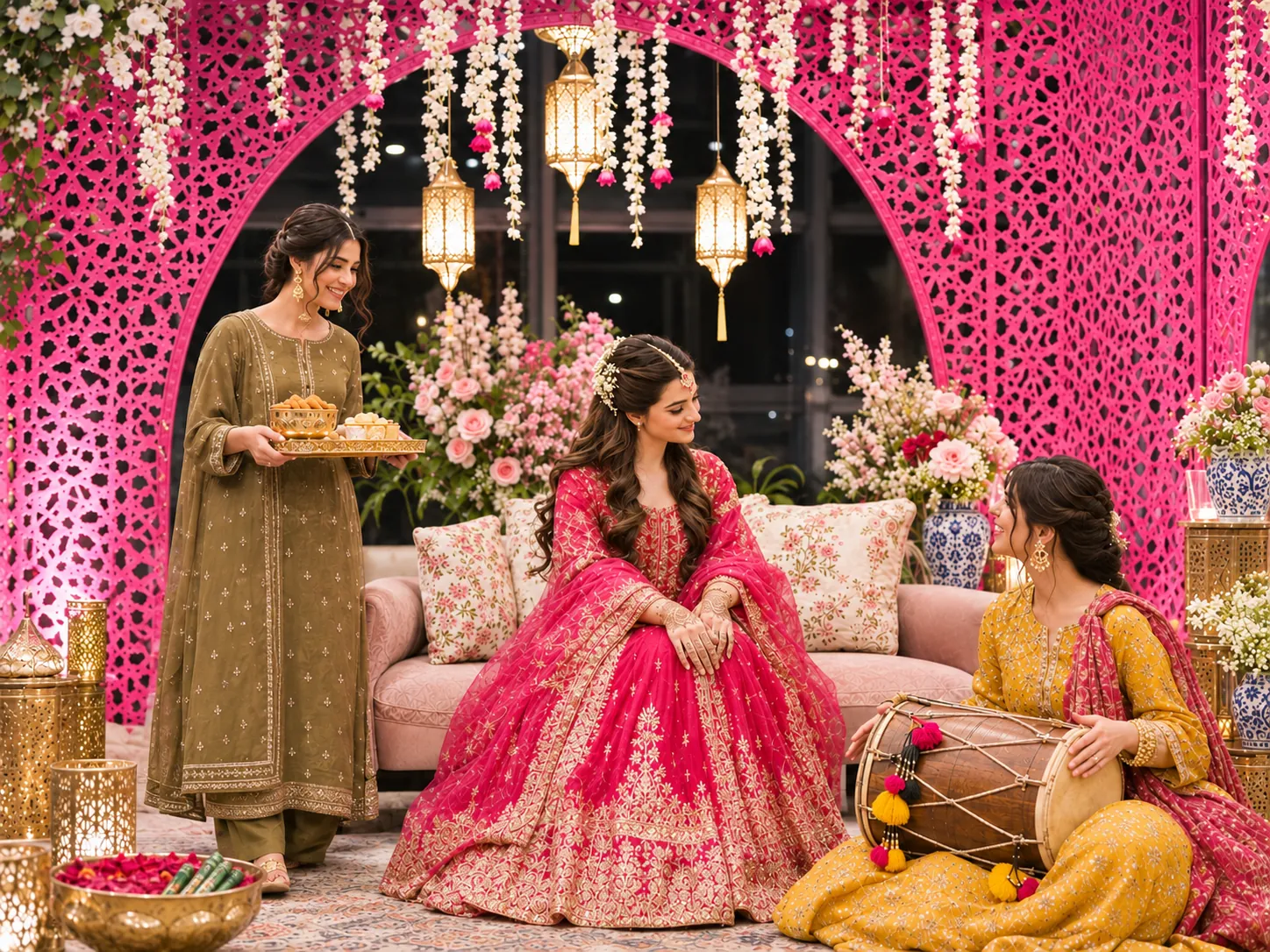
Two plainer glosses help. The Oxford Advanced Learner’s Dictionary defines mehndi as the art of applying a temporary design to a person’s skin using a red-brown dye. A 2017 National Lottery Heritage Fund announcement for a South Manchester project describes Mehndi as henna ceremonies for the bride and groom and Dholki as song and dance evenings; it says what the project planned to research and reports no findings.
On order, the sources point different ways. The 2006 article says weddings most commonly include three main festivities, spelled menhdi, barat and walima. They are held on separate days that conventionally follow one another. A study of Rajput families in one small town in central Punjab, Pakistan, names Butna/Heldi, Henna and Barat as the days. It reports that the Butna/Heldi and Henna rituals take place separately in the bride’s and the groom’s families’ places, and that the henna ritual generally starts in the evenings and goes on till late night. Both describe weddings in Pakistan.
We found no UK study of mehndi nights at UK venues, and no dictionary or study that defines mayun, so this guide does not define it or place it in an order. If your family holds a mayun or a dholki evening, ask who hosts it, where it happens and whether it shares a venue with the mehndi.
What to settle with your families
These are questions, and the answers belong to your families.
- Who hosts the mehndi, and is it separate from any dholki or mayun evening?
- Does each event get its own guest list? Keep one list per event in the guest list tool.
- Which venue terms (dhol window, limiter, finish time) fit the evening you want, and what does it cost to change the plan? Cost each option in the budget calculator.
- What time does each part of the night start and end? Add the confirmed finish time to the day timeline builder.
Checklist
- Ask the venue for its dhol, limiter and finish-time terms in writing.
- Ask whether those terms apply on the night of your mehndi.
- Ask whether its licence covers amplified music until your finish time.
- Check whether a Temporary Events Notice is needed.
- Ask who may supply the dhol player.
- Ask where the henna artists will sit.
- Ask your henna artist what is in the paste.
- Ask your caterer how they will give allergen information.
- Ask about smoke, cold sparks and sparklers.
- Tick off each item on the Wedvisa checklist.
At a glance
|
Question |
Who to ask |
What the sources in this guide show |
|---|---|---|
|
Dhol window and limiter |
Venue |
Six venues state different terms |
|
Finish time and licence |
Venue, council |
Licence or TEN may apply; check your country |
|
Henna safety |
Henna artist |
Ask about PPD |
|
Buffet allergens |
Caterer |
Each item listed separately |
|
Stage effects |
Venue |
Venue rules differ |