Planning a British Pakistani Muslim Wedding in the UK: Events, Nikah & Venue Questions
If you’re planning a British Pakistani Muslim wedding in the UK with several events, such as a mehndi, a nikah, a baraat and a walima, each one raises its own question about law, space or food, and some answers have to be settled before others.
 Hamza Qureshi
·
Updated November 2026
The short answer
Treat the wedding as a set of events and give each one its own UK decision. In England and Wales, start with where the legal ceremony can happen, because notice includes the final venue and must be given at least 29 days ahead. The venues in this guide each publish their own terms for arrivals, alcohol and caterers, so check yours.
What the events are called
In short, the sources name several events and describe them differently by place, so treat the labels below as words for your own plan.
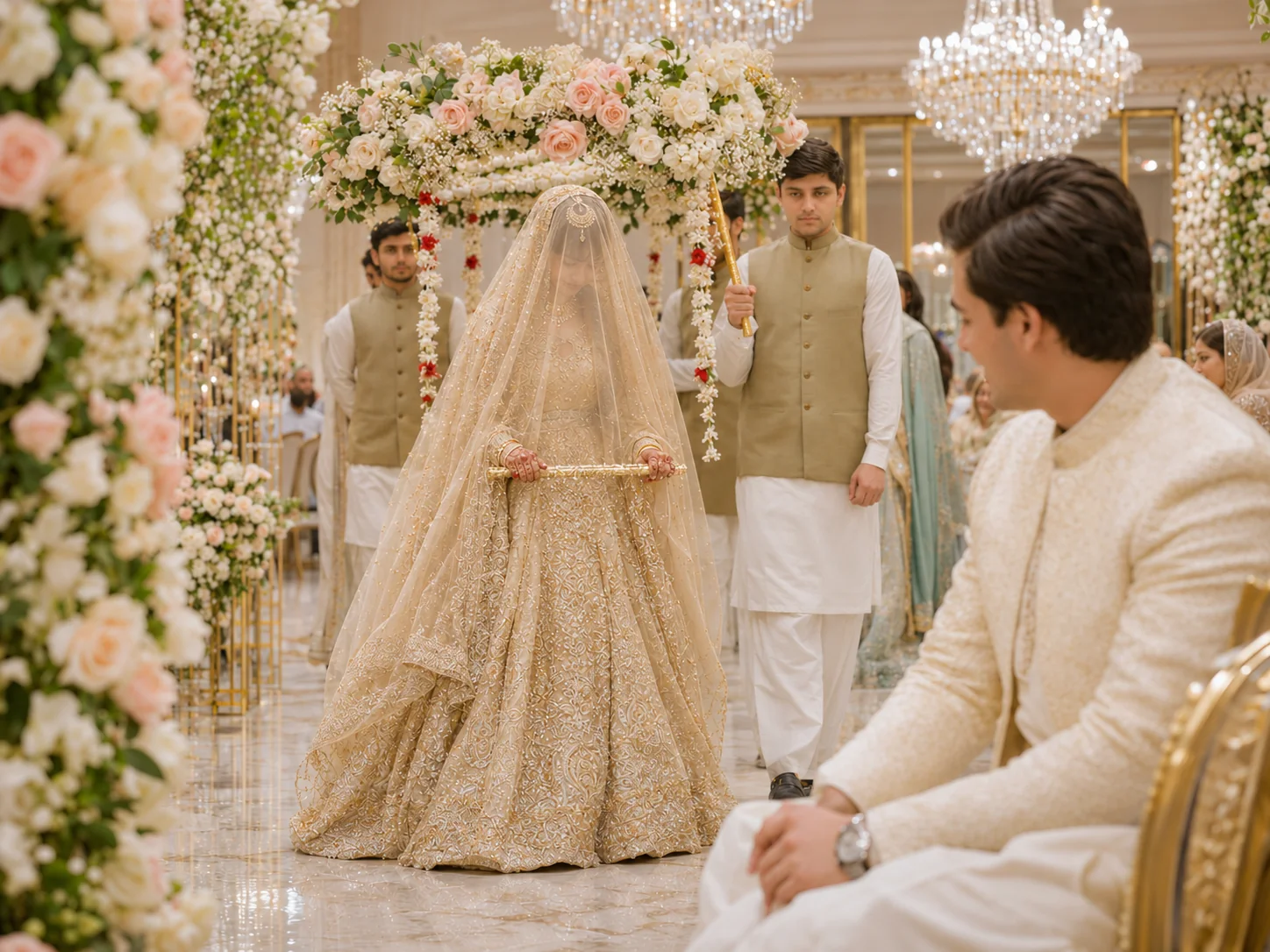
Accounts of Pakistani weddings describe separate events, and they come from different places. A 2006 article on British Pakistani transnational marriage begins with an outline of a typical Pakistani-Punjabi wedding for couples who both live in Pakistan, drawn from fieldwork in Pakistani Punjab and Bristol. It says such weddings tend to be lengthy affairs with a variety of events spread over several days. It names three main festivities that most commonly fall on separate days, conventionally one after another: the mehndi before the wedding, the baraat and the walima given by the groom’s family.
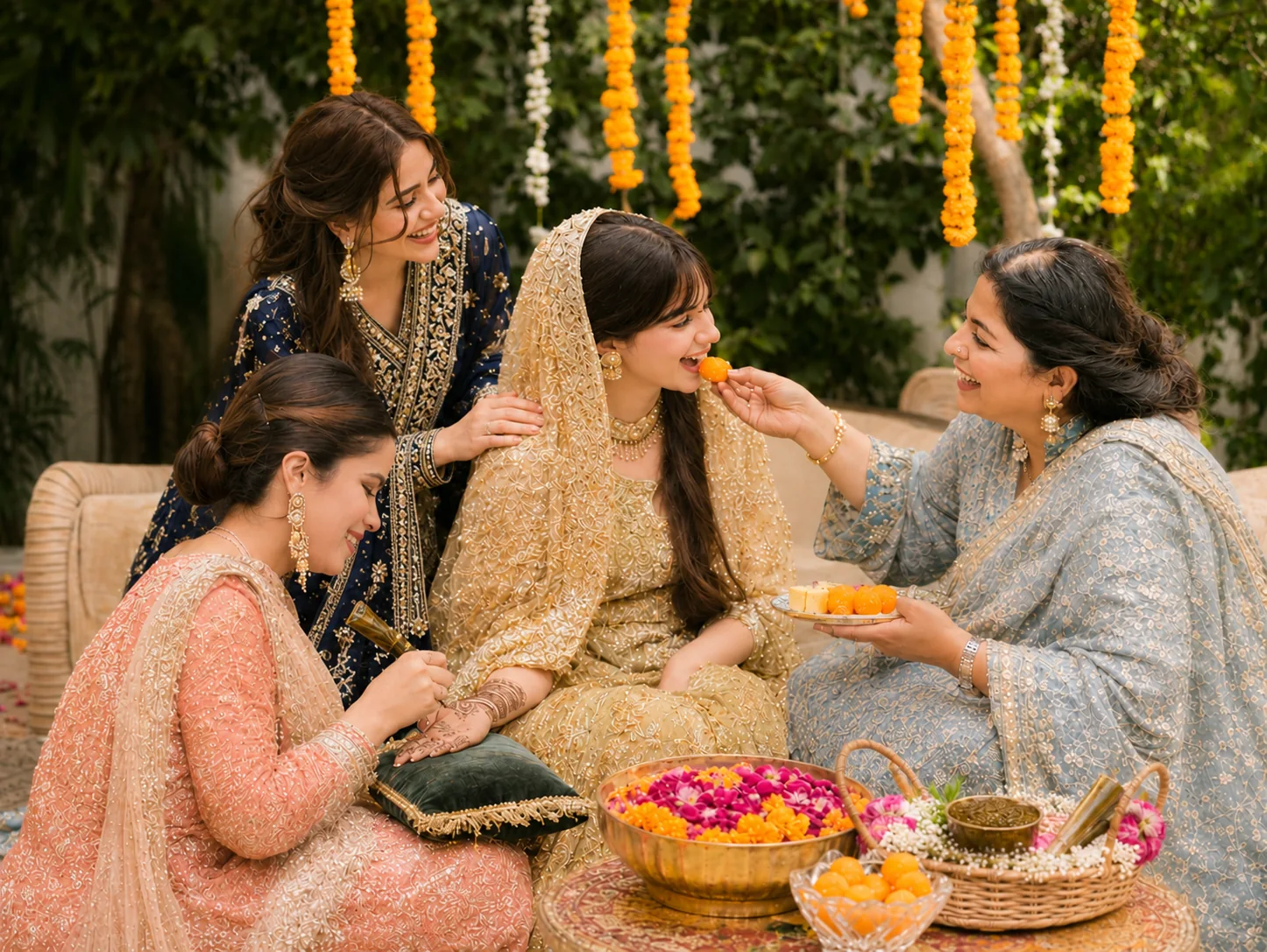
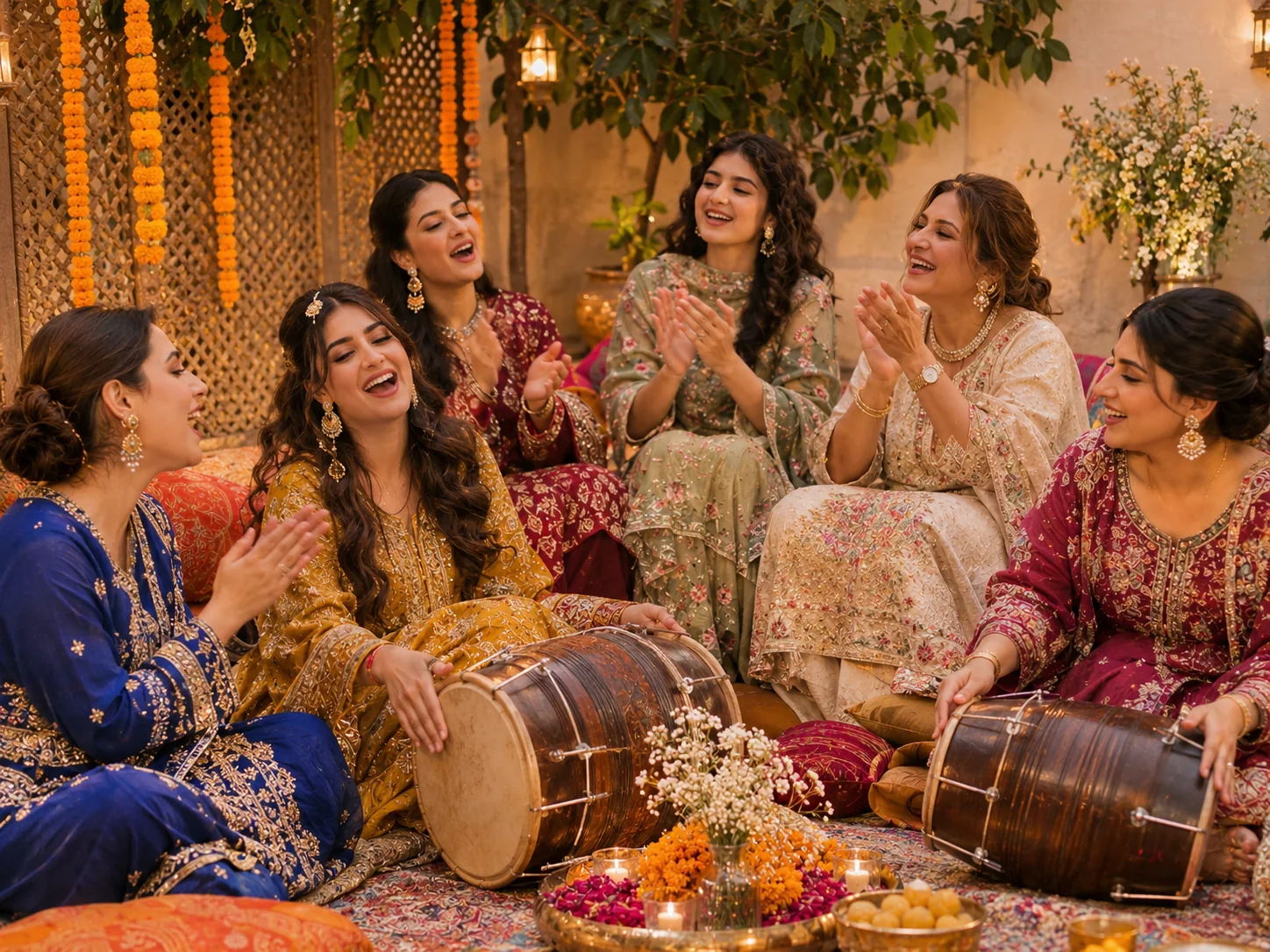
The article’s glosses define the terms used in this guide. In its account, mehndi is henna, used to decorate the bride’s hands and feet, and the mehndi day is an occasion for women to gather, play the dholki (a small drum), dance and sing. The baraat is the day the groom’s party arrives at the bride’s home or wedding hall, and the rukhsati, the moment the bride leaves her family, is the final ritual of that day. The walima, in its account, is the groom’s family’s function the following day, held to celebrate the bride’s arrival in her husband’s household.
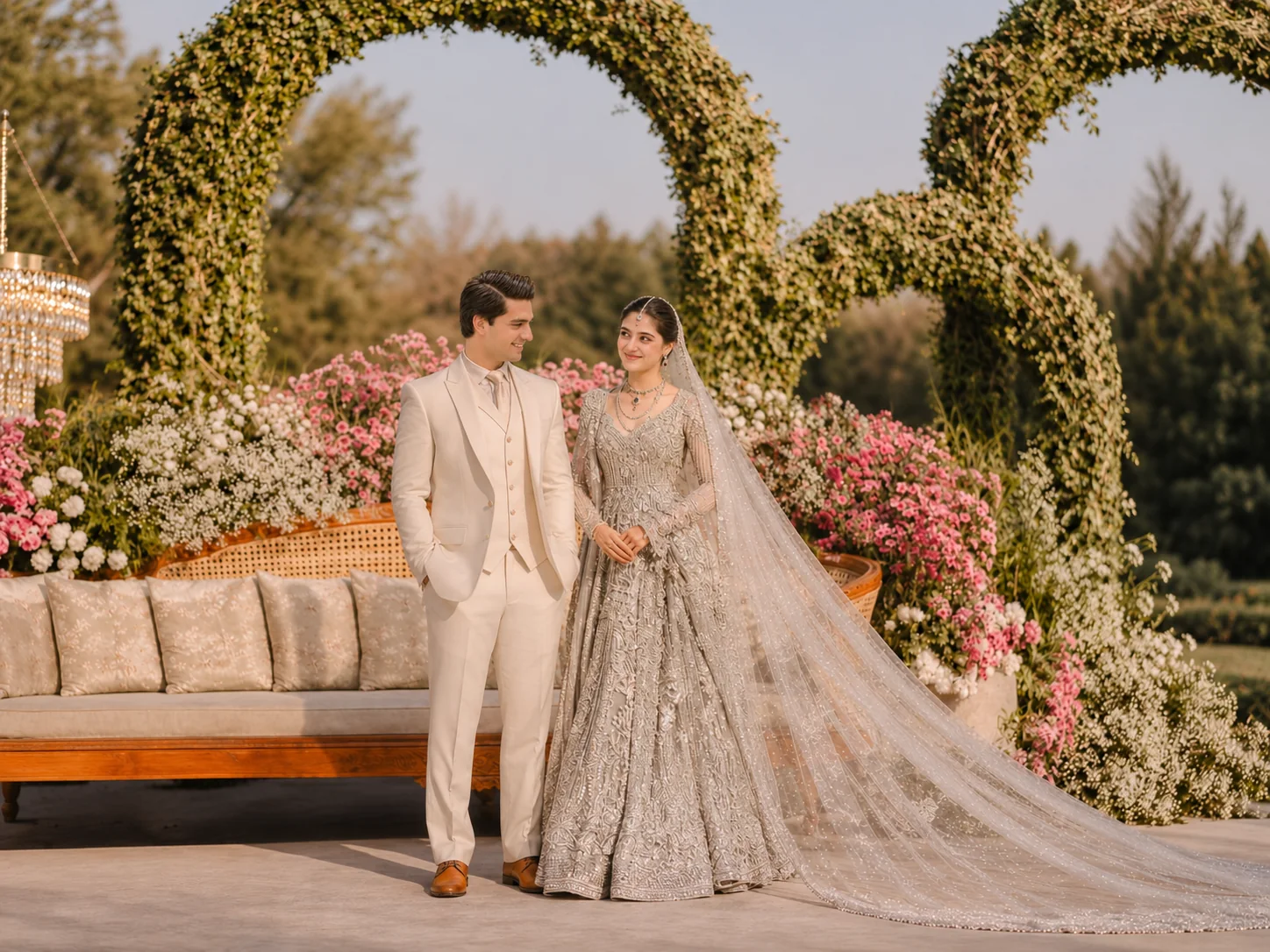
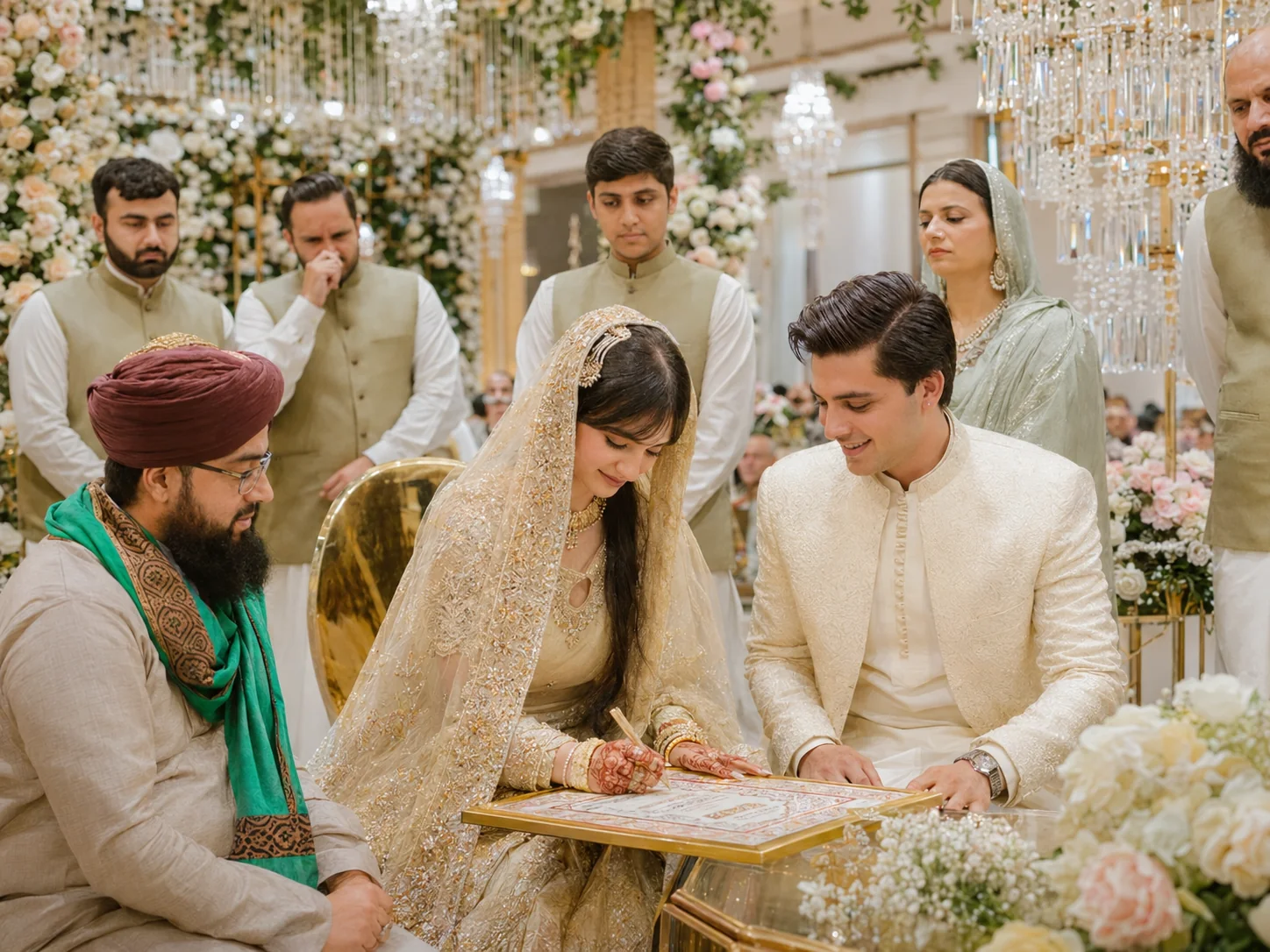
Accounts from the UK add detail and use different words. A 2018 Durham thesis, summarising a 1990 study of British Pakistani weddings, lists tel (oil smeared on the bride), mehndi, khara (a ritual bath before the nikah) and the nikah, and says women carry out the first three. A Migration Museum caption for one photographed wedding in Leicestershire in July 2010 says Muslim weddings are often celebrated for several days, including a mehndi (henna party), civil ceremony, nikah (religious ceremony) and walima (reception). The museum lists the civil ceremony and the nikah as separate items, and the legal section below explains why that matters.
How the events fit together
The accounts here do not agree on one order. The 2006 transnational marriage article also reports that the nikah-namah, the marriage document, is sometimes signed on a separate occasion, often called simply the nikah, which may fall days, weeks or even years before the baraat. In one family it describes, the rukhsati and walima were held in Bristol six months after the nikah and civil marriage. That is one case, and it shows how far a family can stretch the sequence.
Families also differ from each other. A 2006 study of women of Pakistani Mirpuri heritage in Bradford concludes that Pakistanis are not homogeneous. Its abstract does not say how that shows up in weddings, so ask your families what they do. The study describes the walima as a grand finale preceded by several ceremonies, including a henna ceremony.
Two descriptions from the Punjab region show how many events can be added. One Punjabi wedding in Islamabad, attended by an anthropologist during fieldwork, spread over ten days of formal celebrations, including a mayun for the bride, a mayun for the groom, and a mehndi for each. A description of Punjabi weddings across communities names a period before the wedding called maiyan, when bride and groom stay in their houses for three to ten days depending on local custom. Neither describes a wedding in Britain. Ask your own families whether yours includes a mayun or a dholki evening, and who hosts each event.
Once you have your list, give each event a host, a day and a place. The rest of this guide covers the UK decisions behind them: the legal route, venue terms, guests and booking dates.
The legal route comes first
This section describes England and Wales. Couples in Scotland can choose a civil, religious or belief marriage under that country’s own rules, and Northern Ireland has its own registration of people authorised to conduct religious or belief marriages; start with mygov.scot and nidirect.
If you are unsure whether your nikah will also be a legal marriage in England and Wales, ask your mosque whether it is registered for marriages and ask your register office what to arrange.
In England and Wales, GOV.UK says a religious wedding can take place at any registered religious building, and an authorised person, such as a religious minister, must attend and sign the marriage schedule or marriage document. A civil ceremony needs at least 2 witnesses and a registrar who carries out, or is present at, the ceremony. It advises checking with the venue whether there is an authorised person, and if not, booking a registrar, which GOV.UK listed at £114.50 for a registered religious building on 20 October 2026 (its page is undated). You decide where the ceremony will be before giving notice, because the notice includes the final venue, so the legal route and the venue are one linked decision. Notice must be given at least 29 days before the ceremony, and the ceremony must be held within 12 months of giving it.
In its 2022 report on reforming weddings law, the Law Commission of England and Wales describes a non-qualifying ceremony as one that produces a marriage that is neither valid nor void because the ceremony did not comply with the required formalities. It says these may arise more often within certain faiths, including Muslim, Hindu and Sikh groups, and that when a ceremony is non-qualifying the couple are simply treated as cohabitants. The report recommends reform. The Ministry of Justice consultation on reforming weddings law ran from 16 July to 24 September 2026, and its page said on 20 October 2026 that feedback was being analysed, so confirm the current rules with your register office. A 2021 journal article reports that some Muslims in Britain do not register their marriage and live in nikah-only marriages. So the order of events and the legal marriage are separate planning questions, and the second one has deadlines.
Mosques describe their own positions differently, and some of their pages show no date, so confirm each directly:
- Leeds Grand Mosque says it is licensed to conduct marriage contracts in conjunction with the Register Office.
- Madni Jamia Masjid in Bradford says it is licensed as a religious building to conduct a simultaneous service for nikah and civil ceremonies. It needs a registrar for the civil part, so ask the mosque how far ahead to book.
- Abu Bakr Siddique Mosque in Cambridge says it is not registered to solemnise marriages under English law but can perform a religious nikah. Its policy states that a nikah performed in the UK is not considered a legally valid marriage under English law.
- East London Mosque says it can provide a simple Islamic marriage service and strongly recommends that couples also undertake a legal civil marriage separately (its page is dated 2018).
- Maidenhead Mosque & Islamic Centre says that for any marriage to be recognised under UK law a civil ceremony will need to be conducted.
Ask whichever mosque or venue you are considering whether it is registered for marriage, whether you need a registrar, how far ahead to book, and whether a nikah can happen on the same day and at the same venue as the civil ceremony.
Venue terms for each event
The licensing and noise points below are for England, and for Wales where stated; check Scotland and Northern Ireland separately. Venues describe their terms event by event, so check each event against the venue. The venues below show how some describe their own offers; they are examples, and other venues will differ.
Mehndi and dholki. North Mymms Park in Hertfordshire says its spaces suit pre-wedding mehndi events and other pre-wedding rituals. Oakley Hall in Hampshire says its Garden Pavilion can be hired the day before and the day after the wedding for dholki, mehndi and pithi celebrations. Hintlesham Hall in Suffolk says it offers mehndi, baraat and walima in one place.
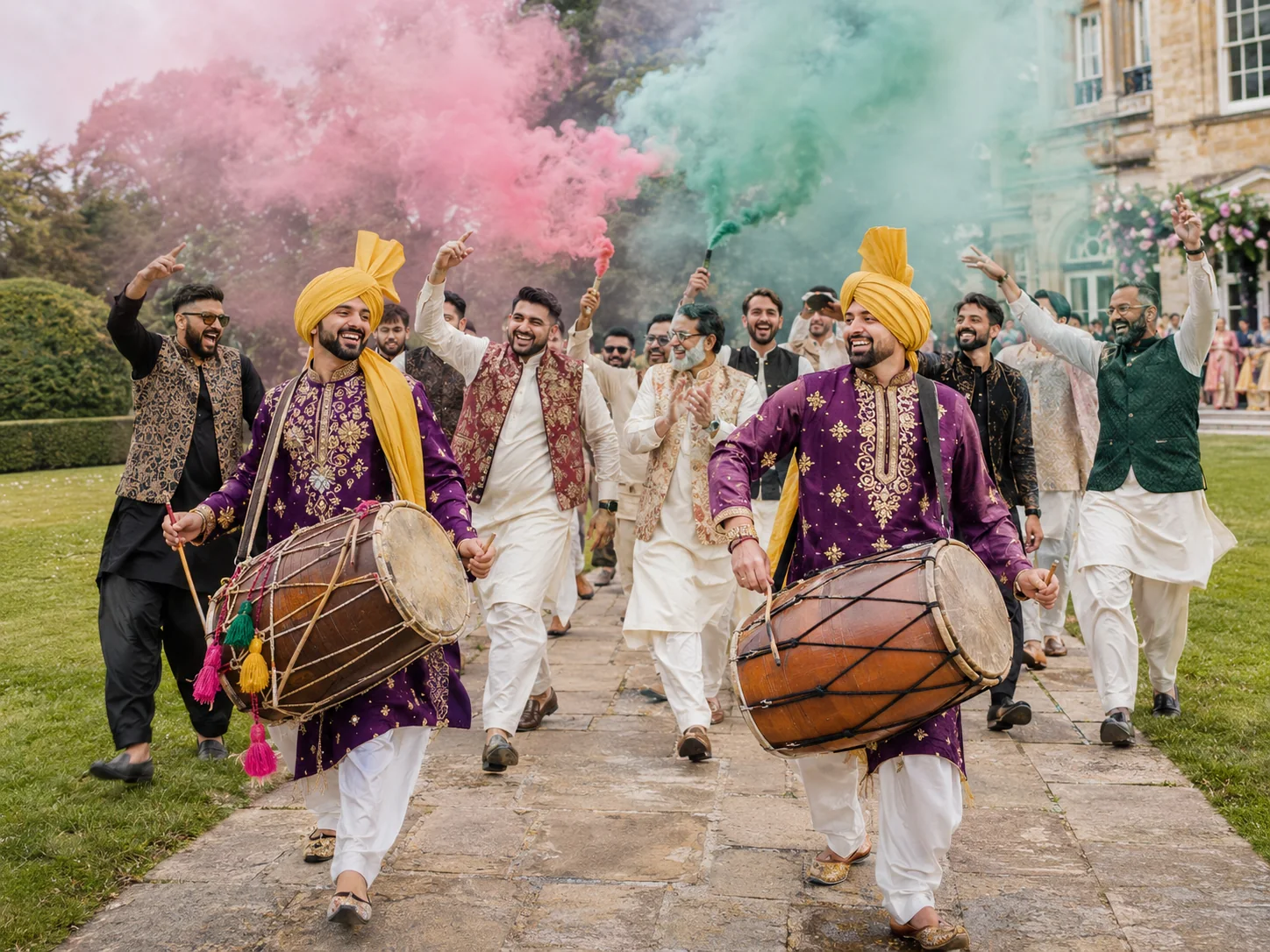
Baraat arrival. North Mymms Park says its private driveway is the setting for a baraat procession, and describes an arrival with dhol drummers, dancing, colourful smoke flares, and a horse or luxury car. Oakley Hall says its long driveway suits baraat processions, and The Hive London says the outdoor grounds of its Amber Suite give room for one. A 2006 study of women of Pakistani Mirpuri heritage in Bradford reports that fireworks to mark the start and end of weddings, a trend in Pakistan, had been transplanted to Britain, where they had met some opposition. GOV.UK guidance on non-professional fireworks displays says Category F2, F3 and F4 fireworks may only be used between 7am and 11pm, with later cut-offs on a few named nights. Ask the venue and your council before you plan fireworks.
Music and late finishes. A GOV.UK page from the Department for Culture, Media and Sport names no country. It says a licence may be needed by anyone who provides entertainment between 11PM and 8AM, and by anyone who provides recorded music to an audience on premises not licensed for the sale or supply of alcohol. It sets out when no licence is needed for music, which includes between 8AM and 11PM, at alcohol on-licensed premises, with an audience of no more than 500. If you are using a community centre, GOV.UK’s Temporary Events Notice page for England and Wales gives holding a wedding reception there as an example of when one may be needed; GOV.UK listed it at £21 on 20 October 2026 and says it must be applied for at least 10 clear working days before the event. Defra says councils are responsible for looking into complaints about noise from premises, including loud music.
Food, alcohol and prayer space. Venues set out different terms here, so compare them event by event:
- Oakley Hall offers dry hire, which lets the couple choose their own caterers, decor suppliers and entertainment, and also offers three bar packages and can remove alcohol on request.
- Hintlesham Hall says it makes sure no alcohol is consumed by anyone on site during the hire period, and often works with third-party caterers.
- Clevedon Hall in North Somerset says it operates as a dry hire venue for Asian weddings, with couples bringing their own caterers from an approved list.
- Prested Hall in Essex says it hands over its commercial kitchen to the couple’s chosen external caterers.
- North Mymms Park says guests may choose their own caterers, decorators and DJs or pick from its recommended suppliers, works with a range of reputable halal caterers, and provides dedicated areas for segregated events and private prayer rooms.
- The Hive London says its Amber Suite welcomes halal catering.
The Food Standards Agency’s guidance for food businesses says that if you offer food as a buffet, you need to provide allergen information for each food item separately. The page covers England, Northern Ireland and Wales, not Scotland, and is written for food businesses, so ask your caterer how they will provide it.
Henna. The NHS says you may be at higher risk of an allergic reaction if you have, or have previously had, a black henna tattoo. The British Skin Foundation says real henna is orange or brown, that most black henna temporary tattoos are based on para-phenylenediamine (PPD) and not on henna, and that PPD used on the skin can cause blistering, painful skin burns and may lead to scarring. Ask your henna artist what is in their paste before the mehndi.
Guest numbers, families and planning tools
A venue’s capacity tells you what fits; your guest count comes from your families. Oakley Hall says its Garden Pavilion seats up to 350 guests, and The Hive London says the Amber Suite accommodates up to 600 seated or 700 standing (venue pages, 20 October 2026). Your count for each event is a family decision, and it may differ between a mehndi evening, a nikah and a walima. Write one list per event. The guest list manager lets you add guests, track RSVPs and record dietary requirements, and it offers a Halal option among its dietary choices. The seating plan maker lets you add guests and tables and drag guests to assign them.
Mahr is a question for you and your families. One mosque asks couples to settle Haq-ul-Mahr in advance, and does not state an amount. Ask your mosque and your families what they expect, and what mahr means for you.
Once you have the venue terms and guest counts, the budget calculator lets you set a total, allocate by category and log expenses.
Prices some UK providers list (20 October 2026)
Each row is that provider’s own listing and what it covers. None is a typical cost.
|
Provider and town |
What the listing covers |
Listed price |
|---|---|---|
|
The Marquee Manchester (By MyLahore) |
Bliss wedding package: three starters, two mains, two sides, two desserts and reception drinks; packages listed for 250 to 730 guests in a 5 hour slot. |
From £40 per person |
|
The Grand by Jalwa, Bradford |
Anaya Suite Bronze package, up to 200 guests. |
£1,500 for 50 guests; £3,650 for 200 |
|
Alive Network (agency listing) |
One dhol drummer, 2 x 15 minute sessions on site for 1 hour, travel extra. |
From £312 |
|
RuShee, Liverpool |
Guest henna, charged per hour per artist, 2 hour minimum, travel extra. |
£55 per hour |
|
Nisha Mehndi Art, Hayes |
Party or guest mehndi, including broad strips from finger to wrist; the page calls the price a guideline. |
From £50 an hour |
|
Find a Performer (The Asian Wedding Horses) |
An act listed on the agency site; the listing does not say what the price includes. |
From £525 |
When to book what
Wedvisa’s planning timeline says the most popular suppliers in any area fill their calendars 12 to 18 months in advance for peak dates. Its checklist marks tasks with a statutory deadline, such as giving notice to the registrar, as Legal. Booking order, longest lead first, with a figure wherever a source gives one:
- Suppliers for peak dates, 12 to 18 months ahead.
- A mosque or venue that can hold your legal ceremony, and a registrar if it has no authorised person. Ask how far ahead to book.
- In England and Wales, notice at least 29 days before the ceremony, with the ceremony held within 12 months of giving it.
- A Temporary Events Notice, if you need one, at least 10 clear working days before the event.
The day timeline builder helps you set out each event hour by hour once the venues are fixed.
At a glance
|
Event |
UK decision |
Who to ask |
|---|---|---|
|
Mehndi, dholki |
Space, henna safety, late music |
Venue, henna artist |
|
Nikah |
Where it happens and by whom |
Mosque, venue |
|
Civil marriage |
Notice, registrar, at least 2 witnesses |
Register office |
|
Baraat |
Arrival route, dhol, flares, noise |
Venue, council |
|
Walima |
Room, halal catering, alcohol |
Venue, caterer |
Checklist
- List your events and who hosts each.
- Decide the legal route and ask each mosque or venue what it can do.
- Book a registrar or an authorised person.
- In England and Wales, give notice at least 29 days before the ceremony.
- Ask each venue about arrivals, music, alcohol and caterers.
- Check the music licence or Temporary Events Notice for late events.
- Ask caterers how they will give allergen information.
- Ask your henna artist what is in their paste.
- Build a guest list for each event.
- Set the budget by event.