Bangladeshi Wedding Sarees and Panjabis: Sourcing Outfits in the UK
If your ammu has already started a WhatsApp album of sarees and the groom hasn’t thought about anything beyond “a panjabi, probably”, it’s time for an outfit plan. A Bangladeshi wedding can mean a different look for every event, for the couple and for half the family. This guide covers what people wear, where to find it in the UK, how to get it made or altered, and what to know before bringing outfits over from Bangladesh.
The short answer
To source wedding sarees and panjabis in the UK, decide the look for each event, choose UK stock, made-to-measure or pieces from Bangladesh, and book alterations well before the wedding week. Work out outfits per event, not per wedding: the holud, mehndi, nikah or ceremony, reception and bou bhat may each need something different. Buy or order from UK shops that make or stock Bengali wear, or bring pieces from Bangladesh, and leave time for alterations either way. If you’re bringing outfits into the UK yourself, there’s a personal allowance, and if you go over it you pay tax and duty on all the goods in that category.1 If outfits are posted from abroad, VAT is charged on everything except gifts worth £39 or less.
What people wear
There’s no single uniform, which is half the fun. Brides choose anything from a red saree to a lehenga or a gown, sometimes changing between events: a lighter saree for the holud, a heavier look for the wedding, a gown or lehenga for the reception. A traditional saree can be styled with a modern blouse or draping. For grooms, the range runs from a panjabi with a koti (a waistcoat) to a sherwani or a prince coat. If your families want coordinated colours for the holud or mehndi, the cousins and aunties need a brief too.
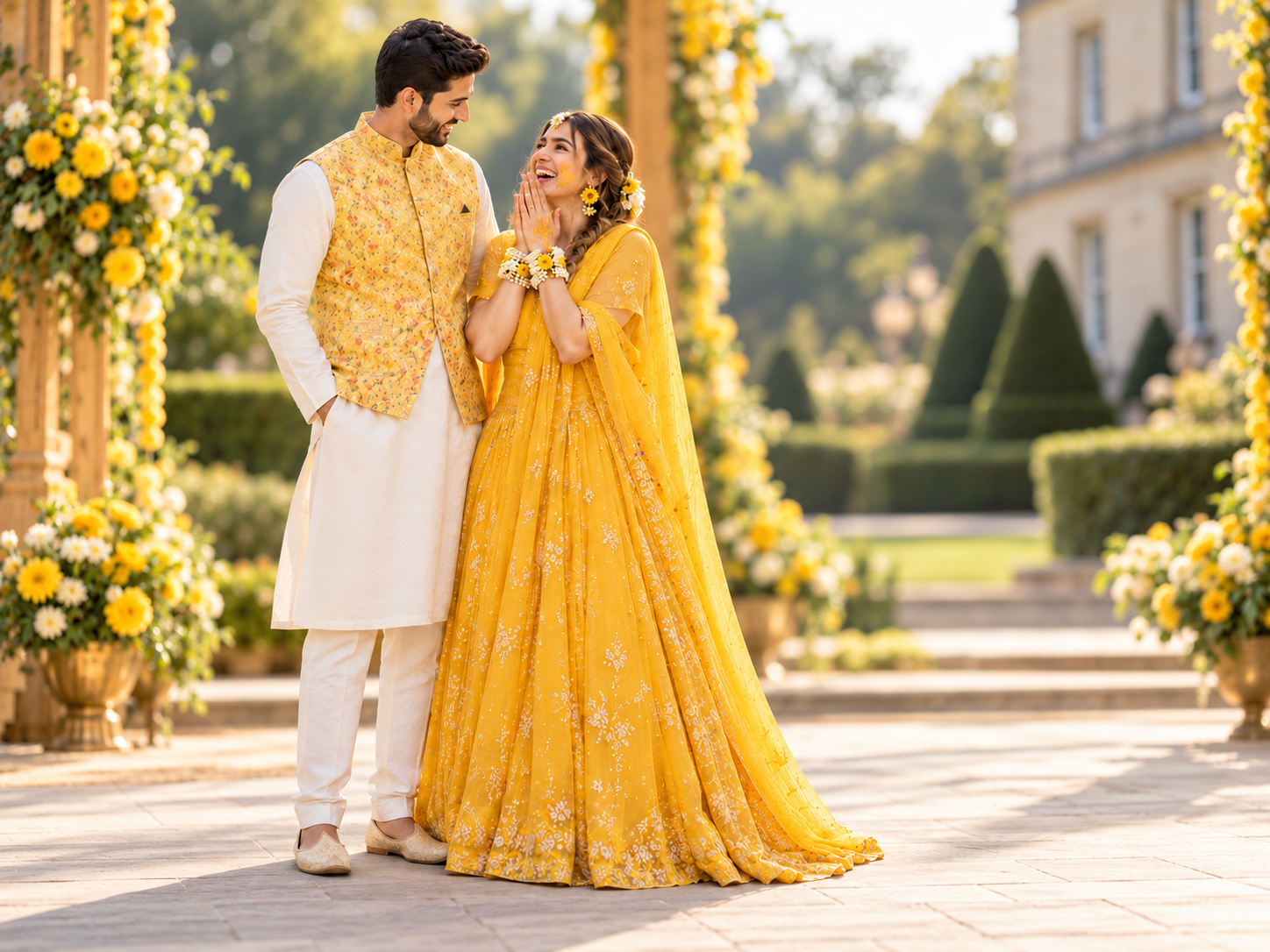
Fabric matters as much as style. A Tangail tant saree, a light cotton handloom from Bangladesh, is a different thing to wear for six hours from a heavy embellished lehenga. Ask yourself where you’ll be sitting, how warm the venue will be and whether you’ll be dancing.
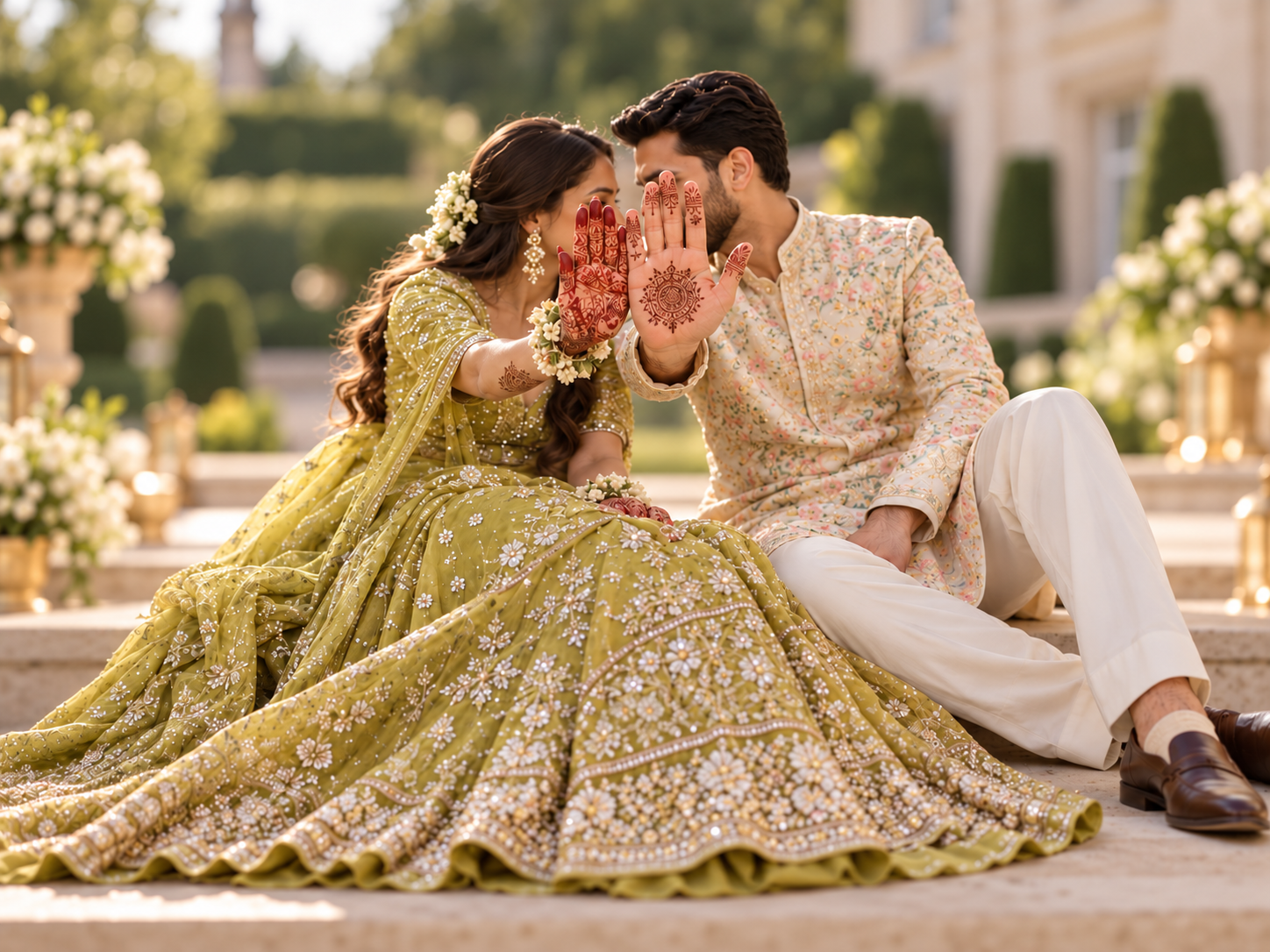
Dressing for each event
Each event asks something different of an outfit, so it helps to think about them one at a time.
- Gaye holud. Turmeric gets everywhere, so wear something you won’t mind marking, at least for the paste part. Our Gaye Holud guide has more on this.
- Mehndi. Wet henna and long sleeves don’t mix. Choose something that keeps fabric away from the hands and feet while the paste dries.
- Nikah or ceremony. You may be sitting for a long time, possibly on the floor. Ask the mosque or temple about dress expectations for the couple and guests, and pick something you can sit in comfortably.
- Reception or walima. Possibly the biggest look, worn under stage lights for hours. Check the weight of the outfit and the jewellery, and try sitting, standing and walking up steps in it before the day.
- Bou bhat. A chance for a second look, if the bride wants one. Plan it with the makeup artist so the change is quick.
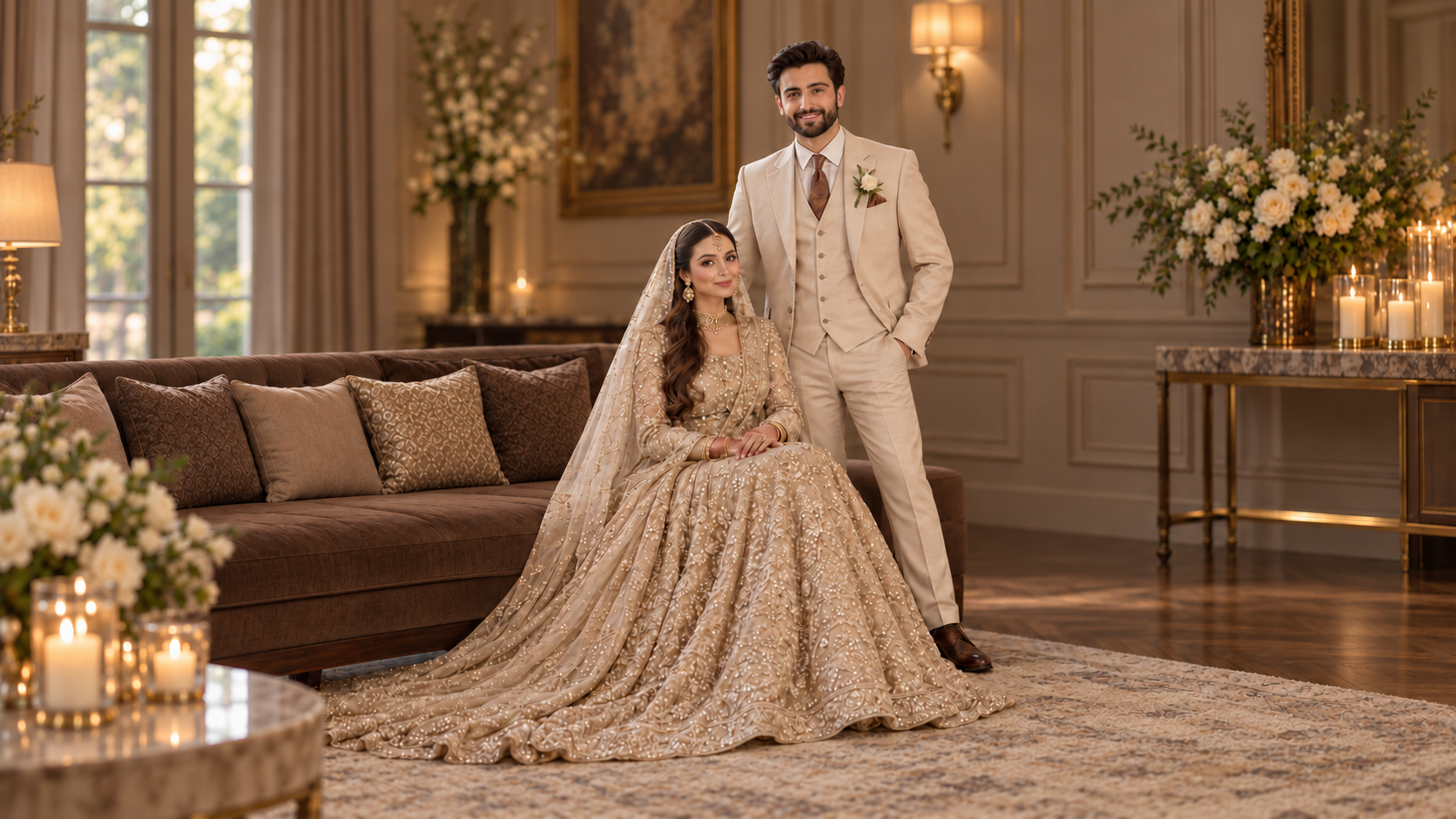
Shopping in person
If you’re shopping in a UK store, take photos of the fabric in daylight before you buy, because shop lighting flatters everything. Bring a swatch or photo of the other outfits so colours sit well together in the family photos. Ask about returns and exchanges before you pay, especially for anything altered. And take one honest relative, not five opinions.
Your planning flow: first, second, next
- List the events and the looks. For each event: bride, groom, and any family colour theme.
- Set a budget per outfit. Outfits add up quickly. Give them their own line in the budget calculator, including alterations, accessories and delivery.
- Decide UK, Bangladesh or both. UK shops for fittings and quick alterations; Bangladesh for some fabrics and family shopping trips. Check the import rules before you decide.
- Order the longest-lead items first. Anything made to measure or shipped from abroad.
- Book the alterations and fittings. Blouse stitching, saree pleating, sherwani adjustments.
- Coordinate with makeup and photos. Your makeup artist needs to know the colours, and the photographer will thank you for a list of outfit changes.
- Plan the outfit changes on the day. A private room, time in the wedding day timeline, and someone to help.
A rough timeline
Use these as working dates; tailors and couriers will give you the real ones.
- 9 to 12 months out: decide the looks per event; start browsing; plan any shopping trip to Bangladesh.
- 6 to 9 months out: order made-to-measure or overseas pieces; book hair and makeup, which Wedvisa’s guide puts at 6 to 9 months ahead.
- 3 to 4 months out: first fittings; blouse stitching; family colour brief out.
- 6 to 8 weeks out: final alterations; hair and makeup trial with the outfit if you can.
- 2 weeks out: final fittings; everything collected, steamed and labelled by event.
Where to find outfits in the UK
Sarees and panjabis
Start with shops that stock Bangladeshi wear. HandcraftUK sells sarees, including Tangail tant, and panjabis, and sends them anywhere in the UK; it agrees delivery cost before you pay and confirms payment by contact rather than online checkout.4 Ask any shop whether the fabric is exactly as shown, how long delivery takes and whether you can return or exchange.
Made to measure and tailoring
For sarees, a well-made blouse and good pleating make all the difference. Rangoli London makes tailor-made blouses, pre-pleated sarees and fitted underskirts, and does alterations. In Birmingham, Misha Tailoring in Sparkhill offers custom blouse stitching and alterations.6 For grooms, Khan Collection says most of its sherwanis, jackets and tuxedos are made to measure. Sherwani Studio says its garments include extra fabric so they can be adjusted later through its tailoring service.8
Questions for any tailor:
- How long does it take, and how many fittings?
- What does an alteration cost, and is it included?
- Can you work on a saree or sherwani bought elsewhere?
- What happens if it doesn’t fit two weeks before the wedding?
Draping and the day
If the bride isn’t used to wearing a saree for hours, pre-pleated or pre-stitched drapes save a lot of stress on the day. Ask your makeup artist whether draping is included, or book someone who does it. Some makeup teams offer Bengali bridal looks: Uzma’s, for example, says it has Bengali bridal makeup teams in Manchester, London, Birmingham, Cardiff and Glasgow.
Bringing outfits from Bangladesh
Decide first whether each outfit will travel with you, arrive as a parcel, or be bought in the UK. Then check the allowance, VAT and delivery time before you pay for the fabric or book the fitting.
Carrying them yourself. You can bring some goods into the UK without paying UK tax or duty if they’re for your own use or a gift; this is your personal allowance.1 You must declare goods over your allowances, and if you go over an allowance, you pay tax and duty on all the goods in that category, not just the extra.1 You can declare online from five days before you arrive.1 When arriving in Great Britain, the allowance for other goods is up to £390, or up to £270 if you arrive by private plane or boat; go over it and you pay tax and duty on the total value, not just the amount above the allowance. Keep receipts, and check the figure again on GOV.UK before you travel, as allowances can change.
Having them posted. VAT is charged on goods sent to Great Britain from outside the UK, except gifts worth £39 or less. If you owe VAT, duty or charges, Royal Mail, Parcelforce or the courier will contact you, and they’ll normally hold the parcel for about three weeks before returning it to the sender if the bill isn’t paid. Duty rates depend on the goods; GOV.UK’s Trade Tariff gives the rate by commodity code.
In practice, leave enough time for a parcel to clear customs, budget for VAT and any duty, and don’t have the wedding outfit arrive the week of the wedding.
Budgeting for outfits
The outfit itself is only part of the cost. Add alterations, blouse stitching, accessories, jewellery, shoes, draping, dry cleaning afterwards, and delivery or postage from abroad, including any VAT or duty. If several looks are planned, decide which one matters most and give each outfit its own budget before you order. Put every outfit on its own line in the budget calculator, with who’s paying, so gifts from relatives and purchases by the couple don’t get counted twice.
Quick answers
Can a relative in Bangladesh post me a saree as a gift? Yes, but VAT is charged on gifts worth more than £39, and you’ll pay it to the delivery company before you get the parcel. Leave plenty of time.
Do I need to declare outfits I’m carrying back? Only if you go over your allowance, up to £390 of other goods for most travellers arriving in Great Britain, and then tax and duty apply to the total value.10 Check the figure on GOV.UK before you fly.
How long do alterations take? It depends on the tailor and the season, so ask when you book. Build in at least one spare fitting before the wedding week.
Family decisions, extra guests and money
Outfits are where family expectations show up fast. If one family expects to buy the bride’s wedding saree, or the other the groom’s panjabi, agree who’s buying what early so nothing is bought twice. If there’s a family colour theme, send it out in writing with a few examples and a deadline, so the cousins aren’t asking the bride on the morning of the holud. And if relatives are gifting outfits, keep a list, because thank-you notes are much easier when you know who gave what.
Looking after the outfits
Label every outfit by event, with the blouse, petticoat, dupatta and jewellery in the same bag. Steam them the day before, not on the morning. Pack a small emergency kit: safety pins, fashion tape, a needle and thread, and a stain pen for the inevitable turmeric. After the wedding, ask the shop or tailor how to clean anything embellished before it goes to a dry cleaner.
Safety and legal, in brief
- Personal allowance: over it, you pay tax and duty on all goods in that category.
- Posted goods: VAT on everything except gifts worth £39 or less.
- Duty rates: check the Trade Tariff by commodity code.
Outfits checklist
- Looks decided for each event, for bride and groom
- Family colour theme sent out in writing
- Outfit budget, including alterations and delivery
- Made-to-measure and overseas pieces ordered
- Import or postage costs checked
- Tailor and fittings booked
- Makeup artist told the colours; draping arranged
- Outfit changes planned in the day timeline
- Everything labelled by event, with an emergency kit
Tick these off in Wedvisa’s wedding checklist.
Your wedding outfits at a glance
| Bride | Anything from a red saree to a lehenga or gown, possibly a different look per event |
|---|---|
| Groom | Panjabi with koti, sherwani or prince coat |
| Plan | Per event, not per wedding |
| UK sources | Bengali wear shops, made-to-measure menswear, saree tailors |
| From Bangladesh | Up to £390 of other goods when carrying; VAT on posted goods except gifts worth £39 or less |
| Leave time for | Fittings, alterations and customs |
| Wedvisa tools | Budget calculator, day timeline, checklist |