Planning a Bangladeshi Wedding in the UK: The Complete Guide
Plan your Bangladeshi wedding in the UK: agree family events, check marriage rules, organise guests, and book venues, food and suppliers with confidence.
If the families have started talking dates and someone has already asked “and the holud, where will that be?”, you’re not planning one event. You’re planning a run of them, and in the UK each one needs its own guest list, venue, budget line and person in charge. This guide takes you through all of it: what each gathering is, how it tends to run, and how to book, source and pull off the whole thing here.
The short answer
A Bangladeshi wedding can be a series of gatherings rather than a single day. Banglapedia’s list of wedding customs runs from the days before the wedding, through the wedding itself, to the days after.1 In the UK that can mean some mix of a gaye holud, a nikah or Hindu ceremony, a big reception, and a walima or bou bhat, each on its own date or in its own room. The order and the mix belong to your two families. Start with an event map: each gathering, its host, date, guest count and venue. Then confirm the legal route, book the main venue and photographer, and give every other supplier a line under the event it serves.
What each gathering is
Before the wedding
The gaye holud is the turmeric blessing. In Bangladesh it was traditionally held three, five or seven days before the wedding, with the elders putting the first dab of turmeric on the bride or groom and feeding them something sweet before the cousins pile in.2 The turmeric and gifts travel between the two houses on decorated trays, and the women’s songs tease the other side.2 It has been part of British life for decades: a 1991 photograph from Tower Hamlets shows the bride’s friends on a council-estate balcony, ready to shower guests with petals and sweets.3 Our Gaye Holud guide covers it step by step.
Some families also hold a mehndi night, and in Hindu families an aiburo bhat, a meal for the bride or groom before they marry, recorded as a Hindu custom.4 Both have their own guides.
The wedding itself
The wedding looks different by faith. Muslim marriages are solemnised through ijab qobul, the khutba and the kabin-nama; Hindu marriages through mantras and the exchange of garlands.1 In Bangladesh, the nikah is conducted by the kazi while close relatives look on, and it includes the proposal, the acceptance and the mahr.5
Then there’s the groom’s arrival, the bor jatri. In Bangladesh today it can be an entourage of cars, with the groom’s car decorated in flowers, the younger relatives up front and the elders at the back.5 In the UK, that procession has to fit a venue car park and an arrival slot, which is why transport needs its own plan (more on that below).
After the wedding
Among Muslim families there’s the walima, the feast after the marriage. A Birmingham fatwa notes that in some Asian cultures the bride’s family provides a meal on the wedding day and the husband hosts the walima afterwards.6 The bou bhat is the groom’s family’s welcome for the new bride; in Bangladesh it’s described as a banquet held by the groom’s family to honour the couple and introduce them to family and friends.5 One east London venue describes hosting the gaye holud, a nikah or Hindu ceremony “depending on your family’s faith”, and the bou bhat reception, across separate days or in different rooms on the same day.7
Nobody has to do all of it. Before anyone prices a venue, ask both families which gatherings they actually want, who hosts each one and who needs to be invited.
Your planning flow: first, second, next
- Write the event map. Sit down together first, then with both families. For each gathering, write its name, who’s hosting, a rough guest count, a date and whether it needs its own venue. “Just a small holud” needs a place, a host and a finish time like anything else.
- Confirm your legal route. A nikah or Hindu ceremony doesn’t automatically make you legally married in the UK. In England and Wales, a religious wedding can be legal at a registered religious building with an authorised person or registrar present; anywhere else, you’ll need a separate civil ceremony.8 You give notice at your local register office at least 29 days before the wedding.9 Scotland and Northern Ireland have their own rules. Our Bangladeshi Nikah and Walima guide goes through the questions to ask.
- Book the venue and photographer together. Wedvisa’s own guide puts popular venues at 12 to 18 months ahead and photographers at 12 months or more.10 Start with the biggest event, then ask whether the others can use the same site.
- Build one guest list with a column per event. Tick who’s invited to what, and count the people eating at each meal separately. Wedvisa’s guest list manager holds names, RSVPs and dietary notes in one place.
- Give every event its own budget line. Venue, food, outfits, photos, decor and travel, per event, with shared costs in their own section. The budget calculator keeps it straight.
- Book the rest around the venue. Caterer, decorator, DJ or band, makeup, mehndi and transport, each quoted per event.
- Write one master schedule. One running order for each day, built from the times the venue, officiant and caterer have confirmed. The wedding day timeline holds it.
Same venue, separate days, or both?
Once the event map is written, the next big choice is how the events fit together. There are three common shapes, and each changes the bookings.
- One venue, separate days. Fewer suppliers to brief, and the venue team gets to know your family. Ask whether decor can stay up overnight and whether setup is charged twice.
- One venue, one day, different rooms. Guests stay put and nobody drives across town in a lehenga. Ask when guests can get into each room, where people wait during the changeover and who moves the flowers.
- Different venues. A holud at home, the nikah at the mosque and the reception at a banqueting hall can each suit its own crowd. Budget for travel time between them, and give every venue the same master schedule.
One east London venue, for example, offers to run the holud, the ceremony and the bou bhat either across separate days or in different spaces on the same day.7 Whichever shape you choose, put it in writing with the venue before anyone sends a save-the-date.
A timeline that works backwards
Use these as working dates, then swap in the ones your venue and suppliers give you.
- 12 to 18 months out: agree the event map and legal route; book the main venue and the photographer.
- 9 to 12 months out: book the caterer and the DJ or band, which Wedvisa’s guide puts at 9 to 12 months for a popular date.10
- 6 to 9 months out: book hair and makeup, which the same guide puts at 6 to 9 months, with the trial 4 to 8 weeks before.10 Book the decorator, mehndi artist and transport, and start on outfits.
- 3 months out: invitations, with a separate reply for each event.
- One month out: final numbers, dietary needs and allergies to the caterer; the seating plan; give notice if you haven’t already.
- Wedding week: the master schedule goes to every supplier and to one named person per event.
The planning timeline builds these dates from your wedding date.
How to source each piece
Venues
Describe the wedding, not just the date. Turmeric at the holud, a flame at a Hindu ceremony, a dhol, a late finish, prayer space and step-free access all need a yes in writing before the deposit.
A few UK venues show what to compare. The Willows in Hainault has a ballroom for up to 800 guests and a smaller suite for up to 120 that it suggests for the gaye holud, with in-house halal catering.7 Grand Sapphire in Croydon sells all-inclusive packages running from the gaye holud to the reception.11 Meridian Grand in London focuses on the reception, seating 200 to 800 in a pillar-free ballroom.12 White Abbey Ballroom in Bradford lists space for up to 500 guests, a halal kitchen, and prayer and wudhu facilities.13 For a sense of room-hire prices, De Montfort University’s Asian celebrations brochure in Leicester lists a Saturday full day at £3,000 and a Sunday full day at £4,500.14 Ask every venue whether a quote includes VAT, staff and cleaning.
Questions worth taking to every viewing:
- What’s the seated capacity once the stage, buffet and dance floor are in?
- Can we bring our own caterer, decorator and photographer, or is there an approved list?
- What time can suppliers get in, and when must the room be clear?
- Is there a prayer room, a private room for the bride and step-free access?
- What are the rules on turmeric, flames, smoke effects, confetti and amplified music?
- How much is the deposit, when is the balance due, and what happens if we move the date?
If you want the legal ceremony at a civil venue in England or Wales, check that the actual room is approved. Councils can attach their own conditions to an approval, such as car-parking space.15
Catering and sweets
Bring the dishes that matter to the tasting and get the menu confirmed in writing, with halal, vegetarian and other requirements listed one by one. Allergies are a separate question: in England, Wales and Northern Ireland, a caterer serving a buffet must give allergen information for each dish, not for the buffet as a whole.16
Sweets deserve their own plan. In Bangladesh, sharing sweets with neighbours and relatives is a traditional way of marking engagements and weddings,17 so there may be mishti at more than one event, plus boxes to send home. In Whitechapel, Praan Sweets lists a “Mishti Thal” at £70 and delivers inside London.18 Our desserts guide covers ordering, storage and serving.
Photography
Ask how many hours cover each event and whether travel or a second photographer is extra. Some photographers price events separately: Bridal Shots, for one, says the holud can be booked on its own or added to wedding coverage.19 Give them a list of the family groups you want, or the aunties will be organising it on the day.
Decor and stage
The stage is where the family photographs live. Ummah Catering’s decor packages include stage design, a backdrop, table dressing, chair covers, and setup and collection on the day.20 Some venues have their own decorator: Midnight Garden is Meridian Grand’s in-house decor service and is reserved for that venue’s clients.21 Ask what’s rented, who installs it, how long setup takes and whether damage or cleaning is charged.
Outfits, makeup and mehndi
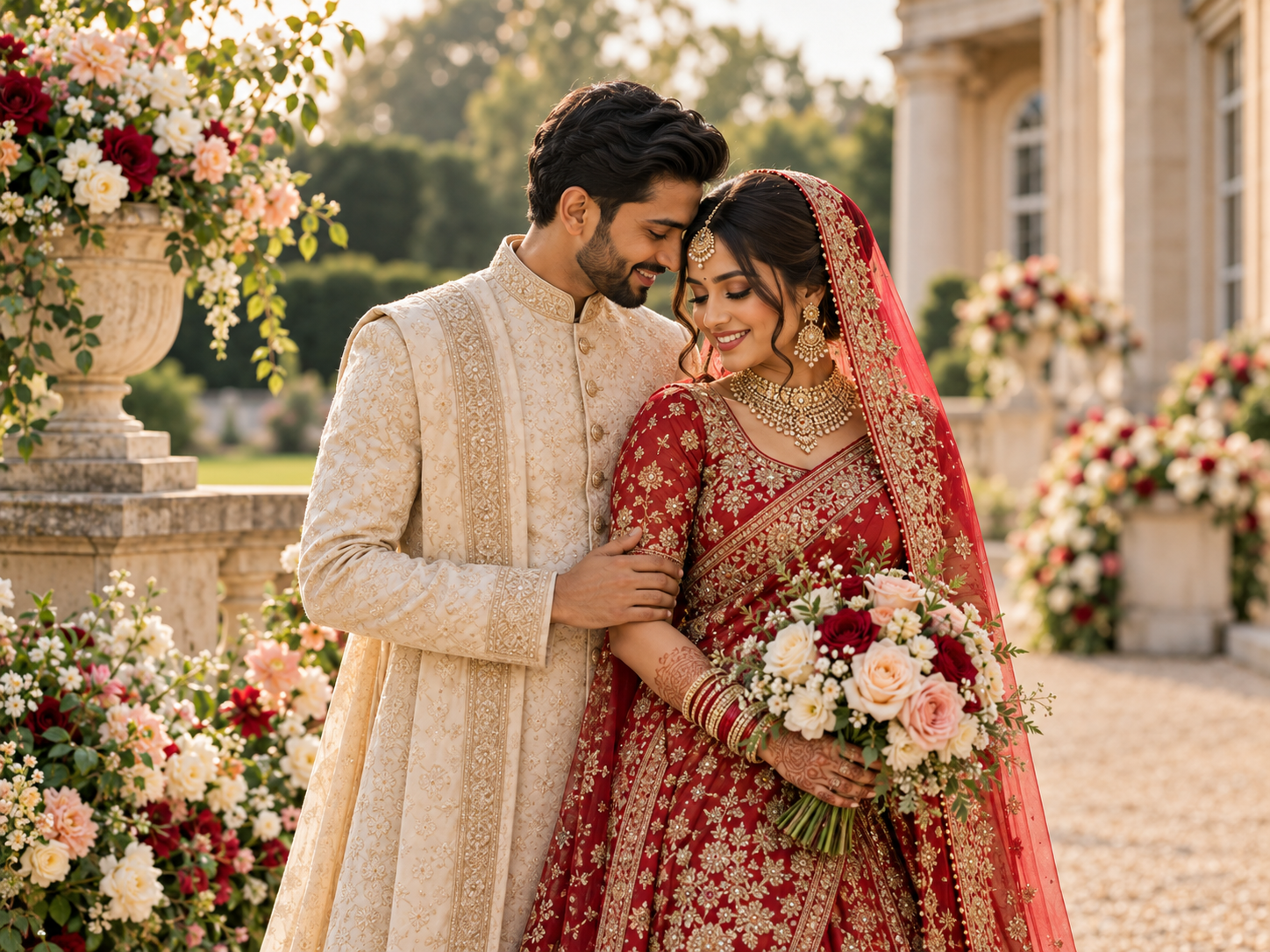
Bridal looks run from a red saree to a lehenga or gown, and grooms from a panjabi with koti to a sherwani or prince coat, so settle what’s being worn at which event before anything is ordered. In the UK, HandcraftUK sells Tangail sarees and panjabis with delivery across the UK,22 and Rangoli London makes pre-pleated sarees and tailored blouses.23 For makeup, Uzma’s says it has Bengali bridal makeup teams based in Manchester, London, Birmingham, Cardiff and Glasgow.24 For henna, MehndiMouj in Ilford lists bridal mehndi from £150.25 Ask each artist how many looks are included, when the trial is and what travel costs.
Music and entertainment
Divine Sounds, an Asian wedding DJ company, says it uses dhol players based all over the UK.26 Send any DJ or band a written brief: the entrance song, the songs for the elders, the volume and the finish time. If the elders want the old songs at the holud and the cousins want a choreographed dance at the reception, there’s room for both across the week.
Transport and the bor jatri
Westway Ride, a London wedding car company, describes cars moving between gurdwaras, mandirs, mosques and banqueting halls across London and the Home Counties.27 Whoever you book, ask about car numbers, waiting time and a plan for delays. If the bor jatri is arriving as a convoy, ask the venue where cars can wait and who manages the arrival.
Guest lists and invitations
A Bangladeshi wedding guest list is really several lists. Keep one master list of names, then add a column for each event and tick who’s invited to what. Count children and supplier meals separately before you compare catering quotes, because they change the per-head numbers.
Ask each side for actual names by an agreed date. “The cousins” is not a headcount. The invitation for each event should say what it is, where, what time food will be served and who to reply to, and anyone invited to more than one event should reply to each one. That way a guest can’t accept the reception and quietly skip the nikah without anyone noticing until the seating plan. Once numbers settle, the seating plan tool helps you put the elders near the stage and the children near the door.
Family decisions, extra guests and money
In Bangladesh, one customary arrangement is for the bride’s side to host one ceremony and the groom’s side to host the grand reception, though there are no set rules.28 In the UK, families work it out their own way, so agree early who pays for which event and whether each contribution is a fixed sum or the whole bill. Put a name and a limit beside every line.
One person should hold each guest list. When a chachi wants to add her neighbours after the numbers have gone to the venue, everyone should know who decides. Every extra guest changes more than the food: tables, chairs, transport, parking and photographs too. If the total is too high, go back to the event map together rather than shaving every line. Compare the guest count and the number of events before cutting individual decor lines.
Running the days themselves
On the day, the couple should be the least busy people in the building. Choose one person per event to hold the schedule and the supplier phone numbers, and give suppliers that person’s number, not yours. Mark supplier arrivals, setup, room changes, travel and outfit changes, and give each handover a name.
If the events run back to back, build in slack. A bride’s makeup that runs 30 minutes late pushes back the photographs, the arrival and the food. The caterer will need to know who can approve a delay. Then hand the clipboard and supplier numbers to the named event lead and go and sit with your family. That’s what all of this was for.
Safety and legal, in brief
- Legal route: confirm it before any bookings are final; see the Nikah and Walima guide.
- Allergens: caterers give allergen information per dish at a buffet.16
- Venue permissions: turmeric, flames, smoke effects, a dhol and late finishes all need written permission.
- Turmeric: buy it in the UK for the holud paste, as our Gaye Holud guide explains.
Wedding checklist
- Event map agreed by both families
- Legal route confirmed and notice date in the diary
- Venue and photographer booked
- Guest list with a column per event
- Budget line per event, with who pays and how much
- Caterer, decorator, DJ or band, makeup, mehndi and transport booked per event
- Outfits decided per event
- Menus and allergen information in writing
- Invitations sent with a separate reply for each event
- Final numbers and seating plan to the venue
- Master schedule shared with every supplier and event lead
Tick these off in Wedvisa’s wedding checklist.
Your wedding plan at a glance
| The events | Some mix of gaye holud, mehndi, nikah or Hindu ceremony, reception, walima or bou bhat, chosen by your families |
|---|---|
| First decisions | Event map, legal route, venue and photographer |
| Book 12–18 months out | Main venue and photographer |
| Book 9–12 months out | Caterer, DJ or band |
| Book 6–9 months out | Hair and makeup, decorator, mehndi, transport |
| Legal | Notice at least 29 days before in England and Wales |
| Money | A line per event, a payer and a limit for each |
| Wedvisa tools | Guest list, budget calculator, planning timeline, day timeline, checklist |