Outdoor Wedding Venues UK: The Legal Rules, the Costs, and Where to Look
Everything you need to know about having the best outdoor wedding in the UK.
The idea sounds simple enough: vows under a tree, guests on hay bales or folding chairs, no ceiling in sight. In practice, "outdoor wedding" covers everything from a licensed garden ceremony at a country estate to a woodland clearing 90 acres deep, and the legal rules, the costs, and the weather risk all shift depending on which one you mean and which part of the UK you're in.
This guide covers what's actually legal where, what outdoor venues cost compared with indoor ones, specific woodland and coastal venues worth researching, and the wet-weather planning that makes or breaks the whole idea.
Can You Legally Marry Outdoors in the UK?
The answer depends entirely on which nation you're marrying in, and the differences are bigger than most couples expect.
England and Wales
Since July 2021, legal civil ceremonies can take place entirely outdoors, but only within the grounds of a venue that holds a civil ceremony licence. This was a permanent change to the law, not a temporary pandemic measure, and it means the licence covers the whole grounds rather than just the building itself. A private garden or an unlicensed field can host a blessing or a symbolic ceremony, but not the legal one — for that, you'll need a registrar present at a licensed site.
Scotland
Scotland has by far the most flexible rules in the UK. Civil ceremonies can take place at any location agreed with the registrar, and religious or humanist ceremonies can be held almost anywhere — a mountainside, a beach, a private field — as long as an authorised celebrant conducts it and the location is written into the marriage schedule. Humanist ceremonies are also legally recognised in Scotland, which isn't the case in England and Wales, making Scotland the go-to option for couples who want a genuinely off-grid outdoor wedding that's still legally binding.
Northern Ireland
Religious and humanist ceremonies can take place anywhere the officiant agrees to and the landowner permits, giving Northern Ireland its own version of flexibility, separate from the licensed-venue model used in England and Wales.
Types of Outdoor Wedding Venues in the UK
|
Venue Type |
Typical Capacity |
What It Offers |
Watch Out For |
|---|---|---|---|
|
Woodland and forest venues |
30–160 |
Natural cover, genuine seclusion, minimal styling needed |
Ground conditions after rain, access for older guests |
|
Garden and estate grounds |
50–250 |
Formal lawns, licensed ceremony spots, existing infrastructure |
Noise curfews, neighbouring properties |
|
Coastal and clifftop venues |
30–300 |
Dramatic scenery, tidal or seasonal considerations |
Wind at photo locations, tide times |
|
Vineyard and orchard venues |
2–100 |
A working landscape as the backdrop |
Seasonal access around harvest |
|
Marquee and tipi on private land |
50–500+ |
Full flexibility, any location you can secure |
Land hire, utilities, and structure costs stack up separately |
How Much Do Outdoor Wedding Venues Cost in the UK
The national average hire fee for an outdoor venue, excluding catering, is £6,319 — broadly in line with the £6,040 average across all UK venue types, though the number hides a wide range depending on what's actually included.
Where outdoor weddings differ most is in structural costs that indoor venues simply don't have. Marquee and tipi structural hire averages £4,633 for the base structure alone, before site preparation or utility connections are added. Generator and toilet hire for marquee or remote outdoor setups adds a further £600 to £8,000 depending on scale, and that's before land hire itself, which is a separate cost again if you're not using an established wedding venue's own grounds.
This is the trap couples fall into most often with outdoor weddings: the ceremony photo looks free, but the infrastructure behind it — power, water, toilets, flooring, and weatherproofing — is where the actual budget goes.
Woodland and Garden Venues Worth Researching
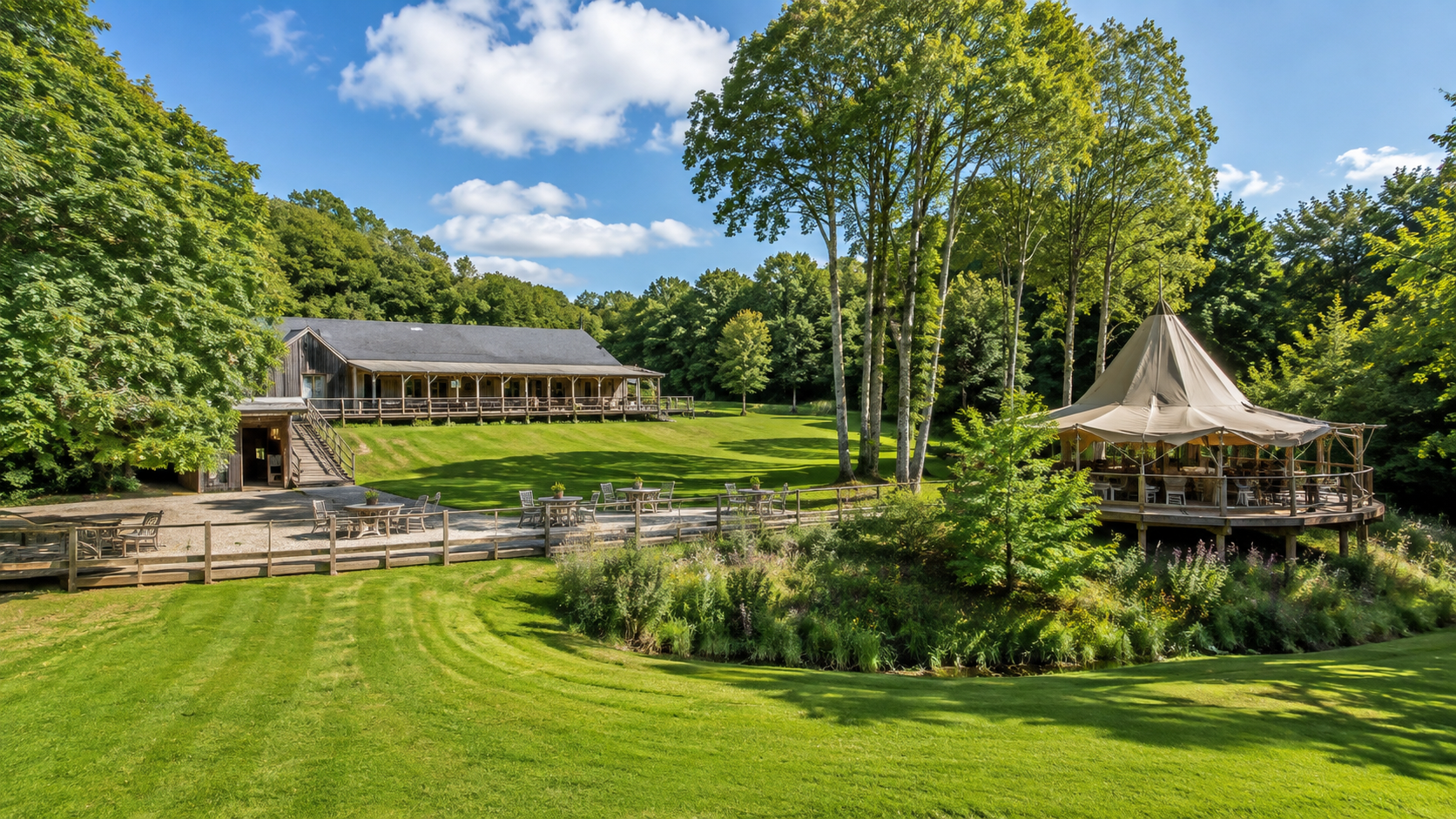
fforest Farm, set within a 200-acre nature reserve on Pembrokeshire's River Teifi, is built around a genuinely outdoor, weekend-long celebration. The property offers multiple licensed spaces, including a Giant Hat Tipi and an ancient stone quarry, with a cedar barn seating up to 160 for the main meal and river swimming available across the wedding weekend.
Dibbins Wood in Northamptonshire sits inside 90 acres of ancient private woodland, where couples exchange vows in the Green Chapel, a natural clearing surrounded by wild flora, before moving to an adjacent tipi for the reception. Higher Holcombe in Devon takes a different approach with a hilltop willow "cathedral," pairing panoramic countryside views with a flexible stretch tent for up to 120 guests and an open-supplier policy that lets couples bring in their own caterers.
Two Woods Estate in West Sussex offers a ceremony aisle flanked by more than 100 towering redwood trees, alongside an open meadow for photos and a fully indoor backup space for bad weather. Sopley Mill, on a private island in Hampshire's New Forest, combines a historic timber-framed water mill with willow-lined water meadows and fully winterised indoor spaces. Marshwood Manor in Dorset centres its ceremony on a historic stone church porch, rescued from a local parish rebuild in 1874, set within a natural forest clearing. Gants Mill in Somerset, an active historic mill in a secluded river valley, runs on a low-intervention model with no corkage charges and open choice of caterer.
Coastal and Clifftop Venues
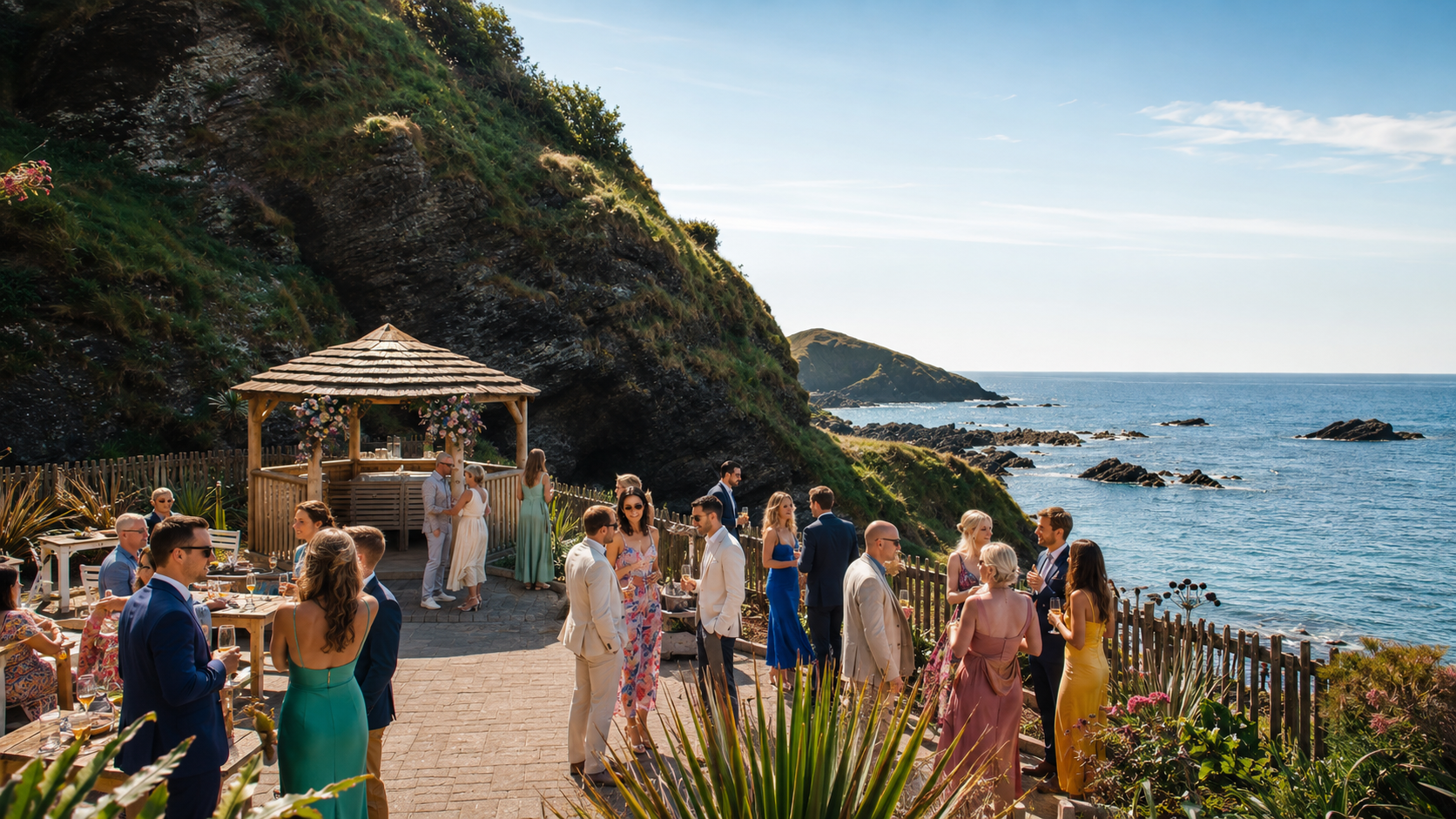
Tunnels Beaches in Devon is one of the most distinctive outdoor venues in the country: hand-carved Victorian tunnels lead through the rock to a private beach, and the venue publishes clear tariff information rather than the enquiry-only pricing common at unusual outdoor sites. The Roman Baths in Bath offer a different kind of open-air ceremony, held beside the original mineral-rich waters of the Great Bath, with rates from £1,600 for a sunrise slot up to £7,300 for exclusive evening hire.
Beyond named venues, the south coast has a growing cluster of vineyard, forest, and coastal spaces built specifically around outdoor ceremonies, reflecting how much this segment of the market has grown over the past few years.
The Practical Reality: Weather Contingency
UK weather doesn't care about your booking confirmation. Any outdoor wedding plan needs a genuine wet-weather contingency, not a vague assurance that you'll "move inside if it rains." That means an actual indoor space with covered capacity for every guest, not just the wedding party, and ideally a covered walkway between the ceremony spot and wherever the reception happens next.
The venues that handle this well tend to build it into the design rather than bolting it on afterwards — glass-roofed orangeries, covered terraces, and modern structures like The Gillyflower at Elmore Court let you keep the feel of an outdoor celebration with a permanent structure overhead if the weather turns. Booking a site visit in November or February rather than a sunny July afternoon tells you far more about how a venue actually copes with bad weather than any photo on their website will.
Hidden Costs to Ask About Before You Book
Outdoor weddings carry their own set of hidden costs on top of the usual venue extras.
- Land hire is a separate line item if you're setting up on private land rather than an established venue's grounds.
- Generator and toilet hire for marquee or remote setups runs £600 to £8,000 depending on scale and duration.
- Marquee and tipi structural hire averages £4,633 before utilities, flooring, or heating are added, and those additions can double the figure quickly for an autumn or winter date.
- Site access and setup days — often needed a day or two before the wedding for marquee builds — sometimes carry a separate daily charge.
Questions to Ask an Outdoor Venue Before You Book
- Does the outdoor ceremony location hold a civil ceremony licence, or will the legal ceremony need to happen separately?
- What is the wet-weather contingency, and how many guests does the covered space actually hold?
- Is there a covered walkway between the ceremony location and the reception space?
- What time must outdoor music or amplified sound stop?
- Are generator, toilet, and utility hire included, or charged separately?
- Is the ground suitable for a marquee or structure after heavy rain?
- Is there accommodation nearby for guests, given many outdoor venues sit outside towns?
Frequently Asked Questions
Can I legally get married outdoors in the UK?
Yes, but the rules depend on where you are. In England and Wales, outdoor civil ceremonies became permanently legal in 2021, but only within the grounds of a venue holding a civil ceremony licence. Scotland allows civil ceremonies at any agreed location and recognises humanist ceremonies almost anywhere. Northern Ireland allows religious and humanist ceremonies wherever the officiant and landowner agree.
Do I need a licence for an outdoor wedding ceremony?
In England and Wales, yes — the location must sit within the grounds of a venue holding a civil ceremony licence, which since 2021 covers the whole grounds rather than just the building. In Scotland, no separate licence is required; you need the registrar or an authorised celebrant to agree to the location instead.
Can I get married in my own garden in the UK?
In England and Wales, generally no for a legal civil ceremony, since private homes aren't usually eligible for civil ceremony licences. You can hold a symbolic blessing there, but it won't be legally binding. In Scotland, a legally recognised religious or humanist ceremony can take place in a private garden as long as an authorised celebrant conducts it and the location is specified on the marriage schedule.
How much does an outdoor wedding venue cost in the UK?
The national average hire fee for an outdoor venue is £6,319, in line with the overall UK average of £6,040 across all venue types. The bigger cost driver is usually structure and infrastructure — marquee or tipi hire averages £4,633 for the base structure alone, with generator and toilet hire adding £600 to £8,000 depending on scale.
What happens if it rains on an outdoor wedding day?
That depends entirely on the contingency the venue has built in. A well-planned outdoor venue has covered indoor space for the full guest list and a dry route between the ceremony and reception areas. Always ask to see this space in person rather than accepting a verbal assurance, and ideally visit the venue outside of peak summer to see how it copes in poor weather.
Are woodland and forest wedding venues legally licensed for ceremonies?
Many are, provided they've applied for and hold a civil ceremony licence covering their grounds, which became possible for outdoor spaces in England and Wales from 2021 onwards. Always confirm this directly with the venue rather than assuming, since some woodland sites host receptions and blessings only, with the legal ceremony held elsewhere.
Is a marquee wedding cheaper than booking an established outdoor venue?
Not always. A marquee gives you land-hire flexibility, but the structure, flooring, heating, generator, and toilet costs add up separately and can match or exceed the all-in hire fee of an established outdoor venue with its own infrastructure already in place. It's worth costing both routes fully before assuming a marquee on private land is the cheaper option.