Wedding Venue Cost UK: How Much You'll Actually Pay, by Type and Region
Booking a wedding venue is a big deal, and before you spend the biggest chunk of your budget, let's learn about the budget.
Ask ten couples what their venue cost is, and you'll get ten different answers, and not just because the venues themselves are different. Some are quoting a bare hire fee. Some are quoting a per-head package that already includes dinner. Some haven't added VAT yet. None of them are lying, but none of the numbers are directly comparable either.
This guide pulls together the actual UK data: what the average wedding costs overall, how venue hire breaks down by type, the three different ways venues charge for themselves, how region and timing move the price, and the hidden costs that turn up after the headline figure has already convinced you to book.
What the Average UK Wedding Actually Costs
Across current UK datasets, the average total cost of a wedding sits between roughly £20,600 and £24,000, depending on which extras — rings, honeymoon, hen and stag dos — are counted alongside the core day. The average cost per guest has settled at around £272 to £278, which is often a more useful number when your guest list is still moving around.
Venue and catering together make up roughly 35% to 50% of that total, making it by far the largest single line in most wedding budgets. That's exactly why getting the venue cost right, and understanding what's actually included in it, matters more than any other decision in the planning process.
How Much Does Venue Hire Cost by Type?
The national average venue hire fee, excluding catering, is £6,040. But that average sits across a huge range depending on the kind of venue you're booking.
|
Venue Type |
Average Hire Fee (Excl. Catering) |
|---|---|
|
Stately home / manor house |
£7,485–£8,958 |
|
Castle |
£7,380 |
|
Barn |
£6,343 |
|
Outdoor venue |
£6,319 |
|
Event / function venue |
£5,303 |
|
Hotel |
£5,156 |
|
City venue |
£3,179 |
|
Restaurant / pub |
£2,419 |
|
Registry office |
£1,342 |
Stately homes and castles sit well above the average because you're largely paying for scarcity and grandeur. Restaurants, pubs, and registry offices sit at the bottom because they're either working on a minimum-spend model or charging a genuinely modest fixed fee for a legal ceremony room.
The Three Ways Venues Charge You
Beyond venue type, the bigger variable is the pricing model itself. Most UK venues fall into one of three structures, and comparing across them without adjusting for this is where couples most often misjudge their budget.
|
Procurement Method |
Peak Summer Saturday |
Off-Peak Midweek |
What's Actually Included |
|---|---|---|---|
|
All-inclusive package |
£14,138 |
£5,742 |
Venue, coordination, food, and basic beverage bundled together |
|
Dry hire |
£8,167 |
£4,203 |
The physical space only — furniture, catering, and staffing are all separate |
|
Cost-per-head package |
£138/person |
£85/person |
Venue and dining combined into a single per-guest figure, median £112 |
|
Marquee / tipi hire |
£4,261 (flat fee) |
Varies by setup |
Structure only — excludes generators, toilets, and site preparation |
All-inclusive packages look expensive at first glance next to dry hire's headline figure, but dry hire rarely stays at its quoted price once external catering (£112 to £159 per head), furniture, staffing, and cleanup are added on top. For most couples planning a single wedding, the all-inclusive model ends up costing about the same in total while requiring far less coordination.
How Region Changes the Price
Location is the single biggest driver of budget variance after venue type and pricing model. London and the South East operate as premium markets almost regardless of venue choice, while the North and Scotland offer meaningfully better value for a broadly similar quality of venue.
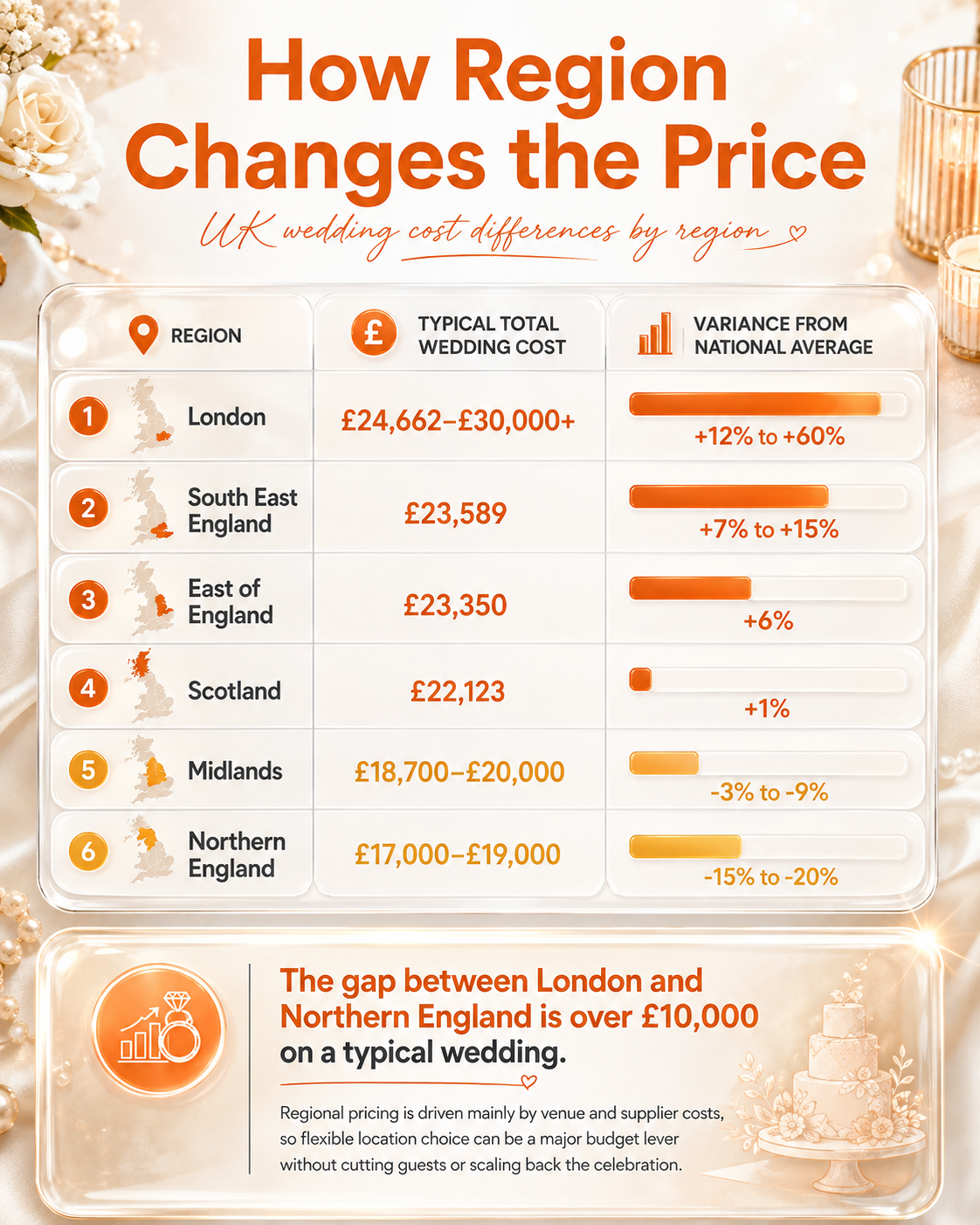
The gap between London and Northern England is over £10,000 on a typical wedding, driven largely by venue and supplier pricing pressure rather than any difference in what's actually delivered on the day. Couples flexible on location have a genuine budget lever available that has nothing to do with cutting guests or scaling back the celebration.
How Timing Changes the Price
Timing is one of the most powerful tools available for controlling venue cost, and it works on exactly the same venue, with exactly the same experience for guests.
|
Month |
Demand |
Cost vs. Average |
|---|---|---|
|
January |
Low |
-16% (cheapest) |
|
February |
Low |
-12% |
|
March–May |
Moderate |
Around average |
|
June |
High |
+5% (most popular) |
|
July–August |
Peak |
+7% |
|
September |
High |
+4% |
|
October |
Moderate |
Around average |
|
November |
Low |
-10% |
|
December |
High (festive) |
+2% |
Winter weddings held in November, January, or February typically cost around £4,000 less than the same venue booked for a peak summer date. Day of the week matters just as much: a Tuesday booking can save well over £6,000 against a Saturday at the identical venue. If your guest list is flexible enough to accommodate a midweek date, it's one of the single biggest cost levers available without changing the venue itself.
Ceremony and Legal Fees Most Couples Forget to Budget For
Legal and ceremonial fees rarely make it into an initial venue budget, yet they're a fixed cost that varies significantly by ceremony type.
Church of England ceremonies carry nationally set statutory fees: up to £605 for marrying in your home parish, rising to £664 or £723 if either partner lives outside the parish or the ceremony takes place in an out-of-district church. These figures exclude optional extras like vergers, heating, organists, and bell-ringers.
Civil ceremonies at approved premises require a registrar's attendance, with couples typically budgeting around £850 to cover travel and ceremony fees, which vary by county and booking time. A local register office room, by contrast, ranges from under £100 to £650 depending on day and time, plus a standard registrar attendance fee of £56 to £62. Celebrant-led ceremonies average £706, but since they aren't legally binding in England and Wales, couples still need to budget for a separate basic register office ceremony to formalise the marriage. On top of all of this sits the statutory fee to give notice of marriage, £46.50 per person, rising to £63 for foreign nationals subject to Home Office referral.
Hidden Costs That Aren't in the Headline Price
The venue contract, not the brochure, is where hidden costs actually live. The most common ones worth asking about before you sign:
- VAT — often excluded from the headline figure, adding 20% to whatever you've been quoted.
- Service charges of 15% to 25% applied to catering bills, sometimes automatically.
- Corkage fees of £10 to £40 per bottle for bringing your own alcohol.
- Supplier restriction fees of £200 to £1,000 for using a caterer or vendor outside the venue's approved list.
- Overtime charges of £100 to £500 an hour if the evening runs late.
- Cleanup and waste removal fees, typically £100 to £300, particularly at dry-hire or historic properties, especially where confetti or sparklers are involved.
- And for marquee or remote outdoor venues, generator and toilet hire adds a further £600 to £8,000 depending on scale.
Where Venue Fits Into the Rest of Your Budget
Venue hire is the largest line item, but it's worth seeing it against the rest of a typical spend to keep perspective. Reception catering averages £5,406, heavily dependent on dining style, from around £20 a head for food trucks to £150-plus for fine dining. Evening food and drink adds a further £2,002 on average, worth budgeting for separately to avoid guest fatigue late in the night. Photography and videography combined average £2,998, floral design and venue decor £2,591, and reception and ceremony music £1,906, spanning DJs from £300 to £1,000 and live bands from £1,700 to £6,500.
Seen against those figures, a £6,040 average venue fee is roughly comparable to catering alone, which is exactly why couples increasingly treat venue and catering together as a single combined decision rather than booking the space first and worrying about food later.
How to Keep Venue Costs Down Without Cutting Corners
A few levers make more difference than most couples expect. Moving the date to a Tuesday or Wednesday, rather than the guest list, can save more than £6,000 at the same venue. Choosing a winter month over a peak summer Saturday saves roughly £4,000 on average. Asking a venue for their cheapest available date in the next 12 months, rather than fixing a date first, often surfaces options that weren't obvious from the website. And costing a dry-hire venue fully, including catering, furniture, and staffing, before comparing it against an all-inclusive quote prevents the most common budgeting mistake in UK wedding planning: assuming the lower headline figure is actually the lower total cost.
Frequently Asked Questions
What is the average cost of a wedding venue in the UK?
The national average venue hire fee, excluding catering, is £6,040. This varies significantly by venue type, from £1,342 for a registry office up to £7,485–£8,958 for a stately home or manor house.
What is the cheapest month to book a wedding venue?
January is typically the cheapest month, running around 16% below the yearly average, followed closely by February at around 12% below average. Winter weddings overall can save roughly £4,000 compared with the same venue booked for a peak summer date.
Is it cheaper to get married on a weekday?
Yes, significantly. A Tuesday or Wednesday wedding at the same venue can cost over £6,000 less than an identical booking on a Saturday, making day of the week one of the most effective cost levers available without changing the venue itself.
What's the difference between dry hire and all-inclusive venue pricing?
Dry hire covers the physical space only, requiring couples to source catering, furniture, and staffing separately, and typically costs £8,167 on a peak Saturday. All-inclusive packages bundle venue, catering, and staffing into one price, averaging £14,138 on a peak Saturday, and often work out similarly priced once a dry-hire setup is fully costed.
Which UK region has the most affordable wedding venues?
Northern England offers the best value, with total wedding costs running 15% to 20% below the national average. Scotland sits close to the national average once destination castle venues are factored in, while London and the South East command the highest premiums, up to 60% above average in London's case.
Are there hidden costs in wedding venue quotes?
Almost always. VAT, service charges of 15% to 25%, corkage fees of £10 to £40 a bottle, and overtime charges of £100 to £500 an hour are among the most common costs missing from an initial headline quote. Always ask for a fully itemised breakdown before comparing venues.
How much should I budget for the legal ceremony itself, separate from the venue?
It depends on the ceremony type. Church of England ceremonies carry statutory fees from £605 to £723. Civil ceremonies at approved premises typically cost around £850 including registrar travel. Register office rooms range from under £100 to £650, plus a £56 to £62 registrar fee. All couples also pay a statutory notice of marriage fee of £46.50 per person.