Punjabi Vidaai and Doli: Planning the Farewell at a UK Hindu or Sikh Wedding
If someone has already warned you to keep tissues in every handbag for the doli, you’ll know the vidaai, the bride’s farewell at a Punjabi wedding, is an emotional moment for her and her family. It’s also easy to leave off the run sheet, and then the venue is closing, the car is blocked in and the rice turns out to be banned.
 Rohan Kapoor
·
Updated November 2026
The short answer
The vidaai, or doli, is the bride’s farewell to her parents’ home. In a study of wedding customs in Punjab, it includes throwing grain over her head at the gate, her brother lifting her into the doli and elders scattering coins as the couple leave. At a UK wedding, decide where it happens (the family home, the gurdwara or temple, or the venue), check what the venue allows you to throw and when everyone must leave, brief the driver and photographer, and give it a real slot in the timeline.
What is the vidaai?
The word comes from farewell. A 19th-century dictionary of Urdu and Hindi defines bidā as permission to depart, taking leave, departure or farewell, and bidā karnā as to see someone off.
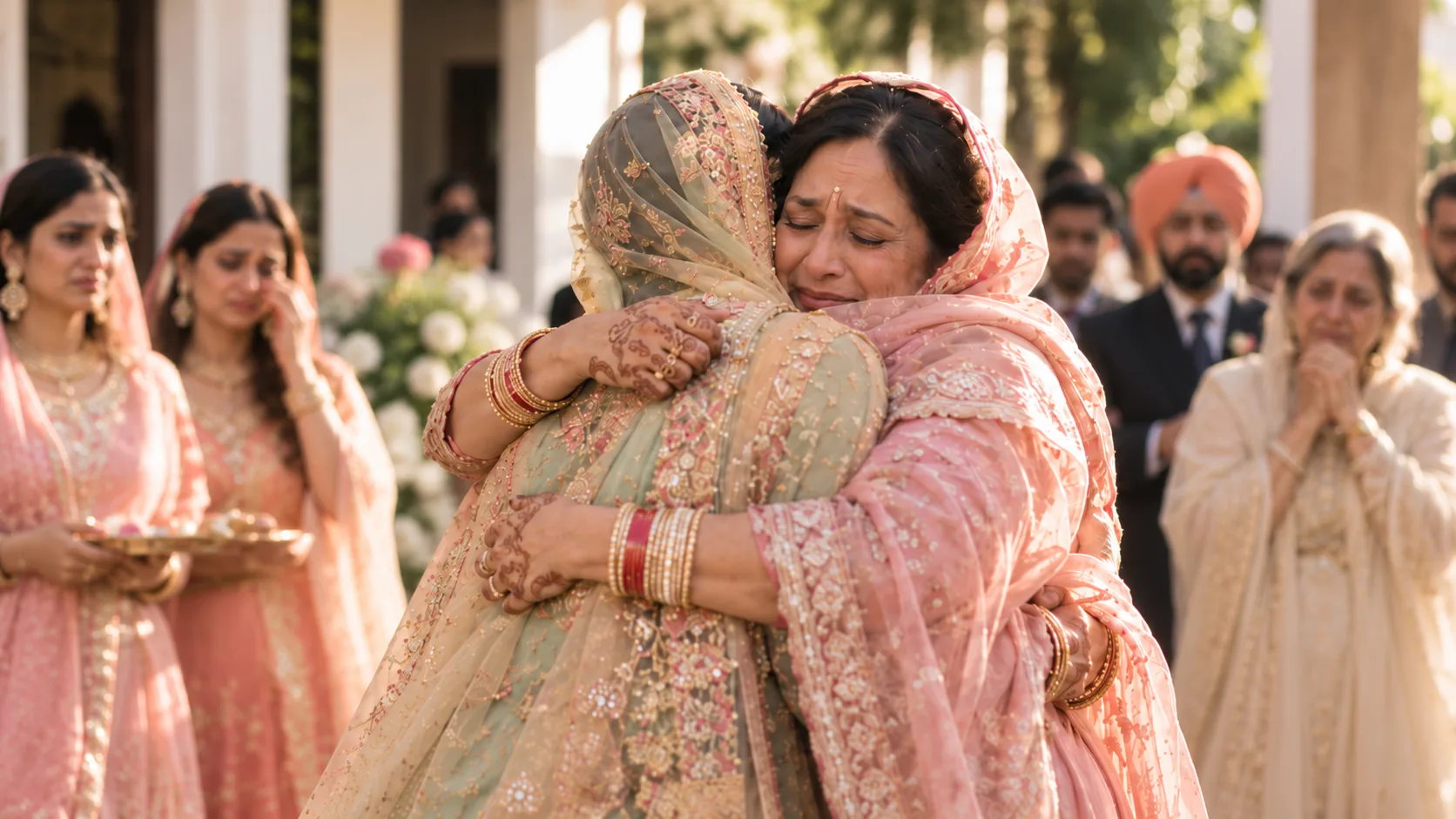
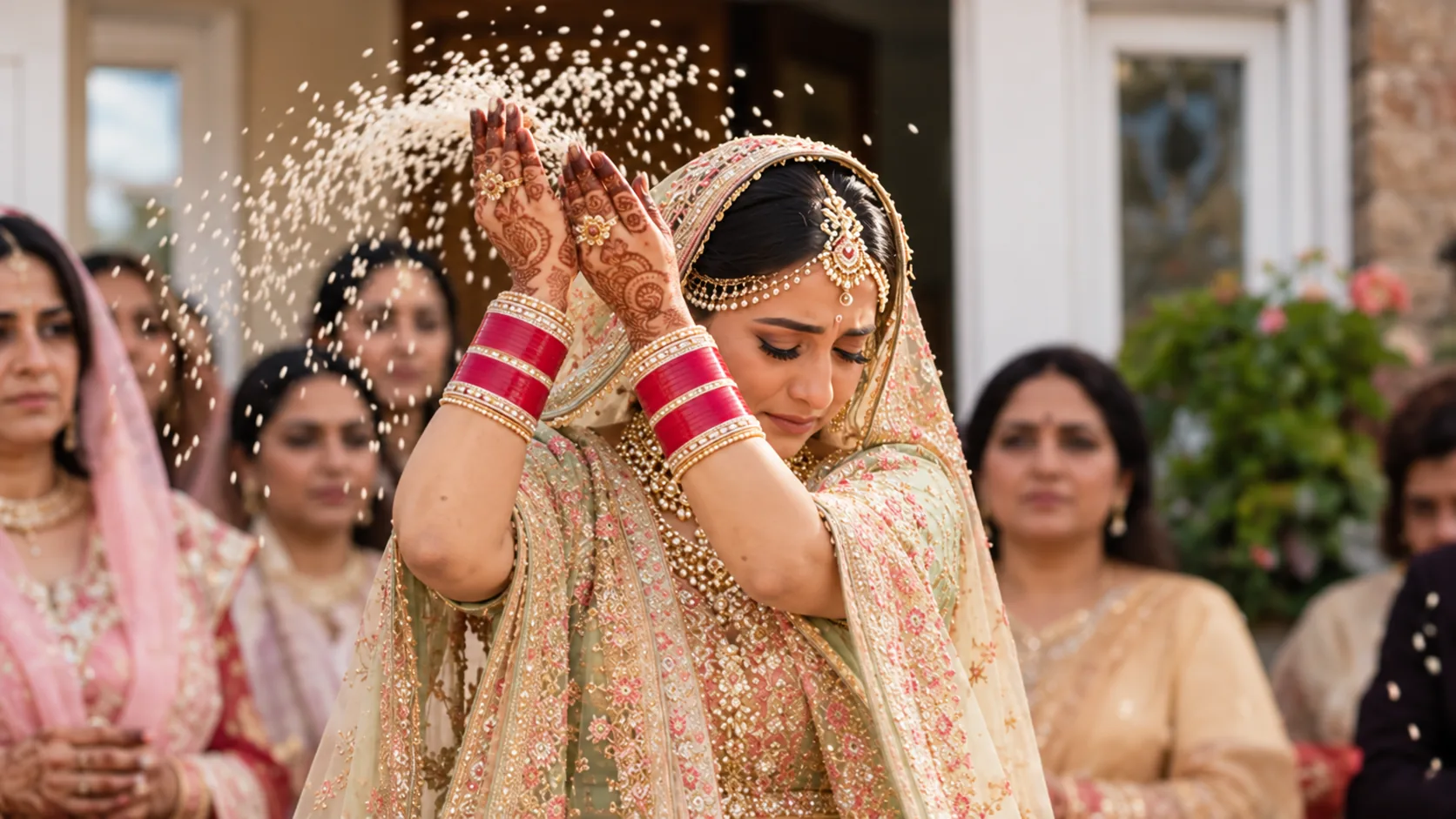
A 2004 study of wedding customs in Punjab, India, which records them across the region’s social and religious communities, describes the bride’s final departure (vidai) from her parental home after the marriage ceremony and calls it framed by sadder emotions. In that account she wears a suit given to her by her in-laws and at the gate of her parents’ home she throws rice, barley or pulses over her head while wishing prosperity for the family she is leaving. Her brother lifts her into a palanquin, the doli, and as the couple set off, elders on the groom’s side throw coins over the doli and to the crowd on the road. The study notes that people still perform these rituals now that decorated cars have replaced the palanquin and that sad songs of separation are sung at the vidai.
The farewell is recorded beyond Punjab too. The British Library’s Endangered Archives Programme has digitised a 1970s album of photographs of a vidai in a village in western Rajasthan, and its catalogue describes the ceremony as marking a bride’s departure from her parents’ house to her husband’s. The customs described here come from Punjabi accounts, and the Punjab study itself notes local differences, so if your family’s customs come from elsewhere, ask the elders which parts apply.
When does it happen at a UK wedding?
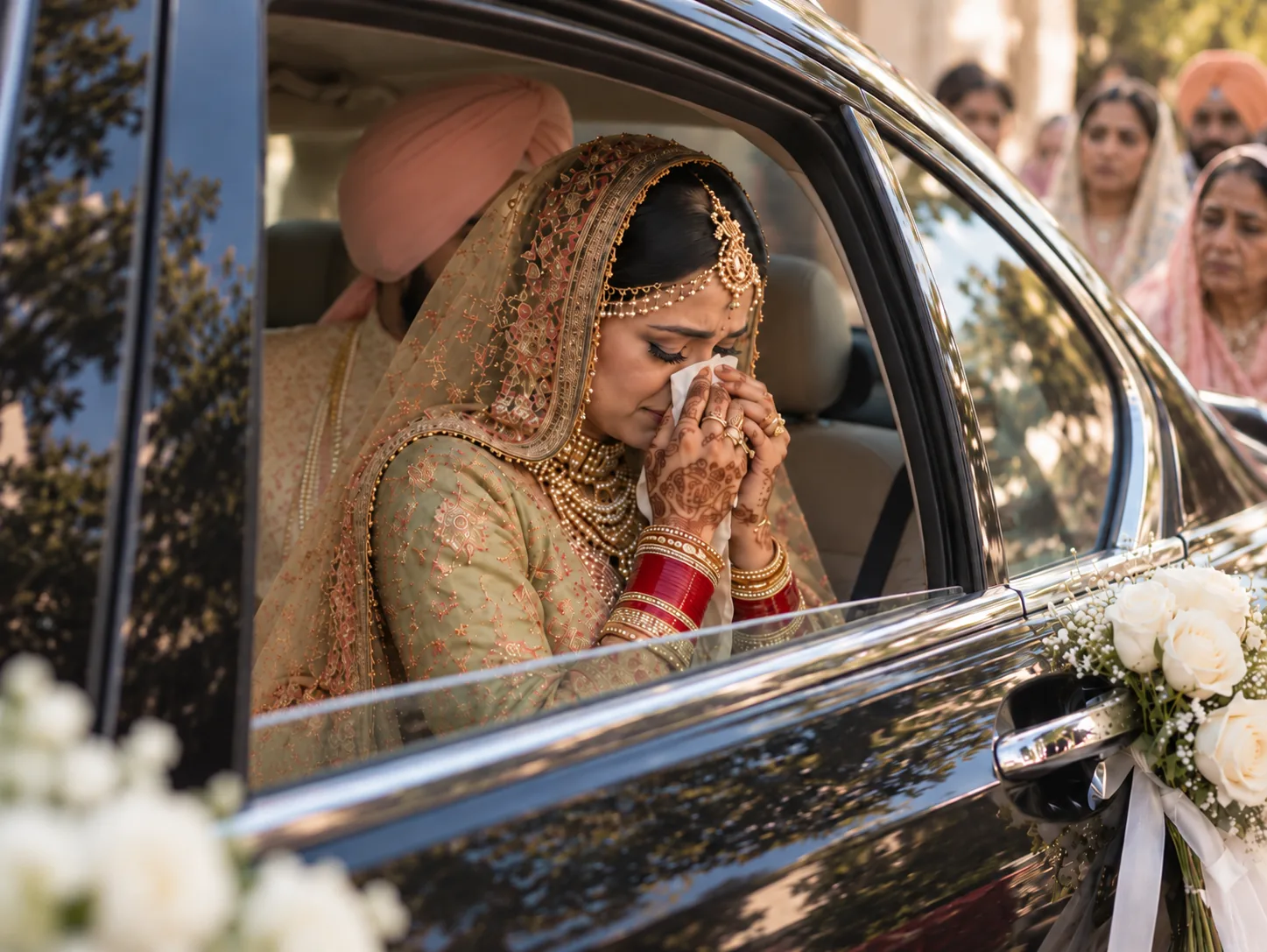
In the Punjab study, the vidai follows the marriage ceremony at the bride’s parents’ house. A 2016 study of Sikh weddings, focused on British Sikhs, places the doli after the Anand Karaj and the reception and says it is customary in the UK for the bride to return to her parents’ home and for the groom to come and collect her there. It describes the moment of departure as an emotional time for the bride, her siblings and her parents.
Both studies place the farewell at the bride’s parents’ home. For a UK wedding, you can choose between three places and each changes the planning:
- At the bride’s family home, after the reception, as in both studies, where you control the timing but need space for the car and the family outside.
- At the gurdwara or temple, where the building’s own rules on cars and leaving times apply. Ramgarhia Board Leeds, for example, says the doli can be held in its langar hall if required.
- At the reception venue, at the end of the night, where the closing time and car access set the limits. The Punjab study notes that hotels and restaurants now serve the same function as the bride’s home.
Agree the place with both families early, because it decides which of the rules below apply to you.
What can you throw?
Rice or grain over the bride’s head is part of the Punjab account. Each venue sets its own rules on what can be thrown and these five publish theirs (checked 16 October 2026):
|
Venue |
What it allows |
|---|---|
|
Milling Barn, Hertfordshire |
Dried natural flower petals or lavender, outside only; no paper confetti or rice; no confetti cannons, with a deduction from your deposit if used |
|
Heaton House Farm, Cheshire |
Biodegradable natural petals only; no tissue or foil; no confetti cannons, with a £100 cleaning charge if one is set off |
|
Micklefield Hall, Hertfordshire |
Real petals or biodegradable, environmentally friendly confetti; no confetti cannons8 |
|
Compton Verney, Warwickshire |
Real or dried flower petals only, and you may be restricted to the grass |
|
Sparth House, Lancashire |
Dried biodegradable petals, in its Confetti Lane only, with a clean-up fee if thrown elsewhere |
If your venue bans rice, you could hold the grain-throwing at the family home’s gate, as in the Punjab account or ask the venue whether it would accept a small handful by the car if you sweep it up. Get the answer in writing.
The car, the doli and the route
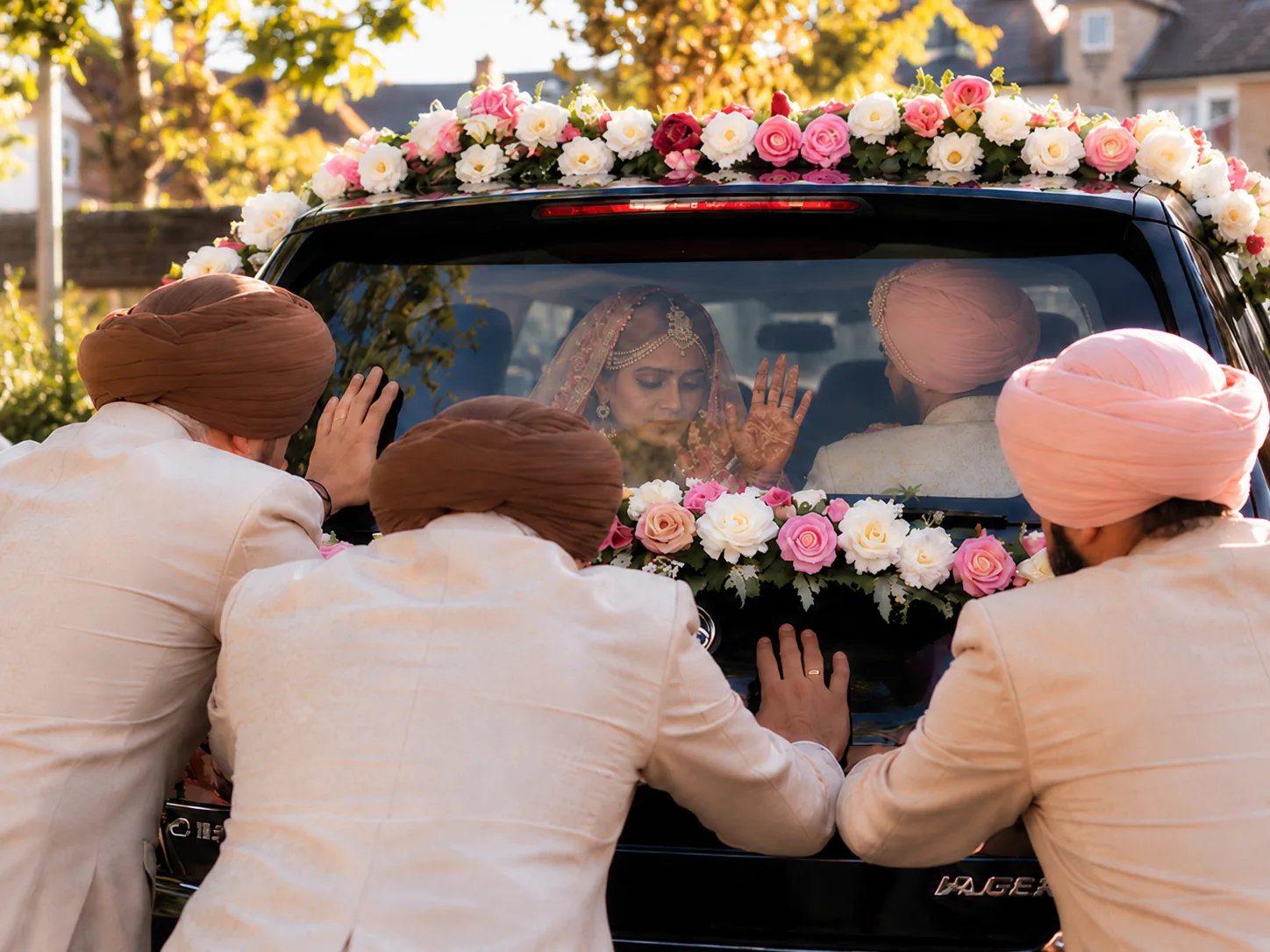
Decorated cars have taken over from the palanquin in the Punjab account. Gold Chauffeur Services, in London, describes a moment in the vidaai when the bride’s brothers and cousins push the car from behind, or lift the doli, as they wish her luck. Palladium Wedding Cars says its drivers know the doli can be a very emotional affair and are flexible about timing. For something closer to the palanquin, Tim Wood Carriages in London offers a pair of horses drawing a decorated carriage for the vidai.
Some venues publish rules on cars too. Ramgarhia Board Leeds asks for wedding cars to park in its car parks and not be left in front of the gurdwara, though they can drop people at the front. West Tower in Lancashire suggests your driver visits on a day without a wedding to see the route. Ask the driver how much waiting time is included.
Leaving on time
Milling Barn turns the music off and closes the bar at midnight, and asks guests and suppliers to be off site by 12.30am. Shree Swaminarayan Temple Willesden requires all guests to leave quietly and in an orderly way by the time on the booking form and charges 10% of the booking cost for each extra hour. If the vidaai is at the venue, schedule it well before the closing time, with enough slack for the photos and the goodbyes.
Photos and video
Two UK providers list the vidaai in their services. Adimad Productions lists “emotional Vidaai” among its Hindu wedding coverage, and HD Moments in London lists the vidaai, the bride’s farewell to her family, among the ceremonies it films. Tell whoever is shooting where and when it will happen, whether you want the gate, the car or the family moments and how long they need to stay, in case it falls after their booked hours.
Planning the farewell, step by step
- Agree the place and the timing with both families: venue, gurdwara or temple, or home; same night or next day.
- Ask the venue what can be thrown, where cars can wait, and when everyone must be off site.
- Book the car or carriage, and tell the driver about the push-off and the waiting time.
- Brief the photographer or videographer on the time and place, and check it’s within their hours.
- Choose who does what: who walks the bride out, who helps her into the car, who scatters the coins.
- Put it in the timeline. Build the evening hour by hour in Wedvisa’s day timeline and share it with the venue and photographer once you’ve signed up, so everyone works to the same clock.
Who does what at the vidaai
These are the roles the studies and providers above describe; your families decide who takes each one. The Punjab study notes that these ceremonies vary locally and expects changing gender roles to reshape them.
|
Who |
What the accounts record |
|---|---|
|
The bride |
Throws rice, barley or pulses over her head at the gate of her parents’ home |
|
Her brother |
Lifts her into the doli |
|
The groom’s elders |
Throw coins over the doli and to the crowd |
|
Brothers and cousins |
Push the car from behind, or lift the doli, in one London car firm’s description |
|
The groom |
Comes to collect the bride from her parents’ home, a UK custom at Sikh weddings in the 2016 study |
|
Those gathered |
Sing sad songs of separation and departure, in the Punjab account |