Wedding Entertainment Ideas for Guests
This guide is organised around when things actually happen and who they're for, since that's usually a more useful way to plan than a straight list of ideas: what works during the drinks reception is rarely what works after dinner, and what entertains a table of eight-year-olds won't do much for their grandparents sitting two tables over.
Not every guest at a wedding wants to dance, and not every moment of the day needs music. The receptions guests actually talk about afterwards tend to have thought about entertainment as something spread across the whole day — a game during the drinks reception, something to look at during dinner, a genuine surprise once the evening gets going — rather than one band or DJ expected to carry the entire thing on its own.
This guide is organised around when things actually happen and who they're for, since that's usually a more useful way to plan than a straight list of ideas: what works during the drinks reception is rarely what works after dinner, and what entertains a table of eight-year-olds won't do much for their grandparents sitting two tables over.
Match the Idea to the Moment, Not Just the Guest List
Before picking anything, it's worth knowing the rough shape most successful UK receptions follow: lawn games and low-key activities during the drinks reception, quieter table-based entertainment through dinner, and higher-energy "spotlight" moments once the meal is finished — with no structured interruptions once dancing has properly started. Getting this sequencing wrong is a more common mistake than picking the wrong activity outright; a well-chosen game placed at the wrong point in the day can stall momentum rather than build it.
During the Drinks Reception
This is the gap most couples underestimate, and it's also the easiest one to fill well. Guests are standing, mingling, often meeting people for the first time, and they generally want something to do with their hands rather than a full activity to commit to.
- Lawn games — croquet, giant Jenga, cornhole, oversized chess — remain the most reliable option for outdoor and garden venues specifically because they need no instruction and work across every age group; guests simply self-organise around them.
- A glitter bar or similar low-cost interactive station gives guests something playful to do while they wait for photos to finish, and it doubles as a genuinely good source of candid photos.
- A casino table or two — blackjack, roulette, poker with play money — works particularly well for guests who'd rather sit and chat than stand around, and it's one of the few activities that keeps working well into the evening for guests who don't want to dance later.
During the Wedding Breakfast
Dinner doesn't call for anything loud or attention-grabbing, but a few quiet touches keep tables engaged between courses without competing with conversation.
- Table-based games — quizzes on "how well do you know the couple," disposable cameras with a note card attached, or simple board games at tables with quieter guests — fill the natural lulls between courses without requiring anyone to leave their seat.
- A live event painter, working quietly at the edge of the room throughout the meal, gives guests something genuinely interesting to glance at over the course of the afternoon, and the finished piece becomes a keepsake the couple keeps long after the day.
- Disposable or instant cameras left on tables let guests document the day from their own perspective — a low-cost idea that consistently produces some of the best informal photos of the whole wedding.
Once the Dancing Starts
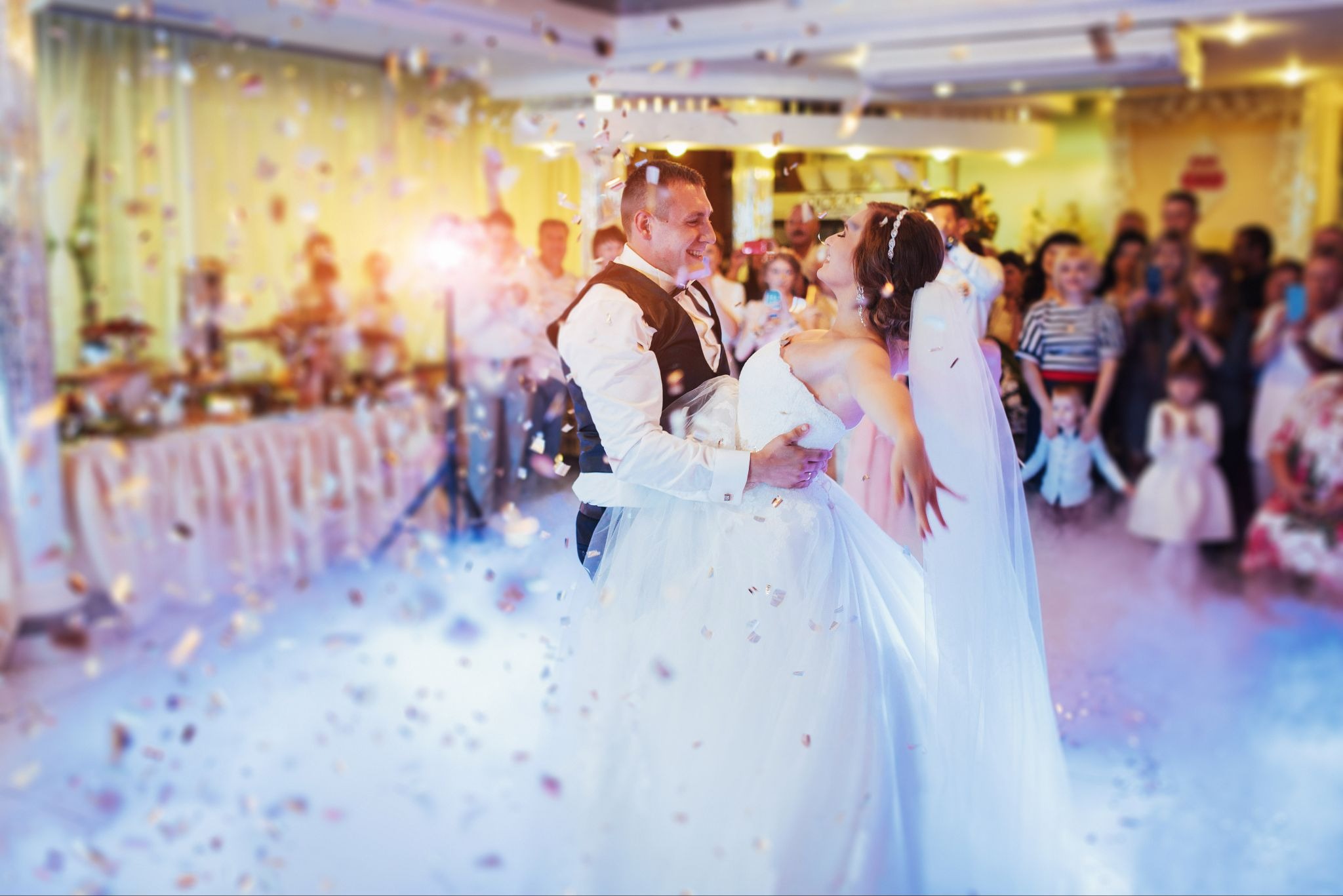
This is where the bigger, more memorable additions belong — but the strongest evenings tend to pick one or two of these rather than layering in several at once, since a reception crowded with competing activities usually feels busier rather than more special.
- Photo booths have moved well beyond a simple backdrop and prop box — instant sharing, video capture, and themed setups (a converted vintage van, for instance) now double as both entertainment and a genuine keepsake for guests to take home.
- Fireworks, if your venue and licence allow them, remain one of the most reliably memorable single moments of an evening reception, particularly for a twilight or late-summer wedding where the sky is dark enough to do them justice.
- A silent disco is worth genuine consideration even outside venues with noise restrictions — it creates a slightly different energy that guests tend to remember specifically because it's unusual, and it lets a reception carry on past a music curfew without breaching any noise limits at all.
- A pop-up escape room or themed puzzle, run in a side room or tent for small groups, has become a genuinely popular option for tech-forward couples with a mixed-age guest list, since it gives non-dancers a proper activity rather than a corner to sit in.
Entertaining Guests Who Don't Want to Dance
Every wedding has a group of guests — often older relatives, or people who simply don't dance — who need something to do once the music starts. Casino tables, a quieter lounge area with board games, and a stand-up comedian or close-up magician working the room between dinner and dancing all give this group a genuine role in the evening rather than leaving them watching from the sidelines. A magician in particular works well here specifically because it's an activity that comes to the guest rather than requiring them to seek it out.
Keeping Children Entertained
Children get bored faster than adults at a wedding, and a bored child tends to become their parents' problem rather than staying quietly out of the way — which is exactly why professional children's entertainment has become such a common addition.
The strongest approach for a mixed-age wedding is generally to combine three things: one active moment (a magician, a face painter, or simple lawn games), one supervised base they can return to throughout the day (a dedicated kids' area or hired childcare team), and one calmer fallback for when energy runs low (a craft table, colouring, or a "busy box" of quiet activities).
For weddings with a genuinely large number of young children, a proper nanny or childcare service — rather than relying on activities alone — lets parents actually enjoy the reception rather than staying on alert all evening.
What Entertainment Actually Costs
Entertainment budgets vary hugely depending on scale, but a few rough UK benchmarks are worth knowing before you start asking suppliers for quotes:
|
Entertainment Type |
Typical UK Cost |
|---|---|
|
Magician or close-up entertainer |
From £180–£350 |
|
Glitter or face-painting station |
From £150–£400 |
|
Casino table hire |
From £250 |
|
Fireworks display |
From £595 |
|
Live event painter |
£400–£900 |
|
Children's entertainer or nanny service |
From £180 |
|
Silent disco hire |
From £250 |
As a general planning rule, entertainment (across the whole day, not just an evening band) tends to sit somewhere around 15–20% of total wedding spend for a modest celebration, rising toward 20–30% for couples who want it to be a genuine centrepiece of the day rather than a supporting element.
Picking the Right Two or Three
The mistake worth avoiding is trying to include everything on this list. The receptions guests remember are rarely the ones with the longest schedule of activities — they're the ones where a small number of additions were chosen deliberately, matched to the venue and the guest list, and given proper space in the day rather than squeezed in as an afterthought. Pick one idea for the drinks reception, one for dinner, and one genuine surprise for the evening, and you'll likely do more for the day than a dozen smaller extras would.
Frequently Asked Questions
What entertainment works best during a wedding's drinks reception?
Lawn games, a glitter bar, or a casino table all suit this slot well — guests are standing and mingling, so low-commitment activities that need no instruction tend to work better than anything more structured.
How do I keep older guests or non-dancers entertained once the music starts?
Casino tables, a quieter lounge area, and roaming entertainment like a magician or comedian all give this group something to engage with without requiring them to be on the dance floor.
What's the best way to keep children entertained at a wedding?
A mix of one active activity, one supervised base guests can return to, and one calmer fallback for quieter moments tends to work best. For a large number of young children, hiring dedicated childcare is usually more effective than activities alone.
How much should I budget for wedding entertainment beyond the band or DJ?
As a rough guide, entertainment across the whole day typically runs 15–20% of total wedding spend for a modest celebration, rising to 20–30% for couples who want it to be a central feature rather than background support.
Should reception activities happen throughout the whole day, or just in the evening?
Throughout, ideally. The strongest receptions place low-key activities during the drinks reception, quieter table entertainment through dinner, and bigger "spotlight" moments after the meal — rather than saving everything for the evening.
Is it possible to have too much entertainment at a wedding?
Yes — a reception with too many competing activities can feel busier rather than more memorable. Choosing one genuinely good idea per part of the day tends to land better than layering in several smaller extras at once.