Hindu Wedding Pheras and Baraat in the UK: Questions to Ask Your Venue
If your venue shortlist for a Hindu wedding keeps growing, two questions will shorten it fast: can we have a sacred fire for the pheras, and can the baraat arrive the way the family wants? The answers rule venues in or out before you talk about menus, and they differ from one venue to the next.
The short answer
Ask each venue, in writing, whether it allows a havan (the sacred fire) indoors or outdoors, whether a mandap fits the room, and what it allows for the groom’s arrival: a horse, a dhol, fireworks. Then check whether the ceremony itself will count as a legal marriage, because in England and Wales a religious wedding needs a registered building and an authorised person, or a registrar.
What happens at the pheras?
The pheras are the circuits the bride and groom walk around the sacred fire: a 19th-century dictionary of Urdu and Hindi gives one sense of pherā as the walking of the bride and bridegroom round the sacred fire.
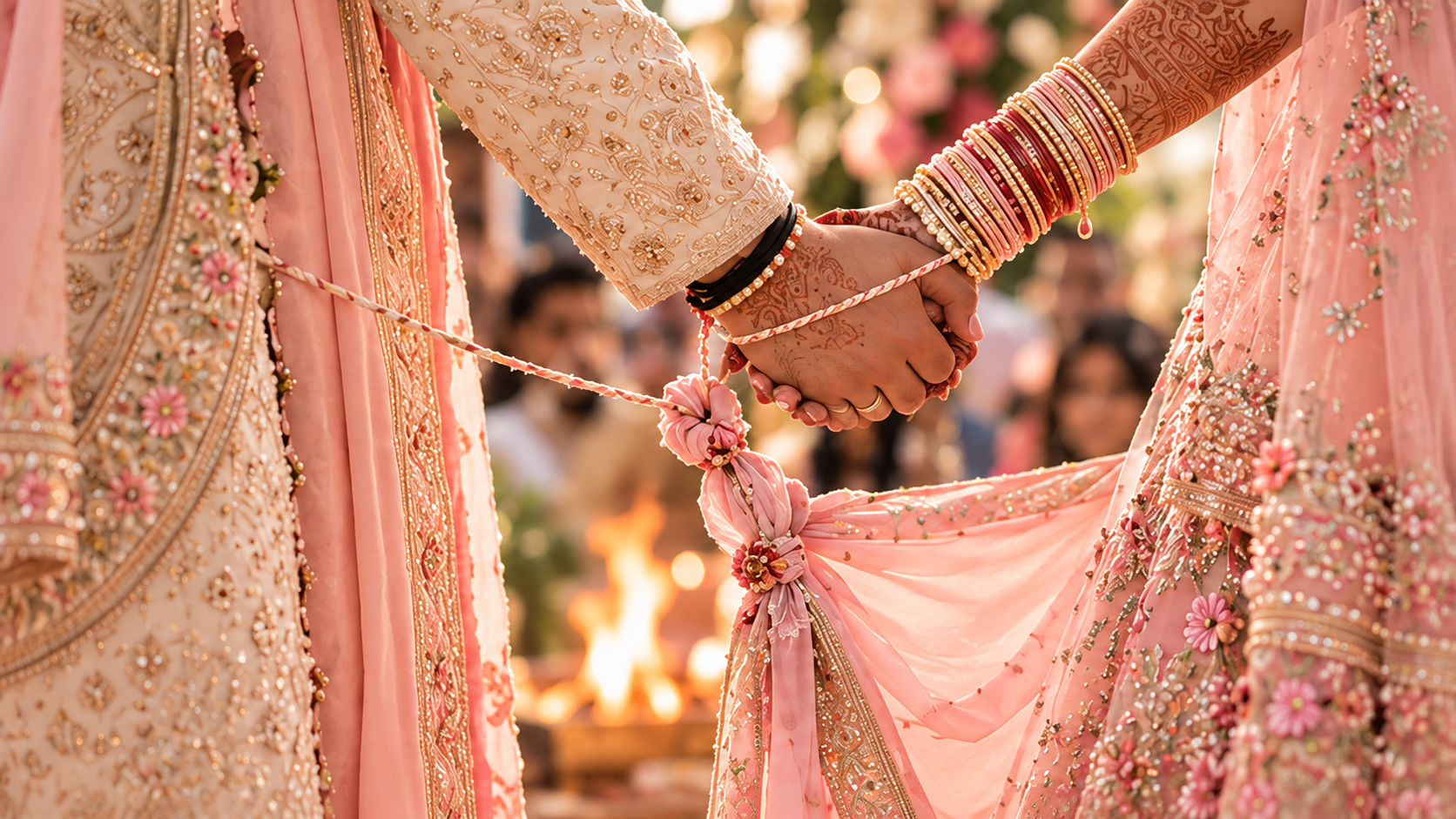
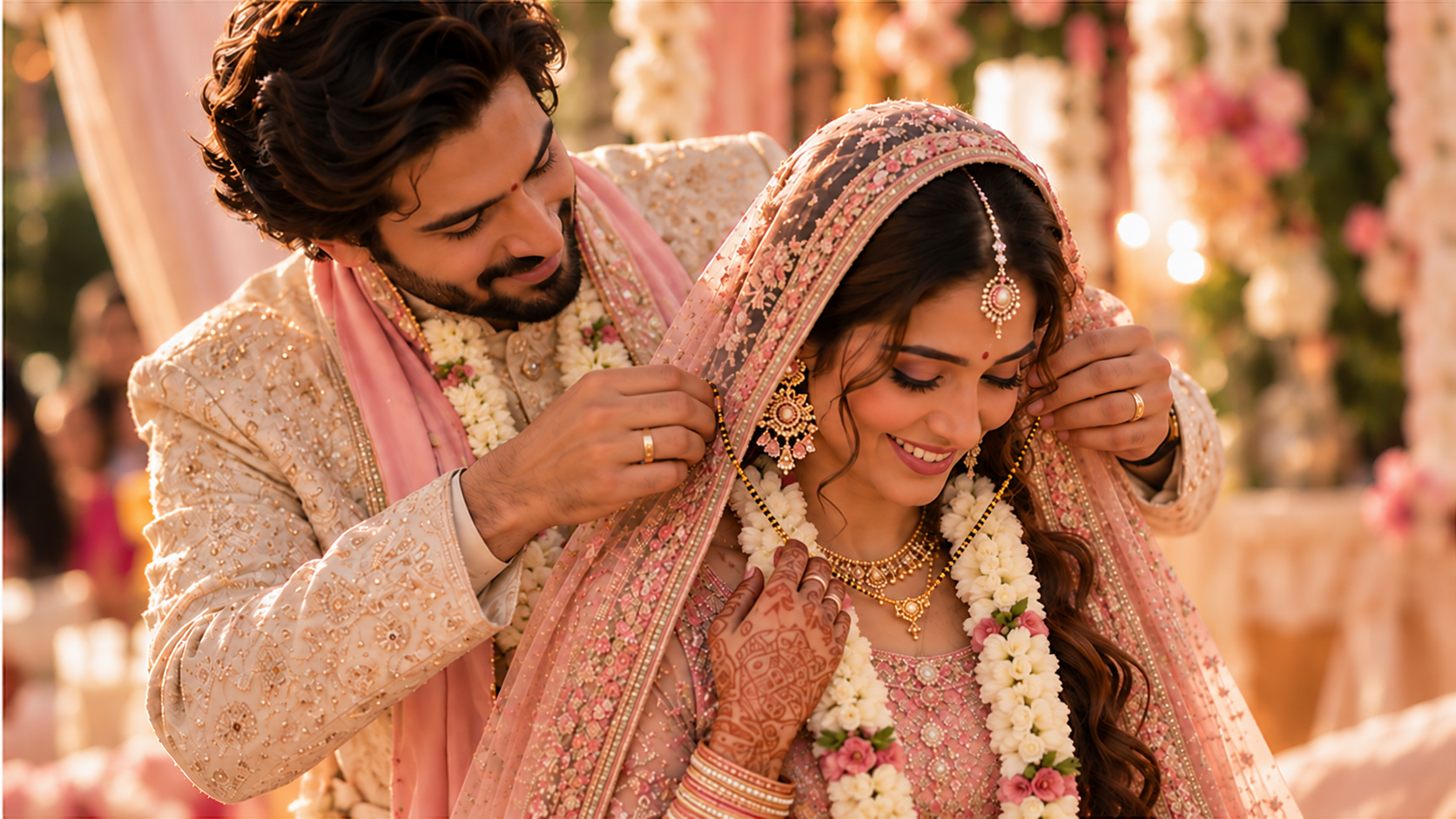
One UK council’s religious education notes, from Haringey, describe a Hindu wedding as a Vedic yajña, a fire sacrifice, in which the sacred fire, Agni, is the primary witness. They list the main ceremonies as Ganesh puja, Agni puja, kanyadaan, tying the mangalsutra, the saat phere and the bride stepping on a stone, and they say the ceremonies vary by region and family tradition. In those notes, saat means seven and phere means circling, and with each of the seven steps the couple say a prayer: for food, for strength, for prosperity and children, for harmony in the family, for the welfare of all beings, for a long life together, and for loyalty and companionship. They add that UK ceremonies are traditionally conducted in Sanskrit and that the priest can give brief translations.
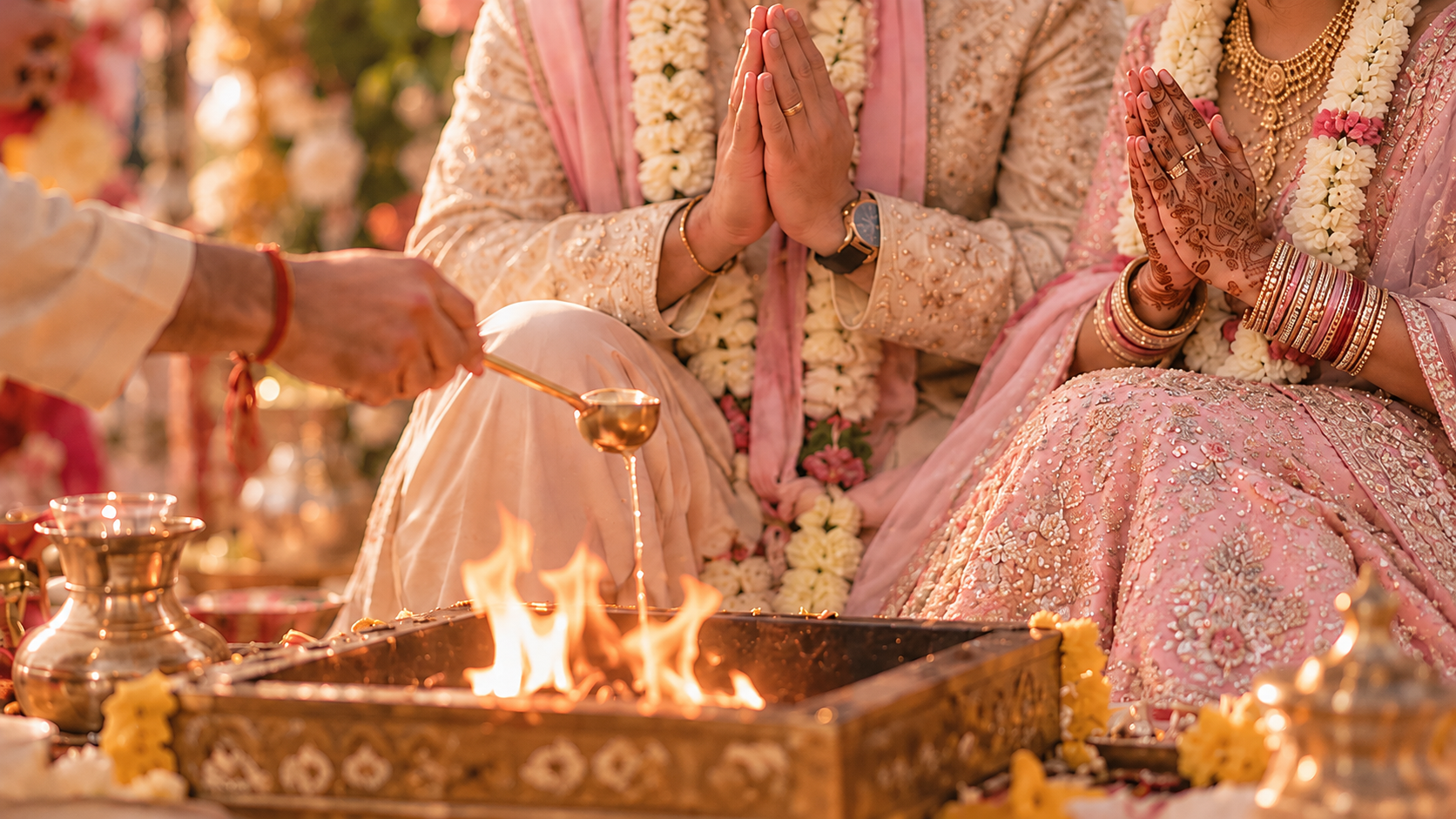
In Punjab, India, a 2004 study of wedding customs records Hindu and Jain couples exchanging vows during seven circuits around the fire (havan). In both of these accounts the pheras circle a real fire, so ask whether the venue allows a flame and leaves the priest, the couple and both families room around it.
What is the baraat?
The baraat is the groom’s procession to the wedding: the same 19th-century dictionary defines barāt (also spelt bārāt) as the procession of the bridegroom to the house of the bride.8 The Haringey notes list the arrival of the marriage party at the bride’s residence, often as a procession, among the pre-wedding ceremonies.
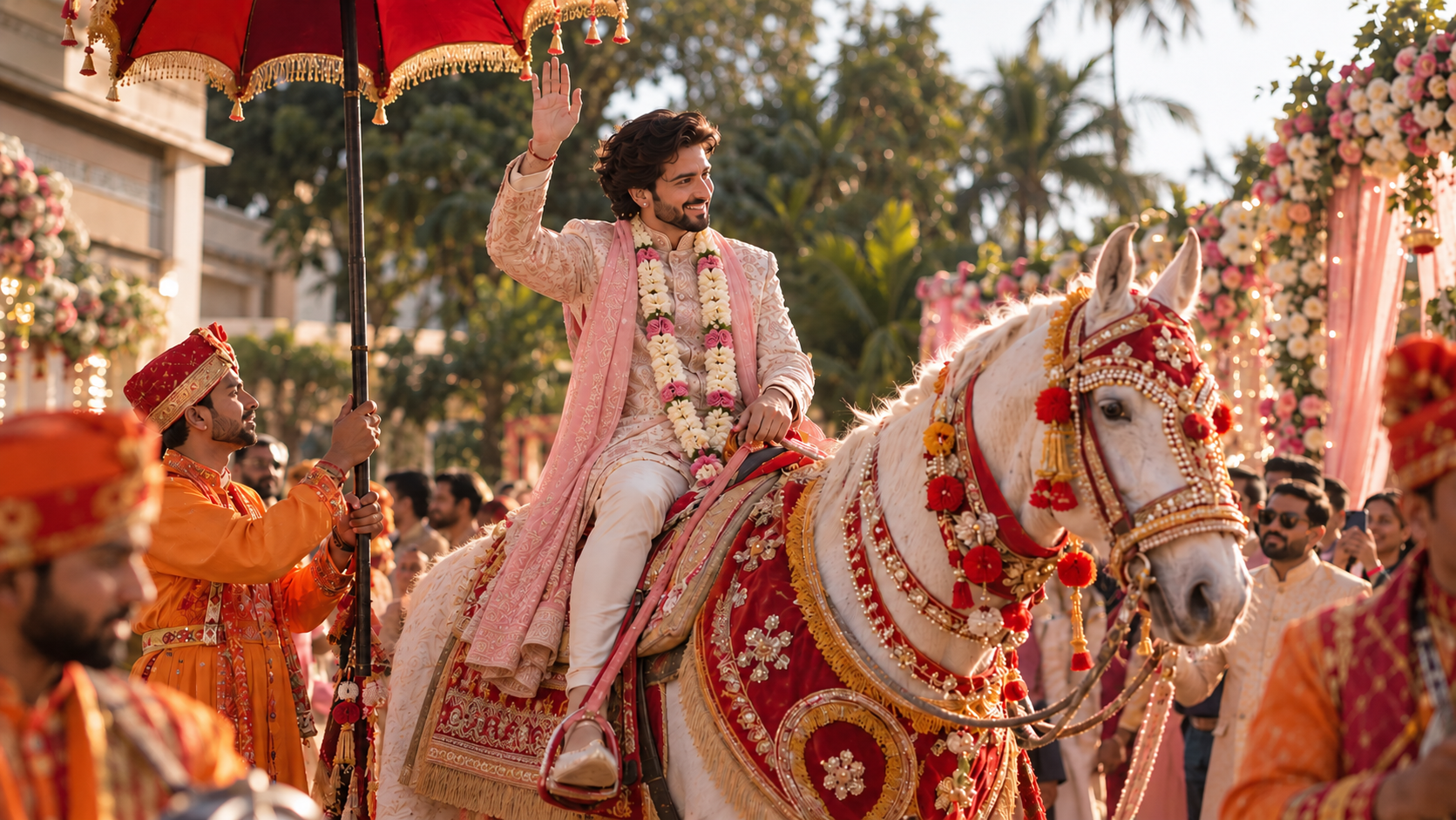
The Punjab study, which records these customs across the region’s religious communities, gives the customs around it more colour. It describes the image of the groom as an armed prince riding a mare to meet his bride, and a departure from his house full of singing and dancing. His sisters tie a sehra over his turban that covers his eyes until the wedding and when he mounts the mare his sister feeds the horse, ties a thread around its neck and holds the reins until the procession has given gifts. A younger brother or cousin, the sarbala, rides with him as escort. When the baraat arrives, the study says, families today often meet with both sides embracing, exchanging gifts and garlands, and sharing a meal before the religious ceremony.
At a UK venue, that arrival becomes a set of practical questions: is there a drive or lawn for the procession, can a horse come on site, and when can the dhol play?
Fire and the mandap: what venues allow
These six venues say on their own pages what they allow for a ceremonial fire or a mandap (checked 16 October 2026).
|
Venue |
What it says about the fire |
|---|---|
|
Froyle Park, near Alton, Hampshire |
Ceremonial fire permitted, terms and conditions apply; indoor and outdoor mandap options, up to 300 guests with a full mandap in its ballroom |
|
Grand Station, Wolverhampton |
The havan for the mandap is allowed inside the building; you bring your own pandit; mandap ceremonies usually run 1 to 2 hours, within a 6-hour booking with the reception |
|
Manor Hill House, Worcestershire |
Indoor and outdoor open flames, such as a havan, allowed in designated areas, with safety and setup agreed with its team |
|
Pylewell Park, Lymington, Hampshire |
Grounds used for outdoor rituals including fire ceremonies, with designated areas for mandaps |
|
Hylands Estate, Chelmsford, Essex |
Its Grand Pavilion has the height and space for a mandap with a havan kund and Ganesh statues; supplier access from 9am |
|
Shree Swaminarayan Temple Willesden, London |
Naked flames are prohibited anywhere on the premises away from the mandap’s havan kund |
“Terms apply” and “designated areas” are where the detail sits, so ask for the written conditions before you pay a deposit.
If the venue doesn’t supply a mandap, specialist suppliers hire them out. Three in and around London publish their terms:
- Mandap For Hire lists a white or gold mandap, 245 by 245 by 215 centimetres, at £780, with a stage at £330, chairs and a ceramic fire tray at £400 and a puja set with a havan kund at £65, all including VAT, delivery, setup and removal; it asks you to allow 2.5 hours for setup, hires Thursday to Sunday, and doesn’t set up in private gardens or under stretch tents.
- Creative Chuppahs lists delivery, setup, breakdown and collection of its in-stock mandaps for local venues from £575, with a £150 deposit, flowers not included.
- Book a Mandap says most installations take 2 to 4 hours, depending on the design and florals, and that it can give your venue its insurance certificates and risk assessments on request.
Check the supplier’s setup time against the venue’s access time before booking. Hylands, for example, gives suppliers access from 9am, so a mandap that takes 2 to 4 hours to install would be ready between about 11am and 1pm; check both times with your priest.
The baraat arrival: horse, dhol and fireworks
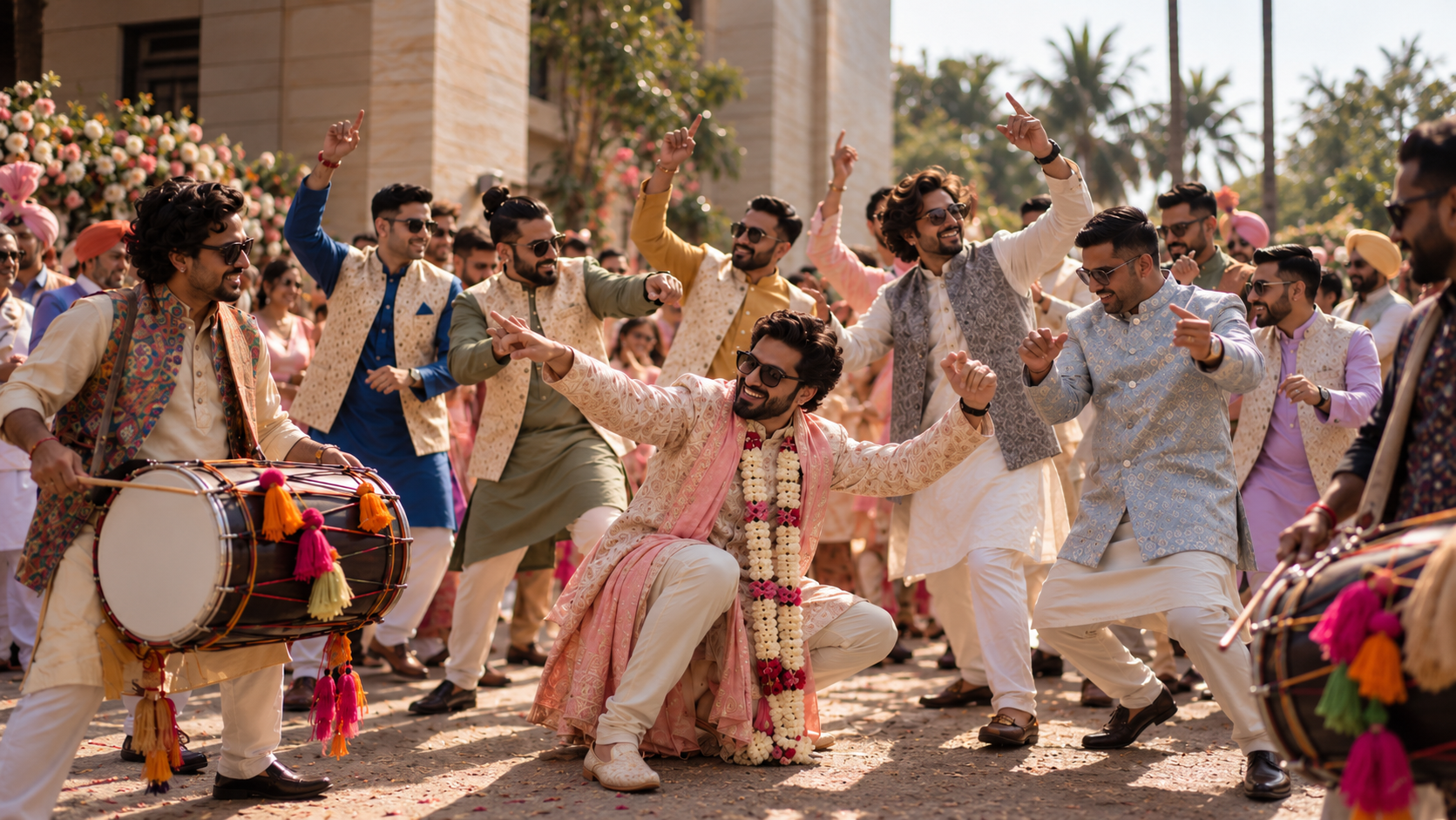
Three of the venues above describe their own baraat arrangements:
- Pylewell Park describes the groom’s baraat arriving with dhol drummers and horses along its drive, and says it can accommodate horses, dhol drummers or processional vehicles on site.
- Hylands Estate says the baraat can process down towards the house in a wedding car or on a horse, and that dhol players are welcome.
- Froyle Park allows dhol drums between 11am and 6pm, for up to 10 minutes, booked through the venue with its one nominated dhol provider; it asks to be told in advance about a groom arriving on horseback and it doesn’t allow fireworks because it sits in a conservation area, though sparklers can be used at the front of the house until 9.30pm.
For the horse, three UK providers publish how they work. My Wedding Entrance says its horse keepers carry full public liability insurance and asks for the venue and the procession start time before quoting. Tim Wood Carriages in London books its ghodi for a one-and-a-half-hour slot and offers a viewing beforehand on request. Heritage Horse Drawn Carriage Masters says its horses, ridden by the groom, are accompanied at all times by one of its handlers.18 None of the three publishes a price.
Two pieces of official guidance bear on the route. The Highway Code says you must not take a horse onto a footpath or pavement. One Kent and Medway event-safety guide notes that horses can be frightened by traffic, noise or pedestrians, and asks for loud noise to be kept to a minimum and for trained handlers to supervise horses throughout an event. With a dhol beside the horse, that’s worth raising with the provider.
In England, a business hiring out horses for riding needs a licence from its local council. Nothing in this guidance settles whether a baraat horse, ridden or led, needs that licence or any other permission for a particular route, so ask the provider which licence and insurance it holds, and ask the council if the procession leaves the venue’s grounds.
If the family would rather skip the horse, Hylands already offers a car arrival, and a walking procession with the dhol is another option to raise with the venue. Check the drive and the dhol window either way.
Public roads and fireworks
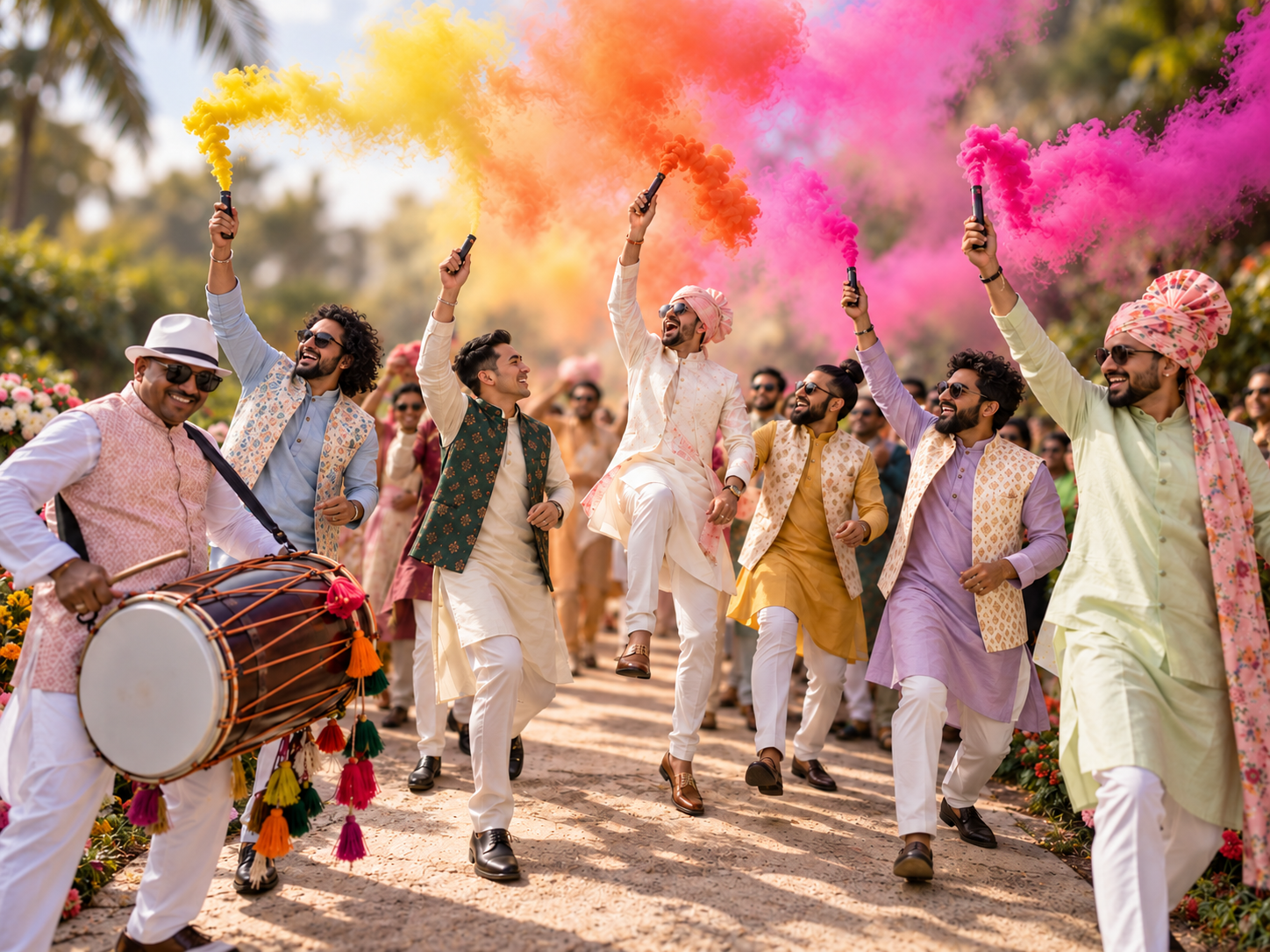
In England and Wales, the Public Order Act 1986 requires written notice to the police for a public procession held for certain purposes, one of which is to mark or commemorate an event, unless it is one commonly or customarily held in that police area, or giving any advance notice isn’t reasonably practicable. The notice gives the date, start time, route and an organiser’s name and address, goes to a police station where the procession starts, and is normally delivered at least 6 clear days ahead. The Act doesn’t mention weddings and nothing we found says whether a baraat is covered, so if your route uses a public road, ask the local police early.
GOV.UK guidance for display organisers says Category F2, F3 and F4 fireworks may only be used between 7am and 11pm, except on Bonfire Night, when the cut-off is midnight, and on Diwali, New Year and Chinese New Year, when it is 1am. The same guidance lists sparklers among its Category F1 examples, so check the category on the packet and go by the venue’s own rule, as at Froyle Park. It also says a display should be on private land with the landowner’s permission, and that fireworks can’t be set off in a public place or street, or within 50 feet of a highway, so at a wedding they belong on the venue’s land, if the venue allows them; Froyle Park allows only sparklers.
Will the ceremony be a legal marriage?
The rules on police notice and on legal marriage in this guide apply in England and Wales. In Scotland, a registrar or an authorised celebrant can carry out a marriage, and in Northern Ireland, a religious marriage can only be performed by a minister or a registered officiant authorised by the Registrar General, so if you’re marrying in either, start with your local registrar, and ask the council and the police about any procession on a public road or any fireworks.
In England and Wales, a religious wedding can take place at any registered religious building, and an authorised person, such as a religious minister, must attend and sign the marriage schedule or document. If the venue has no authorised person, you book a registrar, which costs £114.50 at a registered religious building; at a register office, the registrar costs £62. GOV.UK publishes a list of the places of worship registered for marriages under the Marriage Act.
Temples set their own terms too. Shree Prajapati Association in Leicester says its site is licensed for the registration of marriages and can offer it alongside the religious ceremony, with a Hindu mandir on site for up to 300 people. Shree Swaminarayan Temple Willesden hosts wedding ceremonies where both bride and groom are part of the Hindu community. Bhaktivedanta Manor lists its wedding ceremony as performed at the temple or at home.
A hotel, country house or hall that isn’t a registered religious building can host a civil ceremony only if the council has approved it, and a civil ceremony must not include anything religious. So if your pheras are at one of these venues, plan the legal marriage as a separate civil ceremony, there or at a register office.
Planning order
- Agree the ceremony with your priest: which rituals, roughly how long, and when it should start.
- Shortlist venues that allow a havan and fit a mandap, and ask for the written fire terms.
- Decide the baraat: horse, car or on foot; dhol; any fireworks; on site or on a public road.
- Book the mandap and the horse or dhol, sending each supplier the venue’s rules and access times.
- Sort the legal side: registered building and authorised person, or a registrar, or a separate civil ceremony.
- Set the guest list in Wedvisa’s guest list manager, which records each guest’s side, RSVP and dietary needs.
- Cost it in the budget calculator, where you set a total and allocate it by category.
- Build the day hour by hour in the day timeline: mandap setup, baraat, pheras, lunch. The planning timeline works out booking deadlines from your wedding date.
Questions to ask your venue
The fire and the mandap - Is a havan allowed indoors, outdoors, or both, and where exactly? - What are the written conditions: fire tray, distance from walls, smoke alarms, who supervises? - What is the ceiling height, and will our mandap fit? - From what time can the mandap supplier get in, and when must it be cleared? - Do you need the supplier’s insurance certificate and risk assessment?
The baraat - Is there a drive or lawn for the procession, and how long is it? - Can a horse come on site, and do you need the provider’s details first? - When and for how long can a dhol play, and must we use your provider? - Are fireworks or sparklers allowed, and until what time? - Does the procession stay on your land, or will it use a public road?
The paperwork - Is the building registered for marriages, and do you have an authorised person? - If not, will a registrar attend, or do we need a separate civil ceremony? - Are there rules on who can marry here, or on outside priests and caterers?