How to Choose a Wedding Florist - Guide for UK
How to choose a wedding florist in the UK — realistic costs, seasonal planning, questions to ask, and when to book.
Flowers are one of the easiest wedding budgets to get wrong in both directions. Some couples underestimate what a "simple" arrangement actually costs once delivery, setup and installations are factored in. Others get seduced by a Pinterest board full of out-of-season peonies and blow a disproportionate chunk of their budget on blooms that were never going to be affordable in November.
Choosing a wedding florist is also harder to judge from the outside than it looks. A single stunning bouquet photo tells you very little about whether someone can execute a full ceremony arch, reception centrepieces and buttonholes to the same standard, on one morning, without a rehearsal. Add prices that range from a few hundred pounds to well over £8,000 depending on scale, and it's easy to either overspend on the wrong florist or underspend on someone who isn't set up for what you actually need.
This guide covers what wedding flowers really cost in the UK, how to control that spend without sacrificing the look you want, the questions worth asking before you book, and the timing that keeps your options open rather than narrowing them.
What Wedding Flowers Actually Cost in the UK
Florist pricing has the widest spread of any wedding supplier category, largely because "wedding flowers" can mean a small bridal bouquet or a full marquee installation. The average UK wedding florist cost is around £1,187, typically falling between £1,000 and £1,500. Kindred, citing Bridebook data, gives a similar average of around £1,130, but notes that simple arrangements can start from roughly £500, while luxury installations run £3,000–£10,000 or more.
Breaking the range down further by scale:
- Simple or small arrangements: £300–£700
- Traditional full package (bouquets, buttonholes, centrepieces): £800–£1,500
- Large installations (arches, hanging florals, statement pieces): £2,000+
At the top end, Rebecca Hobbs Floral Design notes that full-service bespoke florals often exceed a £1,000–£1,500 baseline, with large-scale or marquee installations exceeding £8,000–£10,000. Chirpee and the British Flower Market recommend budgeting £1,500–£4,000 for a professional package in 2026, with floral arches or structures alone costing £600–£3,000+.
A useful benchmark: if flowers are going to be a defining visual element of your day — a "floral-first" wedding — industry guidance suggests allocating 15–20% of your total wedding budget to florals. For most couples, where flowers are one element among several, a figure closer to 5–7% of total spend is more typical.
How to Control Cost Without Cutting Corners
Two strategies come up repeatedly in florist guidance, and both protect the look of your wedding rather than compromising it:
Choose seasonal, locally available flowers. This is the single most commonly cited way to control cost without reducing visual impact. Certain blooms are markedly more expensive out of season — a spring wedding built around dahlias, or a winter wedding demanding peonies, will cost noticeably more than working with what's naturally in season around your date. Ask your florist what's in season early, and let that guide the palette rather than fighting against it.
Consider a "collection" arrangement. Rather than paying for delivery and setup, collecting flowers yourself the day before can meaningfully reduce cost. It's not right for every wedding — a large installation still needs professional setup — but for bouquets, buttonholes and simpler arrangements, it's a straightforward saving.
How to Judge a Florist's Work Properly
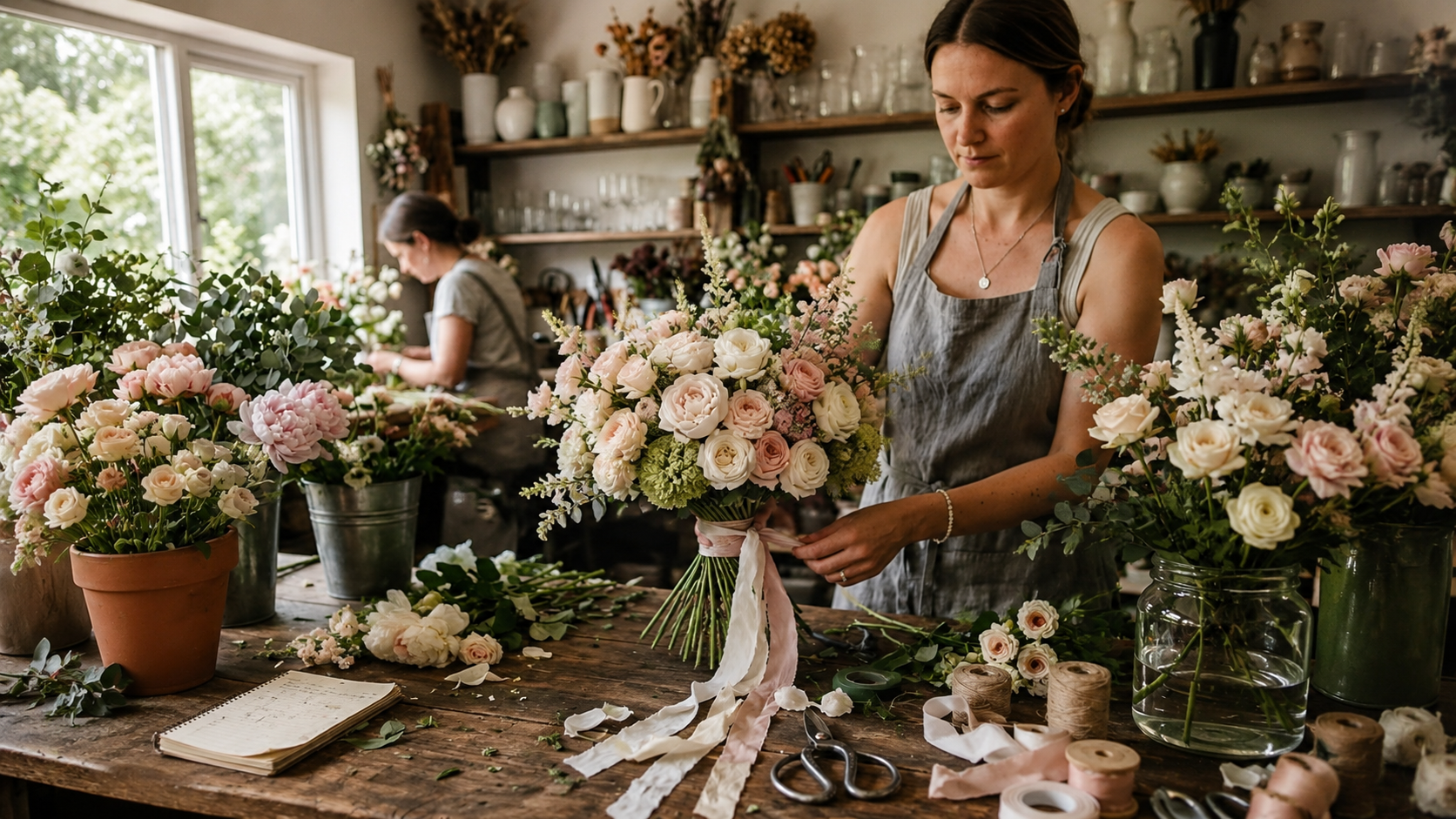
The most common mistake couples make is judging a florist entirely on single bouquet photos, which is roughly equivalent to judging a caterer on one plated starter. Ask instead to see photos of full installations from real weddings — not just isolated shots of the prettiest single piece (Once in a Lifetime Photography, on the same principle applied across wedding suppliers generally).
Look specifically at:
- Whether the florist has handled the scale of installation you're planning — arches and aisle displays are a different skill from bouquets.
- Consistency across a full venue setup, not just a single hero shot.
- How arrangements have translated across different seasons, if you can find comparable examples to your own wedding date.
- Whether they specialise in weddings specifically, rather than doing them occasionally alongside a general florist business.
Questions to Ask Before You Book
- Do you specialise in weddings, and can I see photos of full installations, not just individual bouquets?
- What's in season around my wedding date, and how would that shape the palette and design?
- Do you offer a consultation or mock-up before the day, so I can see the design in advance?
- Is setup, delivery and collection — including any hired vases or arches — included in the quote?
- Can the design scale up or down if my guest numbers or budget change?
- What's your policy on last-minute substitutions if a specific flower isn't available closer to the date?
- Do you handle structural installations like arches or hanging florals, and do you need specific access or rigging permissions at my venue?
- What's the payment schedule and cancellation policy?
The venue-access question is easy to overlook but genuinely important — some venues have restrictions on rigging, hanging installations, or naked flame near florals, and it's better to surface that during the florist consultation than to discover it a week before the wedding.
What Belongs in the Contract
Before paying a deposit, get the following confirmed in writing rather than agreed verbally:
- The full scope of what's included — bouquets, buttonholes, centrepieces, ceremony and reception installations — itemised rather than bundled vaguely.
- Whether setup, delivery and collection of hired items (vases, arches, stands) are included or charged separately.
- The payment schedule, including deposit amount and balance due date.
- The substitution policy if a specific flower becomes unavailable — this is common enough that a florist should have a clear answer, not an improvised one.
- Cancellation and refund terms, for both parties.
If a florist is vague about any of this, or reluctant to put a full breakdown in writing before taking a deposit, treat it as a reason to keep comparing rather than a minor administrative gap.
Red Flags When Choosing a Florist
- Only single bouquet or centrepiece photos, never full setups. It's the florist equivalent of a photographer only showing highlight reels.
- No mention of seasonality when discussing your palette. A florist who doesn't raise what's in season around your date either hasn't thought it through or isn't planning to adjust pricing accordingly — both are worth questioning.
- Vague quotes with no itemised breakdown. "Around £1,200 for everything" without a breakdown makes it hard to catch scope creep later.
- No clear policy on substitutions. Flower availability genuinely changes closer to the date; a florist without a plan for this is more likely to improvise badly under pressure.
- Unwillingness to confirm setup and collection logistics, particularly for larger installations that need specific access or timing at the venue.
When to Book Your Wedding Florist
Most guidance recommends booking a florist 9 months to a year before the wedding — early enough that the florist can design something genuinely bespoke to your day's mood and colour palette, rather than working from a generic template under time pressure.
Popular florists — particularly those who also act as a venue's "in-house" dresser — can book up well over a year in advance in some areas. Florists are typically booked after the "big three" — venue, photographer, caterer — but before finer details like hair and makeup trials are locked in.
The UK wedding market overall is heavily front-loaded, with in-demand suppliers filling their calendars 12–18 months ahead for peak dates — May to September, and bank holiday weekends in particular. Most florists are also solo operators or small teams who can only take on a limited number of weddings each year, which is a strong reason to book promptly once you've found the right fit rather than continuing to compare indefinitely.
If you're planning an off-peak or midweek wedding, you'll have considerably more flexibility — quality florists may still be available with just a few months' notice outside the May–September peak.
The Takeaway
Choosing a wedding florist comes down to matching ambition to budget honestly, planning around what's actually in season rather than fighting it, and judging candidates on full installations rather than single pretty photos. Get the scope and logistics confirmed in writing, book within the 9–12 month window most florists need for bespoke work, and you'll end up with flowers that suit both your wedding and your budget — not just your Pinterest board.
Frequently Asked Questions
How much do wedding flowers cost in the UK?
Most couples spend £1,000–£1,500, with a national average around £1,130–£1,187. Simple arrangements can start from around £300–£500, while large-scale installations with arches or structural florals can run £3,000–£10,000 or more.
How far in advance should I book a wedding florist?
Book 9 months to a year ahead for most weddings, and closer to a year out if you want a specific in-demand florist, especially one who also works regularly at your venue.
What's the best way to keep flower costs down?
Choose flowers that are in season around your wedding date rather than insisting on specific out-of-season varieties, and consider a "collection" arrangement where you collect the flowers yourself the day before rather than paying for delivery and setup.
Should florals be a big or small percentage of my wedding budget?
For most couples, florals sit around 5–7% of total spend. If flowers are a defining visual feature of your wedding — a "floral-first" design — budgeting 15–20% of your total spend is a more realistic guide.
What should I check before booking a florist?
Ask to see photos of full wedding installations, not just individual bouquets, confirm whether setup and collection are included in the quote, and get the substitution policy and payment schedule agreed in writing before paying a deposit.
Can I change my flower choices closer to the wedding?
Most florists build in some flexibility, but availability changes seasonally and can shift closer to the date. Ask about their substitution policy upfront so you know what happens if a specific flower isn't available when the time comes.
How can I tell if a florist isn't right for my wedding?
Warning signs include only showing single bouquet photos rather than full setups, vague or unitemised quotes, no mention of seasonality, and no clear plan for substitutions or venue access requirements for larger installations.