How to Choose a Wedding Photographer
How to choose a wedding photographer in the UK — costs, portfolio red flags, questions to ask, contracts, and when to book.
You'll forget most of the small details from your wedding day within a few years. The photographs are what's left. That's exactly why choosing a wedding photographer feels higher-stakes than almost any other supplier decision — there's no reshoot, no second attempt, and no way to know for certain how someone will perform under pressure until the day is already happening.
It's also a category where marketing is unusually good at masking quality. A polished Instagram grid of twelve perfect shots tells you almost nothing about whether someone can deliver consistently across eight hours, in bad light, with a room full of relatives who won't stay still. Add a price range that swings from £500 to £4,000+ depending on the source, and it's easy to either overpay for a name or underpay for someone who isn't actually equipped for the day you're planning.
This guide walks through the whole decision: what photography actually costs, how to judge a portfolio properly, the questions worth asking before you book, and the details that belong in your contract rather than in a friendly conversation you'll struggle to prove later.
What Wedding Photography Actually Costs in the UK
Prices vary by source, region and style, so it's worth looking at a spread rather than anchoring on one number. Bridebook's 2026 UK Wedding Report puts the national average at £1,484, typically ranging £500–£2,500, with London and the South East running £200–£500 higher. Other sources sit in similar territory: Jordan Fox Photography cites £1,500–£2,500 for full-day coverage, Emma Lowe Photography £1,400–£1,800, and the Institute of Photographers £1,600–£3,000.
A few sources suggest realistic spend runs higher than the headline averages. Tov Studio Photo found the realistic modal spend for an 80–150 guest full-day wedding sits at £2,200–£2,800, even though survey averages land closer to £1,800–£2,200.
Worth knowing: pricing has been remarkably stable. Alex Buckland Photography tracked the national average across three years — £1,464 in 2024, £1,482 in 2025, £1,484 in 2026 — essentially flat. That average also represents roughly 10% of a typical £20,604 total wedding budget, which is a reasonable benchmark if you're deciding how much of your overall spend photography should take.
Extras to budget for:
- A professional printed album typically adds £250–£700 on top of the base package.
- A second shooter is generally worth the extra cost for weddings of 80+ guests, or if you want both partners' preparations photographed simultaneously.
- Tipping isn't customary in the UK, though £20–£50 as a discretionary thank-you is common practice.
Work Out Your Style Before You Start Browsing
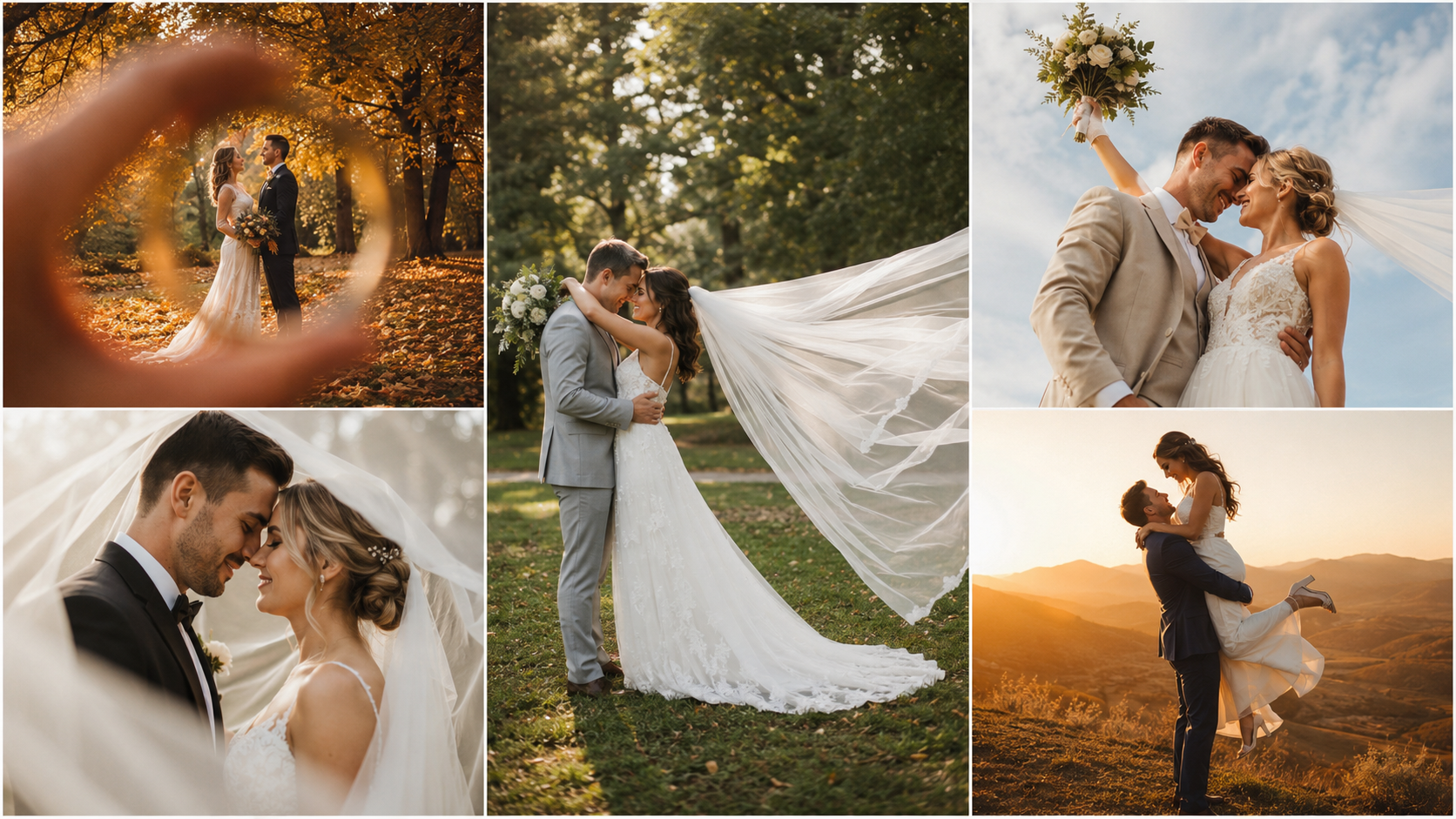
"Wedding photographer" covers several genuinely different disciplines, and the biggest mismatches happen when couples book on price or availability without first deciding which style they actually want:
- Documentary/reportage — candid, unposed, capturing the day as it unfolds.
- Traditional/posed — structured group shots and formal portraits, heavier on direction.
- Fine art — deliberate composition and lighting, often with a distinct editing style.
- Hybrid — a blend of documentary coverage with a set of posed portraits, which is what most UK couples actually choose.
Search by style rather than by name when you're browsing — "documentary wedding photography UK" surfaces very different results to "traditional wedding portraits UK," and it's a faster way to build a shortlist that actually matches your taste than scrolling directories at random.
How to Read a Portfolio Properly
This is where most couples make their first mistake: judging a photographer entirely on a curated highlight reel. Every photographer, regardless of skill, can produce twelve outstanding images. What you actually need to know is whether they deliver consistent quality across an entire day.
Ask to see full galleries from at least two or three real weddings, not just the best shots pulled from many different events. Look specifically at:
- Consistency across lighting conditions — indoor speeches, outdoor ceremonies, evening dancing.
- How candid, unposed moments are handled, not just the posed portraits.
- Whether large group photos are well-composed, since these are notoriously difficult to shoot well.
- Editing style across the whole gallery, not just a handful of standout frames.
Expect roughly 50–100 edited images per hour of coverage, meaning a full day typically produces 600 or more final photos. If a "full gallery" you're shown looks thin compared to that, ask why.
Questions to Ask Before You Book
Go into every consultation with a list — it's easy to get swept up in a friendly conversation and forget to ask the practical questions that actually protect you later.
- What's your photography style, and can I see full galleries rather than curated highlights?
- Will you personally shoot our wedding, or is this a team/associate booking?
- Do you have a second shooter, and would you recommend one for our guest count or venue?
- Have you shot at our venue before, and are you willing to do a pre-wedding site visit?
- What's your backup plan if you're ill or unavailable on the day — do you have a professional network to call on?
- Do you carry public liability and equipment insurance? Some venues require proof of this before granting access.
- What's included exactly — album, USB or digital files, printing rights, an engagement shoot?
- What's your turnaround time for edited images?
- Do you have a wet-weather plan for outdoor ceremonies, given how unpredictable UK weather can be?
The insurance and backup-plan questions are easy to skip because they feel like worst-case scenarios you'd rather not think about. They're also the two that matter most if something does go wrong.
What Belongs in the Contract
A friendly consultation is not a substitute for a written agreement. Before any deposit changes hands, get the following confirmed in writing:
- The deposit amount and the balance due date.
- Exactly what's included — hours of coverage, number of shooters, album, digital files, printing rights.
- The cancellation and refund policy, both for you and for scenarios where the photographer can't perform.
- What happens if the photographer is ill or unavailable — specifically, who their backup is and whether that's named in the contract or left vague.
- Turnaround time for edited galleries, with a specific timeframe rather than "a few weeks."
If a photographer is reluctant to put any of this in writing, or pushes for a deposit before you've seen the actual contract terms, treat that as a warning sign rather than pressing ahead anyway.
Red Flags When Choosing a Wedding Photographer
- Only showing highlight reels, never full galleries. This is the single most common way a mismatch in quality gets discovered too late.
- Vagueness about who's actually shooting your wedding. If a studio dodges the question of personal attendance, assume you could get whichever associate is free that weekend.
- No insurance, or an evasive answer when you ask.
- Pressure to pay a deposit before you've reviewed the contract. A legitimate photographer expects you to read the terms first.
- Pricing significantly below every comparable quote you've received, with no clear explanation. It can mean inexperience, no insurance, or a photographer overbooking multiple weddings on the same date.
- Poor communication before you've even booked. How someone responds to enquiries — speed, clarity, tone — is a fair preview of how they'll handle a stressful wedding day.
When to Book Your Wedding Photographer
Book earlier than feels necessary. 9–18 months in advance is standard for May–September dates, and photographers in high demand are often booked 12 months to 2.5 years ahead.
Book your photographer alongside — or immediately after — your venue, not as an afterthought once the venue is locked in. A common and costly mistake is securing the venue first, only to discover the photographer you actually wanted is already booked for that date.
If you're under six months out, don't assume it's too late — availability is limited but not impossible, and being flexible on the day of the week (a Friday or midweek wedding, for instance) can still secure a photographer who'd otherwise be fully booked for a Saturday. The wider UK wedding market is heavily front-loaded, with the most in-demand suppliers filling their calendars 12–18 months ahead for peak dates — May to September, New Year's Eve, and bank holiday weekends.
The Takeaway
Choosing a wedding photographer comes down to three things done properly: work out your style before you browse, judge candidates on full galleries rather than highlight reels, and get every commitment — coverage hours, backup plan, cancellation terms — in writing before you pay a deposit. Do that, and you're not gambling on a stranger's Instagram feed; you're making an informed decision about the one supplier whose work you'll actually still be looking at in twenty years.
Frequently Asked Questions
How much does a wedding photographer cost in the UK?
Expect to pay roughly £1,400–£2,500 for full-day coverage, with a national average around £1,484. Costs run higher in London and the South East, and can exceed £3,000–£4,000 for in-demand photographers or larger packages including albums and second shooters.
How far in advance should I book a wedding photographer?
Book 9–18 months ahead for a standard date, and up to 2.5 years ahead if you want a photographer who's in particularly high demand. Book at the same time as your venue, since popular photographers are often booked out for peak Saturdays well before couples finish choosing a venue.
Do I need a second photographer or shooter?
It's generally worth it for weddings of 80 or more guests, or if you want both partners' getting-ready photos captured at the same time. For smaller, more intimate weddings, a single photographer is usually sufficient.
What should be included in a wedding photography package?
At minimum, confirm hours of coverage, number of photographers, whether digital files and printing rights are included, and whether an album is part of the package or an add-on (typically £250–£700 extra). Get all of this specified in writing before booking.
How can I tell if a wedding photographer isn't right for me?
Reluctance to show full wedding galleries rather than highlights, vagueness about who's actually shooting on the day, no insurance, and pressure to book before you've seen a written contract are all reasons to keep looking.
How long does it take to receive wedding photos?
Most UK photographers deliver edited galleries within 6–10 weeks. If a photographer can't give you a specific timeframe, ask why — and get it written into the contract rather than left as a verbal estimate.
Is it normal to tip a wedding photographer in the UK?
No, tipping isn't customary practice for UK wedding photographers. That said, a discretionary £20–£50 thank-you is common if you're particularly pleased with the service.