Indian Wedding Mehndi Night in the UK: A Planning Guide for Hindu and Sikh Families
If your wedding week includes a henna evening but nobody has fixed the date or found an artist, those two decisions come first. This planning guide is for Hindu and Sikh families in the UK who hold a mehndi night, with Punjabi detail where it’s documented. It covers the meaning, the date, artist prices, guest henna and how to keep “black henna” off everyone’s skin; Muslim mehndi nights are outside its scope.
The short answer
Hold the mehndi a day or two before the wedding: natural henna darkens over 24 to 48 hours after it goes on, one London artist says. The bride’s artist is worth booking first and early, since her session runs longest and everything else fits around it. After that come the guest henna count, the room and food, and the paste question for every artist.
What does mehndi mean?
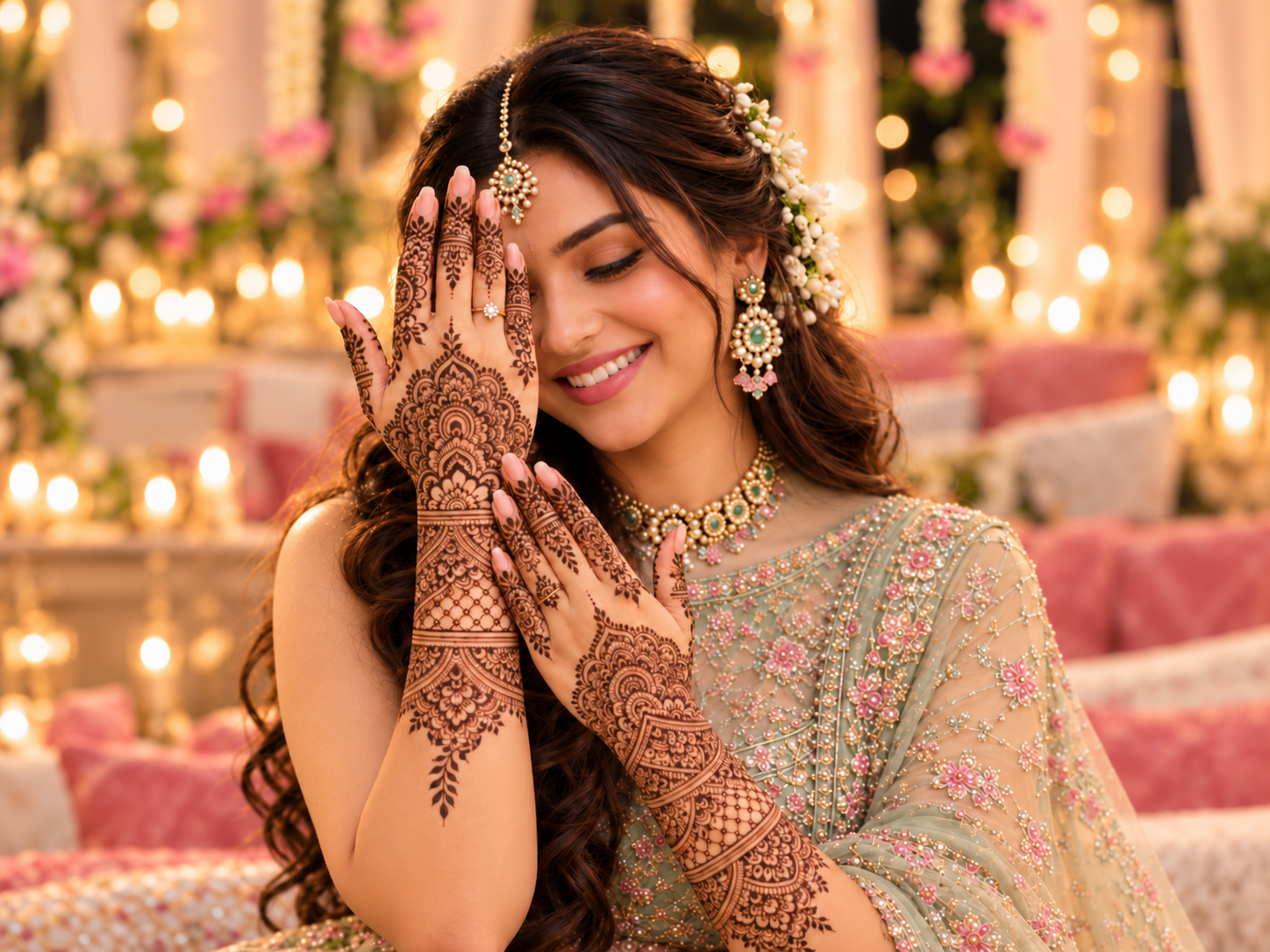
Mehndi means both the henna design painted on the skin and the occasion at which the designs are put on. In 19th-century Hindi and Urdu, meṅhdī named the henna plant, whose powdered leaves made a paste women used to dye their hands and feet reddish orange, and also the marriage feast held when the bride’s hands and feet were stained. The English word comes from Hindi (or a related Indo-Aryan form) and goes back to the Sanskrit mendhīka-, the henna plant. Henna is a symbol of joy in many religions, Hinduism and Sikhism among them.
In Punjab
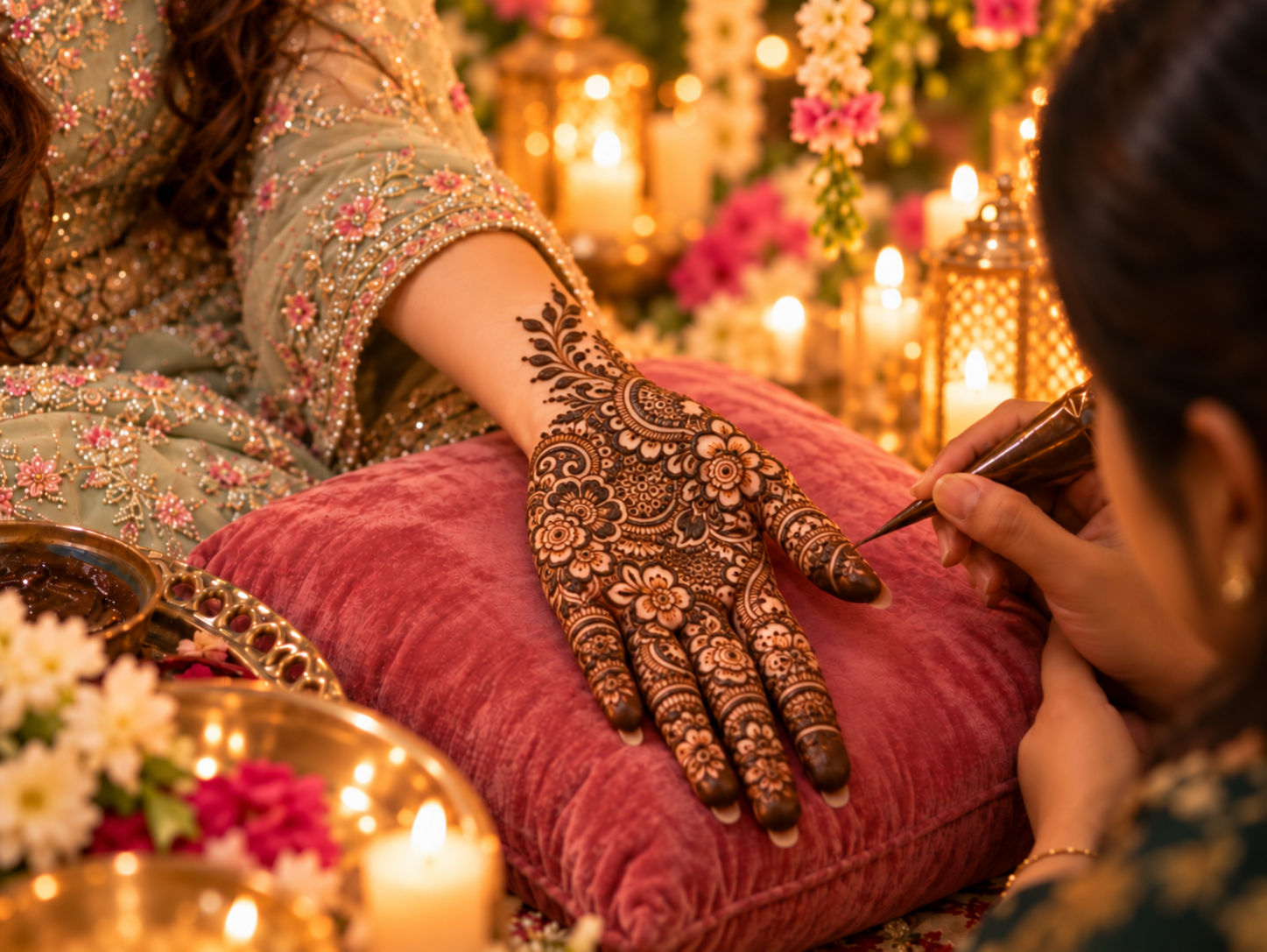
In Punjab, India, the bride and her unmarried friends may paint henna designs on their hands and feet on the evening before the wedding or invite professional henna painters to do it. The groom sometimes gets a simpler design, or just a small mark to show he is getting married. One saying links very dark mehndi on the bride’s hand to the affection of her mother-in-law to be, so women try for the darkest colour they can.
A few days before the wedding, women on both sides may gather in the evenings to sing folk songs tied to the mehndi, called suhag at the bride’s house and ghorian at the groom’s. The Encyclopaedia of Sikhism describes these songs as mostly from Punjabi folklore, sung to a dholak or drum,6 and treats such pre-wedding customs as general Punjabi practice, outside the Sikh marriage itself. How these ceremonies are performed also varies from place to place within Punjab.
If your family is Gujarati, or from another region, ask your elders which customs belong on your evening before you brief the artist. For the wedding ceremonies themselves, see our guide Planning an Indian Wedding in the UK: The Complete Guide to Hindu and Sikh Ceremonies.
When should the mehndi be, and whose is it?
For a Saturday wedding, a Thursday or Friday evening fits the timings below. MehndiMouj in Ilford advises bridal henna usually one to two days before the main event and Henna Art by Masu in Leicester says its stain deepens from orange to brown over two days. It’s worth agreeing the evening with your artist before the invitations go out.
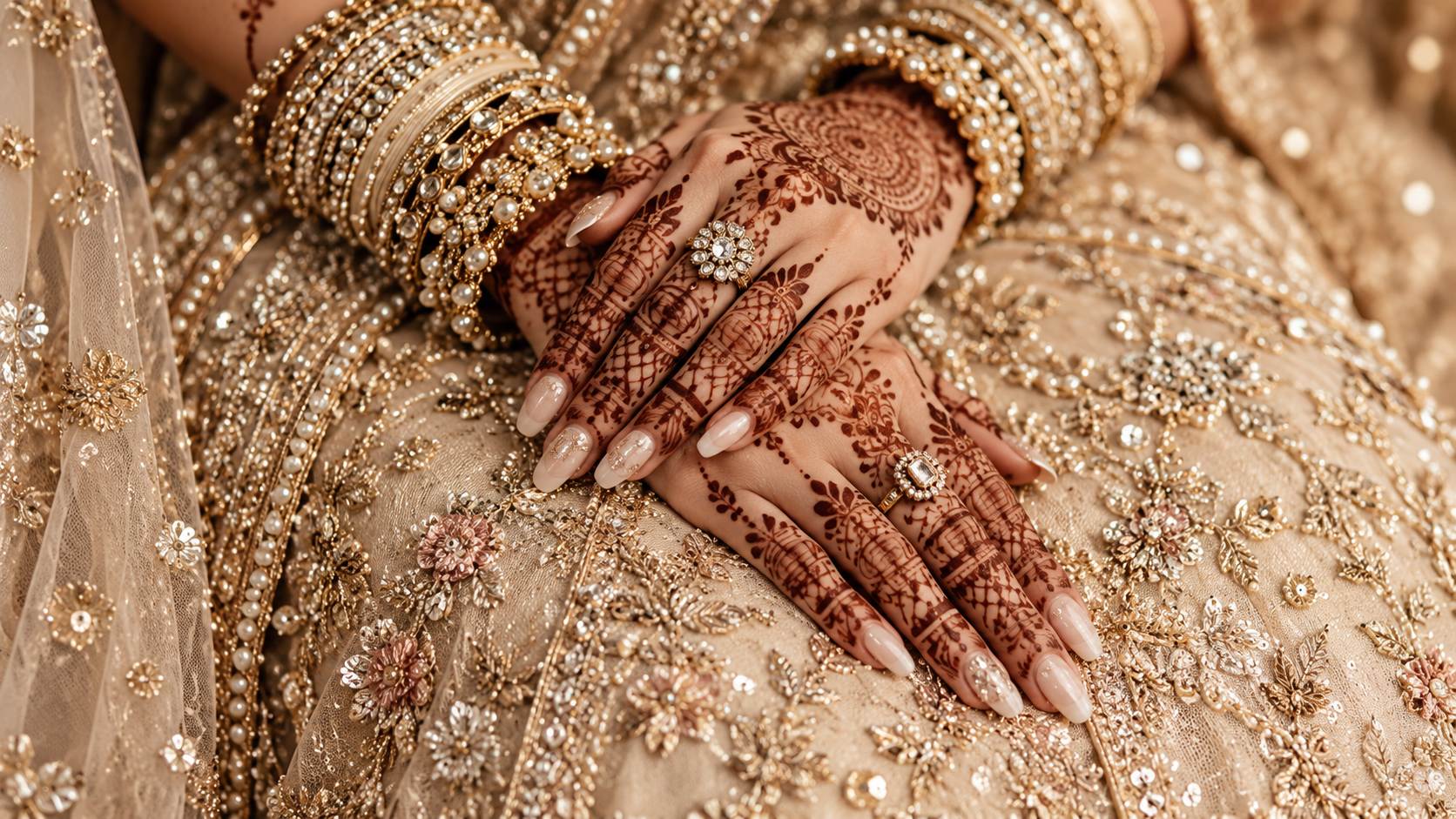
Whose night it is comes next: one mehndi for both sides, or a separate evening for each family. One north-west London venue, The Amber Suite at The Hive, offers to host the bride’s and the groom’s mehndi in one location, with a choice of separate rooms.8 Even if the groom only has a small mark, his side still needs a guest count and a slot with the artist.
How does the evening run?
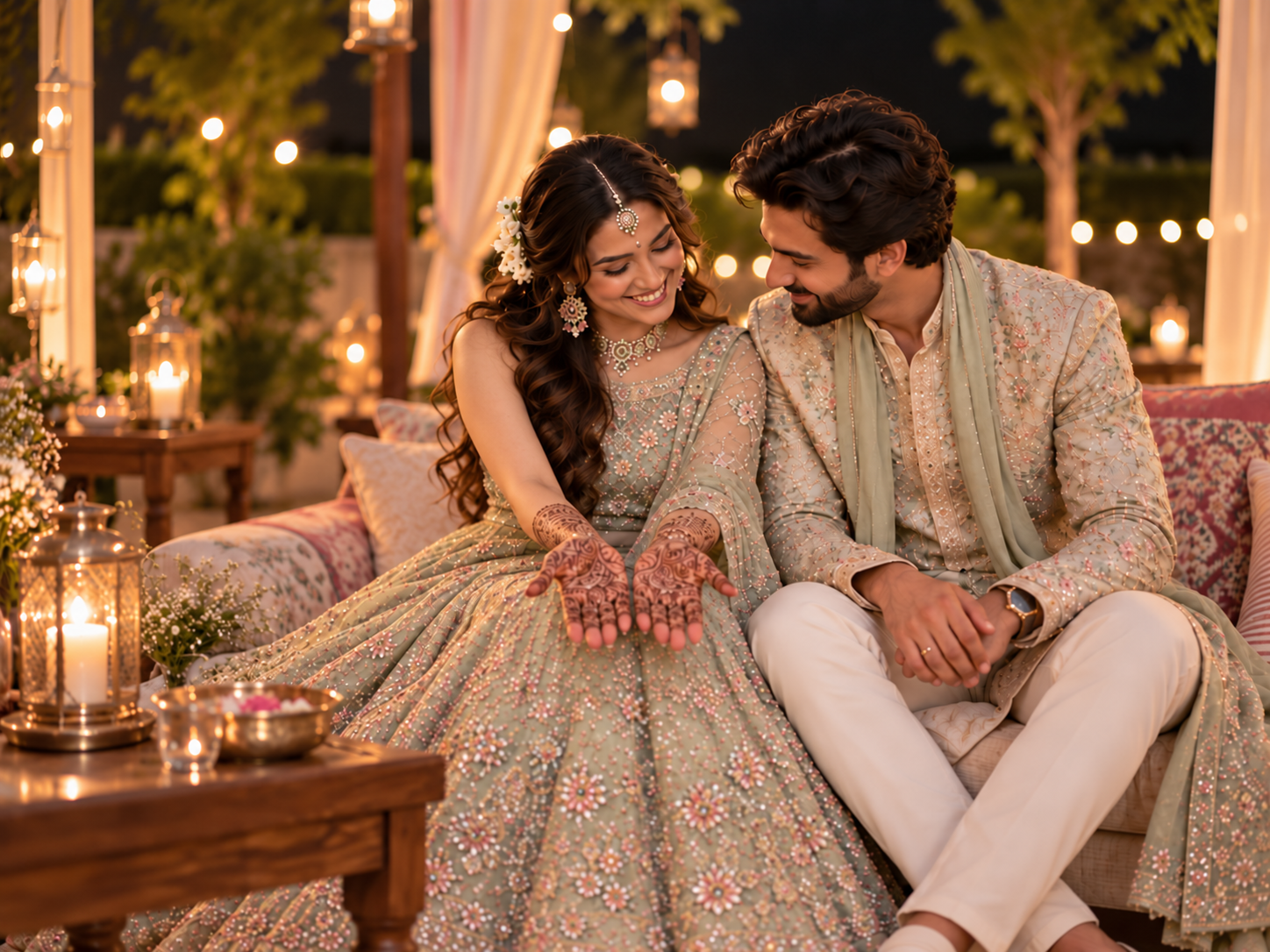
The bride’s henna, if it happens on the night, starts first and runs longest, so seat her before most guests arrive. Guest henna can run alongside the food as a queue. If the elders want songs, an early slot keeps them ahead of any dancing, and a finish time agreed with the venue tells the artist when the queue closes.
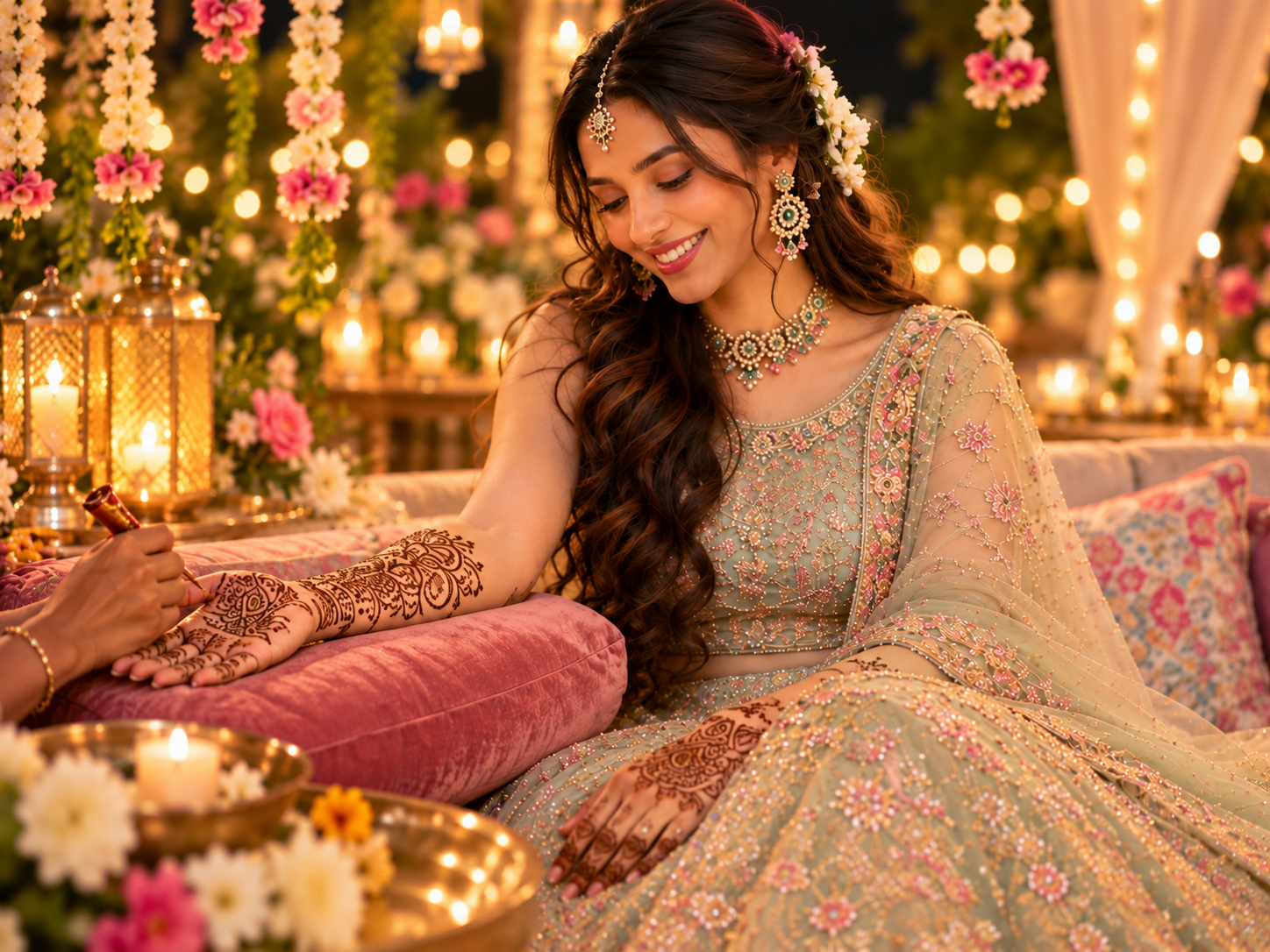
How do you book the bride’s artist?
Read each price with its coverage column. These are the artists’ own listed starting prices and coverage when checked on 14 October 2026; coverage and detail set the final quote.
|
Artist and base |
Bridal henna, as listed |
Covers, as listed |
Time, as listed |
|---|---|---|---|
|
RuShee, Liverpool |
Simple £100–180; medium £200–300; heavy from £350 |
Simple: both hands to the wrist and both feet to the ankle; heavy: full arms and feet to mid-leg |
3–4 hours; 4–5 hours; 6 hours or more |
|
Kajal Karunakar, Manchester |
From £250; from £350; from £450 |
Both hands, to mid-arm; to 3 inches below the elbow; to the elbow |
At least 4, 6 and 8 hours |
|
Henna Art by Masu, Leicester |
Bridal from £50; semi-bridal from £307 |
Bridal: hands, feet and forearms |
5–6 hours for full bridal |
|
Henna At Home, Hayes |
Bridal from £200; Bridal Signature £365 with a trial |
Not listed on the page checked |
Not listed |
RuShee’s simple tier includes both feet to the ankle, while Kajal Karunakar’s packages list both hands and mention no feet. MehndiMouj calls two to three months ahead ideal and Henna Art by Masu calls three months comfortable for a bride, or three to six months for a Saturday between May and October.
Before you pay a deposit, ask each artist:
- What’s in your paste, is any dye added, and is there a natural option for sensitive skin? (See “Is black henna safe?” below.)
- How far up the arm does the design go, and are feet included?
- How long is the bride’s sitting, and what do you need in the room?
- What are your travel, parking and deposit terms?
- What’s your hourly rate for guest henna, and can a second artist join you?
How many guests can have henna?
At the speeds artists list below, 40 guests with one simple design each come to roughly three to five hours of one artist’s time. A shorter evening needs a second artist or a cap of one hand per guest.
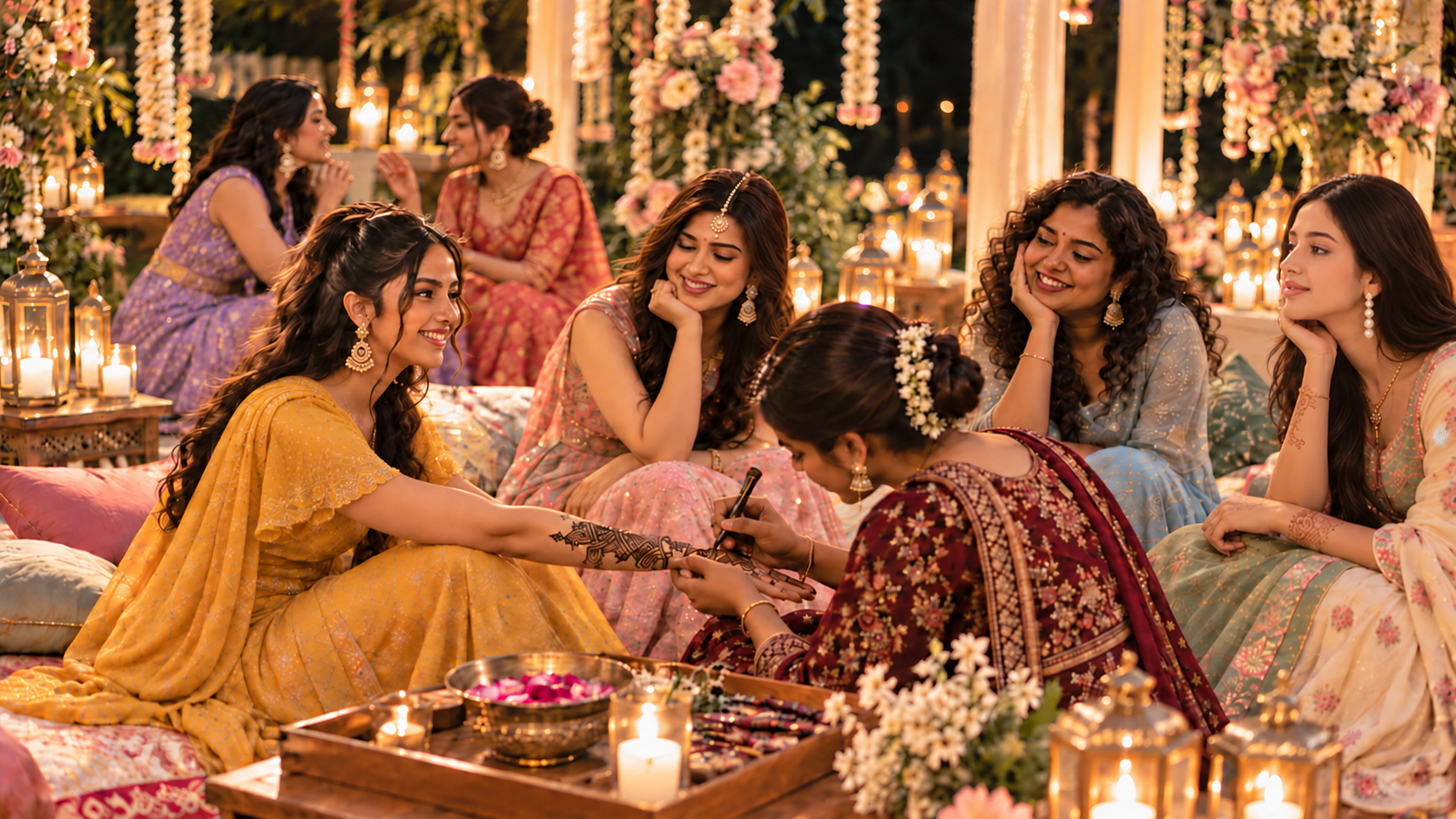
RuShee charges £55 an hour per artist for guest henna, with a two-hour minimum and travel on top and lists five to seven minutes for a simple trail, ten for a simple mandala and 20 to 30 for heavy patterns. Nisha Mehndi Art in Hayes lists guest henna from £50 an hour or £5 a design,12 at around 12 freestyle designs an hour. Henna At Home lists a three-hour event package at £320 for around 30 guests. MehndiMouj books the bride’s design as a separate session and offers a bride-plus-mehndi-night booking, quoted on consultation, with guest henna the evening before.
Add a henna column to Wedvisa’s guest list manager so the count is ready when the artist asks.
What do you need for the room, food and music?
The artist needs a lit table, and the bride needs a seat she can stay in for her whole session, which the artists above list at anything from three hours to eight or more. If you’re hiring, The Amber Suite says it can arrange a mehndi artist or let you book your own, and lets you use its partners or your own suppliers. For any venue, check:
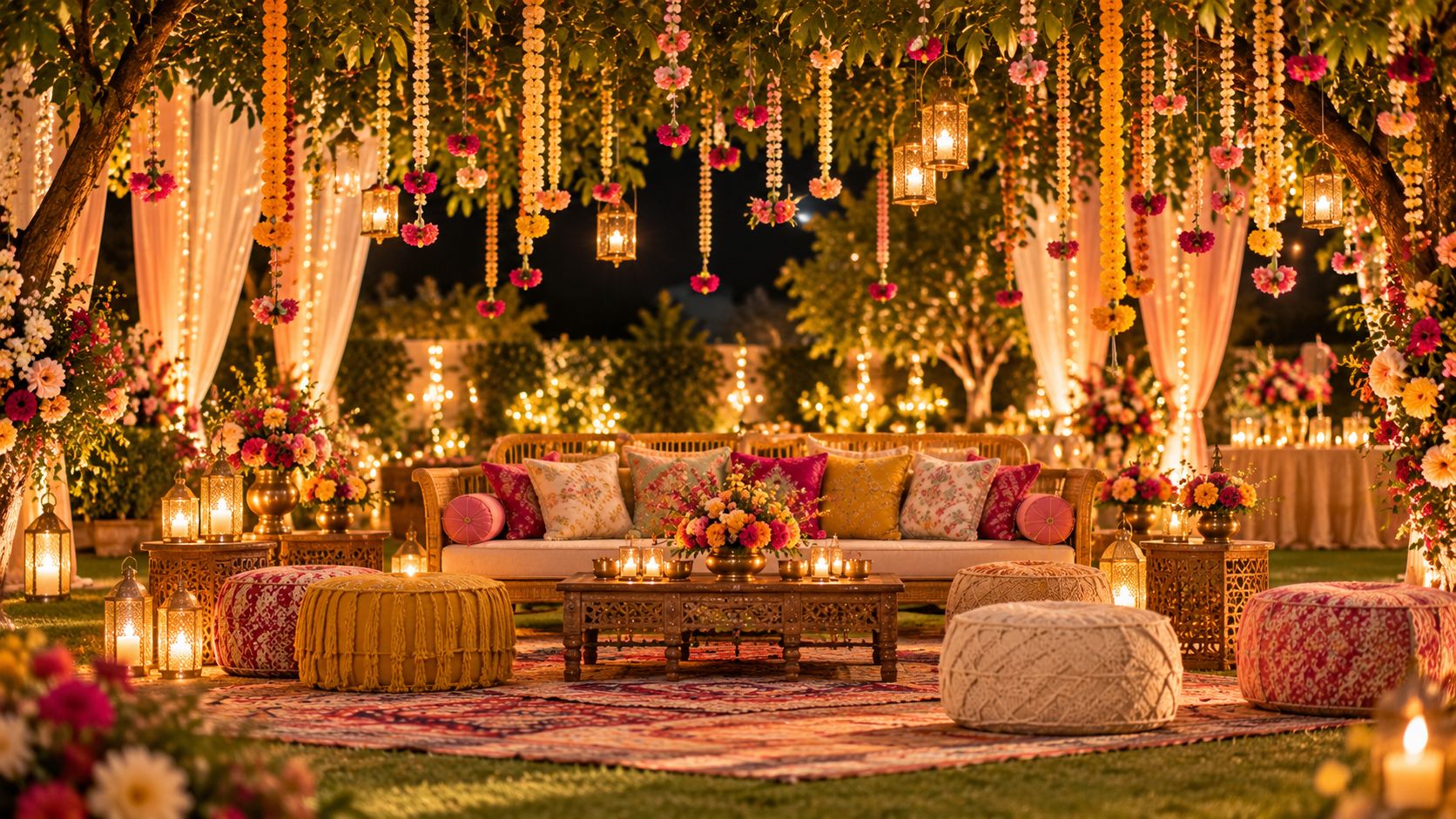
- whether henna is allowed in the room, and who pays if paste marks the linen
- where the nearest sink is, since henna artists in Westminster must have hand-washing facilities with hot water, soap and towels
- whether outside caterers can come in, and how late you can stay

Food. Sapna Caterers in Wembley lists a pre-wedding mehndi and sangeet menu, live stations, finger food and bowl food, plus a vegetarian Gujarati menu and a Punjabi menu that mixes vegetarian and non-vegetarian dishes. Where food is served as a buffet, the caterer has to give allergen details dish by dish (the rule covers England, Wales and Northern Ireland).
Music. Dances, performances and the music plan belong to the sangeet, and our guide Sangeet Night in the UK: Venue, Music and Performance Planning covers them.
What order should you plan in?
- Pick the evening and the format. One mehndi or two, home or hall, agreed with your artist.
- Book the bride’s artist. Get the paste ingredients, coverage, hours and travel in writing.
- Count the hands. Use the henna column in the guest list manager.
- Book guest henna time. Turn the count into hours, and add a second artist if the evening is too short.
- Book the room and the food. Check the venue’s rules on henna, food and finish time first.
- Cost it separately in the budget calculator: artist fee and travel, venue, food, decor.
- Write the running order in the wedding day timeline: bride’s start, guest henna window, food, songs, finish.
- Share it with the artist, the venue and the caterer.
When should each booking happen?
These dates count back from the wedding and are a starting point; the planning timeline lets you adjust them.
|
When |
What |
|---|---|
|
2–6 months before |
Book the bride’s artist |
|
6–8 weeks before |
Confirm guest henna numbers and hours; book the food |
|
2 weeks before |
Send the running order to the artist, venue and caterer |
|
1–2 days before |
Mehndi night and bridal henna |
What should the family settle?
- One mehndi, or one for each side? If two, who goes to which?
- Who is hosting and paying for the artist, the venue and the food?
- Will the groom have henna, even a small mark?
- Which songs or customs do the elders want, and who leads them?
- Will there be a bar, and does the venue allow one?
Is black henna safe?
Natural henna does not normally cause skin reactions, according to Westminster’s environmental health team; “normally” isn’t a guarantee, so the questions above about what’s in the paste and whether any dye is added still apply. Real henna stains orange or brown; most so-called “black henna” temporary tattoos are made with PPD (paraphenylenediamine), a chemical used in hair dye. On skin, PPD can cause blistering, burns and scarring and leave a lifelong sensitivity, and a past black henna tattoo can raise the risk of a reaction to hair dye. Westminster’s environmental health team refuses any henna containing PPD, which darkens the colour,13 and the UK cosmetics trade body says PPD’s use in temporary tattoos is illegal in the UK and EU (CTPA). MehndiMouj, for example, applies what it calls an instant-stain henna by default (henna powder, water, sugar, lemon juice and oils such as clove and eucalyptus), uses a natural option with no added dye for clients with allergies, eczema or sensitive skin, and says both are free of PPD.
- Past reactions: anyone with a past reaction to hair dye or a black henna tattoo should tell the artist, as people with that history are advised to avoid PPD (NHS).
- If someone reacts: get medical advice from a doctor or dermatologist straight away, and call the emergency services for a severe allergic reaction (British Skin Foundation).
- Clean kit: henna artists in Westminster must use single-use or disinfected applicators; ask yours how they handle theirs.
- Children: the same paste questions apply to their henna.
Before the mehndi: checklist
Track each item in the Wedvisa wedding checklist.
☐ Evening agreed with both families and the artist
☐ One mehndi or two decided, with hosts named
☐ Bride’s artist booked, with paste and coverage in writing
☐ Henna column filled in on the guest list
☐ Guest henna hours booked, and a second artist if needed
☐ Lit table, long-stay seat and a sink sorted
☐ Food booked, with allergen information for each dish
☐ Mehndi budget line set
☐ Running order sent to every supplier
☐ Someone other than the bride in charge of the guest henna queue
The mehndi night in one table
|
What it is |
Henna designs on the skin and the occasion they’re put on |
|---|---|
|
When |
One to two days before the wedding on MehndiMouj’s timing; the eve of the wedding in Punjab |
|
Book the bride’s artist |
Three to six months ahead for a May–October Saturday, per Henna Art by Masu |
|
Bridal prices seen |
Starting prices from £50 to £450 at the four artists in the table, depending on coverage |
|
Guest henna |
About 12 freestyle designs an hour at one artist; £50 to £55 an hour at two |
|
Safety |
No PPD or “black henna”; ask about added dye; single-use or cleaned applicators |
|
Where to plan it |
Wedvisa’s planning timeline, guest list manager, budget calculator, wedding day timeline and checklist |