Planning an Indian Wedding in the UK: The Complete Guide to Hindu and Sikh Ceremonies
If the family is already asking which night the sangeet falls on, or whether the gurdwara has a Saturday free, you’re planning more than one event. Each one needs a date, a venue, a guest list and someone in charge. This guide to planning an Indian wedding in the UK covers Hindu weddings and the Sikh Anand Karaj, plus some of the Punjabi customs around them: what each part means, how it runs, the legal step that’s easy to miss, and how to book each part. Indian Muslim and Christian weddings have their own ceremonies, and this guide doesn’t cover them.
The short answer
A Hindu wedding centres on a sacred fire, which the couple circle. A Sikh Anand Karaj takes place before the Guru Granth Sahib, with the couple walking around it once for each of the four stanzas of the laavan. In England and Wales, a religious wedding can be legal at a registered religious building, as long as an authorised person or a registrar is there. Settle the legal route first, then book the venue and the priest or gurdwara.
What the ceremonies mean
A Hindu wedding
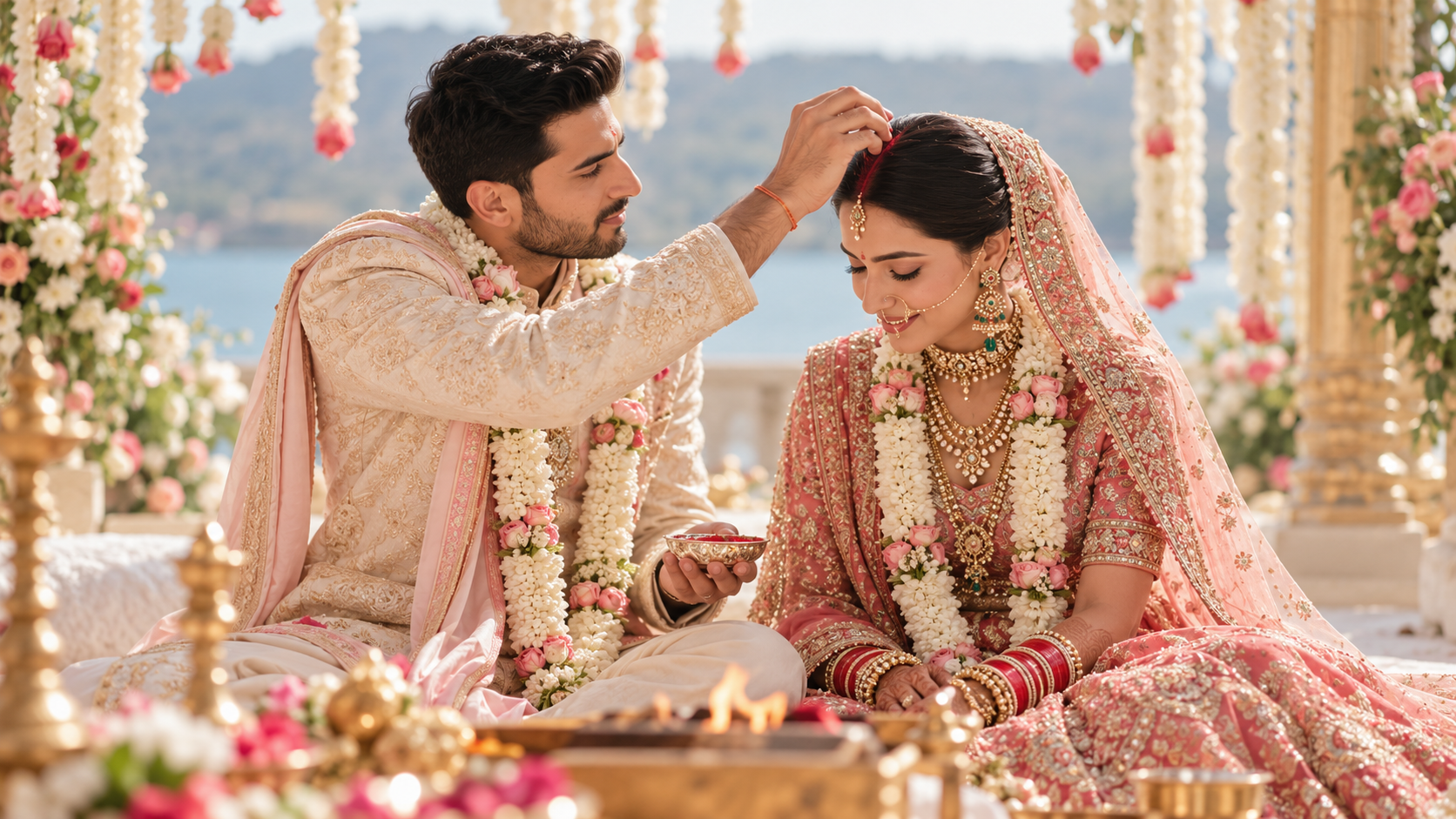
One UK council’s religious education notes describe a Hindu marriage ceremony as, at heart, a Vedic yajña, a fire sacrifice, and say no Hindu marriage is deemed complete unless seven encirclements of the sacred fire have been made. They also list a Ganesh puja, to remove obstacles, an Agni puja that calls on the fire as a witness, and the saptapadi, seven steps around the fire with a prayer or promise for each.
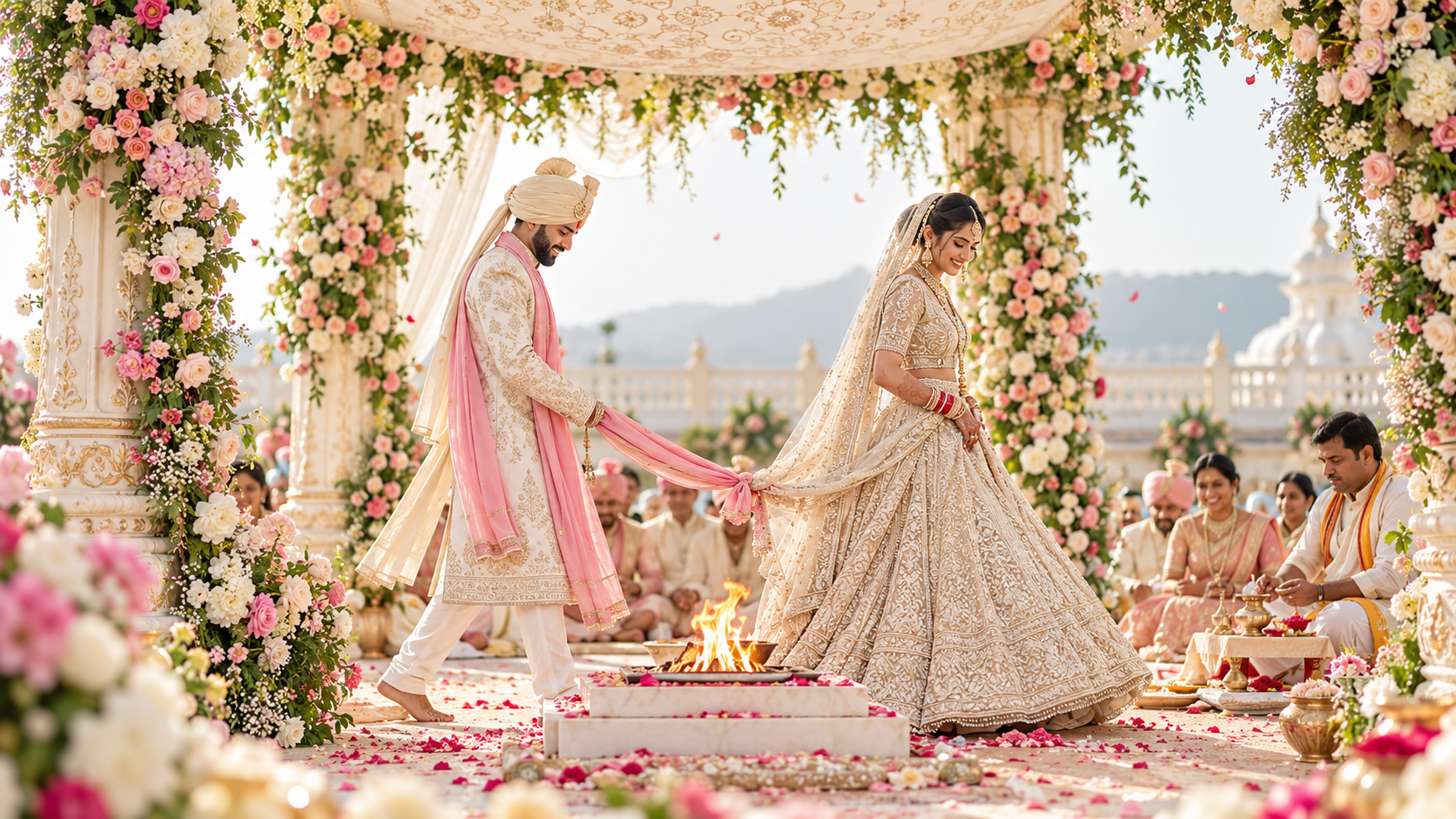
One university collection of Hindu weddings in Houston, in the US, places the ceremony under a mandap, a structure put up for the occasion, and describes these moments inside it:
- Kanyadaan, the giving of the bride. Water passes from the bride’s mother’s hand to the groom’s palm and then to the bride’s, as a blessing and a sign of the daughter’s move into the new union.
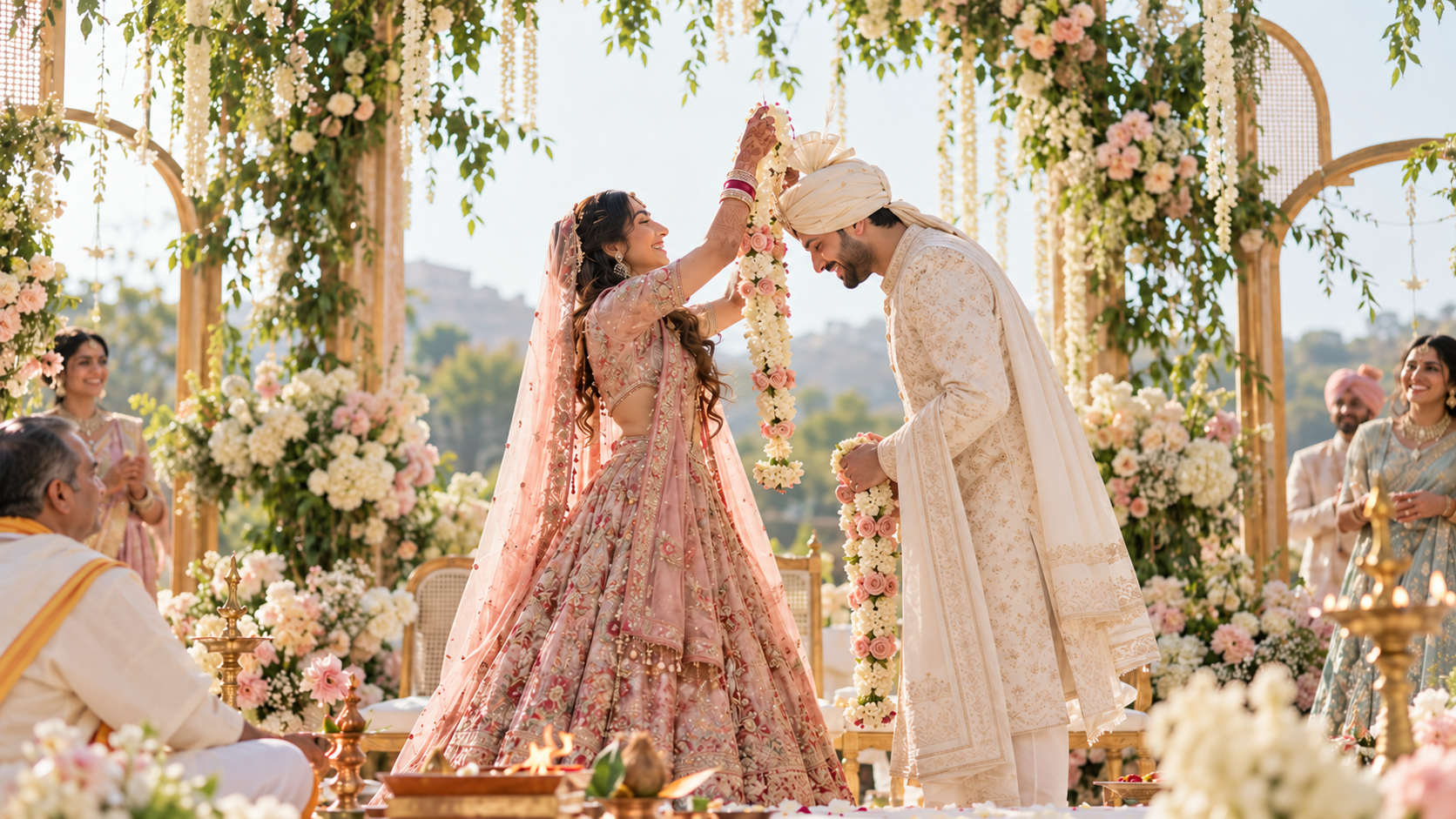
- The garland exchange, after a screen held between the couple is lowered.
- The pheras, where the couple circle the havan, the ceremonial fire, seeking a promise of righteousness, prosperity, love and spiritual enlightenment.
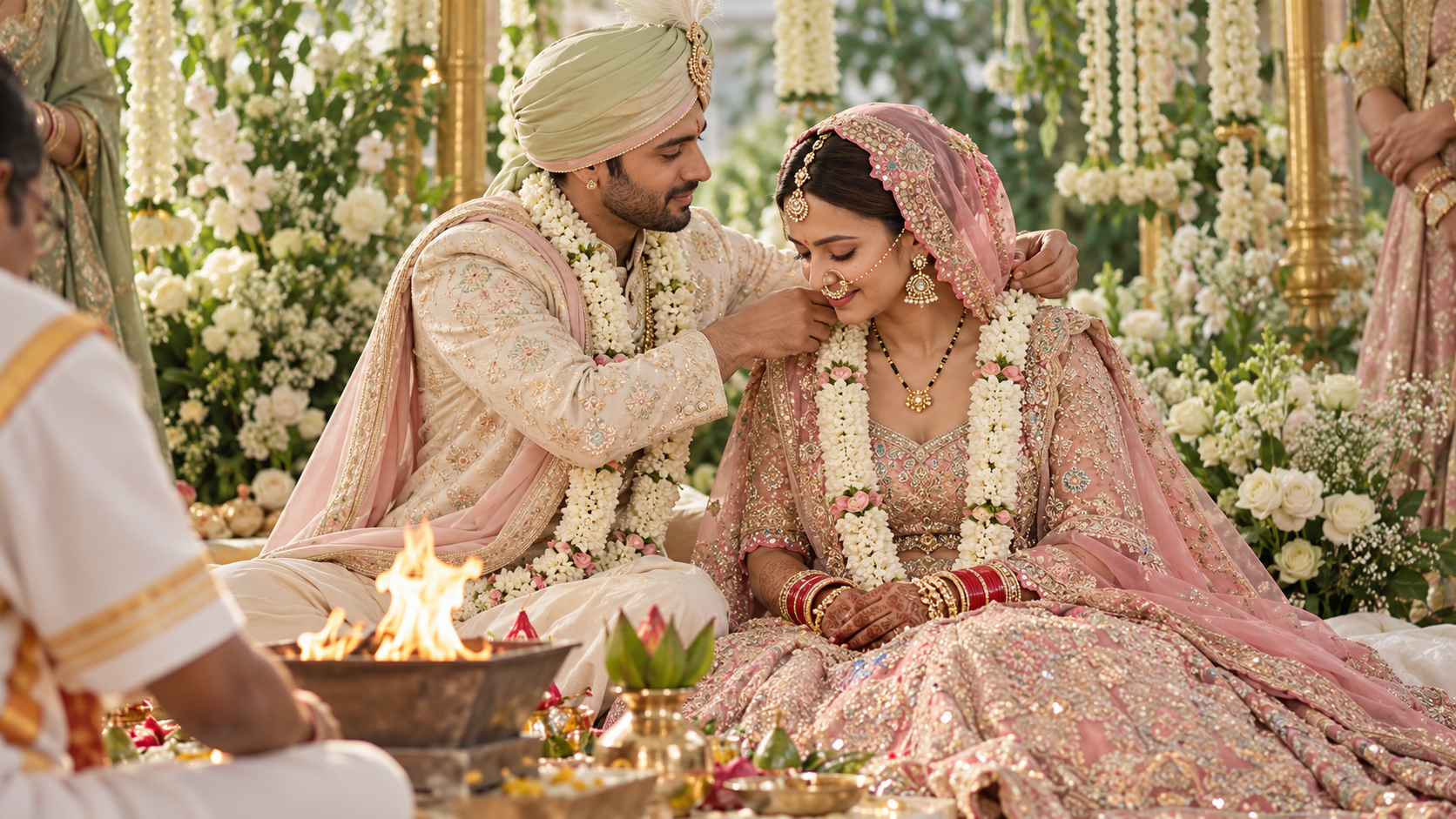
- The mangalsutra, a necklace the groom fastens on the bride as a sign of the bond they have entered.
The same collection notes that weddings differ from one region to another and from one family to the next. One City of London hall, for instance, lists the jaan procession, the mangal phera around the fire pit and the vidai among the parts of the day it can help with. At one Hertfordshire temple, the mantras are sung in Sanskrit with their meaning explained in English, and the meaning can also be explained in Gujarati or Hindi; weddings there are held on an auspicious day of the couple’s choice, at the temple or at home. It’s worth asking your priest early which rites your family’s ceremony will include and how long it will run, because that shapes the rest of the day.
A Sikh wedding: the Anand Karaj
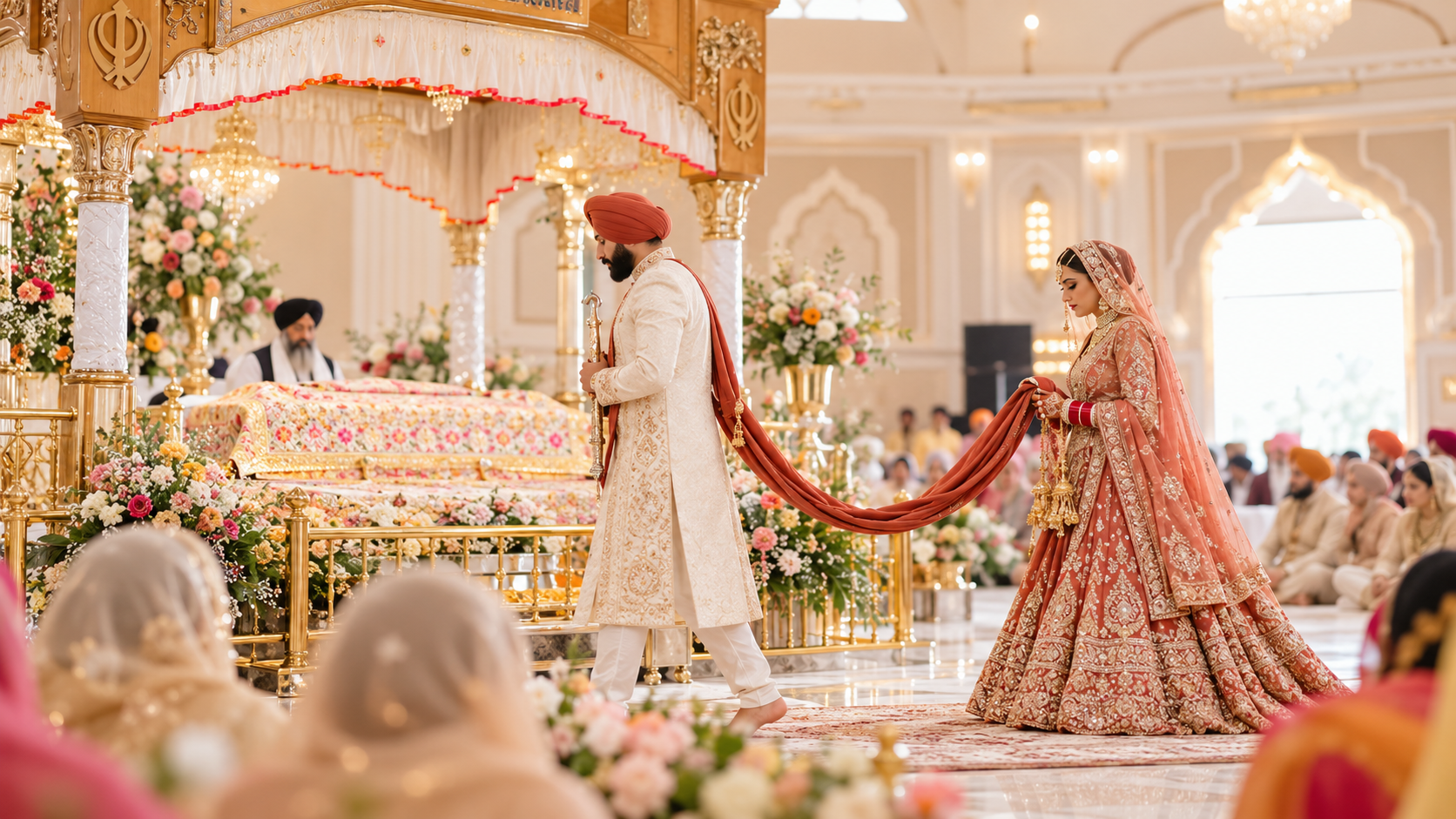
Anand Karaj, “joyful ceremonial occasion”, is the name of the Sikh marriage ceremony. At its centre is the laavan, a four-stanza hymn by Guru Ram Das: for each stanza, the couple walk clockwise around the Guru Granth Sahib, the groom leading and the bride following.
At the two Southall gurdwaras of Sri Guru Singh Sabha Southall, the granthi reads each laav from the Guru Granth Sahib before it is sung as kirtan, and each round takes about two to three minutes. Their guidelines state that the Lavaan “is neither an exchange of vows nor a symbolic act of commitment to one another”. Around the laavan come Ardas, the Hukamnama, the Palle Dee Rasam, six verses of Anand Sahib and the sharing of Karah Parshaad.
Mornings there start early. The typical schedule has the groom’s party arriving at 9am, the milni at 9.30, tea at 10 and the laavan at 11, and any change has to be approved by the gurdwara. The guidelines describe the milni as a formal greeting between the two sets of extended families.
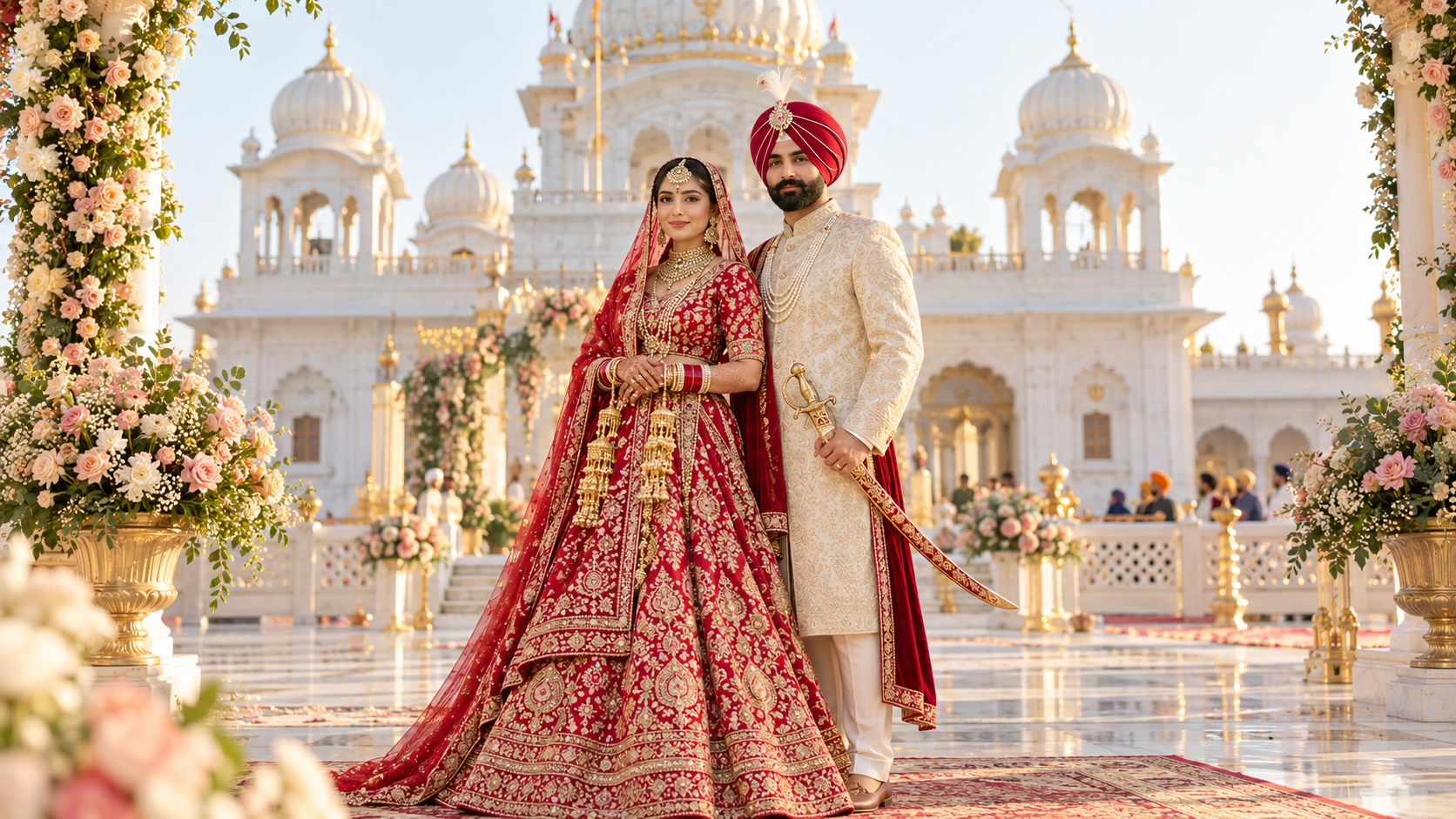
The gatherings around the ceremony
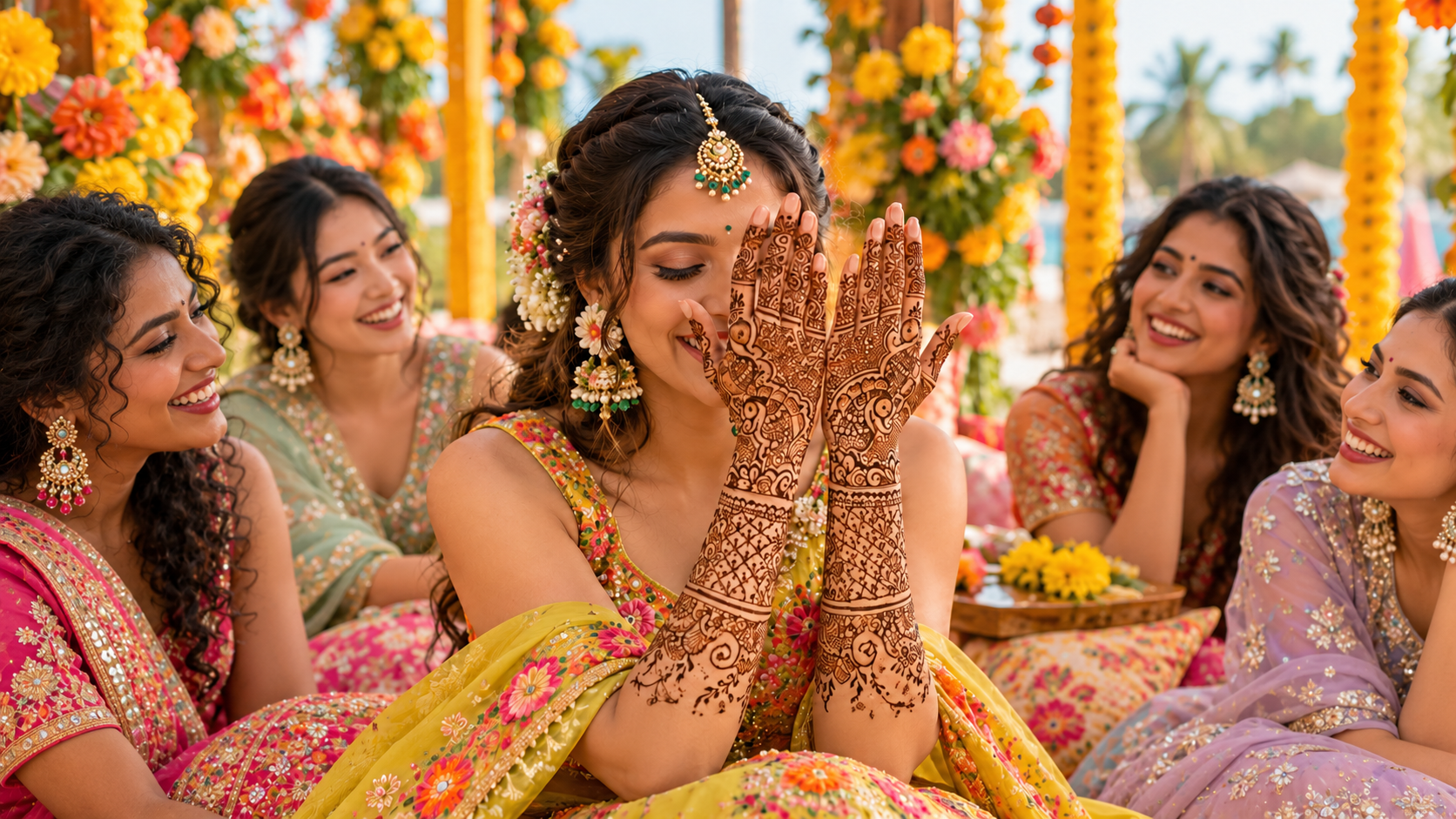
Mehndi is henna: temporary designs painted on the skin, used especially in Hindu, Muslim and Sikh ceremonies, and also the name of the event where the designs are applied.
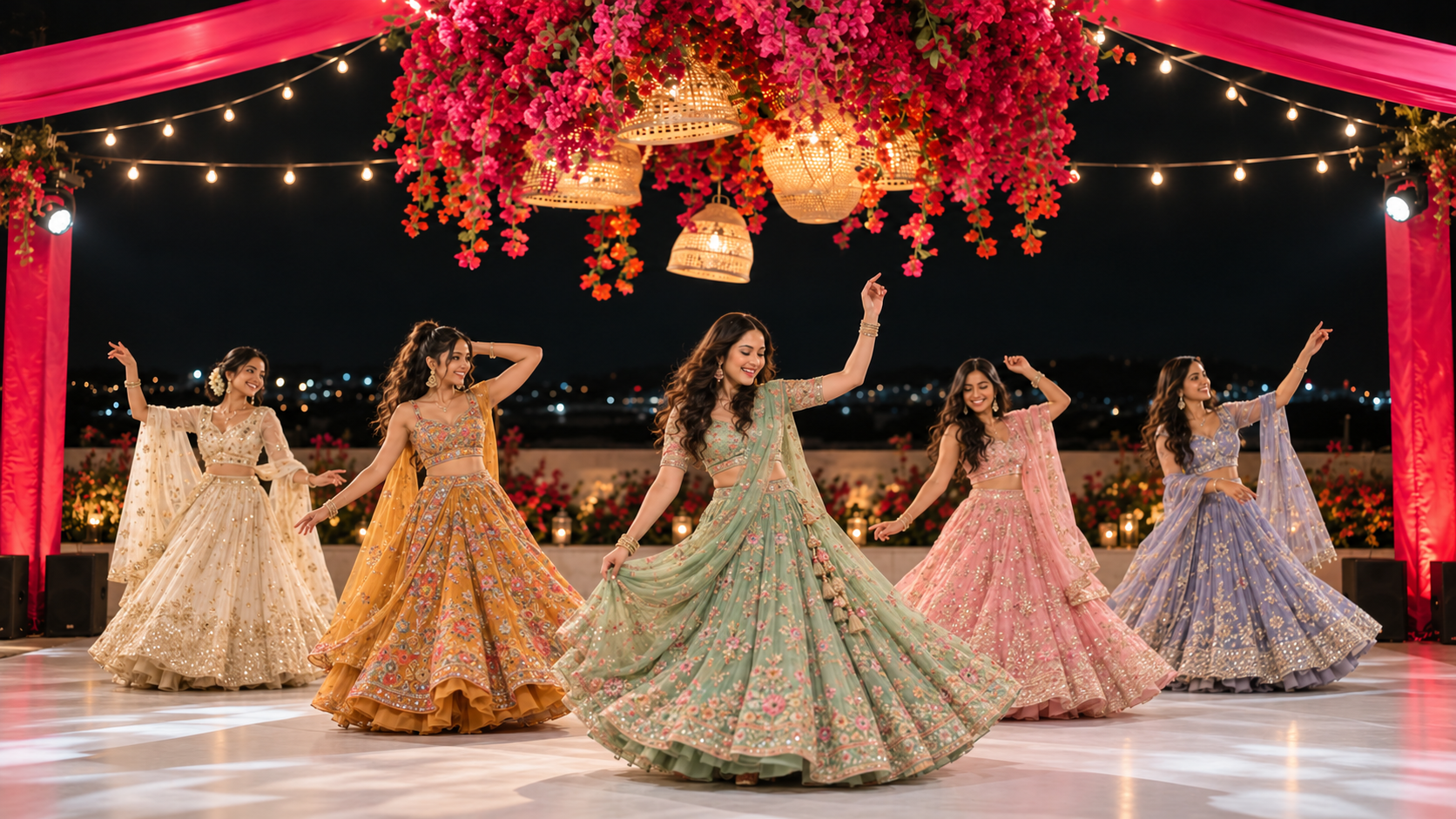
Sangeet, in Indian English, is a celebration held before a Hindu wedding for the bride and her friends and relatives.
If your family holds a haldi, give it its own line in the plan: a date, a guest list, someone in charge, and a word with the venue about what it allows and how long it needs to clean up.
In Punjab, the days before a wedding can include maiyan, a period when the bride and groom keep apart from relatives and outsiders; songs sung by the women, ghorian for the groom and suhag for the bride; and the sihra, the crown the groom wears as he sets off for the bride’s home. These belong to Punjabi custom and sit outside the Sikh marriage rite itself.
In the Houston weddings that university collection records, the baraat is the groom’s procession to the wedding, with family and friends dancing him to the place where the two sets of parents meet, a short trip that symbolically begins the joining of the two families. In Punjab, the milni has customarily been kept to the fathers or guardians and the maternal uncles of the couple. At the Southall gurdwaras, the ban on dancing, dhol and music includes the street when arriving, so check your own gurdwara’s rules before booking a dhol for the arrival.
The City of London hall mentioned above lists the vidai among the things it can help with. If you’re holding a reception as well, compare its guest count with the other events before you settle on the size of venue.
Is a Hindu or Sikh ceremony legally binding in the UK?
It can be, but not automatically. In England and Wales, a religious wedding can take place at any registered religious building, and an authorised person must attend; if there isn’t one, you’ll need to book a registrar. A civil ceremony, by contrast, must not include anything religious. If your religious ceremony will be somewhere else, such as at home or in a hotel, ask your register office early how you’ll make the marriage legal.
Some religious ceremonies don’t meet the legal requirements, and when that happens the marriage may not be legally recognised. You must give notice at least 29 days before your ceremony,12 and Wedvisa’s booking guide suggests giving it 10 to 12 weeks ahead, for a buffer. The legal rules above apply in England and Wales; if you’re marrying in Scotland or Northern Ireland, check the rules there.
Questions for the temple or gurdwara:
- Is the building registered for marriages, and will an authorised person or a registrar be there?
- If not, when and where will the civil ceremony happen?
- What paperwork do they need from you, and by when?
The Southall gurdwaras ask couples to submit their notice of marriage to the local authority in time, to meet the registrar individually for final checks, and to bring one witness each to sign the registration documents. Both partners’ documents go to the gurdwara’s main office at least four weeks before the wedding.
Who can marry in a gurdwara?
The gurdwara you want to book is the one to ask; here is what the Southall gurdwaras have published. Their guidelines quote the Sikh Rehat Maryada: “persons professing faiths other than the Sikh faith cannot be joined in wedlock by the Anand Karaj ceremony”. They also cite a 2007 Sandesh from Sri Akal Takhat Sahib: a person of non-Sikh origin who wishes to take part must adopt the Sikh faith and have Singh or Kaur added to their name on relevant identity documents.
The bride and the groom each sign a rules declaration, agreeing to abide by the guidelines. There is also a further declaration: the policy section says anyone marrying there by Anand Karaj must sign it, while the booking flow chart asks for it where one partner is not Sikh, so ask the gurdwara which applies to you. It includes that the Anand Karaj will be the only religious ceremony they take part in for the purposes of marriage, and that they will try to bring up any children as Sikhs. If you were hoping to hold a Hindu ceremony as well, raise it with the gurdwara before you book either. Where a couple can’t agree to the requirements, the guidelines say an Anand Karaj is not the appropriate ceremony for them and offer another service instead.
The same gurdwaras allow only approved caterers on their premises and permit only strictly vegetarian, egg-free food. Everyone covers their head, the bride and groom wear modest clothing, and intoxicants, including alcohol and tobacco, are strictly prohibited, along with dancing, dhol, music and bhangra. The guidelines also ask people not to take photos with their back to the Guru Granth Sahib, and the couples’ course is free. At a gurdwara with rules like these, a dhol, dancing or a bar needs its own event and venue.
Choosing venues: the fire, the mandap and the numbers
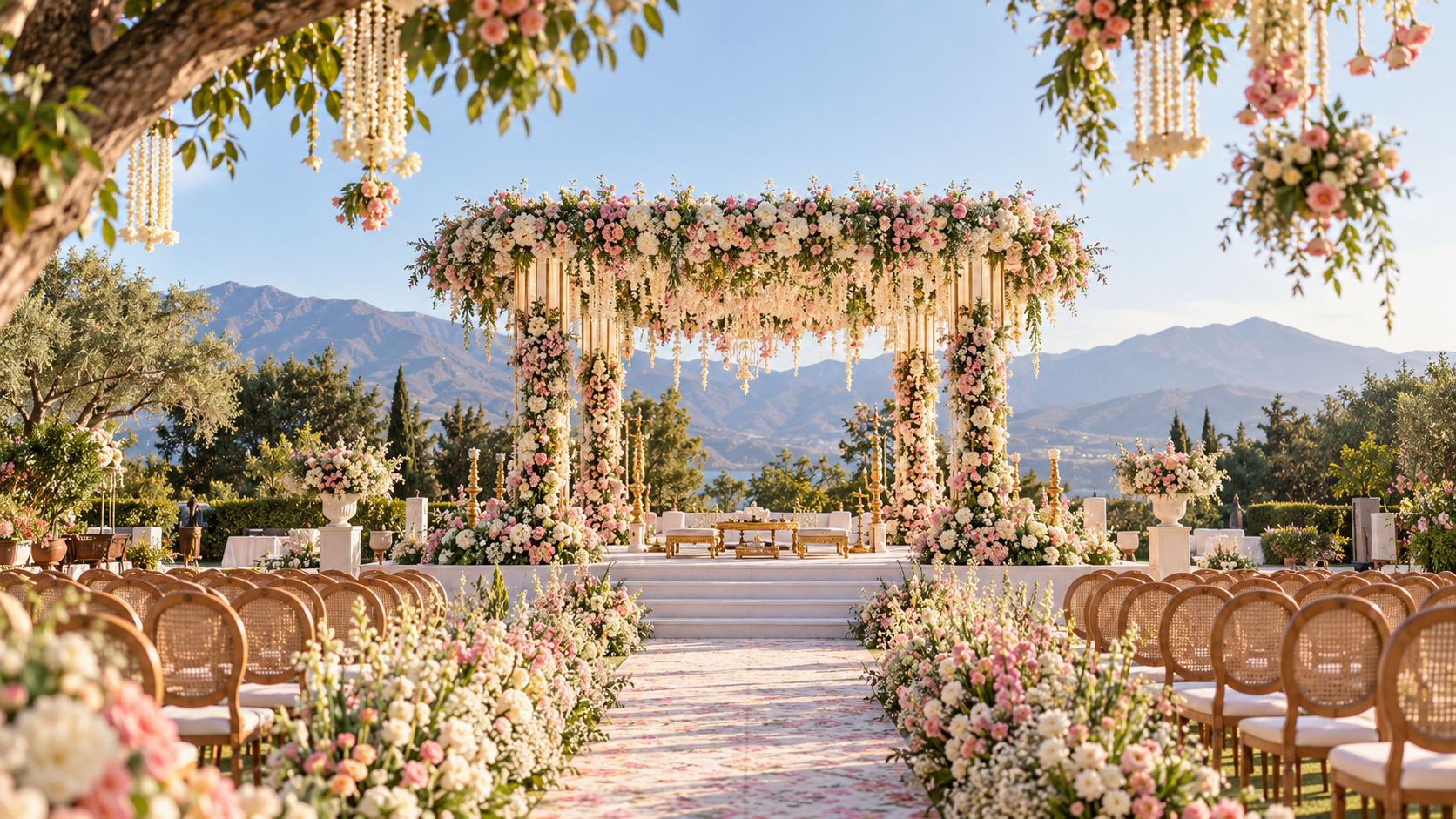
The sacred fire is the first question for any venue, and the answer is worth having in writing. Here is what some UK venues say on their own sites, as of 12 October 2026:
- Stationers’ Hall, City of London: allows the sacred-fire part of the ceremony, has space for a stage and mandap in its main hall, hosts up to 200 guests, works with accredited caterers including Asian specialists, and is licensed for marriage and civil partnership ceremonies.
- Pavilions of Harrogate, North Yorkshire: space for a bespoke mandap, rooms for up to 350 and 450 guests, full-day hire from 8am to midnight, your chosen caterer runs the food, and no fireworks on site.
- Hintlesham Hall, Suffolk: indoor and outdoor space for a mandap, up to 100 guests, and 32 bedrooms for celebrating over several days; it also offers its outdoor spaces for the sacred fire at Tamil weddings.
- Kew Gardens, London: up to 200 for a ceremony and 300 to 400 standing, hire from 3pm to midnight, and speciality South Asian suppliers it recommends for a Hindu ceremony.
- The Hive London: up to 600 seated or 700 standing, outdoor grounds for a baraat, in-house catering, and what it calls Anand Karaj arrangements.
What to ask any venue:
- Can the fire be lit indoors, outdoors, or not at all? Who supplies the fire pit, and what happens with the smoke alarms?
- Where does the mandap go, who builds it, and how long are set-up and take-down?
- Can you bring your own caterer, and is there a kitchen or corkage fee?
- Where does the baraat arrive, and are a dhol, a horse or fireworks allowed?
- When does the music have to stop, and when must everything be cleared?
- If you’re thinking about an Anand Karaj at a venue, ask your gurdwara first whether it will conduct one there.
Sourcing the other pieces
Caterer. Venues can limit who cooks: the Southall gurdwaras allow only approved caterers, and Stationers’ Hall works with accredited caterers. A separate quote for each event, with vegetarian dishes and serving staff listed, keeps the smaller events from disappearing inside one big number.
Decor and the mandap. A venue may name the decorators you can use: at Pavilions of Harrogate, your decor must come from one of the companies on its list. How high is the ceiling, how wide are the doors, and who builds and removes the mandap? The answers decide which mandap you can order.
Other suppliers. Kew points couples planning a Hindu ceremony to its own list of speciality South Asian suppliers. Each venue’s preferred list matters too, along with any fee or insurance papers it asks of outside suppliers.
Priest. The questions here are which rites they’ll perform, in which language, how long the ceremony runs, and whether they bring the items for the fire or expect you to buy them.
Mehndi artist and outfits. A mehndi artist needs the date and the number of hands to quote, and can tell you how long each design takes. Outfits need time for fittings and alterations.
Your planning flow: first, second, next
- Map the events. List each gathering, who hosts it, a rough guest count and the date. Keep one guest list with a column per event in Wedvisa’s guest list manager.
- Fix the ceremony and the legal route. Decide on the temple, gurdwara or venue, ask whether it is registered for marriages, and give notice: 29 days is the legal minimum in England and Wales, and Wedvisa’s booking guide suggests 10 to 12 weeks.
- Book the main venue and photographer. Popular UK venues often book out 12 to 18 months ahead, and the best photographers 12 months or more.
- Book the priest or the gurdwara. At the Southall gurdwaras, that means reading the guidelines, signing the declaration, booking the date and the course, and handing in the paperwork.
- Book the caterer and the music. Caterers and bands or DJs typically need 9 to 12 months’ notice for a popular date.
- Book hair and make-up. Allow 6 to 9 months’ notice, with a trial 4 to 8 weeks before the day.
- Give every event its own budget line. The budget calculator keeps venue, food, outfits, decor and photos separate per event.
- Write one running order for each day. Build it from the times the venue, priest or gurdwara and caterer have confirmed, in the wedding day timeline.
A suggested timeline
This is a suggestion, worked back from the wedding day. Move it to fit your dates in the planning timeline.
|
When |
What |
|---|---|
|
12–18 months before |
Main venue; photographer (12 months or more) |
|
9–12 months before |
Caterer, band or DJ |
|
6–9 months before |
Hair and make-up |
|
4–8 months before |
Invitations go out |
|
10–12 weeks before |
Give notice of marriage (suggested) |
|
4–8 weeks before |
Hair and make-up trial |
|
29 days before |
Last day for legal notice in England and Wales |
|
4 weeks before |
Documents to the gurdwara office (Southall) |
Outfits
A sherwani is a long-sleeved, close-fitting, knee-length coat with a stand-up collar. Brides might wear a lehenga, a sari or something else entirely, and each event can have its own look. Whatever you choose, check what the ceremony venue expects: the Southall gurdwaras ask the bride and groom to wear modest clothing and everyone to cover their head.
Family decisions, guests and money
Questions to settle together:
- Which events does each family host, and who pays for which?
- Who is invited to which event? The ceremony, the sangeet and the reception may have very different lists.
- How many guests need vegetarian or alcohol-free food at each event?
- Who leads the baraat and the milni on each side?
- Who is the single point of contact for each venue on the day?
Safety and legal, in brief
- Legal route: in England and Wales, a temple or gurdwara ceremony is the legal marriage only at a registered religious building with an authorised person or registrar there (GOV.UK).
- Fire: follow the venue’s own written rules for the sacred fire.
- Fireworks: one Harrogate venue bans them on site, so ask yours.
- Gurdwara rules: check your gurdwara’s own guidelines on food, dress, music and photos before the day.
Your checklist
Tick these off in the wedding checklist.
- ☐ Event map with hosts, dates and guest counts
- ☐ Legal route confirmed and notice given
- ☐ Ceremony booked: temple, gurdwara or venue, and the priest confirmed
- ☐ Fire and mandap rules confirmed in writing
- ☐ Main venue and photographer booked
- ☐ Caterer booked, with vegetarian and dietary needs logged per event
- ☐ Baraat arrival, dhol and parking agreed with the venue
- ☐ Outfits ordered, with time for alterations
- ☐ Gurdwara declaration, course and documents done, if you’re having an Anand Karaj
- ☐ A budget line for every event
- ☐ One running order per day, shared with every supplier
Hindu and Sikh weddings at a glance
|
Hindu wedding |
Sikh Anand Karaj |
|
|---|---|---|
|
The ceremony |
Rounds of a sacred fire |
Four rounds of the laavan around the Guru Granth Sahib |
|
Where |
Temple, home, or a venue that allows the fire |
Gurdwara; ask yours before planning one at a venue |
|
Legal in England and Wales |
A registered religious building with an authorised person or registrar; otherwise ask the register office |
The same rule |
|
Before the wedding |
Mehndi, sangeet, and a haldi if your family holds one |
Mehndi; in Punjab, customs such as maiyan and the sihra |
|
Arrival |
Baraat |
Groom’s party and the milni; no dhol or dancing at the Southall gurdwaras, even on the street |
|
Food at the ceremony |
Your venue’s and caterer’s rules |
Strictly vegetarian, egg-free, approved caterers only (Southall) |
|
Book first |
Main venue, 12 to 18 months ahead |
Gurdwara date, declaration and course |