Sangeet Night in the UK: Venue, Music and Performance Planning
If your family is planning a sangeet for a Hindu wedding in the UK, Punjabi or otherwise, the first question to ask the venue is when the music must stop. The answer shapes the music, the family performances and the bar, so this guide takes them in that order.
The short answer
Get the venue’s finish time, sound limit and dhol rule in writing before you book anything else, because they decide what music the night can hold. Then choose a DJ, live singers or a dhol to fit those rules, give whoever plays the music every performance track and the running order in advance, and check whether the hall needs a licence or a notice for music, a bar or late food.
What is a sangeet?
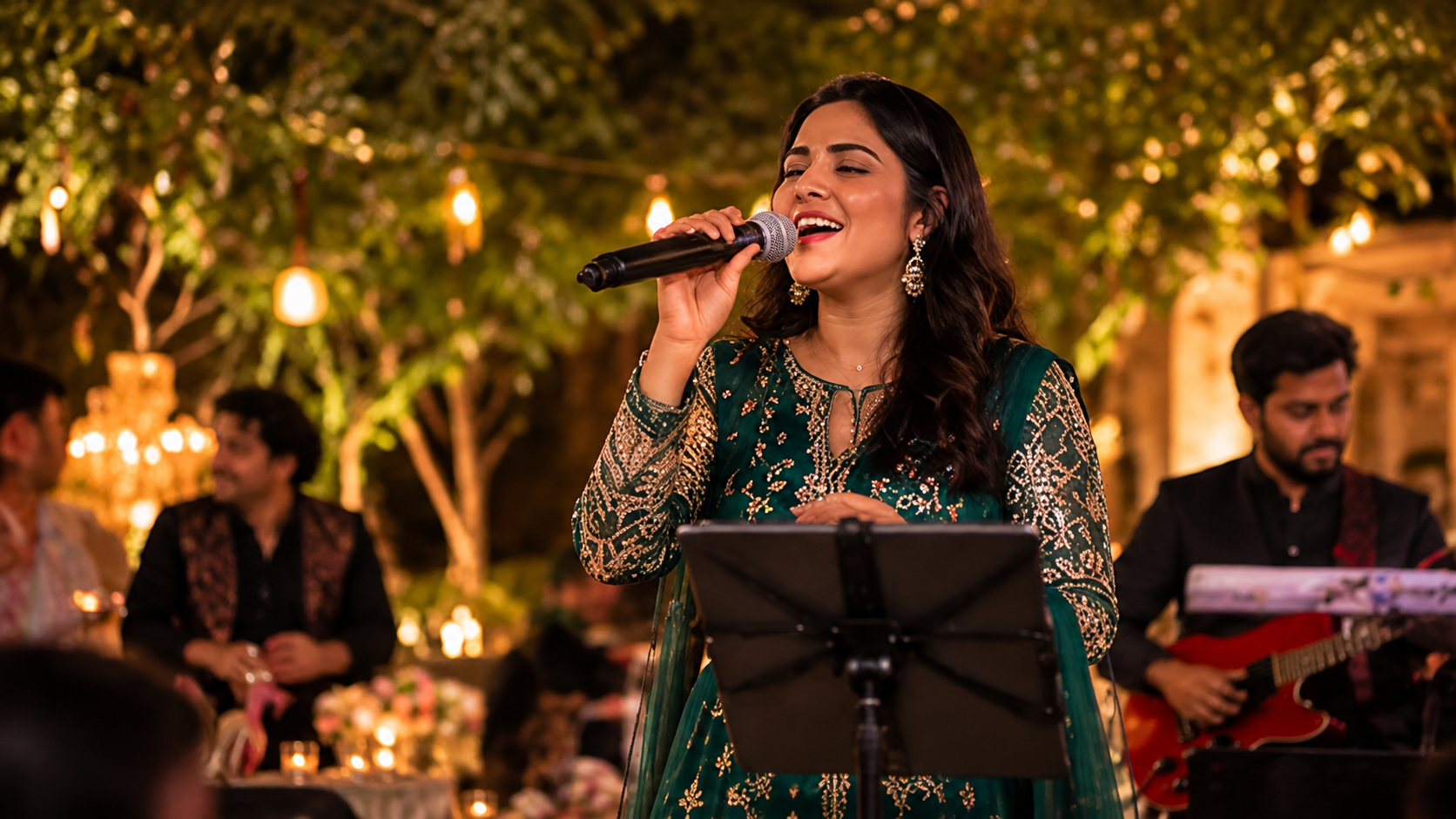
In Indian English, a sangeet is a celebration held before a Hindu wedding for the bride and her friends and relatives, especially in North India. In Punjab, India, a 2004 study of wedding customs shared across the region’s religious communities notes folk songs at almost every wedding ceremony, performed by family, friends and professional folk musicians. It doesn’t use the word sangeet.
Two of the customs it records are performed by the women of the family: At the groom’s house, some women may put on a turban and mimic the groom, to a lot of laughter. On the night before the marriage procession leaves, the groom’s maternal aunt and other women of the family hold a jago, a procession of light: the maternal aunt carries a decorated pitcher of water topped with lit flour lamps, and the women walk the neighbourhood, waking people, dancing and singing. The henna evening has its own guide, Indian Wedding Mehndi Night in the UK: A Planning Guide for Hindu and Sikh Families.
How does the night run?
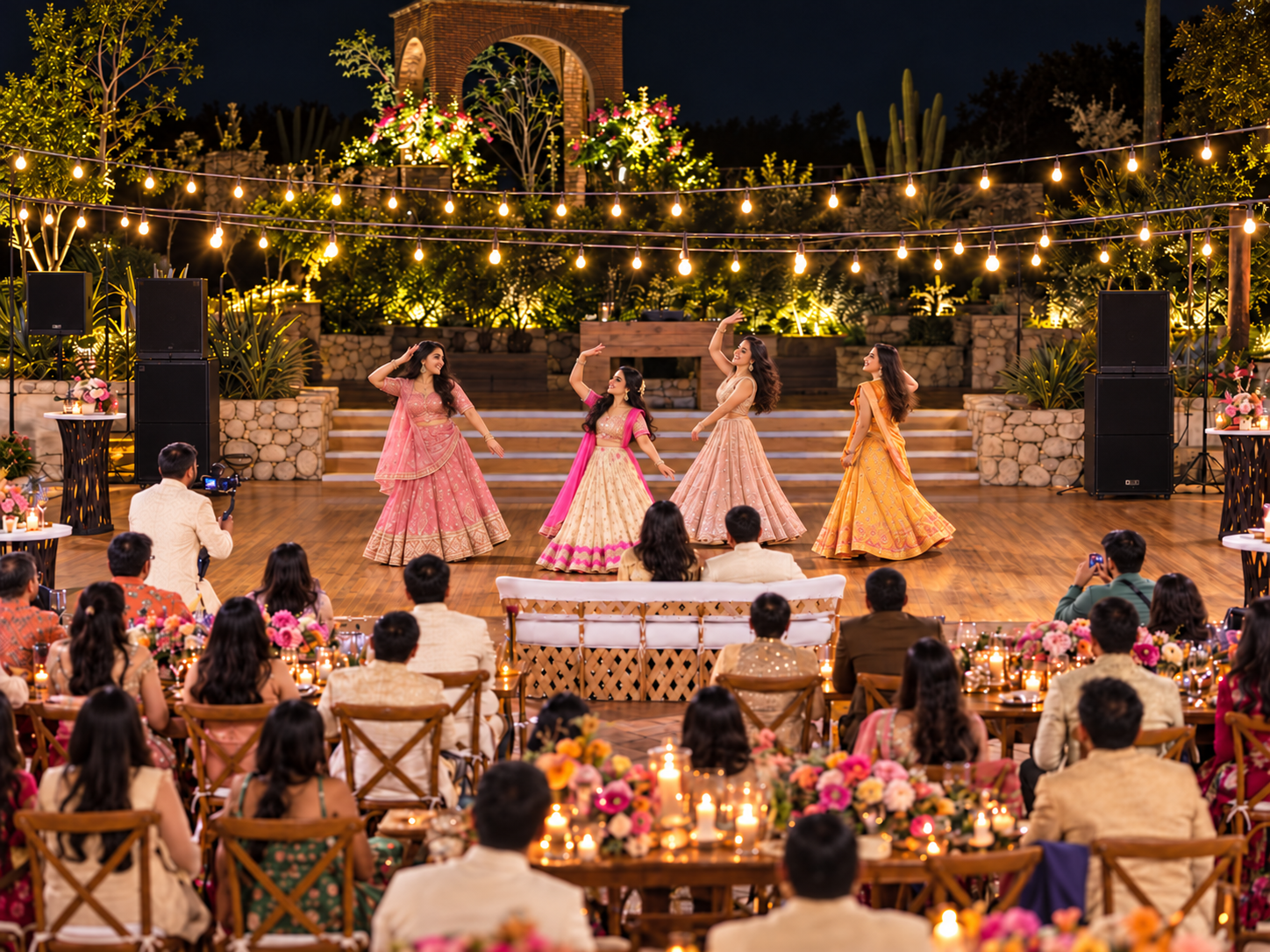
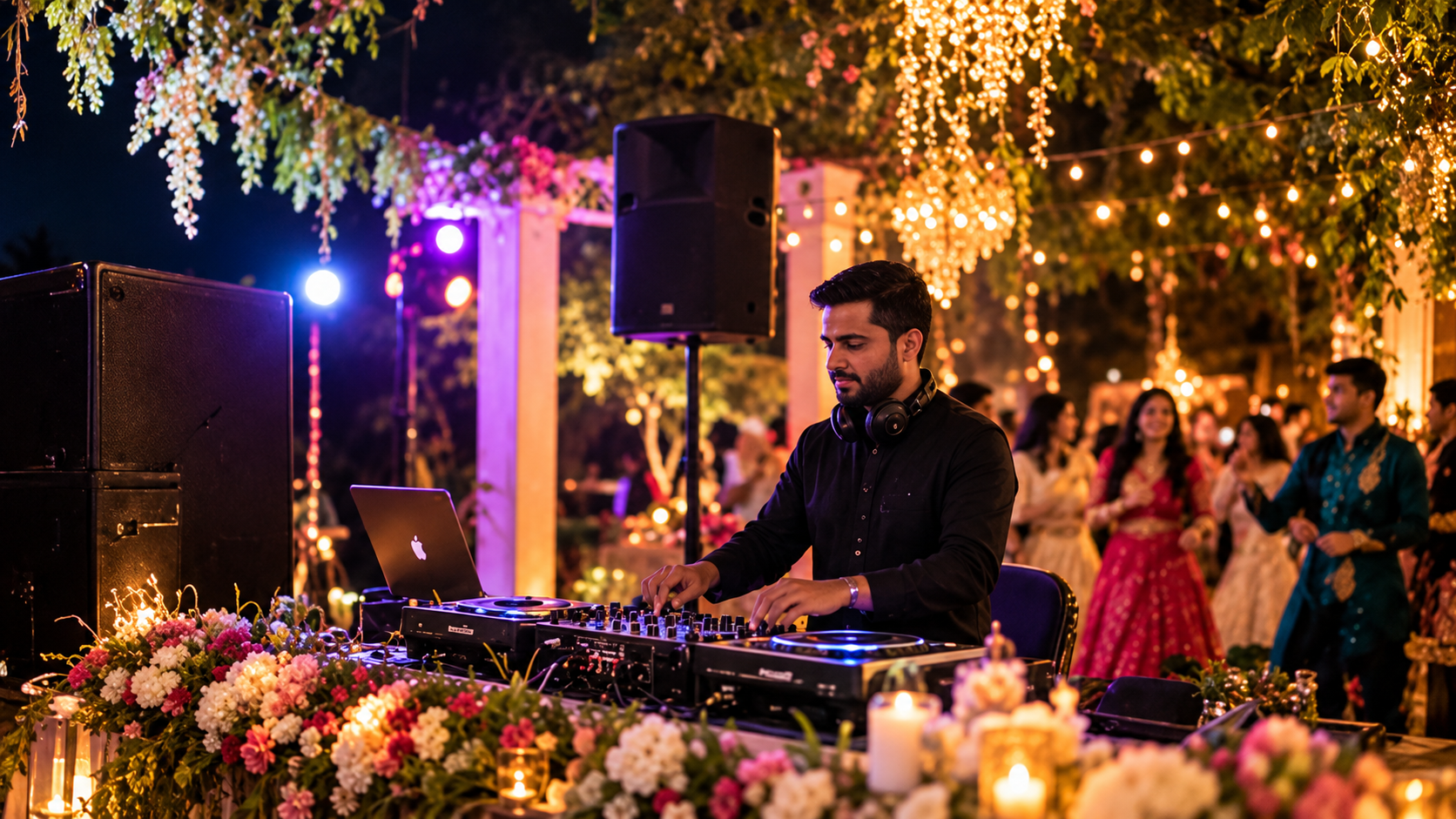
One London DJ, Prit Nasha, describes a sangeet night in four parts: the performances, short interludes between acts, the turn when the last act ends, and an open floor that builds until close. A running order built on that shape might serve food first, put the performances in one block, and leave open dancing until the venue’s finish time.
Which venue suits a sangeet?
Three UK venues publish their terms (checked 14 October 2026).
|
Venue |
Sound and drums |
Finish time |
|---|---|---|
|
Froyle Park, near Alton, Hampshire |
Sound limiter set at 92 decibels, which it says the local council mandates as part of its music licence; outdoor music acoustic only; bands use electric drums; dhol for up to 10 minutes between 11am and 6pm, through its exclusive nominated provider |
Not listed in its FAQs |
|
Meridian Grand, London N18 |
No sound limiter and no music restriction; full-volume DJs, dhol and live bands, in its words |
Late-night licence to 3am |
|
Pavilions of Harrogate, North Yorkshire |
Not stated in its brochure |
Dry hire 8am to midnight, including complete breakdown; extra time £500 including VAT per hour or part, and beyond 3 hours the full contracted amount |
At Froyle Park, a sangeet starting after 6pm would have no live dhol. At Pavilions of Harrogate, the music has to finish before midnight to leave time for the breakdown, unless you pay for extra hours. Pavilions also lets you bring your own entertainers if they show public liability insurance and risk assessments.
Get these in writing from the venue:
- what time the music stops and when the room must be clear
- whether there’s a sound limiter, at what level, and when a dhol can play indoors
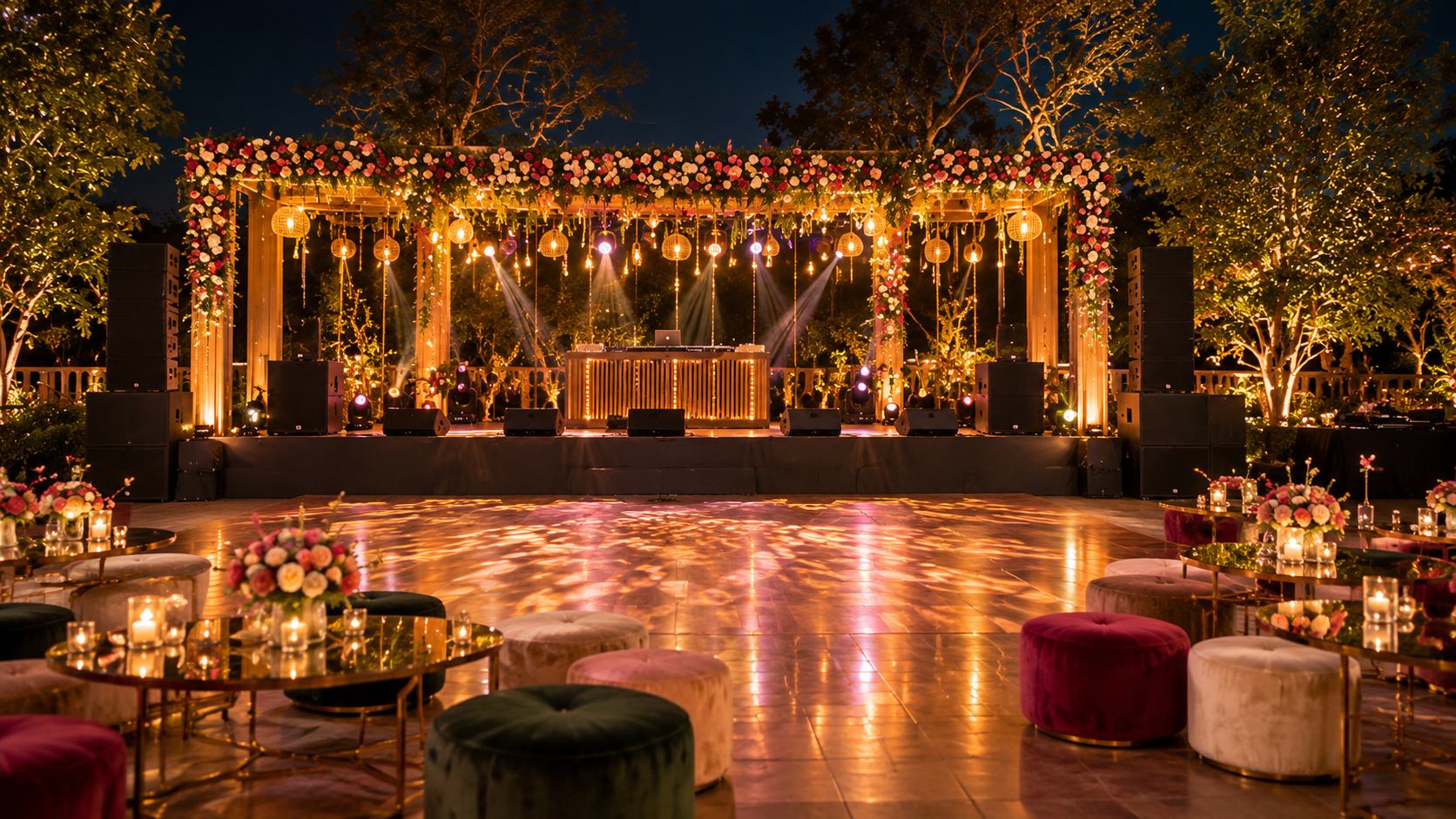
- what stage, dance floor or staging you can use
- whether its licence covers music after 11pm and a bar
- whether cold sparks, smoke machines or lit lamps for a jago are allowed
- if you want a larger production, whether the venue provides or permits stage lighting and LED screens, and whether these affect the sound, setup or breakdown arrangements
DJ, live singers or a dhol?
The venue’s rules decide which of the three you can use, and when. In 19th-century Urdu and Hindi, a dhol is a large drum and a dholak (or dholki) a small one.
A DJ. Prit Nasha lists London and UK weddings from £1,795, with a 50% deposit, for a single straightforward event with sound, microphones and MC coordination. If the venue allows the night to run on, he lists overtime at £75 per half hour.8 He MCs in English and brings in an MC he works with for announcements in Punjabi, Hindi or Urdu.
Live singers. For folk songs sung live, the Bollywood Event Company lists what it calls Ladies Sangeet singers: a London and nationwide duo from £890, with a singer who plays the harmonium, a dholki player and a PA system. A Midlands North singer who plays the dholki herself is listed from £400 solo or £550 as a duo, as a base rate for up to two hours.
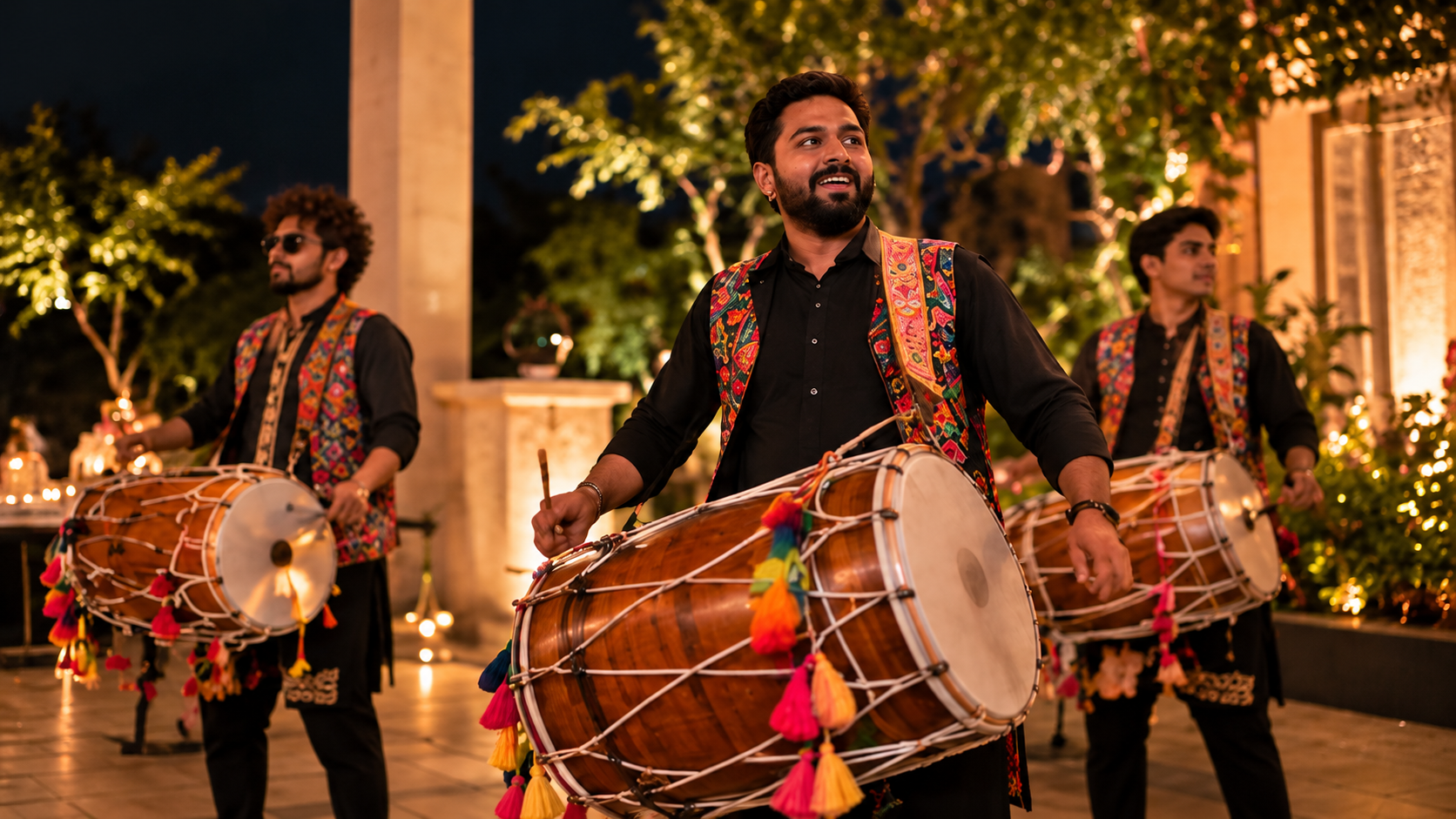
A dhol. The Alive Network agency lists a London-based act, Dhol Drummers, from £312 plus travel, for one drummer playing two 15-minute sets within an hour on site; the act needs parking, 15 minutes to set up and a 2 by 1 metre space.
How do you get the family performances ready?
Settle the acts early, book rehearsal time, and gather every track into one running order. Who performs is a family choice, from a dance by each side to a comic sketch in the spirit of the turban custom above.
The Bollywood Co in London lists first-dance packages per couple, including studio hire and VAT, at £368 for two 60-minute sessions or £568 for three, and one-to-one sessions open to brides, grooms, family members or guests from £106 a person. Sumeet’s Step2Step, a London dance academy, offers choreography of the entire sangeet and mehndi functions, with individual, couple and group lessons, says its instructors come to you, and publishes no sangeet price.
For the tracks, Prit Nasha asks families to send their rehearsal edits ahead of the night so each can be checked, levelled and cued, and maps the running order with the family leads on a call before the event. Any DJ or band can work the same way: one lead per family, each track named by act and slot, and a spare copy. It also helps to settle:
- how long each act runs, and how long the performance block can last
- who introduces each act, and in which languages
- what happens if a track won’t play
Who’s coming, and what about food and drink?
Give the sangeet its own guest list, and settle food and drink against the venue’s terms. Add the performers to the list in Wedvisa’s guest list manager, so the total the venue and the DJ work from includes them.
At Pavilions of Harrogate, a dry-hire booking expects your chosen caterer to bring a catering manager and their own waiting staff. Froyle Park’s bar opens at 7pm with a £750 minimum spend; if your caterer serves the drinks instead, there’s a £1,500 corkage fee, and the caterer has to bring its own pop-up bar and a personal licence to serve alcohol. Hot food after 11pm and any bar are both on the licence check below.

If you’re considering finger food, mocktails or live food stations, it’s worth confirming what the venue and caterer can provide, whether outside suppliers are allowed, and how these choices affect the budget and running order.
Planning steps, in order
- Ask the venue for its terms, in writing.
- Set the guest list in the guest list manager, including performers.
- Book the music. DJ, singers or dhol, checked against the venue’s rules.
- Decide the acts and book any choreography sessions.
- Cost it in the budget calculator: venue, music, choreography, food and bar.
- Check the licence. If the hall isn’t licensed for what you plan (a bar, music or dancing, or late hot food), ask the council whether you need a TEN, and diary the deadline.
- Draft the running order (arrival, food, performances, open floor, finish) with the wedding day timeline.
- Collect every track and send them, with the order, to whoever plays the music.
A suggested timeline
The dates count back from the sangeet and are a starting point; shift them in the planning timeline.
|
When |
What |
|---|---|
|
9–12 months before |
Venue terms checked; DJ or band booked, since Wedvisa’s own guide says wedding bands and DJs typically need booking 9 to 12 months ahead for a popular date14; a sangeet booked with the same supplier may follow the same calendar |
|
3–4 months before |
Acts decided; choreography sessions booked |
|
6–8 weeks before |
Running order drafted; guest numbers to the venue |
|
At least 10 clear working days before (if a TEN is needed) |
Notice to the council |
|
1–2 weeks before |
Final tracks and running order to the DJ and MC |
What do the two families need to agree?
- One sangeet for both families, or one each?
- Who hosts it, and who pays for the venue, music and food?
- Which songs, skits or customs matter to the elders, and is there a jago?
- Who performs, and can anyone opt out without fuss?
- Bar or no bar, and if there is one, who runs it?
Licences and noise: what to check
Whether you need a licence or a notice depends on the premises and the event: whether the venue is alcohol on-licensed, the time, the size of the audience, and whether guests are charged for the entertainment or alcohol is sold. Your venue or the council’s licensing team can tell you what applies; the points below are what to ask about. The licensing points are for England and Wales, and the noise guidance applies in England.
- Music and dance hours: no licence is needed for live or recorded music between 8am and 11pm at “alcohol on-licensed premises” for an audience of no more than 500, or for a performance of dance between 8am and 11pm for up to 500; any entertainment between 11pm and 8am may need one (GOV.UK).
- Recorded music and community buildings: recorded music on premises not licensed for the sale or supply of alcohol may need a licence, and places of public worship, village halls, church halls and other similar buildings can be exempt from needing a music licence in defined circumstances.
- Private events: entertainment at an event held in private isn’t licensable unless the guests are charged for it with a view to making a profit (raising money for charity included), and a fee the organiser pays the performers doesn’t by itself make it licensable (Home Office guidance, para 16.15).
- Temporary Event Notice: licensable activities include selling alcohol, serving alcohol to members of a private club, providing entertainment such as music, dancing or indoor sporting events, and serving hot food or drink between 11pm and 5am; carrying one out on premises not licensed for it needs a TEN, as for a wedding reception at a community centre. The event must have fewer than 500 people at all times, staff included, and the notice goes to the council at least 10 clear working days ahead with a £21 fee; a late TEN can be given up to 5 clear working days before, but if the police or environmental health object, it isn’t valid and the event can’t go ahead.
- Noise: councils in England must look into complaints about noise that could be a statutory nuisance, including loud music from premises and gardens, and must serve an abatement notice if they agree it is one; between 11pm and 7am they can also issue warning notices for noise above permitted levels (GOV.UK).
Checklist for the sangeet
For the wider wedding’s tasks, there’s the Wedvisa wedding checklist.
☐ Venue’s finish time, sound limit and dhol rule in writing
☐ Stage and dance floor confirmed
☐ Licence checked, and a TEN given if needed
☐ DJ, singers or dhol booked and briefed on the venue’s rules
☐ Acts, performers and MC (with languages) confirmed
☐ Every track collected, labelled and backed up
☐ Running order shared with the DJ, MC and venue
☐ Food, bar and staff confirmed with the caterer and venue
Your sangeet in brief
- What it is: in Indian English, a celebration held before a Hindu wedding, especially in North India.
- First question for the venue: finish time, sound limiter and dhol rule; one Hampshire venue sets its limiter at 92 decibels, and one north London venue lists a licence to 3am.
- Music: one London DJ lists UK weddings from £1,795; one agency lists two sangeet singers from £400 and £890; one dhol act starts at £312 plus travel.
- Performances: a list of acts, rehearsal time, a running order and every track with the DJ before the night.
- The law (England and Wales): no licence for music between 8am and 11pm for up to 500 people at alcohol on-licensed premises; a TEN needs at least 10 clear working days.
- Tools: Wedvisa’s guest list manager, budget calculator, day timeline, planning timeline and checklist.