Small Wedding Venues in the UK: What They Cost and Where to Look in 2026
Small wedding venues are not just beautiful and intimate; they can help you save a lot on your wedding budget.
Big weddings used to be the default. Book the ballroom, invite everyone your mum has ever mentioned, and hope the seating plan doesn't cause a family incident. That's changed. More UK couples are choosing to keep the guest list under 50, and the venue market has responded with genuine options rather than a scaled-down version of a big wedding.
This guide covers what actually counts as a small wedding, the venue types available, realistic costs based on current UK market data, specific venues worth researching, and the questions to ask before you sign anything.
What Actually Counts as a Small Wedding
There's no official cut-off, but in practice UK venues and planners tend to use 30 to 60 guests as the working definition of a micro or small wedding. Some venues, like Holdsworth House in West Yorkshire, cap out at just 20 guests and build their entire offering around that number, including the UK's smallest licensed outdoor wedding venue, a stone gazebo that seats a handful of people.
Anything above roughly 80 guests moves you into standard wedding territory, where you're competing for the same barns and country houses covered in most general venue guides. Below that number, a different set of venues opens up: ones that would feel empty or impractical for a 120-person wedding but are built specifically around smaller numbers.
Why More Couples Are Choosing Smaller Weddings
The average total cost of a UK wedding currently sits between roughly £20,604 and £21,990, depending on which costs are counted, and the average cost per guest has settled at around £272 to £278. That per-head figure is doing a lot of the explaining. Cut your guest list in half and you don't just save money — you free up budget to spend more on each person who's there.
This is why couples are choosing fewer guests and better food, sharper styling, and a venue that actually suits an intimate group, rather than a smaller version of a big wedding. A restaurant private dining room or a converted chapel with 30 guests can deliver an experience that a marquee for 150 simply can't match on a similar budget.
Types of Small Wedding Venues in the UK
|
Venue Type |
Typical Capacity |
What It Offers |
Worth Knowing |
|---|---|---|---|
|
Boutique country house |
20–60 |
Grounds, character, often exclusive use |
Full-house buyouts can include overnight stays for the couple and close family |
|
Restaurant or pub private dining |
Up to 40 |
Excellent food, minimum spend model |
Often cheaper overall than a flat hire fee once catering is factored in |
|
Chapel or ceremony-only space |
60–120 |
A striking, photogenic setting for vows |
Usually requires a separate reception venue |
|
Small barn or converted farm building |
20–60 |
Rustic character on a manageable scale |
Check whether catering is in-house or dry hire |
|
Glamping and residential micro venues |
2–30 |
Weekend-long, low-key celebrations |
Guests often stay on-site, which changes the cost structure entirely |
Boutique Hotels and Country Houses
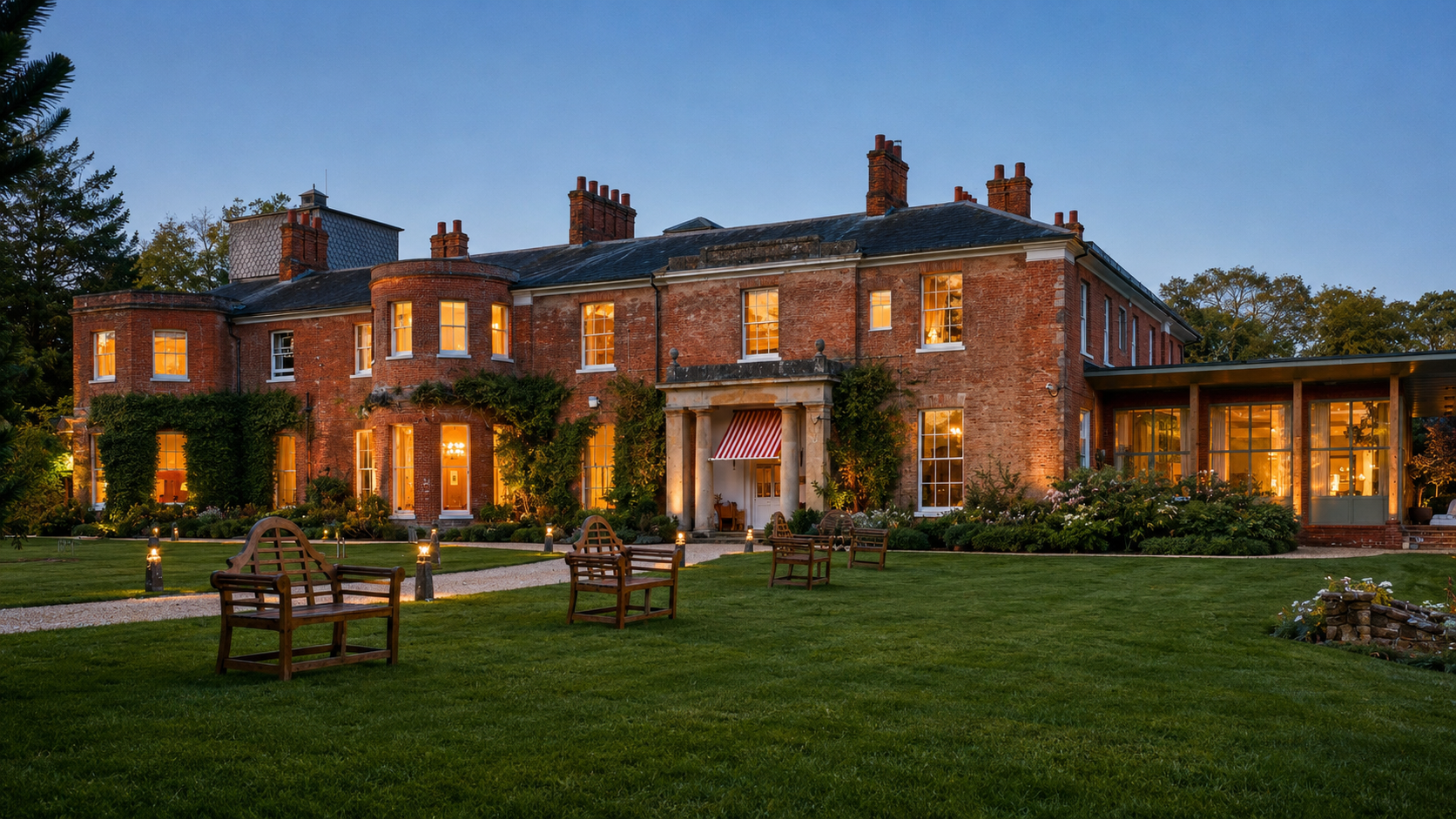
Smaller country houses handle intimacy well because the room-to-guest ratio is right, rather than because the building is small. Smallfield Place in Surrey, a Jacobean manor with seven luxury bedrooms, sells itself as a two-night stay for up to 60 guests, with a firm midnight music curfew that's worth knowing about if you're planning a late finish.
Restaurant and Pub Private Dining
For under 40 guests, a restaurant with a private dining room is often the best-value option on this list. You're paying for food you'd choose to eat anyway, not a separate hire fee stacked on top of catering, and the kitchen is built to cook for that number rather than stretching to feed 150.
Chapels and Ceremony-Only Spaces
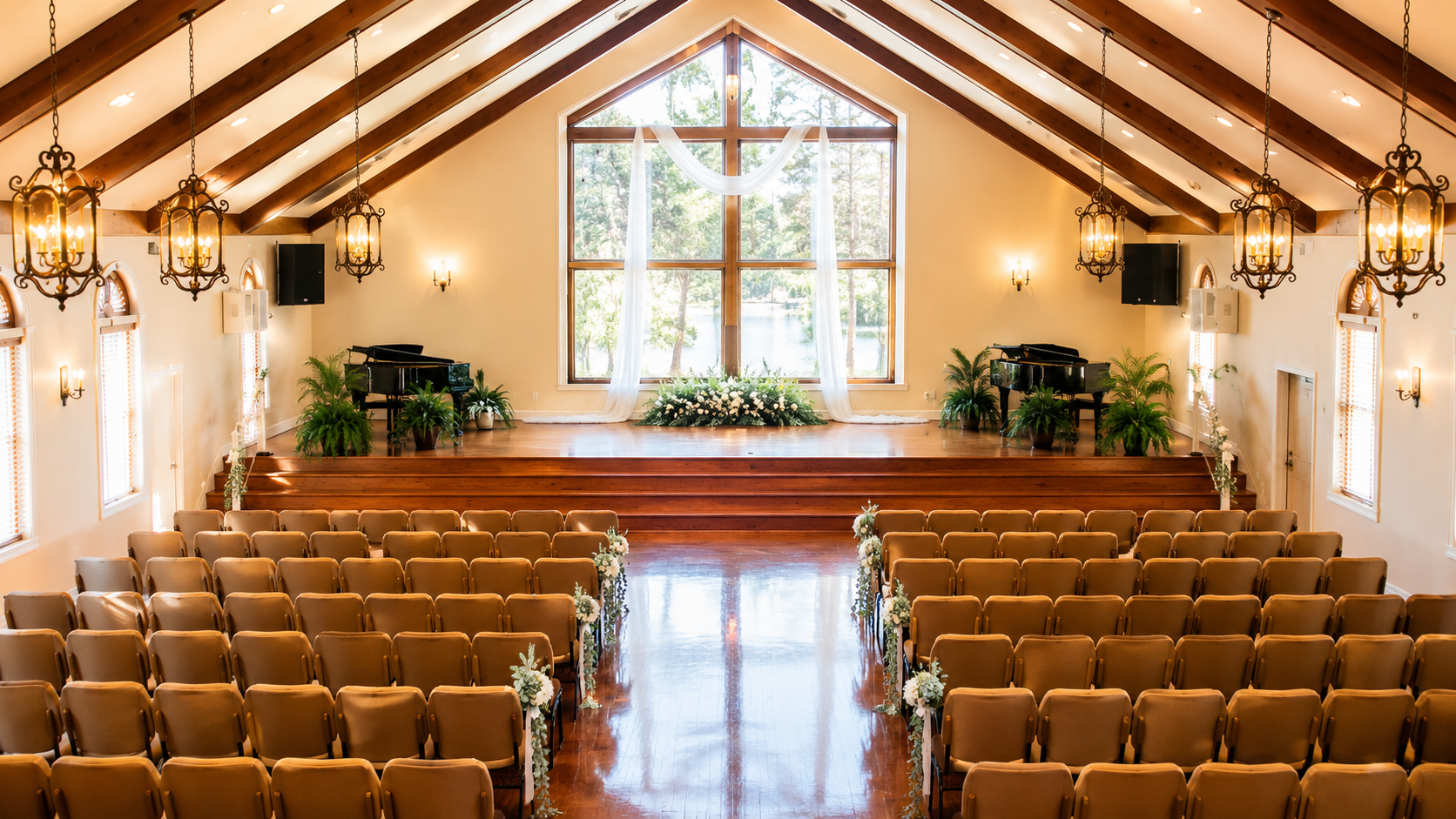
London has a small but distinctive cluster of chapel venues. Fitzrovia Chapel, with its gold-tiled interior, is one of the more striking options for couples planning a micro wedding in the capital. Asylum Chapel in Peckham, a deconsecrated Victorian chapel, works similarly but on a dry-hire basis, meaning you'll need to bring in catering and furniture separately. Both are ceremony spaces first, so budget for a second venue for the reception unless the chapel has an adjoining room.
Small Barns, Cottages and Glamping Sites
This is where the market has grown fastest. Nantwen in Pembrokeshire runs a package for 2 to 30 guests that includes a two-night stay for the couple and up to eight guests, built around a genuinely small footprint rather than a scaled-down big barn. The Green Escape, a six-acre woodland glamping site in Surrey, houses up to 22 guests in shepherd's huts on-site, which turns the wedding into a weekend rather than a single day.
How Much Do Small Wedding Venues Cost in the UK
Costs vary hugely depending on whether you're paying a flat hire fee, a per-head package, or a two-night estate buyout. Here's what some specific small venues are charging, based on current published rates:
|
Venue |
Location |
Capacity |
Base Venue Fee |
|---|---|---|---|
|
Nantwen |
Pembrokeshire |
2–30 |
From £525 |
|
Asylum Chapel |
Peckham, London |
Up to 120 |
£1,400–£4,000 |
|
Fitzrovia Chapel |
Fitzrovia, London |
Up to 80 |
£2,500–£3,500 |
|
Battle Abbey (part site) |
East Sussex |
Up to 60 |
From £3,500 + VAT |
|
Holdsworth House |
West Yorkshire |
Up to 20 |
£3,095–£4,950 |
|
The Green Escape |
Dorking, Surrey |
Up to 30 |
£4,200–£5,975 |
|
Smallfield Place |
Surrey |
Up to 60 |
£8,000–£8,900 |
For context, the national average venue hire fee across all venue types, excluding catering, is £6,040. Several small venues undercut that comfortably, particularly ones running on a per-head or minimum-spend model rather than a flat fee.
One thing worth doing early: ask whether the fee includes catering or is venue-only. Battle Abbey's part-site rate, for example, sits on top of a three-course breakfast charged separately at around £46 plus VAT per adult. A £3,500 headline fee for 60 guests looks very different once that's added.
Small Weddings Don't Always Mean Cheaper Weddings
It's worth being honest about this: fewer guests doesn't automatically mean a smaller total bill. Micro weddings have pushed per-head spending up, not down, because couples are putting more money into fewer plates. A tasting menu at £150 a head for 30 guests costs less overall than a £60-a-head buffet for 100, but it's not the budget option it might look like on paper.
Where small venues genuinely save money is on the fixed costs that don't scale with numbers: floristry, styling, evening entertainment, and often the venue fee itself if it's charged as a flat rate rather than per head. If your priority is spending less overall, a small venue with simple catering will beat both a big wedding and a lavish micro wedding. If your priority is spending the same total but making every pound count for fewer people, a small venue lets you do that too.
Hidden Costs to Ask About Before You Book
Small venues carry the same hidden costs as larger ones, and sometimes they bite harder because there's less room to absorb them in the budget.
- VAT is the most common surprise — check whether the quoted figure includes it, since a £3,500 fee becomes £4,200 with VAT added.
- Service charges of 15% to 25% are often applied to food and drink packages.
- Corkage runs £10 to £40 per bottle if you want to bring your own wine.
- Overtime for running past midnight typically costs £100 to £500 an hour, which matters more at chapel and dry-hire venues with strict curfews.
And if the venue has a preferred supplier list, using a caterer or florist outside it can add £200 to £1,000 in penalty fees.
Dry-hire venues in particular need a fully itemised quote before you commit. A £1,400 hire fee at somewhere like Asylum Chapel doesn't include furniture, catering, staffing, or cleanup, and those additions can close the gap with an all-inclusive venue fairly quickly.
Questions to Ask a Small Venue Before You Book
- Is the quoted fee inclusive of VAT?
- Is catering in-house, or will we need to bring in an external caterer?
- Is there a minimum spend, and does it apply to food and drink separately?
- What time does music have to stop, and is there a curfew?
- Is this a dry-hire venue, and if so, what furniture and equipment do we need to source ourselves?
- Does the venue cover the ceremony, the reception, or both?
- Is there accommodation on site, and how many guests can it sleep?
- What's the cancellation and postponement policy?
Frequently Asked Questions
What is considered a small wedding in the UK?
Most UK venues and planners treat 30 to 60 guests as a small or micro wedding, though some venues, such as Holdsworth House in West Yorkshire, are built specifically for groups as small as 20. Anything under roughly 80 guests generally opens up venue types that wouldn't work for a larger celebration.
Are small weddings actually cheaper than big weddings?
Often, but not automatically. A smaller guest list reduces fixed per-head costs like catering and favours, but many couples reinvest those savings into higher-end food, styling, or a residential venue, which can bring the total back up. The real saving usually comes from fixed costs that don't scale with guest numbers, such as the venue fee, florals, and entertainment.
What is the cheapest type of small wedding venue?
Restaurant and pub private dining rooms tend to offer the best value for groups under 40, since you're paying largely for food you'd choose anyway rather than a separate hire fee. Registry offices remain the cheapest legal ceremony option nationally, though most couples pair that with a separate small reception venue.
Can a chapel venue host both the ceremony and the reception?
Some can, but many, including Fitzrovia Chapel and Asylum Chapel in London, are ceremony-only spaces without an adjoining reception room. Always check this before booking, since you may need to source and pay for a second venue nearby.
How far in advance should I book a small wedding venue?
Popular small venues, particularly London chapels and residential estates with limited weekend availability, can book out 9 to 12 months ahead for peak season Saturdays. Off-peak and midweek dates are usually easier to secure with shorter notice.
Do small venues charge less for VAT and service fees than larger venues?
No — VAT at 20% and service charges of 15% to 25% apply regardless of venue size. Because the base fees are lower at small venues, these percentage-based charges can look proportionally smaller in cash terms, but they're calculated the same way.
What should I check before booking a dry-hire micro venue?
Ask for a fully itemised quote covering catering, furniture, glassware, staffing, and cleanup before comparing the price against an all-inclusive venue. A low headline hire fee at a dry-hire chapel or barn can end up costing more once every element is added separately.