Sikh Anand Karaj: Planning a Gurdwara Wedding in the UK
If the gurdwara has just pencilled in your Anand Karaj and the family group chat is already asking about dhol, outfits and who sits where, start with the gurdwara’s own rules. The gurdwaras that publish them each set their own, and those rules decide the arrival, the food and the paperwork long before the reception does.
 Rohan Kapoor
·
Updated November 2026
The short answer
Ask your gurdwara for its written Anand Karaj guidelines and its policy on who can marry there as soon as you book, because they can cover eligibility, a marriage course, a declaration, arrival rules, catering and the timing of your civil paperwork. In England and Wales, for the Anand Karaj to count as a legal marriage, the gurdwara must be registered for marriages and an authorised person or a registrar must attend, and you must give notice at least 29 days ahead. If the gurdwara isn’t registered, you need a separate civil ceremony for the legal marriage.
What is the Anand Karaj?
The SGPC’s code of conduct, the Sikh Rehat Maryada, says a Sikh’s marriage should be solemnised by Anand marriage rites, with a congregational gathering in the presence of Guru Granth Sahib and the bride sitting on the groom’s left.
A 2016 study of Sikh weddings in Punjab and among British Sikhs describes the Anand Karaj as a sacrament or spiritual bond, made in the presence of Guru Granth Sahib and needing no priest; any Amritdhari Sikh, man or woman, who can recite the set hymns can conduct it. At its heart are the Lavan, four stanzas composed by Guru Ram Das and found at pages 773 to 774 of Guru Granth Sahib, in Rag Suhi.
The four laavan
During each stanza of the Lavan the couple walk clockwise around Guru Granth Sahib while it is sung, four times in all. The code describes the groom wearing a sash over his shoulders and the bride’s father or the principal relative, placing one end of it in her hand; the groom then leads, she follows holding the sash, and they bow before Guru Granth Sahib after each round. The 2016 study describes the bride following the groom around Guru Granth Sahib four times, escorted by her brothers.
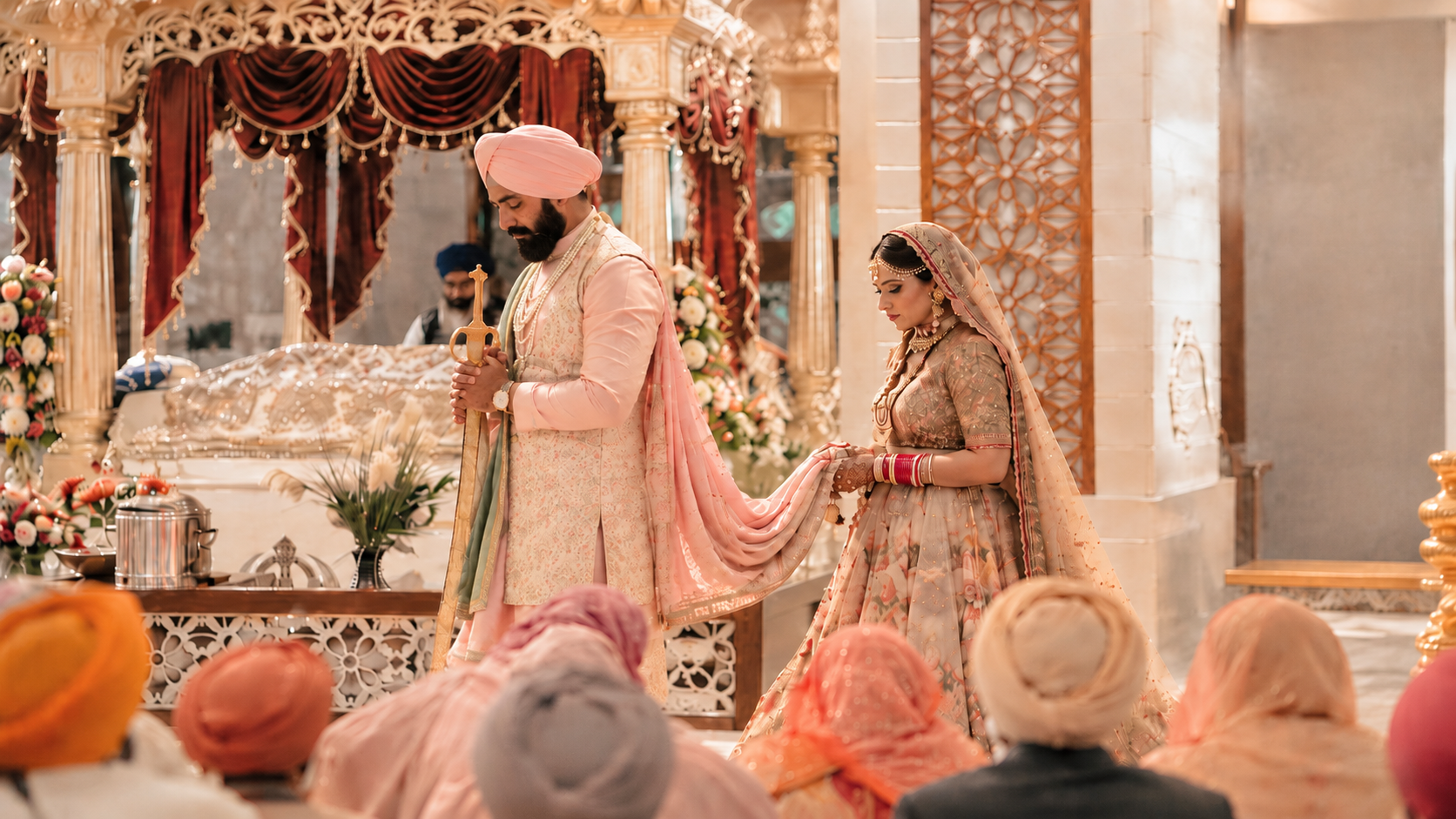
The same study gives one reading of what each stanza is about:
|
Laav |
One interpretation |
|---|---|
|
First |
Duty towards family and community, and the beginning of married life |
|
Second |
Sacrifice, mutual love and yearning, and the Divine word now heard |
|
Third |
Detachment in the midst of family life, and love of God awakening in the heart |
|
Fourth |
Final union, when human love merges into the love of God |
Ask your granthi how your gurdwara explains the laavan on the day; the code itself asks the officiant to explain the couple’s duties before the rounds begin.
How the morning runs
The order differs between gurdwaras; here is how three of them describe it. At Sri Guru Singh Sabha Southall, the groom’s family waits in the foyer for the milni, a formal greeting between the two extended families that includes an Ardas led by the granthi, and then families go down for cha pani, breakfast. The code asks that the two sides greet each other singing sacred hymns and then with “Waheguru ji ka Khalsa, Waheguru ji ki Fateh”.
At Ramgarhia Board Leeds, the milni takes place outside the front entrance if the weather allows, men and women do their milnis at the allocated time, and no one is lifted during it. At Guru Nanak Nishkam Sewak Jatha in Birmingham, the ceremony is conducted in Punjabi, the gurdwara tries to keep non-Punjabi-speaking guests informed and guests are asked to keep complete silence in the darbar; for a kurmai on the same day, the bride’s family brings the sagan into the darbar once everyone is seated.
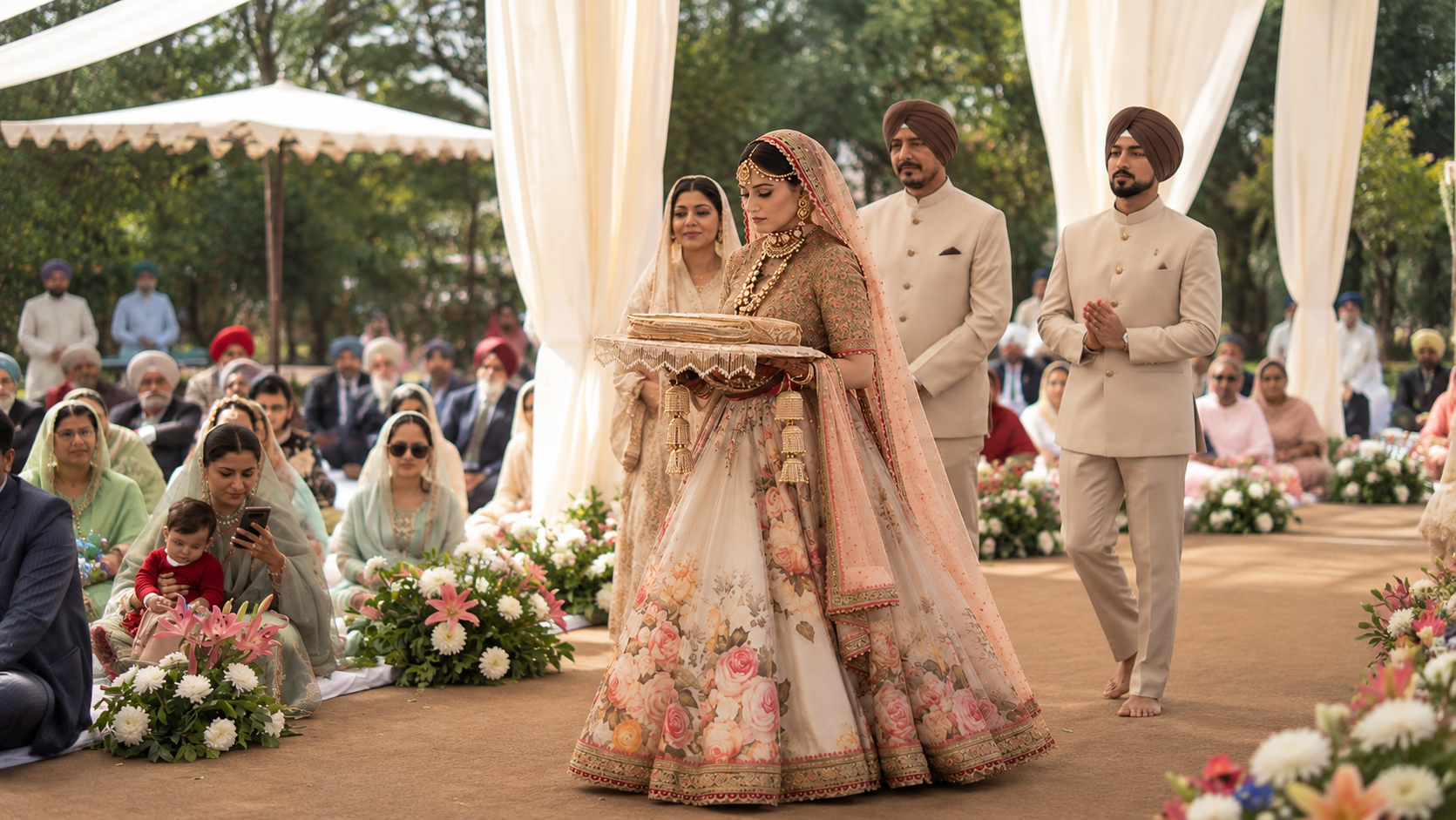
Langar after the ceremony depends on the gurdwara and on what you book: Guru Nanak Nishkam Sewak Jatha, for example, prepares it where you choose the langar option.8 The 2016 study notes that in the UK, with a few exceptions, a reception and dinner have largely taken the place of langar after the ceremony, and it places the doli, the bride’s departure from her parents’ home, after the Anand Karaj and the reception.
Who can marry in a gurdwara?
This is the question to settle first. The SGPC’s code says that people professing faiths other than the Sikh faith cannot be joined in marriage by the Anand Karaj. Sikh Council UK’s guidelines, approved in October 2014, cite that clause, and also cite a 2007 Sandesh from Sri Akal Takht Sahib, which says the Anand Karaj can only be conducted for Sikhs and that a person of non-Sikh origin who wishes to take part must adopt the Sikh faith and have Singh or Kaur added to their name on identity documents.
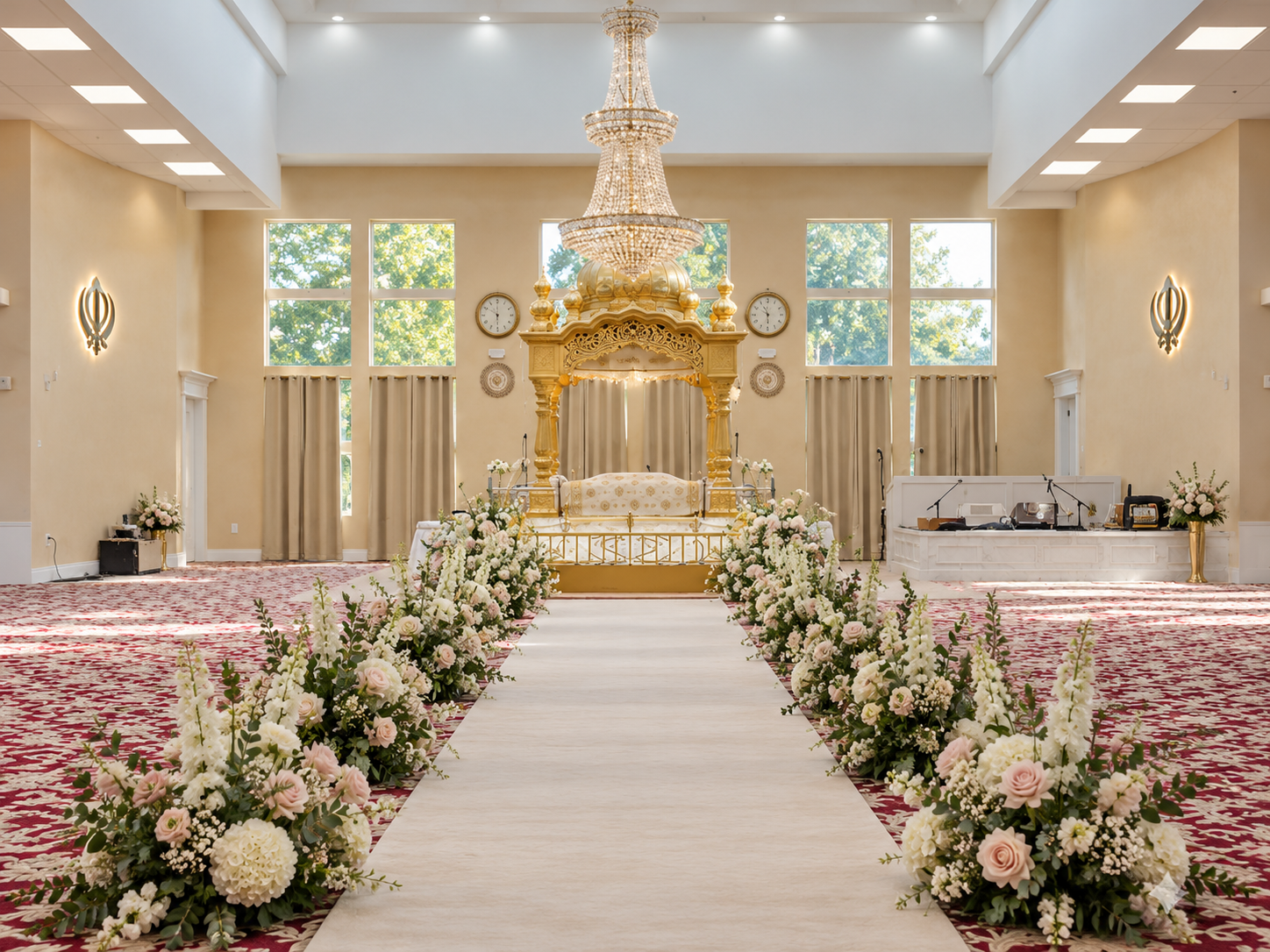
Of the gurdwaras we checked, Sri Guru Singh Sabha Southall publishes how it applies this. It asks every couple to take its free Anand Karaj course, invites them back afterwards to talk through any questions, and asks them to sign a declaration, with a partner of formerly non-Sikh origin presenting the relevant identity documents. In that declaration each partner confirms they are Sikh and will use Singh or Kaur in their name and that the Anand Karaj will be the only religious ceremony they take part in for the marriage. Sikh Council UK’s guidelines say that where a couple chooses a civil marriage at a register office instead, they should be offered an Ardas, a Sukhmani Sahib path, an Akhand path or another service to celebrate their union.
If one of you isn’t Sikh, or you’re not sure how your gurdwara applies its policy, ask before you book anything else. The answer can change the venue, the date and the paperwork.
What gurdwaras ask of you
These are some of the rules five UK gurdwaras publish (checked 16 October 2026).
|
Gurdwara |
Arrival and music |
Food |
Ceremony and other rules |
|---|---|---|---|
|
Sri Guru Singh Sabha Southall, London |
No dancing, dhol, music, bhangra or smoke, including on the street on arrival |
Approved caterers only; strictly vegetarian and egg-free |
Free Anand Karaj course for every couple |
|
Siri Guru Singh Sabha Croydon |
Not stated |
Gurdwara doesn’t cater; its kitchen is available for private catering; vegetarian only, no egg or fish |
No kalgi or sehra on the turban in front of Guru Granth Sahib; no flower petals or garlands after the ceremony |
|
Ramgarhia Board Leeds |
No singing, dancing or loud music on arrival or while at the gurdwara; no dhol in the car park |
Only food from the gurdwara or an agreed supplier at morning tea |
No oil rituals, jai mala, chunni ceremony or sindoor; no alcohol, tobacco or vaping anywhere on the premises, car park included |
|
Guru Nanak Nishkam Sewak Jatha, Birmingham |
Not stated |
Not stated |
Ceremony in Punjabi; complete silence in the darbar |
|
Guru Nanak Darbar Gurdwara, Gravesend |
Not stated |
Not stated |
Bride, groom and both families at the booking meeting; details finalised at least 4 weeks before |
Your DJ, dhol player and decorator need these rules before the day, because some apply on the street or in the car park as well as inside.
What to wear and bring
Khalsa Jatha British Isles asks wedding guests to dress modestly, cover their heads and take off their shoes before entering the darbar, and the Sikh Missionary Society UK asks visitors to take off their shoes and cover their heads. Sri Guru Singh Sabha Southall keeps headscarves and bandanas at the entrance for anyone who needs one, and asks couples to tell non-Sikh guests about the dress code. The Sikh Missionary Society UK says alcohol, narcotics, intoxicants and tobacco in any form are not allowed in gurdwara precincts.
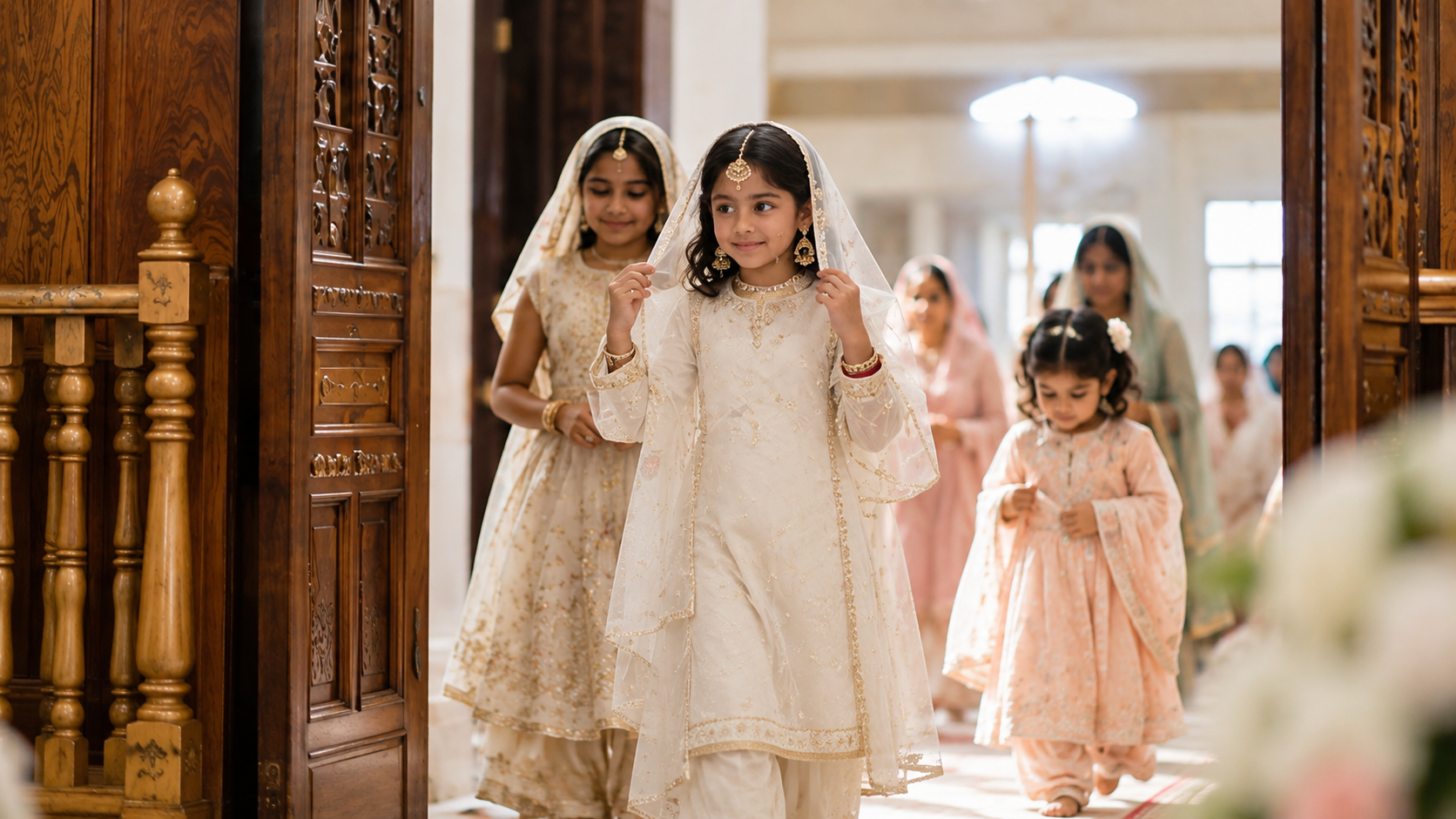
Sri Guru Singh Sabha Southall also reminds couples that they’ll be sitting and walking during the Anand Karaj, so choose clothes you can move in easily.
Making it legal
In England and Wales, a religious wedding can take place at any registered religious building, and an authorised person, such as a religious minister, must attend and sign the marriage schedule or marriage document. If the gurdwara has no authorised person, you book a registrar, which costs £114.50.4 GOV.UK publishes the list of places of worship registered for marriages. You must give notice at least 29 days before the ceremony and marry within 12 months of giving it.
These gurdwaras set their own deadlines on top. Siri Guru Singh Sabha Croydon wants the council’s notice letter at least 3 weeks before the wedding. Guru Nanak Nishkam Sewak Jatha asks couples registering there to give notice at their register office at least 12 weeks before the Anand Karaj and hand in the forms at least 28 days before; couples who have already married at a register office bring a copy of their marriage certificate at least 4 weeks before. Ramgarhia Board Leeds asks couples to give notice at their council and tell its marriage registrar once they have.
In Scotland, a registrar or an authorised celebrant can carry out a marriage. In Northern Ireland, a religious marriage can only be performed by a minister or someone registered as an officiant and authorised by the Registrar General. In either, ask your gurdwara who will solemnise the marriage legally.
A countdown for the gurdwara side
The dates combine the gurdwaras’ published deadlines with suggestions; your gurdwara’s own list comes first. Work the rest of the wedding around them in the planning timeline, which works out booking deadlines from your wedding date.
Keep the guest list for the gurdwara and the reception together in Wedvisa’s guest list manager, which records each guest’s side, RSVP and dietary needs, so the langar and the reception caterer get the right numbers. Build the morning hour by hour in the day timeline: milni, cha pani, Anand Karaj, langar (if booked), travel to the reception.
|
When |
What |
|---|---|
|
As early as possible |
Ask the gurdwara for its written guidelines and its eligibility policy; book the date |
|
6 months before |
At Gravesend, book your appointment with the Anand Karaj team |
|
3–4 months before |
At Leeds, the Anand Karaj team gets in touch to finalise the details |
|
At least 12 weeks before |
If registering at GNNSJ, give notice at your register office |
|
At least 29 days before |
Legal deadline in England and Wales: give notice at your local register office |
|
3–4 weeks before |
Croydon wants the notice letter (3 weeks); GNNSJ wants forms (28 days) or a marriage certificate (4 weeks); Gravesend finalises (4 weeks) |
|
The week before |
Brief caterer, DJ, dhol and photographer on the gurdwara’s rules; share the morning’s timings |