Minimalist Wedding Style Guide
What actually defines the Minimalist wedding look in the UK right now, and how to plan one without it tipping into feeling bare?
There's a common misconception that a minimalist wedding is a cheap wedding — fewer flowers, fewer details, less effort. It's usually the opposite. Removing everything that doesn't earn its place takes more editing, not less, because every remaining choice is exposed. There's nowhere for a weak decision to hide behind a busier room.
Here's what actually defines the look in the UK right now, and how to plan one without it tipping into feeling bare.
The Idea Behind Minimalism
Minimalist wedding design is architectural at heart. It's about clarity and restraint — letting negative space, natural light, and form do the work that decoration would normally be asked to do. A lot of its current momentum traces back to '90s ready-to-wear fashion, and specifically the clean, understated aesthetic associated with Carolyn Bessette-Kennedy — Marie Claire's rundown of 2026's defining bridal trends points to her as the reference point behind the current wave of slip-dress bridalwear and sleek, centre-parted hair.
Three principles hold the theme together, and most minimalist weddings that go wrong are ones that break at least one of them:
- One accent colour, not several. A neutral palette lifted with three competing accents stops being minimalist — it just becomes muted maximalism.
- The venue does the heavy lifting. Minimalism only works in a room that already looks finished with nothing in it.
- Quality over quantity, everywhere. A single high-weight, blind-embossed invitation says more than a stack of smaller printed touches ever could.
Colour and Materials
Cream, warm taupe, charcoal, and stone form the base of most minimalist palettes, usually with a single deeper tone allowed in as an accent — nothing more. Tailored, unpatterned linens in natural fibres, clear or lightly smoked glassware, and tall unadorned glass cylinder candles are the standard toolkit; anything textured, clustered, or patterned tends to work against the effect rather than for it.
Stationery is where a lot of the theme's quiet detail actually lives. High-weight paper stock, blind embossing, sharp typography, and raw birch plywood backings do more for the minimalist look than any amount of printed decoration, because the value is tactile rather than visual.
Where It Works Best
Not every venue can carry minimalism, because the room is doing the job decor would normally do elsewhere. Brutalist and industrial architecture — the Barbican Centre in London is the standard reference point — offers exactly the raw, structural backdrop the theme is built to complement. Repurposed industrial lofts and warehouse conversions give the same high ceilings and open-plan feel without quite the same formality, and are increasingly flagged as go-to minimalist wedding settings precisely because their existing structure needs so little added to it. Modern art galleries and museums suit sculptural floristry particularly well, since the space is already designed to let individual objects stand out rather than blend into a busier scene. Historic municipal buildings, like the Town Hall Hotel in London, offer a softer version of the same architectural presence.
A quick way to test a shortlisted venue: if it already looks good completely empty, it's probably right for this theme. If it needs dressing to feel finished, it isn't.
Florals: Less Volume, More Shape
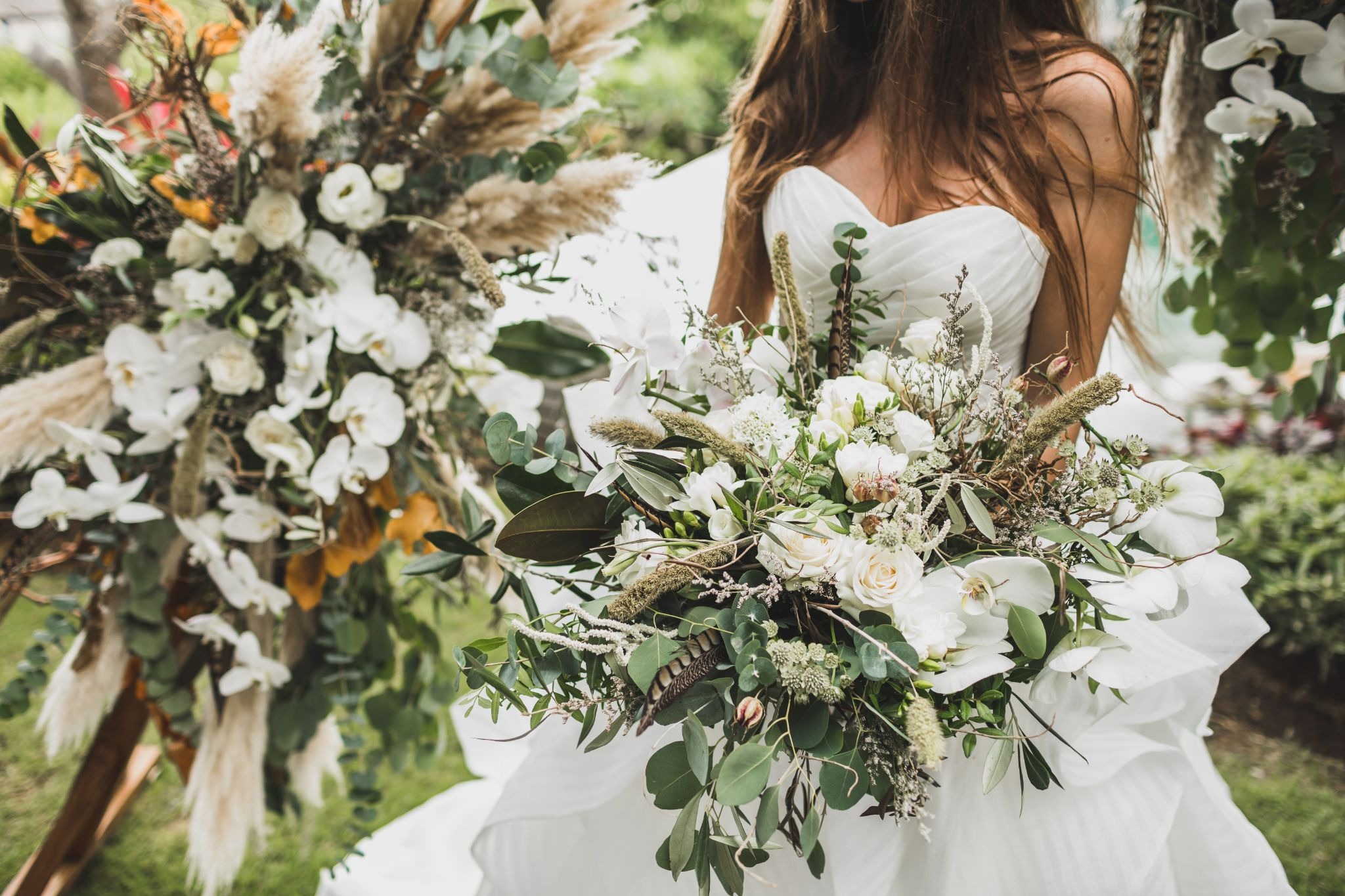
Sculptural floristry is the defining feature of minimalist wedding styling, and the calla lily has become its signature flower. Its clean, architectural lines deliver real visual impact without needing large floral volume — a genuine advantage for couples on a tighter florals budget, since one or two well-placed sculptural stems can carry a table that would otherwise need a dense arrangement to feel intentional. According to Guides for Brides' 2026 trend research, Pinterest searches for "calla lily bridal bouquet" have roughly doubled year-on-year, reflecting a broader shift across the UK market toward slim, single-stem shapes over clustered blooms.
What the Bride and Groom Wear
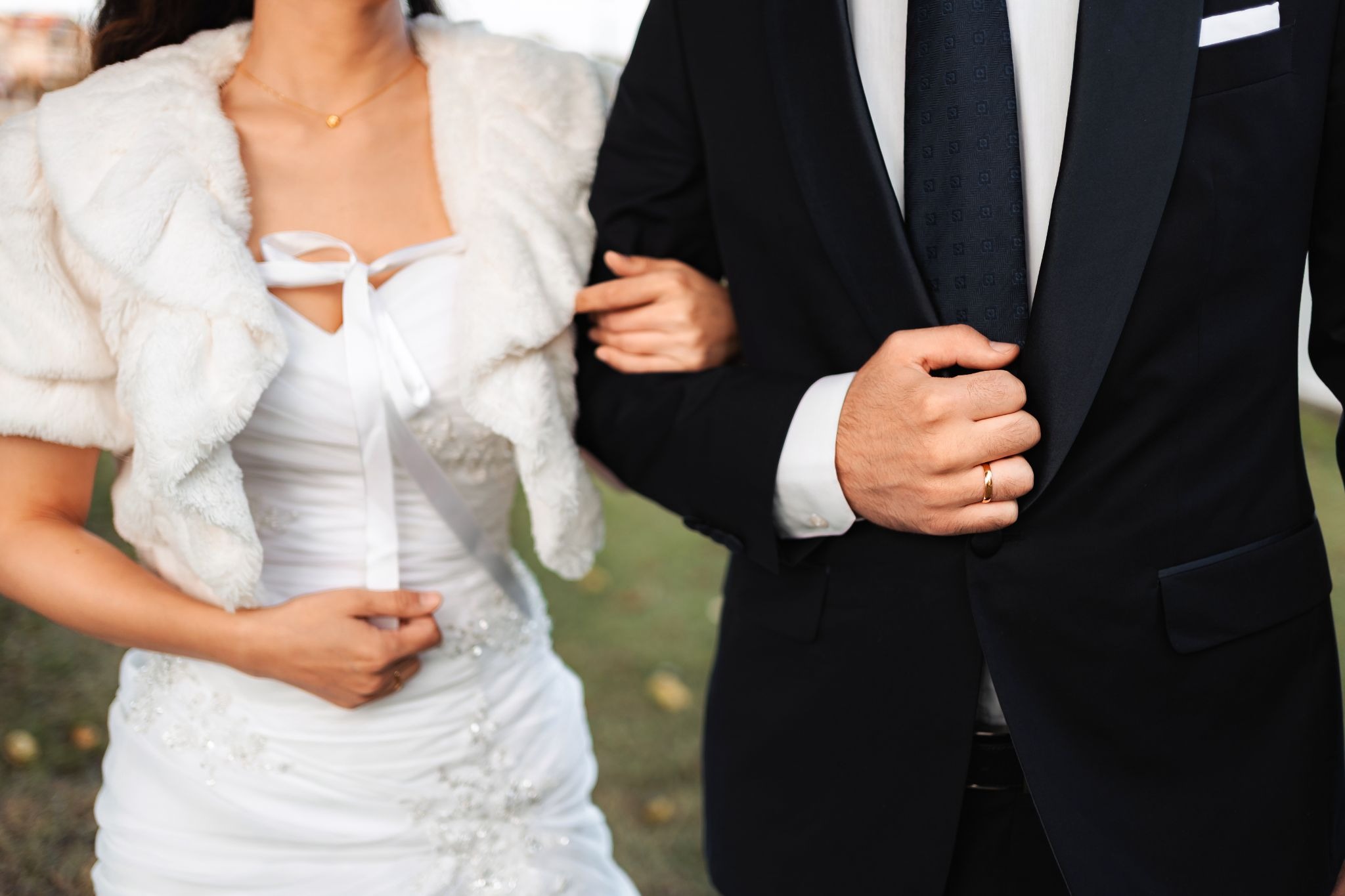
Minimalist bridalwear has been shaped heavily by '90s-inspired simplicity. Slip dresses — clean, bias-cut, and genuinely timeless — are a defining choice for 2026, and one of the few dress styles that can be restyled with different accessories across the day rather than requiring a full second outfit. Sleek necklines with minimal embellishment round out the look for brides who'd rather let cut and fabric do the work than decoration.
Hair and beauty tend to follow the same restraint: a centre-parted ponytail, a minimalist low bun, brushed-up brows, with maybe one sculptural accessory — a velvet bow, a pearl pin — as the only decorative note in the whole look. For grooms, a well-tailored suit in a single restrained colour, minimal pattern, and simple accessories does the job without needing a statement waistcoat or tie to compete with it.
Where the Savings Actually Come From
Minimalism doesn't guarantee a lower total spend, but it does concentrate money more efficiently than most other themes — and the savings show up in a specific place. Because a beautiful, architecturally strong venue needs comparatively little dressing, decor budgets that would otherwise go on dense floral installations or full-room draping can often be scaled right back, and calla lily arrangements in particular deliver impact without the volume (and cost) a fuller bouquet or centrepiece style would demand.
The trade-off is that this theme puts more pressure on the venue itself to be genuinely right, rather than "good enough with decor added." It's usually worth spending slightly more on a venue with real architectural character than trying to save there and compensate with styling — minimalism rarely survives that swap.
Frequently Asked Questions
Is a minimalist wedding just a cheaper wedding with less decoration?
Not really — it's a different allocation of effort, not necessarily a smaller one. Decor spend often comes down, but that saving tends to get reinvested into a venue with stronger architectural presence, since the room needs to carry more of the visual weight itself.
Why is the calla lily so associated with minimalist weddings?
Because its clean, architectural line delivers strong visual impact without needing much volume — a single stem or small cluster can do what a dense bouquet would elsewhere. That efficiency is exactly what the rest of the theme is built around too.
What venues actually suit this style?
Anywhere with strong existing architecture and enough negative space to feel complete without dressing: brutalist or industrial buildings, converted lofts, galleries, and historic municipal buildings all work. A useful test is whether the room looks finished empty — if it doesn't, it's the wrong venue for minimalism.
How do I stop a minimalist wedding from feeling cold?
Through tactile detail rather than more decoration — high-weight paper, natural materials like raw wood and linen, and one or two genuinely personal touches carry far more warmth here than a room full of smaller decorative items would.
What should I wear for a minimalist wedding aesthetic?
A clean, bias-cut slip dress or a sleek, minimally embellished silhouette are the defining bridal choices for 2026, generally paired with simple, low-key hair and a single sculptural accessory rather than heavier styling.
Can a minimalist colour palette include more than one accent colour?
It can, but it's risky — the moment a scheme carries two or three competing accents with equal weight, it tends to read as muted maximalism rather than genuine minimalism. One accent, used sparingly, is what keeps the discipline intact.