Vintage Wedding Theme Ideas: A Complete Guide to Nostalgic Wedding Style
What defines vintage wedding styling in the UK today: the eras and aesthetics currently shaping it, the palettes and materials that read as authentically vintage rather than themed, the venues that suit the look, and the dress, floral, and budget details that bring it all together.
A vintage wedding isn't a costume party built around one decade — it's an act of curation. The best examples borrow patinated surfaces, heirloom textiles, and period-specific details from history and use them to tell a genuinely personal story, rather than recreating a single era wholesale. It's the theme with the most built-in warmth, because so much of it comes from objects that already have a history of their own.
This guide covers what defines vintage wedding styling in the UK today: the eras and aesthetics currently shaping it, the palettes and materials that read as authentically vintage rather than themed, the venues that suit the look, and the dress, floral, and budget details that bring it all together.
What Makes a Wedding "Vintage"?
Vintage wedding design draws its inspiration from historical periods, using storytelling, romance, and curated heirlooms rather than uniform, mass-produced decor. It's built on patinated surfaces, vintage textiles, and period-specific architectural details, balanced against a modern venue and modern practicalities.
Unlike a strict "period" wedding built entirely around one decade, most vintage weddings in the UK now blend eras — a 1920s-inspired engagement ring, 1950s-style bridal silhouettes, and Victorian or Georgian venue architecture can all sit comfortably together, provided the materials and colour palette tie the whole thing together. The unifying thread is history itself, not any single point on the timeline.
Vintage Wedding Eras and Inspiration
Different decades bring different moods to a vintage wedding, and most couples find it easier to pick a lead era and let the rest of the styling support it, rather than trying to represent every decade at once.
- Regency (1810s–1820s), popularised again by the continued cultural pull of Bridgerton, brings elegant historic venues, soft pastel palettes, ornate floral arrangements, and classic silhouettes built around lace, corsetry, and flowing fabric.
- 1920s Art Deco brings geometric detailing, gold accents, and glamour — a strong influence right now in bridal jewellery specifically, with "vintage wedding ring 1920s" searches roughly tripling year-on-year on Pinterest.
- 1950s romance brings fuller skirts, soft pastels, and a more polished, ladylike silhouette, often paired with tea-length dresses and vintage-style gloves or hats for guests.
- Victorian and Georgian grandeur brings heavy fabrics, dark academia-adjacent colour palettes, and the grand country house architecture that most naturally carries a fully immersive vintage atmosphere.
Vintage Wedding Colour Palettes
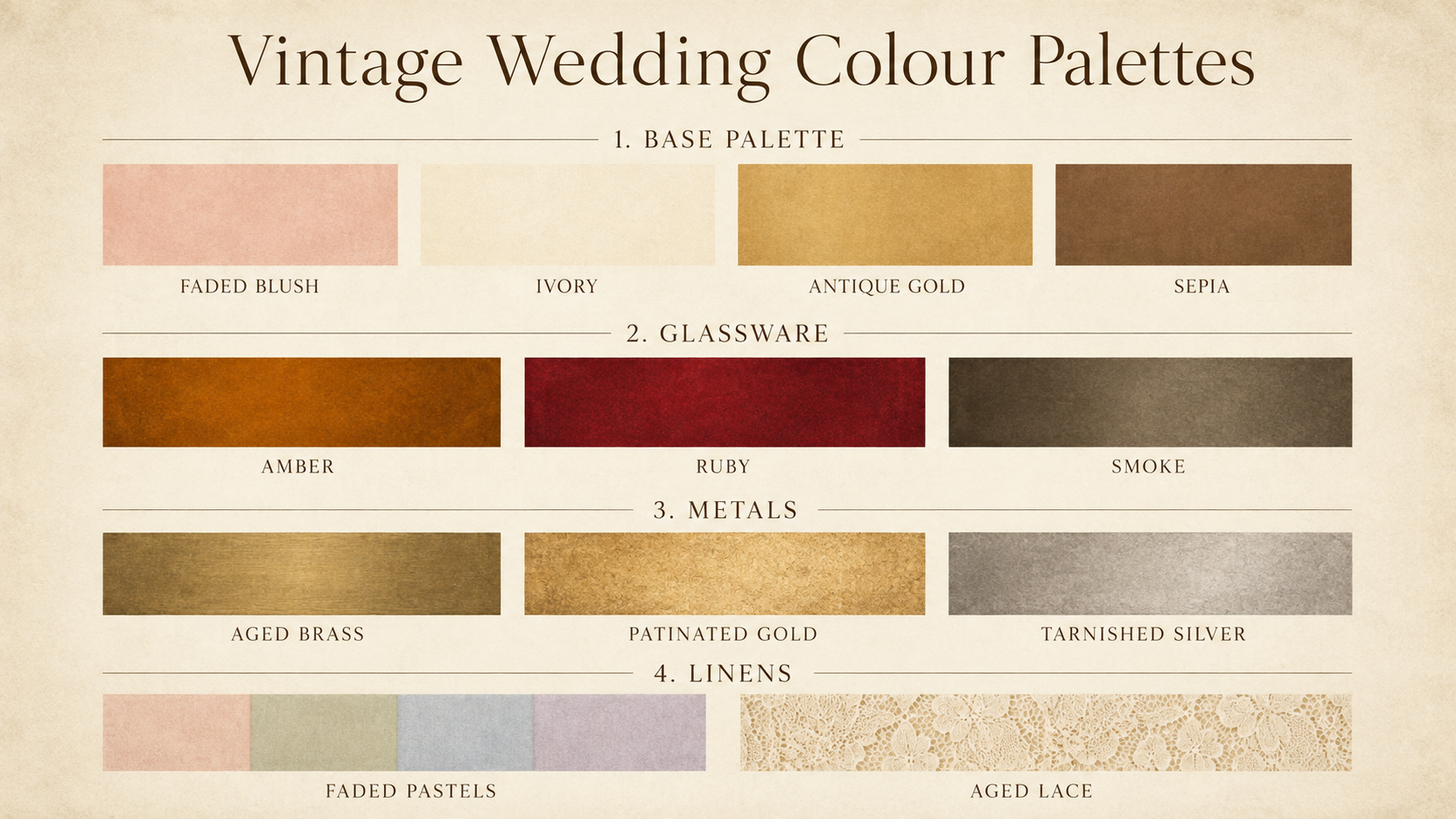
Vintage palettes lean into faded, aged tones rather than crisp modern shades — faded blush, ivory, antique gold, and sepia sit at the core of the look. A current addition worth knowing about is the reappearance of amber, ruby, and smoke-toned glassware across tablescapes, which adds real warmth and depth to vintage styling and is genuinely inexpensive to source secondhand.
|
Element |
Vintage Approach |
|---|---|
|
Base Palette |
Faded blush, ivory, antique gold, sepia |
|
Glassware |
Amber, ruby, and smoke-toned tones |
|
Metals |
Aged brass, patinated gold, tarnished silver |
|
Linens |
Faded pastels, aged lace overlays |
|
Tableware |
Mismatched antique china, heirloom silver |
Mismatched, rather than matching, is the operative word throughout — a set of identical hired glassware reads as modern no matter what colour it is, while a genuinely mismatched collection of antique pieces reads as vintage even in a fairly restrained palette.
Vintage Wedding Venues in the UK
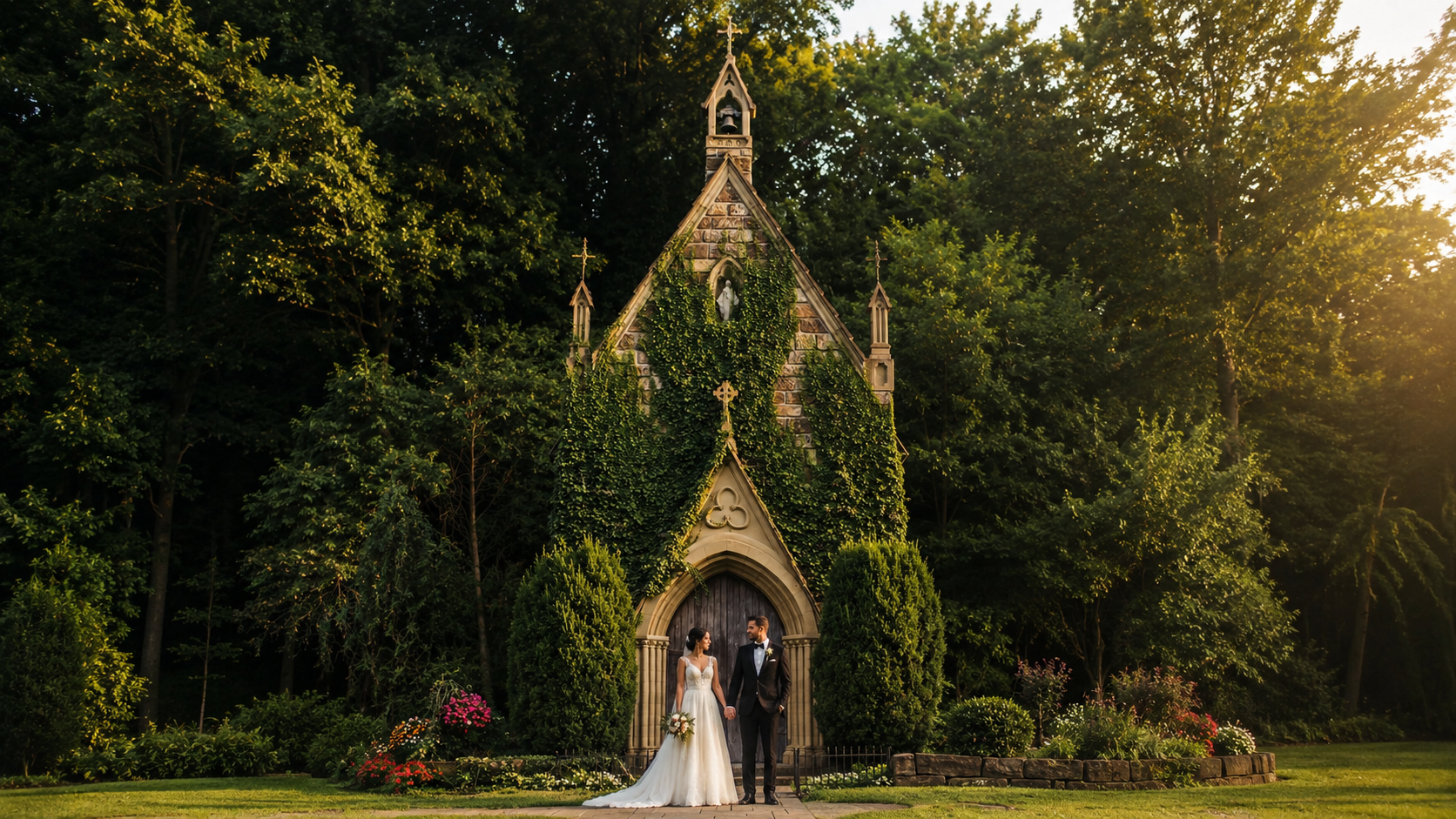
Vintage styling needs a venue with real architectural history behind it — this is one theme where a brand-new build, however well designed, struggles to compete with genuine age and patina.
- Historic country estates and heritage manor houses are the classic choice, offering both the grand rooms and the period detail (fireplaces, cornicing, original windows) that vintage styling is built to complement.
- Ancient stone chapels suit an intimate, deeply traditional ceremony, particularly for couples leaning into a Victorian or Georgian aesthetic.
- Raw industrial sites, such as repurposed stone quarries, offer scale and character for couples who want the drama of vintage styling without a formal country house setting.
- Art galleries, old libraries, and other clean historic spaces suit a softer, quieter take on vintage — one that mixes vintage charm with simpler, more elegant modern details rather than full period immersion.
Worth budgeting for early: heritage venues with genuine period character tend to command a premium over a modern equivalent, since that history is precisely what couples are paying for. It's usually the single biggest cost variable in a vintage wedding, and the one place where the theme doesn't offer an obvious way to cut corners.
Vintage Florals and Decor
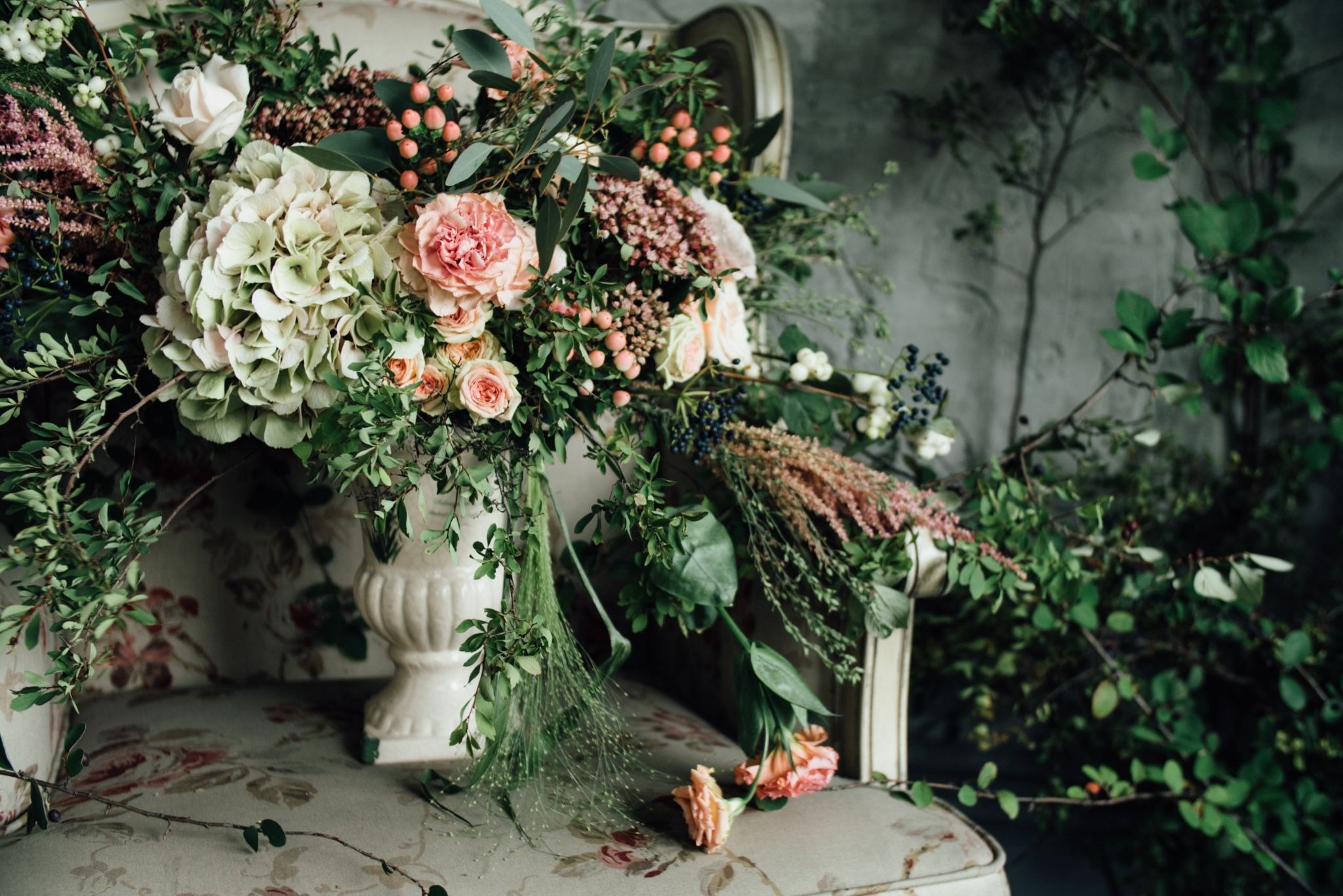
Floral design for vintage weddings prioritises soft, garden-style blooms — heritage roses, delphiniums, and fragrant herbs, arranged loosely rather than in tight, structured clusters, to recall a classic English garden rather than a formal florist's display. Styling elements lean on delicate lace drapery, faded pastel linens, antique brass candlesticks, and patinated metallic accents throughout.
Heirloom pieces are what make a vintage wedding feel genuinely personal rather than simply themed — a borrowed brooch, family silver, or a reworked heirloom veil does more to establish authenticity than any amount of purchased decor. Mismatched antique china, secondhand glassware, and vintage-style menu cards or place settings, often handwritten, reinforce the same collected, storied feel. This is also where a vintage theme can genuinely save money against most other styles: Bridebook's 2026 UK Wedding Report has flagged upcycling and reselling decor as a rising strategy among UK couples, and secondhand antique props tend to cost a fraction of new hired equivalents — so the decor line of a vintage budget can genuinely offset a pricier venue.
Vintage Wedding Attire
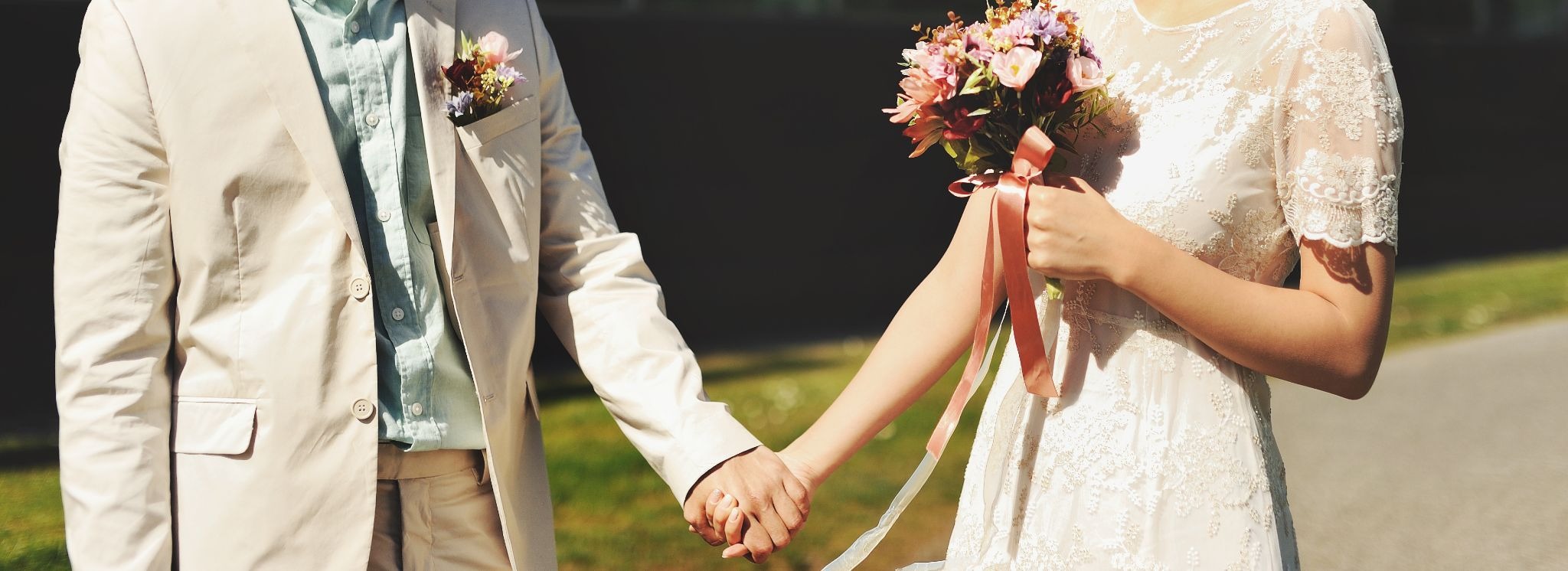
Bridal attire within vintage styling favours soft, romantic silhouettes — structured basque waists, intricate lace detailing, heirloom jewellery, and vintage-inspired veils. A reworked family veil or a grandmother's jewellery does more for the theme than any newly purchased "vintage-style" equivalent, since it carries genuine history rather than an imitation of it.
For grooms, vintage-inspired menswear has moved well beyond a plain black tuxedo: vintage-inspired waistcoats, velvet dinner jackets, and subtle taffeta accents on impeccably tailored suits all nod to tradition while still feeling current, rather than costumed. Pocket watches, antique cufflinks, and tie pins are small, easy details that carry a lot of the theme's weight without much cost.
Bringing It Together
The strongest vintage weddings don't try to recreate a single decade perfectly — they pick a lead era, let it set the tone, and then fill in the details with pieces that carry real history: a family heirloom, secondhand glassware, mismatched china gathered rather than bought as a set. Choose a venue with genuine period architecture, keep the palette faded and warm rather than crisp, and let personal objects do more of the storytelling than purchased decor ever could.
Frequently Asked Questions
What is a vintage wedding, exactly?
A vintage wedding draws its styling from historical periods — often blending more than one era — using patinated materials, heirloom pieces, and curated antique details rather than uniform modern decor. The unifying idea is history and storytelling, not a strict recreation of a single decade.
Which era is most popular for vintage weddings in the UK right now?
Regency styling, driven largely by the continued popularity of Bridgerton, and 1920s Art Deco detailing (especially in bridal jewellery) are both strongly trending, alongside more classic 1950s romantic silhouettes. Many couples blend elements of several eras rather than committing to one.
What colours work best for a vintage wedding?
Faded blush, ivory, antique gold, and sepia tones form the core palette, often lifted with amber, ruby, or smoke-toned glassware across the tablescape for extra warmth and depth.
What venues suit a vintage wedding in the UK?
Historic country estates, heritage manor houses, and ancient stone chapels are the classic choices, offering genuine period architecture that vintage styling needs to feel authentic. Raw industrial sites like repurposed stone quarries offer a more dramatic alternative for couples who want scale without formality.
Is a vintage wedding cheaper than other themes?
It can be, since much of the material culture — antique china, secondhand glassware, vintage props and furniture — is genuinely inexpensive to source secondhand. The main cost driver tends to be the venue itself, as the heritage properties that suit the theme best often sit at the higher end of UK venue pricing.
How do I make a vintage wedding feel personal rather than just themed?
Lean on genuine heirloom pieces rather than purchased "vintage-style" equivalents wherever possible — a borrowed brooch, family silver, or a reworked heirloom veil carries real history that a newly bought imitation simply can't replicate.
What should the groom wear for a vintage wedding theme?
Vintage-inspired waistcoats, velvet dinner jackets, and subtle taffeta accents on a well-tailored suit all nod to the theme without feeling like a costume. Small details — a pocket watch, antique cufflinks, a tie pin — go a long way for relatively little cost.