Luxury Wedding Theme Ideas: A Complete Guide to High-End Wedding Style
This guide covers what actually defines luxury wedding styling in the UK right now.
A luxury wedding isn't really about spending the most money — it's about precision. Every material, every sightline, every transition from champagne reception to candlelit dinner to late-night dancefloor is deliberate. Nothing is left to fill a gap; everything is chosen because it earns its place.
This guide covers what actually defines luxury wedding styling in the UK right now: the "two-chapter" structure most high-end weddings are built around, the colour palettes and materials that read as genuinely elevated rather than simply expensive, the venues that can carry the scale, and the dress code, florals, and budget realities that come with planning at this level.
What Makes a Wedding "Luxury"?
Luxury styling is defined by grand proportions, high-end materials, and dynamic staging rather than any single colour or motif. Where a classic wedding aims for elegance and a boho wedding aims for texture, a luxury wedding aims for immersion — a fully considered environment where the lighting, the linens, the florals, and the room itself all work together.
The defining structural idea in modern UK luxury weddings is the two-chapter day: a formal, romantic daytime phase built around a heritage ballroom or grand reception room, muted neutral palettes, and classic floral arrangements — followed by a dramatic shift into evening glamour, with saturated lighting, mirrored surfaces, and a genuinely different atmosphere for the party. It's less a "look" and more a piece of stagecraft, and it's become one of the clearest signals of a well-executed luxury wedding.
Luxury Wedding Colour Palettes
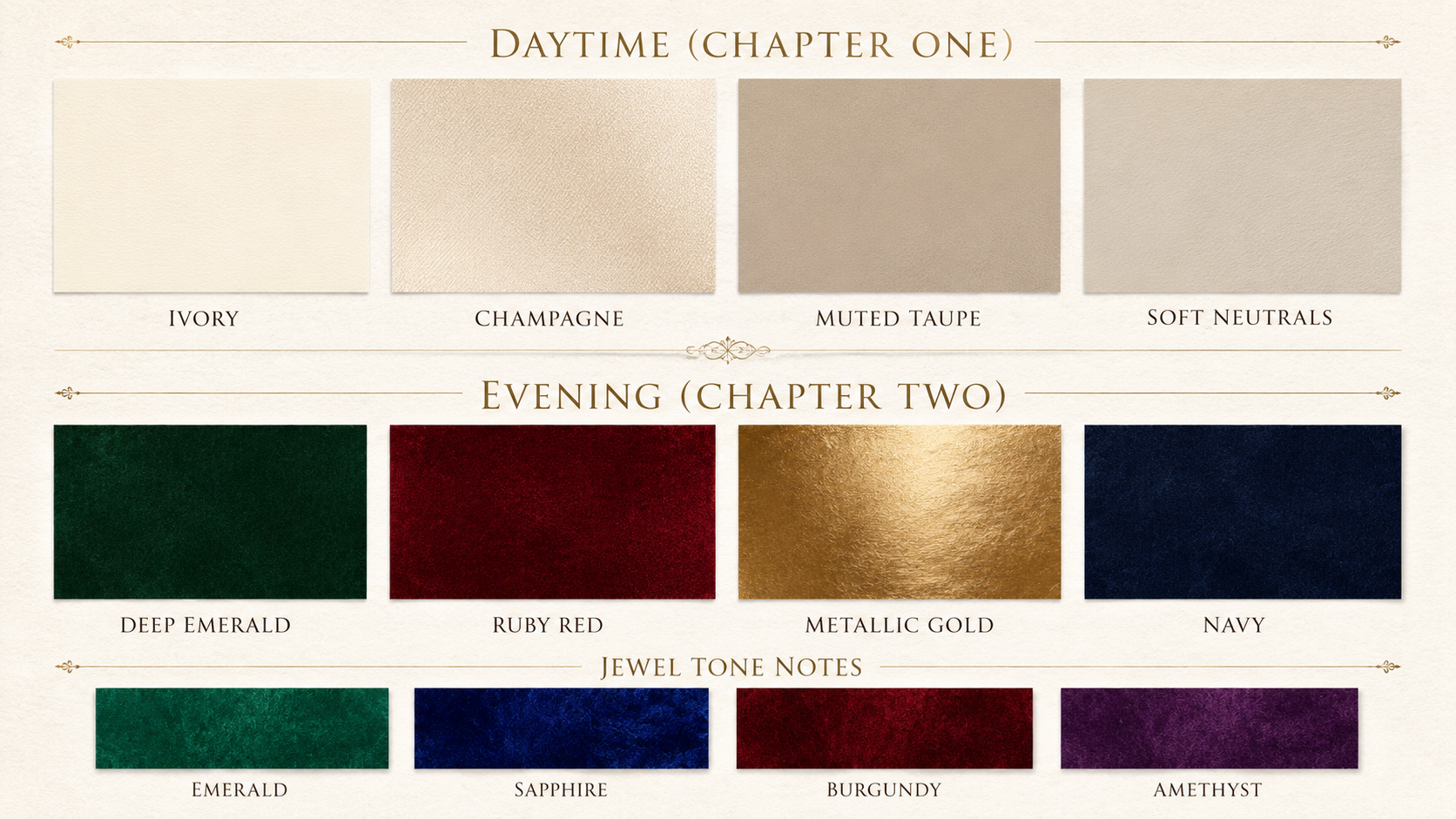
Luxury palettes lean into depth and richness rather than pastel softness. Deep emerald, ruby red, metallic gold, and navy dominate the evening end of the day, while daytime styling tends to pull back into muted neutrals — ivory, champagne, soft taupe — that let the venue's architecture do the talking.
Jewel tones in particular have become the defining note of black-tie luxury weddings: emerald, sapphire, burgundy, and amethyst all hold their richness beautifully under ballroom chandeliers and candlelight in a way that flatter pastels simply can't match in the evening.
|
Chapter |
Palette |
Materials |
Mood |
|---|---|---|---|
|
Daytime (Chapter One) |
Ivory, champagne, muted taupe, soft neutrals |
Classic linen, formal florals, understated table settings |
Timeless, romantic, restrained |
|
Evening (Chapter Two) |
Deep emerald, ruby red, metallic gold, navy |
Velvet, mirrored glass, saturated draping |
Dramatic, celebratory, immersive |
Choosing one anchor colour for each chapter — rather than trying to carry the same palette through the whole day — is what allows the transition between the two to actually feel like one.
Luxury Wedding Venues in the UK
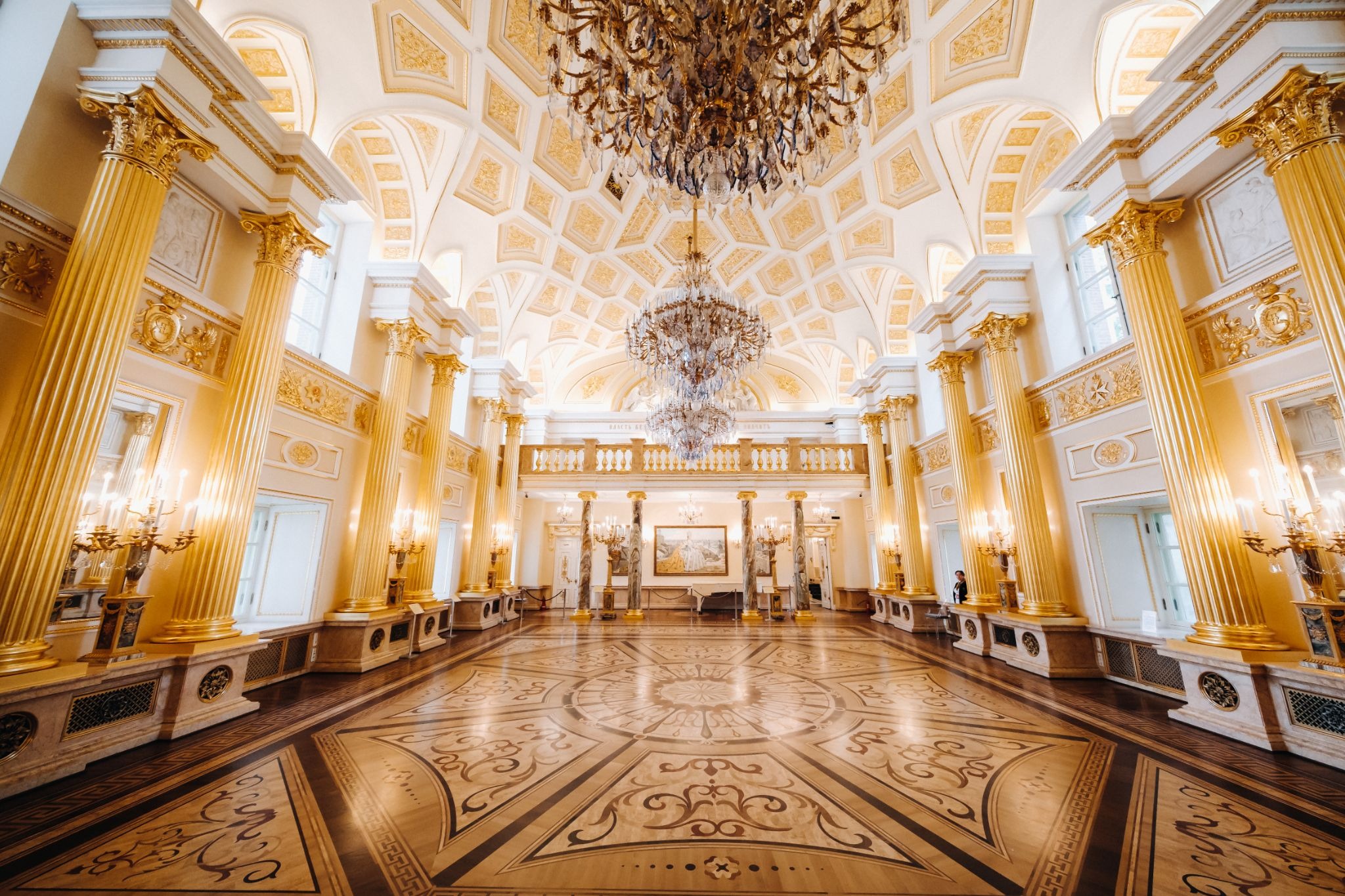
Venue is everything in luxury styling, because the room needs to be able to carry the scale of the design without extra help. The strongest luxury venues share a few characteristics: high ceilings, chandeliers or a genuine lighting rig, a dance floor with presence, and enough architectural detail to hold its own once the room is fully dressed.
- Grand heritage estates and country houses remain the classic choice for a two-chapter luxury wedding — formal enough for the daytime ceremony, with rooms that transform convincingly for the evening.
- Hotel ballrooms, particularly those with ornate moulding and parquet floors, offer the architectural authority and in-house, multi-course catering capability that large-scale luxury weddings need.
- Museums, galleries, and grand libraries are an increasingly popular alternative to a traditional ballroom — they carry the same sense of occasion with more visual interest, and give guests the appeal of private access to a usually public building.
- Destination-style UK venues — country estates and coastal properties designed to feel like a getaway without international travel — are a fast-growing option for couples who want the immersive, multi-day feel of a destination wedding closer to home.
Luxury Florals and Decor
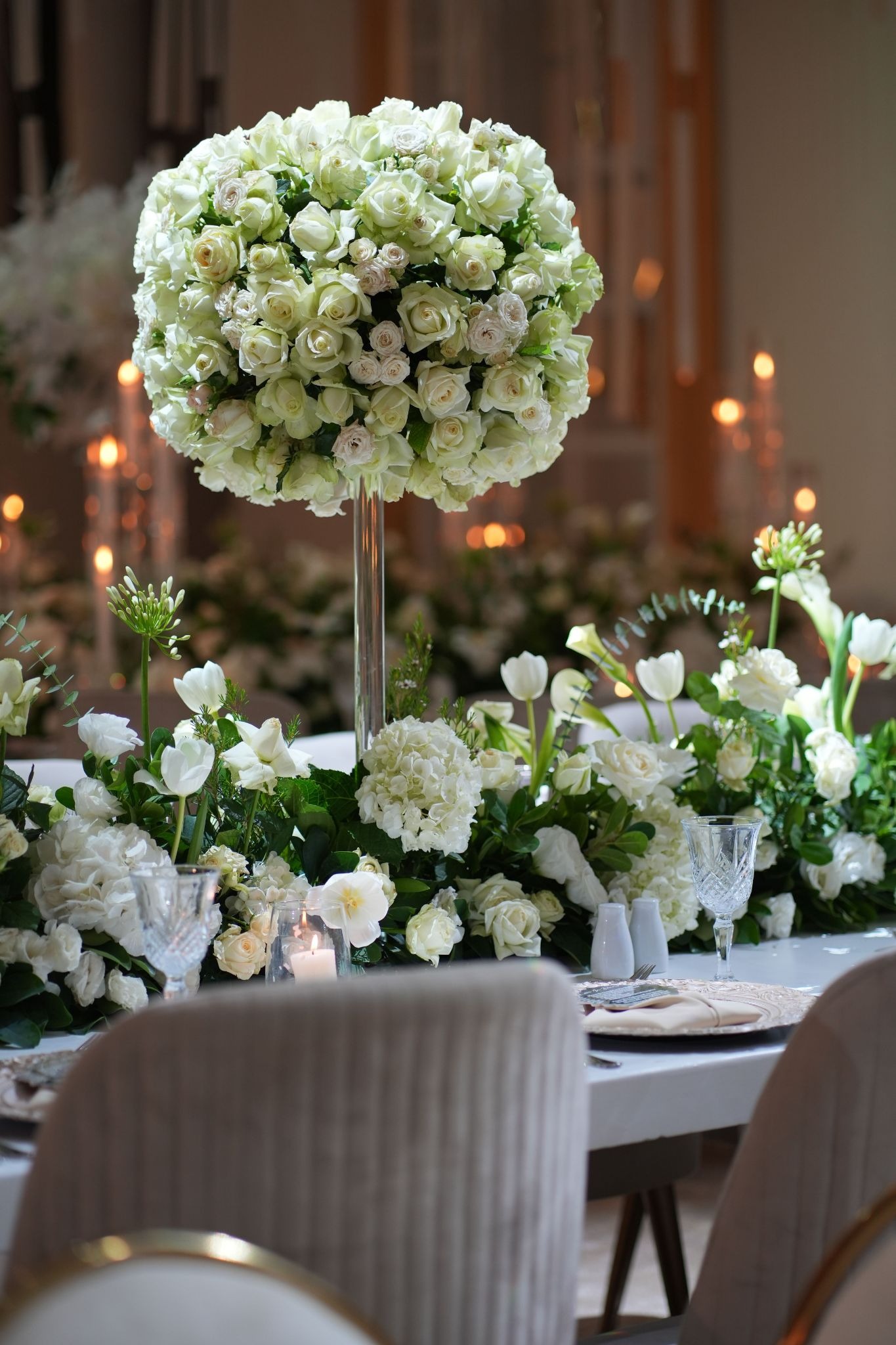
Where boho florals favour movement and irregularity, luxury florals lean maximalist and structured — dense, blousy arrangements of cascading roses and hydrangeas, built for visual weight rather than airiness. Deep-hued or coloured glassware, sculpted taper candles, and richly patterned table linens complete tablescapes designed to photograph as well up close as they do from across the room.
Fabric plays an architectural role at this scale. Floor-to-ceiling draping is used to reshape entire rooms — softening the proportions of a large heritage hall, or carving cosy, intimate dining pockets out of a cavernous ballroom. Combined with saturated architectural lighting and mirrored dance floors, this draping is what makes the shift from formal daytime ceremony to full evening party feel like walking into a different event entirely.
Luxury Wedding Attire
Bridal fashion within the luxury theme favours structure: corsetry, basque waistlines, and detailed lace overlays paired with long, dramatic veils. Convertible bridal scarves and light capes have become a popular practical addition too, letting a bride refresh her look between daytime vows and the late-night celebration without a full second outfit.
For a black-tie luxury wedding specifically, the dress code does real work: floor-length gowns in jewel tones, classic black, or champagne are the standard for guests and bridal party alike, with A-line and column silhouettes remaining the safest, most consistently flattering choices for a formal ballroom setting.
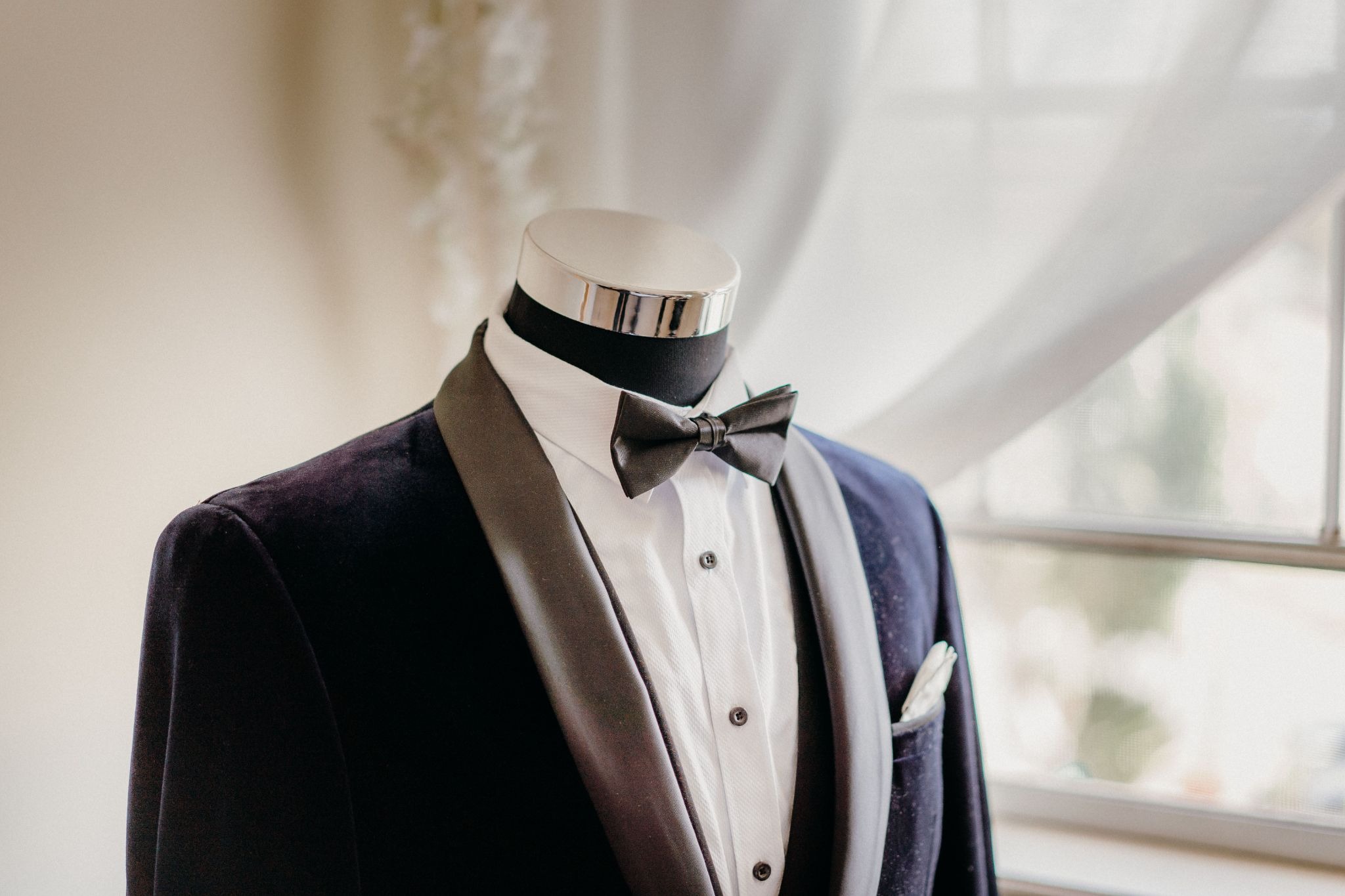
Grooms are moving beyond the traditional black tuxedo. Midnight navy has overtaken black as the most popular tuxedo colour for evening weddings, reading richer and more dynamic under chandelier and candlelight, while velvet dinner jackets in burgundy or emerald offer a bolder option for grooms who want the formalwear to make a statement of its own.
How Much Does a Luxury Wedding Cost in the UK?
Luxury weddings sit well above the UK national average of £20,600–£22,000, largely because so much of the theme depends on scale — full-room draping, dual lighting rigs for two atmospheric "chapters," multi-course catering, and florals dense enough to carry a grand room all cost meaningfully more than their equivalents at a smaller, simpler wedding.
Venue hire and catering still typically make up the largest single share of the budget at 35–50% of total spend, but at the luxury end that percentage often buys considerably more — in-house event design teams, multiple room transformations, and staffing levels that a smaller venue simply couldn't offer. Floral and lighting budgets tend to run higher than average too, since maximalist tablescapes and full architectural lighting rigs are central to the look rather than optional extras.
Bringing It Together
A luxury wedding theme works best when every decision reinforces the same idea: this room, this evening, was designed specifically for you and no one else. Choose a venue with genuine architectural presence, commit fully to the two-chapter structure rather than trying to make one palette work all day, and put the bulk of the budget into the handful of elements — lighting, draping, florals — that actually transform a space. Done well, it reads not as expense for its own sake, but as precision.
Frequently Asked Questions
What is a luxury wedding theme, exactly?
A luxury wedding theme is defined by grand proportions, high-end materials, and immersive staging rather than any single colour or motif. The defining structural feature in the UK is the "two-chapter" day — a formal, romantic daytime phase followed by a dramatically different evening atmosphere within the same venue.
What colours work best for a luxury wedding?
Muted neutrals like ivory, champagne, and taupe suit the formal daytime ceremony, while deep jewel tones — emerald, ruby, sapphire, and metallic gold — come into their own for the evening reception, where they hold their richness beautifully under chandelier and candlelight.
What venues suit a luxury wedding in the UK?
Grand heritage estates and country houses, hotel ballrooms with ornate moulding and parquet floors, and museums or galleries with strong architectural character all suit the scale luxury styling requires. The key is a room with enough architectural presence to carry full draping, lighting, and dense florals without feeling overwhelmed.
Is a luxury wedding always black tie?
No, though the two often go together. Black tie adds a formal dress code on top of luxury styling, but a luxury wedding can also be styled with a less strict dress code — the defining features are the venue, materials, and staging rather than what guests are asked to wear.
How much more does a luxury wedding cost compared to the UK average?
There's no fixed multiple, but luxury weddings sit well above the national average of roughly £20,600–£22,000, largely due to full-room draping, dual lighting setups for the two-chapter transition, multi-course catering, and denser, larger-scale floral arrangements.
What's the best way to keep a luxury wedding budget under control?
Concentrate spend on the handful of elements that genuinely transform the space — lighting, draping, and statement florals — rather than spreading budget evenly across every detail. A venue with strong existing architecture also reduces how much needs to be built from scratch.
Can a luxury wedding still feel personal rather than generic?
Yes — in fact, the best ones do. Couples increasingly personalise within the luxury framework: choosing jewel-tone florals that suit the specific venue's architecture, adding meaningful cultural elements, or opening the day with a cocktail hour that reflects their personalities before the formality of the evening begins.