Wedding Planner vs DIY Wedding - What to Choose in the UK
Wedding planner vs DIY wedding: UK costs, time commitment, and how to decide which approach actually suits you.
Somewhere around month three of planning, most couples ask the same question: is this actually saving us money, or would it have been cheaper — and saner — to just hire someone? It's a fair question, and the honest answer is that it depends far more on your time, temperament and wedding complexity than most advice columns admit.
The choice isn't really "hire a planner" or "do it all yourself." It's a spectrum, from full-service planning where someone else runs the entire project, through partial planning and on-the-day coordination, to a genuinely DIY wedding where you handle everything. Most UK weddings actually land somewhere in the middle, mixing professional help on the parts that carry the most risk with DIY on the parts that don't.
This guide breaks down what a wedding planner actually costs in the UK, what a realistic DIY time commitment looks like, and a practical way to decide which mix of the two suits your wedding — rather than assuming one option is universally "better."
What a Wedding Planner Actually Costs in the UK
Planner fees vary enormously depending on how much of the project you hand over. For full-service planning, most experienced UK planners charge 10–15% of your total confirmed wedding budget, often with a minimum fee attached. In practice, that works out to roughly £4,000–£15,000+ for a full-service package, with luxury or highly bespoke planners setting minimum fees from £7,000–£8,000 upward. For a more average-budget wedding, Rock n Roll Bride suggests £2,000–£3,500 is a realistic figure for full help.
Bridebook's own data on average spend across all planner types — full planning, partial help and day-of coordination blended together — puts the figure lower, reporting an average of £1,543, with more recent 2026 analysis citing a figure closer to £1,900. The gap between that figure and the £4,000+ full-planning quotes above simply reflects that most couples who hire help aren't paying for full-service planning — they're paying for a smaller, more targeted slice of it.
Two lighter-touch options worth knowing about:
- Partial planning — help with some elements while you handle others yourself — typically runs £1,500–£2,500.
- On-the-day (or "day-of") coordination — someone to manage logistics and troubleshoot on the wedding day itself, without being involved in the planning beforehand — typically costs £1,000–£2,500, sometimes more for large weddings or complex venues.
It's worth noting that some venues include a coordinator as part of their package. That's a different service to an independent planner — a venue coordinator typically focuses on logistics specific to that building rather than your overall vision, styling or supplier sourcing.
What "DIY Wedding" Actually Means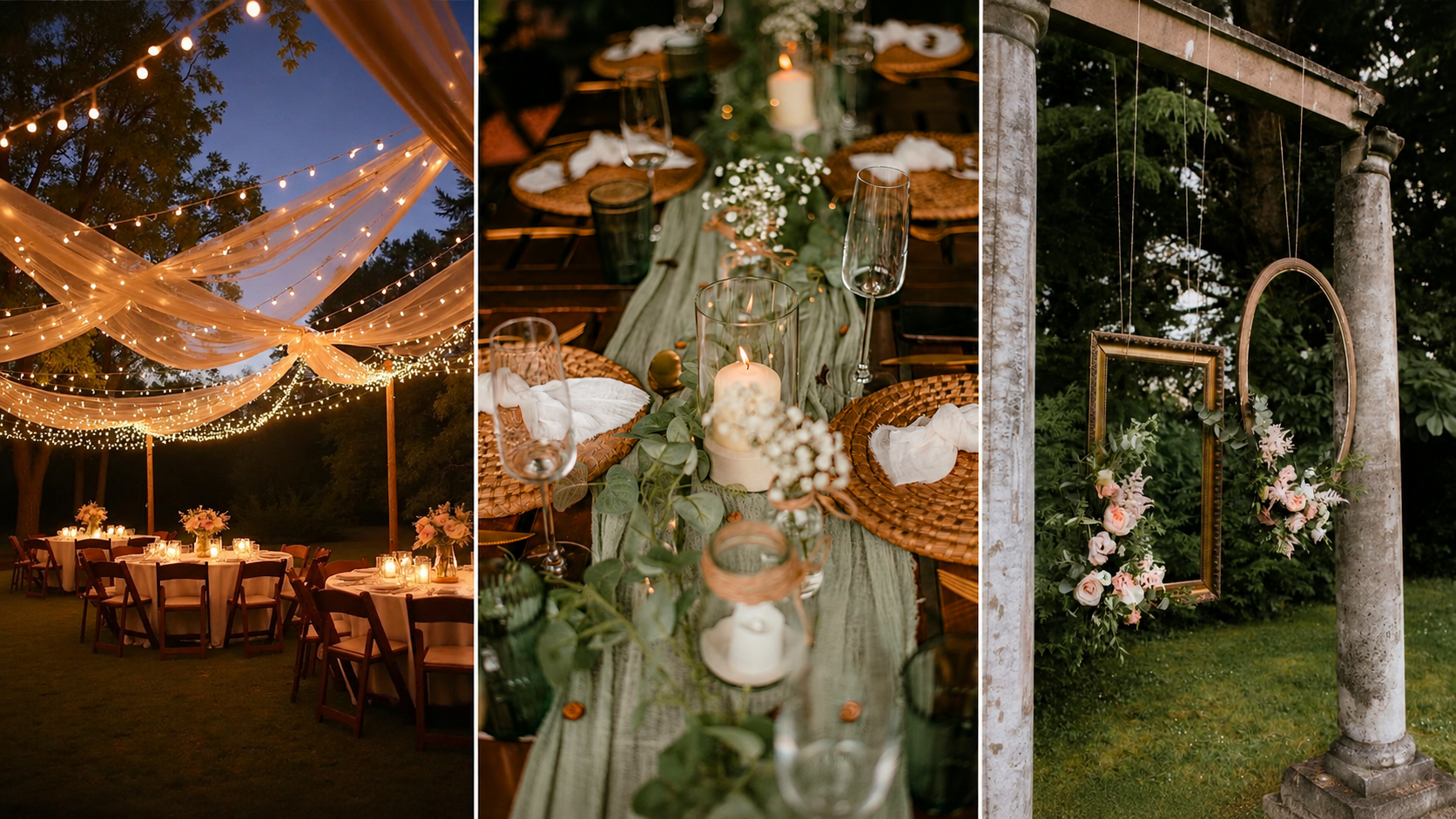
Very few couples plan a wedding entirely alone from first principles. In practice, "DIY" usually means one of a few things: managing the overall project yourself while still hiring professional suppliers for photography, catering and so on; DIY-ing specific elements like decor, favours or stationery while outsourcing the bigger logistical pieces; or, at the far end, handling almost everything — sourcing every supplier, building every timeline, managing every contract — without professional help at any stage.
The distinction matters because "DIY" doesn't automatically mean cheaper, and it doesn't automatically mean more work either — it depends entirely on which pieces you take on. Full DIY decor for a small, intimate wedding is a manageable weekend project. Full DIY decor for a 150-guest marquee wedding is a genuinely large undertaking that can eat evenings and weekends for months.
How Much Time Each Option Actually Takes
Wedding planning is a bigger time commitment than most couples expect going in. Bridebook cites qualified wedding planner Hamish Shephard's estimate that organising a wedding typically takes 200 to 300 hours from start to finish, a figure echoed elsewhere in the UK wedding industry, with more complex or detailed weddings pushing well past 400 hours.
That's the real trade-off a wedding planner is selling: not just expertise, but hundreds of hours of your own time back. A full-service planner absorbs most of that workload. Partial planning or day-of coordination gives some of it back to you, in exchange for a lower fee. Full DIY means all of it sits with you and your partner, on top of work and everyday life.
The Case for Hiring a Planner
A planner earns their fee in a few specific ways that are easy to underestimate from the outside:
- Supplier relationships and negotiating power. Established planners often have existing relationships with venues and suppliers, and can sometimes secure better rates or availability than a couple booking independently — a saving that can offset a meaningful portion of the planner's fee.
- Problem-solving without you knowing there was a problem. A good planner absorbs the small crises — a supplier running late, a weather change, a seating mix-up — and resolves them before they reach you on the day.
- Time back. If you and your partner are both working full-time, 200–300+ hours of planning has to come from somewhere — usually evenings, weekends, and annual leave. A planner reclaims that time.
- Fewer costly mistakes. Contract terms, deposit schedules, and supplier vetting are all easier to get wrong without experience — and the mistakes tend to be expensive ones.
The trade-off is cost and, for some couples, a feeling of reduced control — handing decisions to someone else can be difficult if you want to be closely involved in every detail.
The Case for DIY
DIY planning has real advantages beyond simply saving money:
- Full creative control. Every decision reflects your own taste, without filtering it through someone else's process or preferred supplier list.
- Potential cost savings, provided you're realistic about your own time and skills — DIY only saves money where you're genuinely replacing a paid service with your own effort, rather than buying materials and still needing a professional to fix the result.
- Involving family and friends in the process can be meaningful, though it's worth being upfront about expectations early, since some helpers can feel put out if they're not included and others can feel put upon if they're asked to do too much.
The trade-off is time and risk. Every task you take on is a task without a backup plan if it goes wrong, and the most complex weddings — large guest counts, marquee or dry-hire venues, multiple ceremony locations — are where DIY workload increases fastest, not linearly with guest numbers but disproportionately.
The Middle Ground Most Couples Actually Choose
For most UK weddings, the realistic answer isn't "planner" or "DIY" — it's a mix. A common approach: handle the overall planning and supplier sourcing yourselves, but hire a day-of coordinator so that on the wedding itself, you and your families aren't the ones fielding questions from suppliers or managing the timeline. This gets you most of the cost savings of DIY with the single biggest practical benefit of a planner — someone whose entire job on the day is making sure things run without you having to notice.
Alternatively, some couples hire partial planning support for the specific areas where mistakes are most costly or time-consuming — venue and catering negotiation, for example — while handling styling, favours and smaller supplier bookings themselves.
Questions to Ask Yourselves Before Deciding
- How much combined free time do you and your partner realistically have over the coming months — evenings, weekends, annual leave?
- Is your wedding logistically complex (marquee or dry-hire venue, multiple locations, large guest count, several cultural or family traditions to coordinate), or relatively straightforward?
- How important is it to you to be personally involved in every decision, versus trusting someone else to execute a brief?
- Does your budget have room for a planner's fee, and if not, would a lighter-touch option like day-of coordination fit instead?
- Who in your circle could genuinely help with DIY elements, and are they willing — not just polite about it?
If You Hire a Planner: What to Confirm Before Booking
- Exactly what's included at your service tier — full planning, partial planning, or day-of coordination — since these terms aren't always used consistently between planners.
- Whether their fee is a flat rate or a percentage of your total budget, and what that percentage applies to.
- How many weddings they typically manage per date, and whether they'll personally be present on your wedding day.
- Their process for supplier recommendations — do they have a fixed preferred list, or will they source based on your specific brief and budget?
- Cancellation and refund terms, in writing, before any deposit is paid.
If You Go DIY: How to Avoid the Common Pitfalls
- Cost out every DIY element before committing to it. Materials, time, and the risk of needing a professional to fix a failed attempt can sometimes make "DIY" more expensive than simply hiring a supplier.
- Start earlier than feels necessary, particularly for anything handmade — DIY projects consistently take longer than the planning stage suggests.
- Draw a clear line on how much you take on. It's possible to over-DIY a wedding, placing unnecessary pressure on yourselves or the friends and family helping out.
- Consider a day-of coordinator even in an otherwise fully DIY wedding. It's the single highest-value addition for couples who've handled everything else themselves, since it means neither of you is managing logistics on the actual day.
- Communicate clearly with anyone helping, about what you want them involved in and what you'd rather keep to yourselves — assumptions in either direction tend to cause friction.
The Takeaway
There's no universally right answer between a wedding planner and a DIY wedding — only the right answer for your specific budget, time, and how much control you want over each decision. Be honest about how many hours you and your partner realistically have to give, cost DIY elements properly rather than assuming they're automatically cheaper, and don't treat "planner or DIY" as all-or-nothing — a day-of coordinator on top of your own planning is often the single best-value decision either route can lead to.
Frequently Asked Questions
How much does a wedding planner cost in the UK?
Full-service planning typically costs 10–15% of your total wedding budget, or roughly £4,000–£15,000+. Lighter options are considerably cheaper: partial planning runs around £1,500–£2,500, and day-of coordination £1,000–£2,500.
Is a DIY wedding actually cheaper than hiring a planner?
Often, but not automatically. DIY only saves money where you're genuinely replacing a paid service with your own time and skill rather than buying materials and still needing a professional to fix the result. For complex weddings, the time cost of DIY can be substantial even if the cash cost is lower.
How much time does planning a wedding take?
UK estimates commonly cite 200–300 hours from engagement to wedding day, with more detailed or complex weddings running well beyond 400 hours. A full-service planner absorbs most of this; DIY planning means it falls entirely on you and your partner.
What's the difference between a wedding planner and a day-of coordinator?
A wedding planner is typically involved from early planning through to the day itself — sourcing suppliers, managing budget, building the timeline. A day-of (or on-the-day) coordinator only manages logistics on the wedding day, after you've done the planning yourselves, and costs significantly less.
Does my venue coordinator count as a wedding planner?
No. A venue coordinator manages logistics specific to that venue and is usually included in your venue package, but they aren't the same as an independent planner and typically won't handle overall styling, supplier sourcing beyond the venue, or your broader vision.
Can I do a mix of DIY and hiring a planner?
Yes, and most UK couples do exactly this — handling some elements themselves (styling, favours, smaller bookings) while hiring help for the highest-risk or most time-consuming parts, such as venue negotiation or on-the-day coordination.
Is it worth hiring just a day-of coordinator if I've planned everything else myself?
For many couples, yes — it's often considered the best-value addition to an otherwise DIY wedding, since it means neither of you is managing suppliers or troubleshooting logistics on the day itself, and can instead actually be present at your own wedding.