How to Find the Best Wedding Suppliers in the UK
A practical, no-nonsense guide to finding reliable wedding suppliers in the UK — budgets, vetting, contracts, red flags and booking timelines.
Open Instagram, search "wedding photographer near me", and you'll have forty tabs open within ten minutes. Every supplier looks polished. Every review is five stars. And somehow you still don't know who to trust.
That's the real problem with finding wedding suppliers in the UK: it isn't a shortage of options; it's too many, with no reliable way to tell a brilliant florist from someone who'll cash your deposit and go quiet three weeks before the big day. Add a budget that can swing by thousands depending on the day of the week you marry, and it's easy to see why supplier-hunting causes more stress than almost anything else in wedding planning.
This guide won't give you a list of "top 10" suppliers — those lists are usually paid placements dressed up as recommendations. Instead, it's a working process: how to budget properly, where to actually look, how to vet anyone before you hand over a deposit, and how to spot trouble before it costs you money.
Start With a Realistic Budget, Not a Wish List
Before you contact a single supplier, know roughly what you're working with. UK wedding costs vary depending on whose data you read — starting from £20,604 to up to £25,815.
A few things worth knowing before you set your own figure:
- A quarter of UK couples spend £10,000 or less on the day itself, so a smaller budget is far from unusual.
- The day of the week matters enormously. A Saturday wedding averages £22,290 against £16,273 for a Tuesday.
- Location changes everything. London weddings run 12–31% above the national average, and Bridebook's regional breakdown shows suppliers in London costing roughly 30% more than the national average, against 12% less in Yorkshire and Humber.
- Venue and catering eat nearly half the budget — typically 45–51% of total spend, which is why photography, florals and entertainment often get squeezed into whatever's left over.
As a rough guide for allocating what remains: photography typically runs around 10% of total spend (roughly £1,484 on average), entertainment around 4–5%, and florals anywhere from a few hundred pounds to 15–20% of your total budget if flowers are a central design feature. Set these ranges before you start browsing — it stops you falling for a stunning portfolio that's simply out of budget.
Where to Actually Look for Wedding Suppliers UK-Wide
Once your numbers are set, widen the search beyond the first page of Google:
- Supplier directories built specifically for weddings (rather than general marketplaces) tend to have more relevant filtering — by region, style, and budget — and let you compare several UK wedding vendors side by side without visiting a dozen separate websites.
- Your venue's preferred supplier list. Venues that host weddings regularly often have relationships with photographers, florists and entertainers who already know the space — its lighting, its noise restrictions, its layout. This isn't a reason to skip vetting them, but it's a strong starting point.
- Instagram and Pinterest, searched by style rather than by name — "documentary wedding photography UK" or "wildflower wedding bouquet UK" will surface working suppliers whose actual output matches what you want, rather than what a directory listing claims.
- Wedding fairs, particularly at venues you're considering. You get to meet suppliers face to face, ask questions on the spot, and gauge how they present themselves under pressure — useful information you won't get from a website.
- Personal recommendations from recently married friends carry more weight than any review site, because you can ask the follow-up questions reviews never answer: Did they turn up on time? Were there any hidden costs? Would you book them again?
Whichever route you take, the goal of finding wedding suppliers isn't to find the most suppliers — it's to build a shortlist of three or four per category worth a proper conversation.
How to Vet Any Supplier Before You Commit
The vetting process is largely the same regardless of category, and it's the step most couples rush.
- Ask to see full galleries or full sets, not highlight reels. Anyone can produce twenty perfect photos or one stunning bouquet for a portfolio. What you actually need to know is whether a photographer delivers consistent quality across an entire eight-hour day, or whether a florist can execute a full installation, not just a single arrangement.
- Meet in person or on a video call before booking. You'll spend a significant chunk of your wedding day with these people. Personality fit is not a "nice to have" — it affects how the day actually feels.
- Check insurance. Ask whether the supplier carries public liability insurance; some venues require proof of it before allowing access on the day.
- Confirm who's actually turning up. Some companies book you in on a "team" basis, meaning the person you meet isn't necessarily who shows up on the day. Ask directly.
- Ask how many weddings they've done this year, and whether they've worked at your venue before.
Photographers: Costs, Timing and What to Ask
Photography prices vary widely by source and region. Some sources say that the national average is £1,484, with a typical range of £500–£2,500 and London/South East running £200–£500 higher. Other sources land in similar territory: Jordan Fox Photography cites £1,500–£2,500 for full-day coverage, while Tov Studio Photo suggests the realistic modal spend for an 80–150 guest full-day wedding sits closer to £2,200–£2,800. Worth noting: Alex Buckland Photography found the national average has barely moved in three years — £1,464 in 2024, £1,484 in 2026 — so don't assume prices are rocketing every season.
Budget extras
A professional album typically adds £250–£700, and a second shooter is generally worth it for 80+ guests or if you want both partners' prep photographed at once. Expect edited galleries within 6–10 weeks, and roughly 50–100 edited images per hour of coverage. Tipping isn't customary, though £20–£50 as a thank-you is common.
When to book
9–18 months ahead is standard for May–September dates, and in-demand photographers can be booked 12 months to 2.5 years out. Book your photographer alongside — or immediately after — your venue. A common and costly mistake is locking in a venue first, only to discover the photographer you actually wanted is already booked for that date.
Questions worth asking:
- What's your shooting style, and can I see full galleries rather than highlights?
- Will you personally shoot our wedding, or is this a team/associate booking?
- Have you worked at our venue before, and will you do a site visit beforehand?
- What's your backup plan if you're ill or unavailable?
- What's included — album, digital files, printing rights?
- Do you have a wet-weather plan for outdoor ceremonies?
Florists: Budgeting and Booking Sensibly
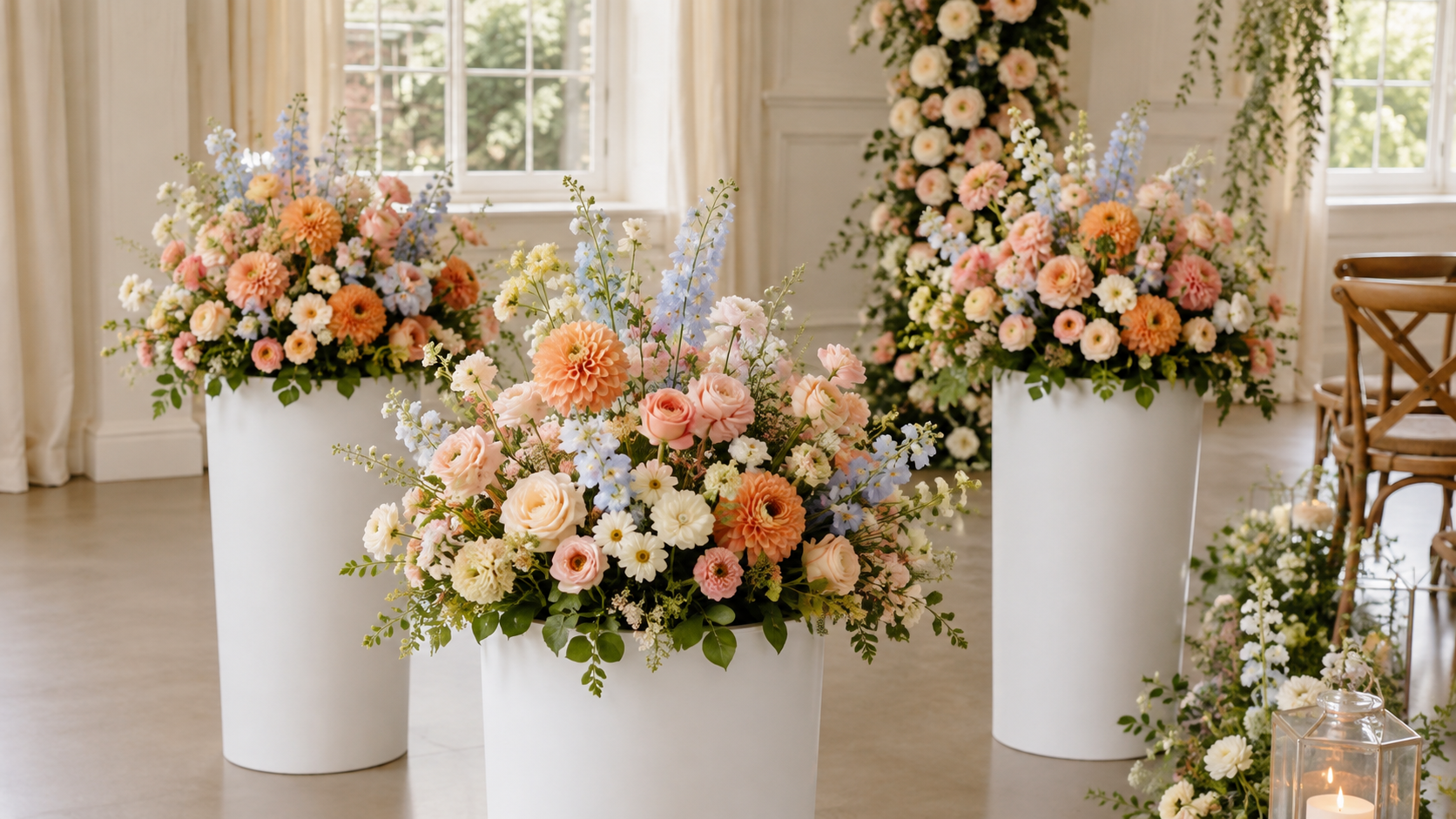
Florist pricing has the widest spread of any category, largely because "flowers" can mean a small bouquet or a full marquee installation. Flower Farm Floristry says £300–£700 for simple arrangements, £800–£1,500 for a traditional package, and £2,000+ for large installations. At the top end, Rebecca Hobbs Floral Design notes that large-scale or marquee florals can exceed £8,000–£10,000.
The single most effective way to control cost is choosing seasonal, locally available flowers rather than insisting on specific out-of-season varieties, which can dramatically inflate the bill. "Collection" arrangements — where you collect the flowers yourself rather than paying for delivery and setup — can also cut costs meaningfully.
When to book: 9 months to a year ahead is typical, giving the florist time to design around your actual colour palette rather than working from a generic template. In-demand florists, especially those who also "dress" popular venues, can book up over a year in advance.
Questions worth asking:
- Can I see photos of full installations, not just single bouquets?
- What's in season around my date, and how would that shape the design?
- Is setup, delivery and collection of any hired items included in the quote?
- Can the design scale up or down if guest numbers or budget change?
- What happens if a specific flower isn't available closer to the day?
DJ or Live Band: Which Actually Suits Your Wedding?
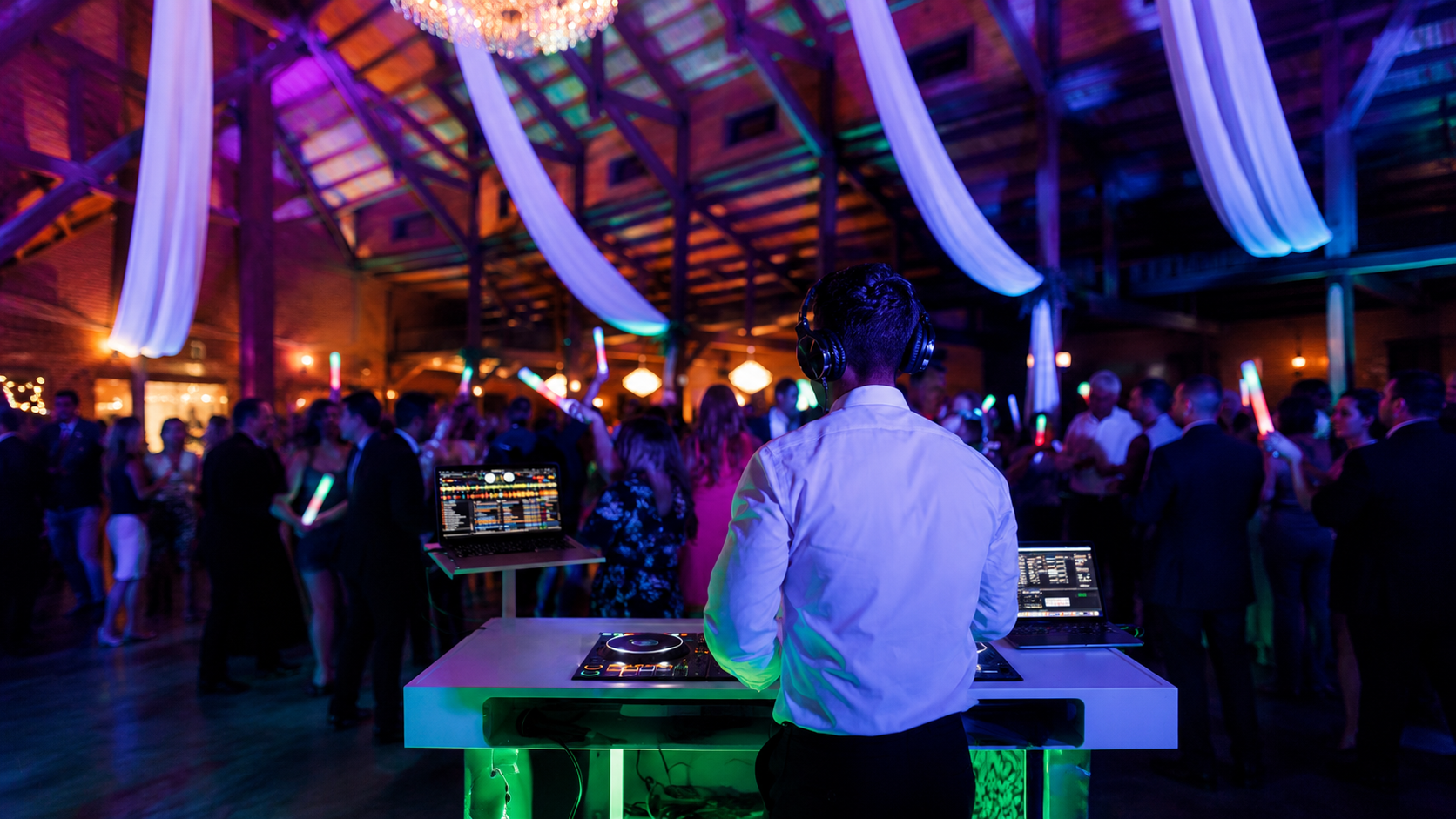
This is less about "better" and more about trade-offs, and the cost gap is significant. A live band typically costs three to five times more than a DJ for the same event. DJs can cost £500–£2,000+ and bands £1,500–£3,000+, while GigXchange's 2026 UK gig rate index found a £990 national median for bands, with Scotland's major cities running highest. Average total entertainment spend across UK weddings sits around £1,000, or 4–5% of the overall budget.
A few practical differences worth weighing:
- Bands often need a DJ booked separately to cover set breaks, adding roughly £300–£500 to the total.
- DJs need minimal space and offer continuous music, including your exact first-dance recording; bands create more visual energy but can't reproduce a song exactly and will stop for breaks.
- Sound limiters are easier to manage with a DJ, which matters at venues with strict noise restrictions.
- Peak season — May to October, especially June and August — pushes prices up for both.
When to book: aim for 8–9 months ahead, earlier for a live band since you're coordinating several musicians' diaries. Popular DJs for peak-season Saturdays are often booked 9–12 months out.
Questions worth asking (both):
- Are you actually contracted for my date, not just provisionally held?
- How many weddings have you played this year?
- Do you MC — making announcements and coordinating timings with the venue?
- What's the backup plan for equipment failure or illness?
DJ-specific: Will you personally perform, or could a substitute be sent? How do requests work, and can guests submit a do-not-play list?
Band-specific: How many musicians will perform, and is the lineup flexible? How long are the set breaks, and what covers the gaps? Can they learn your specific first-dance song?
Red Flags That Signal an Unreliable Supplier
Most wedding supplier problems are avoidable if you notice the warning signs early:
- Reluctance to share full galleries or client references — a supplier only willing to show curated highlights is often hiding inconsistency.
- No written contract, or pressure to pay a deposit before you've seen one. A legitimate supplier expects you to read the terms first.
- Vague answers about who will actually deliver on the day — a supplier who dodges the question about personal attendance is setting up a bait-and-switch.
- No insurance, or evasiveness when you ask about it.
- Unusually low pricing with no explanation. If a quote sits far below everyone else's for the same brief, ask why — inexperience, a lack of insurance, or overbooking are common reasons.
- Poor or inconsistent communication before you've even booked. How a supplier responds to enquiries is a reasonable preview of how they'll behave under wedding-day pressure.
It's also worth asking more questions. According to The Knot UK's 2024 findings, cited by Oompah Band UK, over 65% of couples wished they'd asked more questions before booking their wedding entertainment — particularly around timing, setup and backup plans. That "questions to ask" stage isn't box-ticking; it's where problems get caught before they cost you money.
Contracts, Deposits and Protecting Yourself
Get everything in writing before any money changes hands — the deposit amount, the balance due date, exactly what's included, and what happens if the supplier can't perform on the day. Verbal promises made during a friendly consultation aren't worth much if a dispute arises later.
A few general principles worth applying to any UK wedding supplier contract:
- Read the cancellation and refund terms carefully, both for your own cancellation and for scenarios where the supplier can't deliver. Deposits are typically non-refundable, but the contract should still specify what happens if the supplier themselves fails to turn up.
- Ask about hidden costs upfront — travel, overtime, extra hours, and setup or breakdown fees are common add-ons across photographers, florists, DJs and bands alike.
- Consider wedding insurance. It won't fix a bad supplier, but it can cover you if a supplier goes out of business, becomes unable to perform, or if the day itself is disrupted by circumstances outside anyone's control.
- If you're unsure about any clause, ask before signing, or get independent advice — particularly for large deposits or bespoke packages where a lot of money is committed early.
None of this replaces proper legal advice for high-value contracts, but treating every supplier agreement as a real contract — not a formality — is the single best protection you have.
Booking Timeline: When to Secure Each Supplier
The UK wedding market is heavily front-loaded: the most sought-after suppliers in any area fill their calendars 12–18 months ahead for peak dates — May to September, New Year's Eve, and bank holiday weekends. Waiting until six months out significantly narrows your options at every price point for those dates. Off-peak or midweek weddings are far more forgiving — a Thursday wedding in November or February may still have quality suppliers available with just six months' notice.
|
Supplier |
Recommended booking window |
|---|---|
|
Venue |
18–24 months before |
|
Photographer / Videographer |
9–18 months before, alongside or just after the venue |
|
Caterer |
Research 10–12 months before; book around 8 months before |
|
Band / DJ |
8–9 months before (bands earlier) |
|
Florist |
9–10 months before (up to a year for bespoke design) |
|
Cake |
Tastings around 7 months before |
|
Hair stylist / Makeup artist |
Research around 7 months before; book 5–6 months before |
|
Officiant / Registrar |
8–10 months before |
|
Wedding dress |
8–12 months before (bespoke gowns can take 6–8 months) |
|
Suit |
Around 9 months before |
Most photographers, florists and bands are solo operators or small teams who can only take on a limited number of weddings a year — a key reason to book promptly once you've found the right fit, rather than sitting on a decision.
Getting More From Your Budget Without the Awkward Haggling
You don't need to negotiate aggressively to get better value — timing does most of the work:
- Consider a weekday or off-peak date. The gap between a Saturday and Tuesday wedding averages several thousand pounds, and suppliers are far more flexible on availability and, sometimes, price outside peak season.
- Ask what's included before assuming a quote is final. Many suppliers have tiered packages that aren't listed publicly.
- Book the "big three" — venue, photographer, caterer — together where possible, since they're the most in-demand and the most likely to clash on your ideal date.
- Don't chase the cheapest quote in isolation. An unusually low price on a category where quality varies enormously — photography and florals especially — often costs more in disappointment than it saves in cash.
Frequently Asked Questions
How much do wedding suppliers cost in the UK?
It depends heavily on category and region, but as a guide: photography averages around £1,484, florists around £1,000–£1,500, DJs £500–£2,000, and live bands £1,500–£3,000 or more. London and the South East typically run 12–31% above the national average.
How far in advance should I book wedding suppliers?
Book your venue 18–24 months out, then photographer, caterer and florist within the following few months. Bands, DJs and smaller details like hair and makeup can generally wait until 6–9 months before the wedding — earlier for peak-season Saturdays.
Is a DJ or a live band better value?
A DJ is almost always cheaper — bands typically cost three to five times more for the same event. Bands offer more visual energy and audience engagement, but need breaks (often covered by a DJ) and can't replicate a recorded song exactly, which matters if you have a specific first-dance track in mind.
What's a normal deposit for a wedding supplier?
There's no single UK standard — it varies by supplier and category. What matters more than the amount is getting the deposit, balance due date, and refund terms confirmed in writing before you pay anything.
How can I tell if a wedding supplier is untrustworthy?
Watch for reluctance to share full galleries or references, no written contract, vagueness about who's actually attending on the day, no insurance, and unusually low pricing with no explanation. Trust your read on their communication before you book — it's a fair preview of how they'll handle the wedding day itself.
Do I need wedding insurance?
It's not compulsory, but it's worth considering, particularly for larger budgets. It can help if a supplier becomes unable to perform, goes out of business, or if the day is disrupted by something outside anyone's control.
Can I negotiate with wedding suppliers?
Sometimes, but timing usually matters more than haggling. Choosing an off-peak season, a weekday, or booking multiple services with one supplier tends to get better value than asking for a discount outright.