Rustic Wedding Theme Ideas: The Complete Guide for UK Couples
What the rustic theme actually is, how to choose your colour palette, what to wear, how to decorate, what to eat, and how to make it feel genuinely yours rather than a catalogue copy.
There's a reason rustic weddings have dominated inspiration boards for over a decade — and it isn't just Pinterest. The theme captures something that polished hotel ballrooms rarely can: warmth, character, and the sense that the celebration has grown naturally out of the landscape around it. Exposed timber beams, wildflower centrepieces, candlelight flickering across worn wooden tables — it's a look that feels both effortless and deeply intentional.
The rustic theme has evolved considerably. What began as mason jars and burlap bows has matured into a sophisticated design philosophy — one that sits comfortably alongside crystal glassware, linen runners, and farm-to-table menus sourced from local producers just down the road.
This wedding themes and styles guide covers everything: what the rustic theme actually is, how to choose your colour palette, what to wear, how to decorate, what to eat, and how to make it feel genuinely yours rather than a catalogue copy. Whether you're planning an elegant barn reception in the Cotswolds or a simple outdoor ceremony in the countryside, you'll find what you need here.
What Is the Rustic Wedding Theme?
At its core, the rustic wedding theme is built around a love of natural materials, organic textures, and the beauty of imperfect, weathered things. It draws on the visual language of barns, woodland, meadows, and working farms — but it isn't about recreating an agricultural museum. It's about using those environments and materials as a starting point for something genuinely beautiful.
The modern rustic wedding blends raw elements — reclaimed wood, stone, linen, dried botanicals — with considered, refined details like gold-rimmed charger plates, crystal glassware, and trailing floral installations. The result is an aesthetic that feels grounded and natural without ever feeling underdressed.
What separates it from a traditional country wedding is restraint and intention. A country theme reaches for checked tablecloths, bunting, and literal farm imagery. The rustic theme is quieter and more considered — it builds depth through texture, warm lighting, and the honest beauty of natural materials, rather than through decoration for decoration's sake.
The Different Styles of Rustic Wedding
One of the great things about the rustic theme is how adaptable it is. Depending on how you apply it, it can feel entirely different. Here are the most popular variations — and what distinguishes each one.
Simple Rustic Wedding Theme
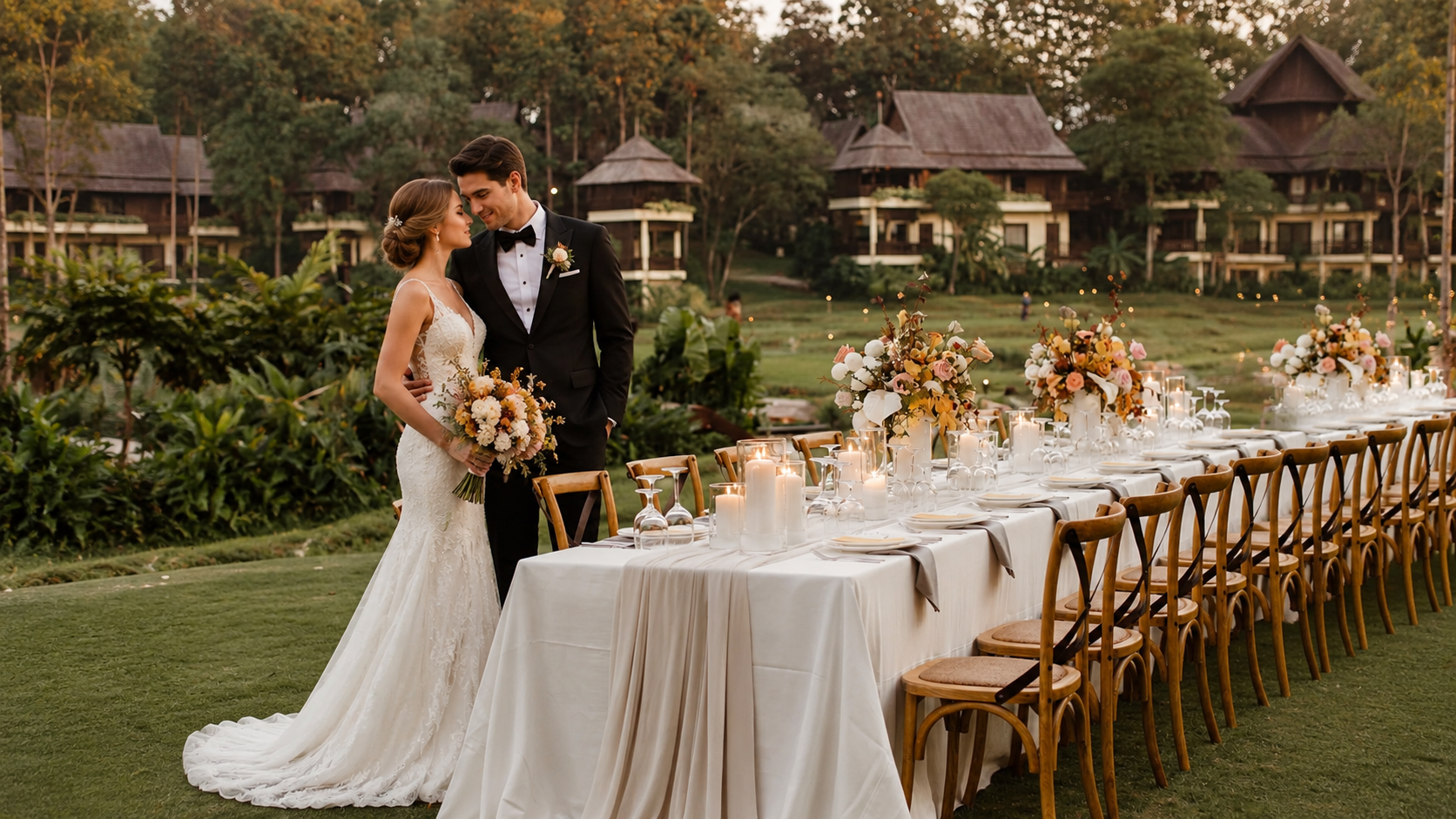
The simple rustic approach strips things back to essentials: unadorned wooden farm tables, mismatched candles in glass holders, foraged greenery, and clean linen. It's affordable, genuinely beautiful, and often the most emotionally resonant — there's nothing competing for attention. Couples planning a smaller celebration or working to a tighter budget often find this approach the most achievable and the most them.
Simple doesn't mean sparse. A single generous garland of eucalyptus and garden roses running the length of a table can anchor the whole room. It just means knowing when to stop.
Elegant Rustic Wedding Theme
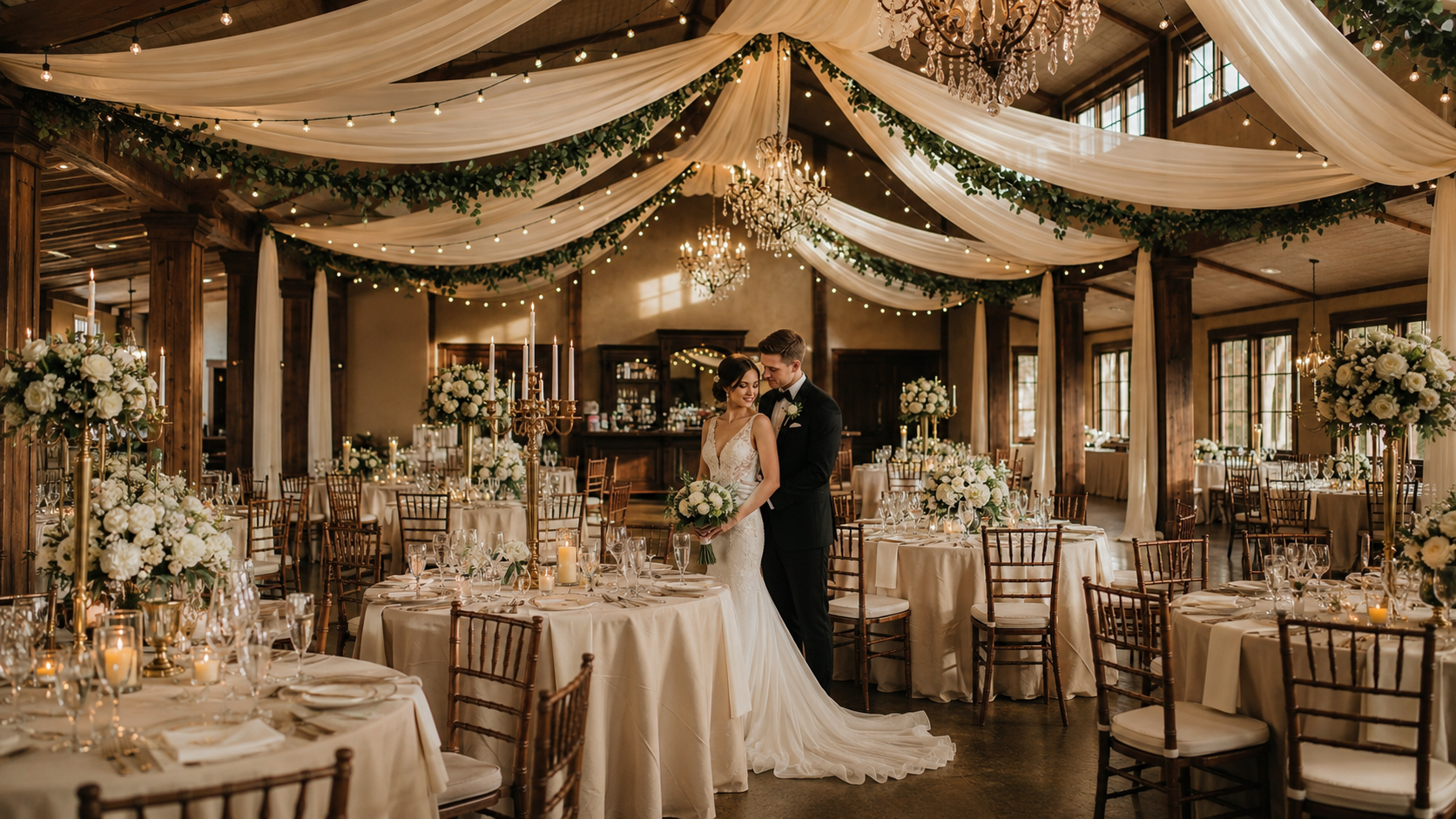
This is where rustic meets luxury. Think crystal chandeliers suspended from original oak rafters, taper candles in antique brass holders, velvet ribbon on floral arrangements, and hand-tied bouquets of garden roses and dahlias. The venue might be a restored Georgian barn or a countryside estate — somewhere with genuine architectural character that the décor works with rather than against.
The key contrast here is intentional: rough textures like stone walls and reclaimed wood are offset by fine linen, high-quality tableware, and sophisticated florals. It's the most popular direction for barn weddings, and the one most frequently seen in UK wedding publications.
Modern Rustic Wedding Theme
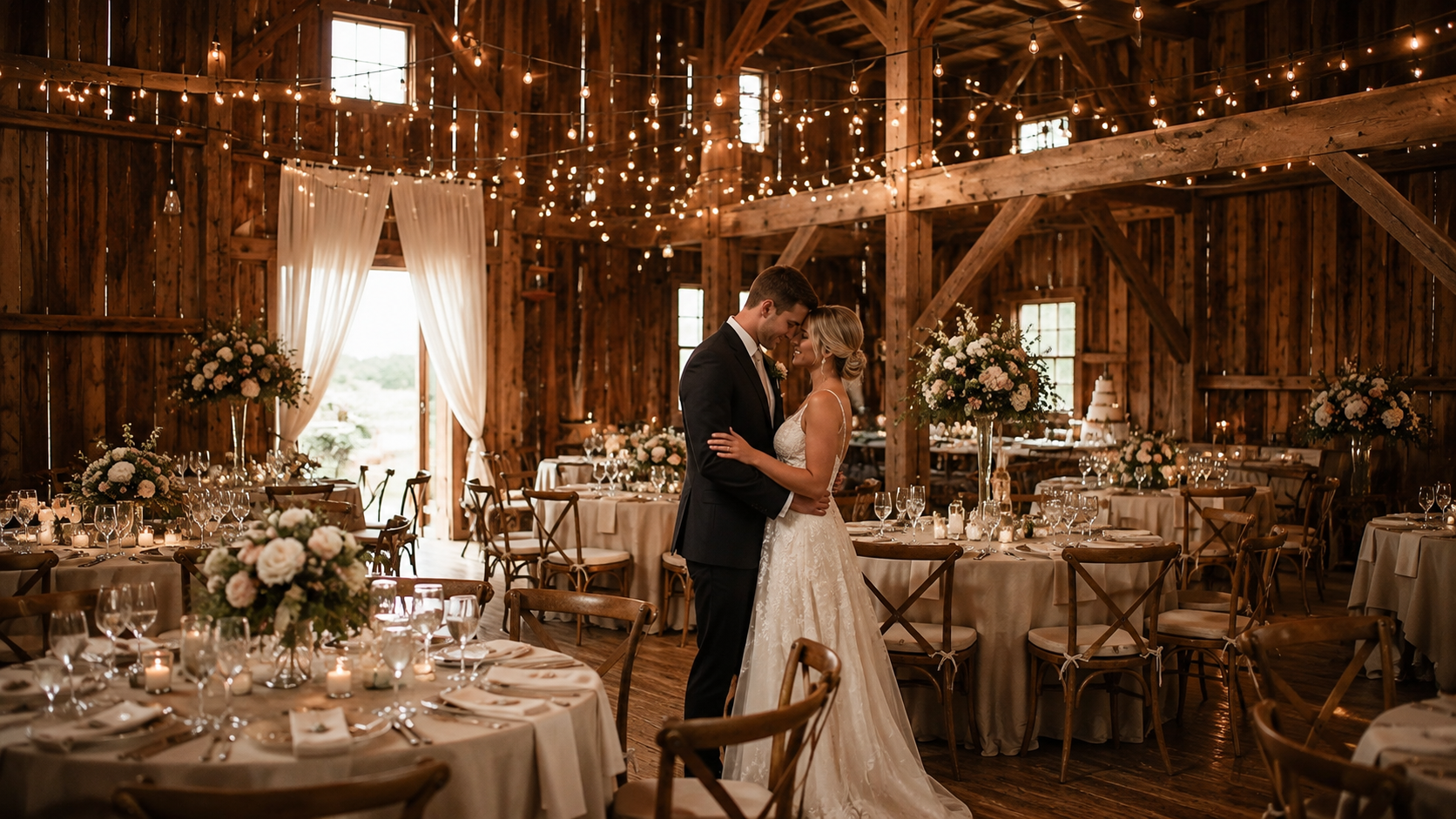
Modern rustic borrows the warmth and materials of traditional rustic design but applies them with a cleaner, more architectural eye. Expect geometric shapes, pampas grass, dried flower installations, and a more disciplined approach to colour — often built around a single neutral plus one or two carefully chosen accent tones. Industrial barn conversions, warehouse spaces, and contemporary rural venues lend themselves well to this style.
If you love the idea of greenery and natural materials but want something that feels current rather than romantic, modern rustic is the direction to head.
Bohemian Rustic Wedding Theme
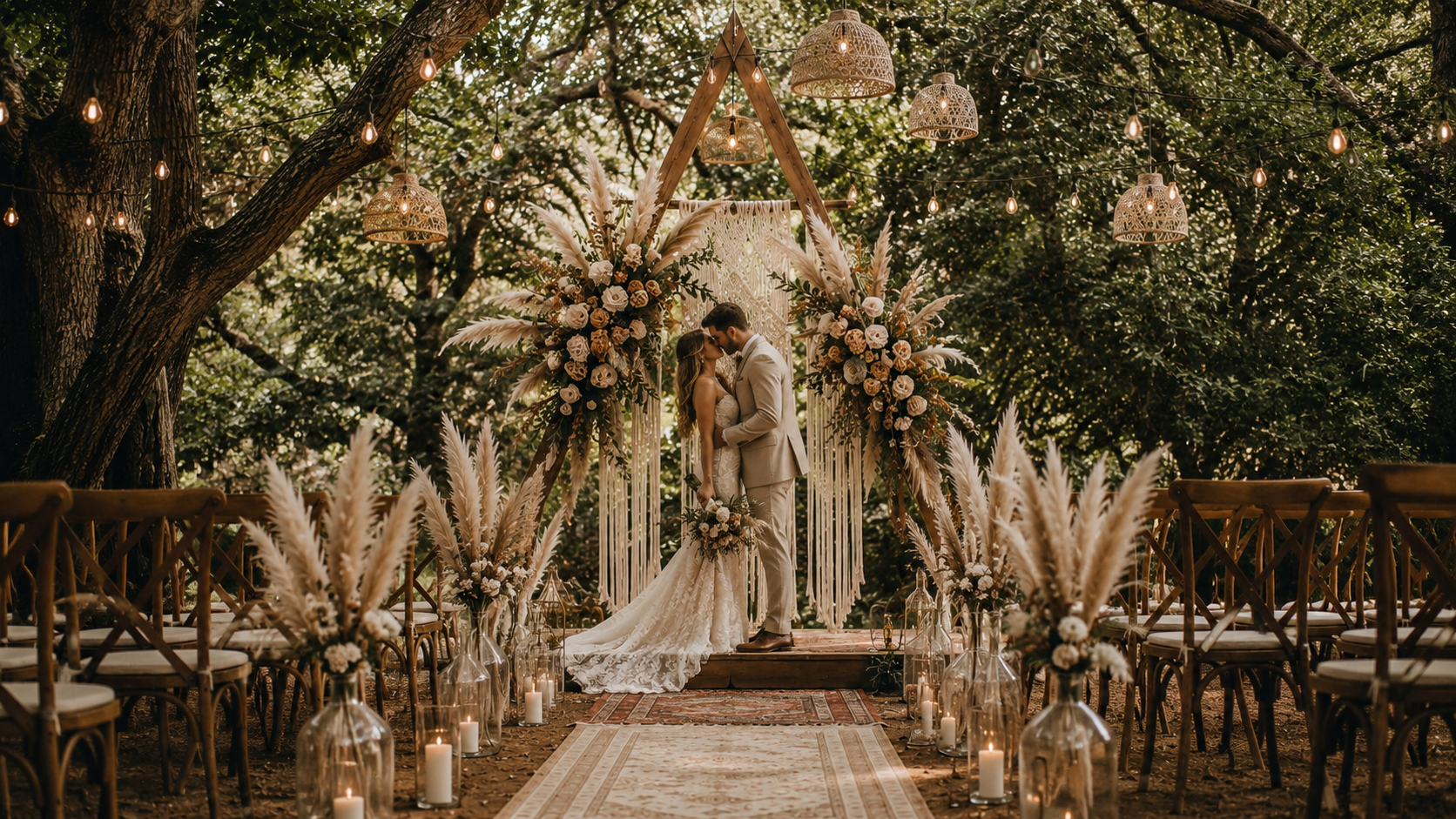
Boho-rustic overlaps considerably with the broader rustic aesthetic but brings in a more free-spirited, layered quality: macramé backdrops, mix-and-match seating (floor cushions, mismatched chairs), dreamcatchers, and a palette that runs to burnt orange, terracotta, and earthy ochre. Tipi venues and outdoor meadow settings suit this style particularly well.
Rustic Wedding Colour Palettes
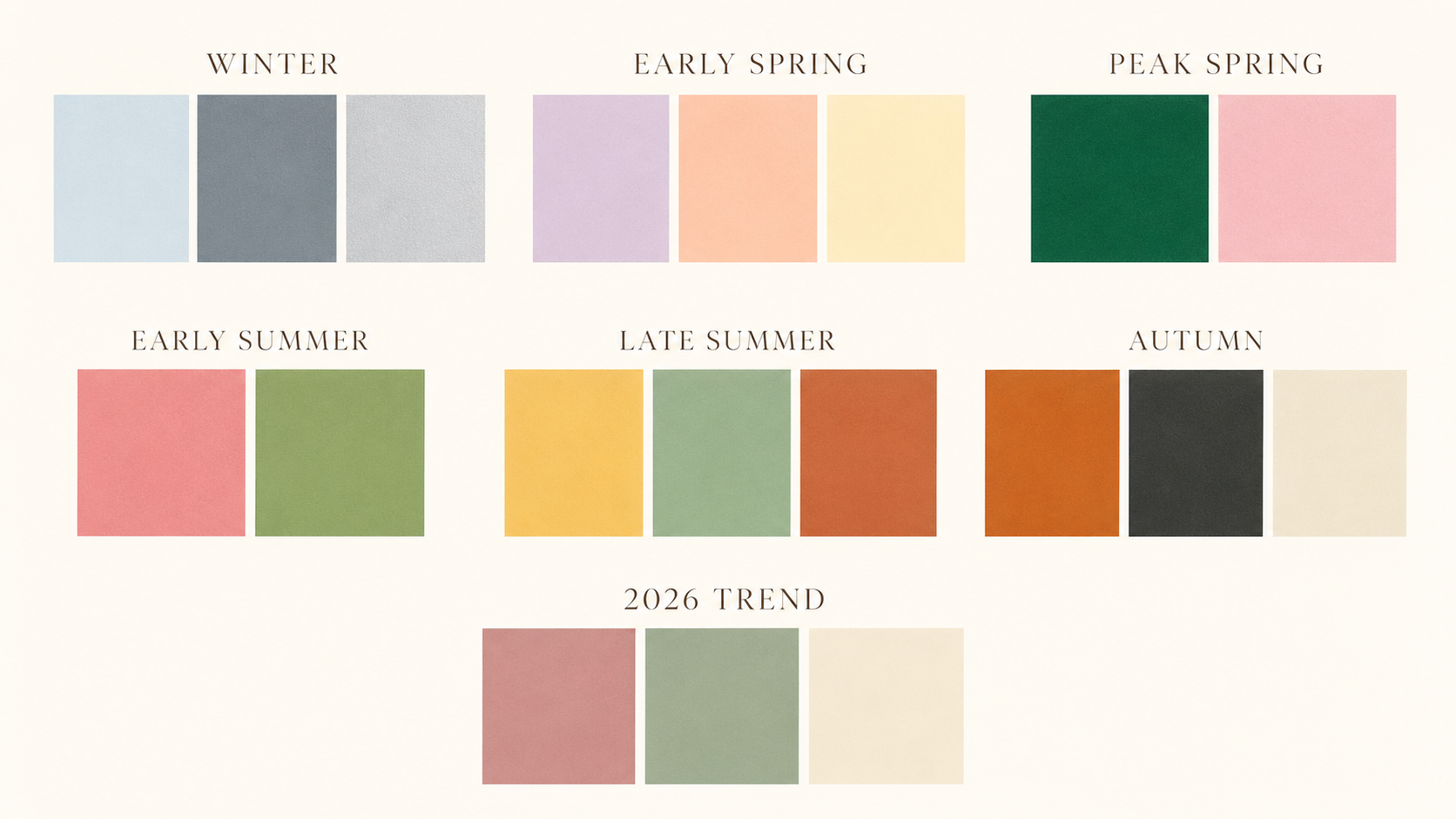
Choosing the right colour palette is one of the most important decisions in any rustic wedding. Get it right and everything else falls into place. The most effective approach uses three to five colours: a foundational neutral, one or two supporting organic tones, and a nature-inspired accent that provides the focal point.
The best palettes are built around the season you're getting married in. According to seasonal colour research by Merve Bayindir, each time of year has a distinct atmospheric personality that translates naturally to a wedding aesthetic.
|
Season |
Colour Palette |
Mood & Key Materials |
|---|---|---|
|
Winter |
Ice Blue, Slate Grey, Frosted Silver |
Hammered silver candlesticks, frosted glassware, soft grey linen |
|
Early Spring |
Lilac, Peach, Buttercream |
Sheer linen runners, hand-torn stationery, fresh lavender bundles |
|
Peak Spring |
Emerald Green, Peony Pink |
Velvet ribbons, heavy cotton napkins, lush peony arrangements |
|
Early Summer |
Strawberry Pink, Grass Green |
Wildflower centrepieces, mismatched vintage ceramics, organic table settings |
|
Late Summer |
Sunflower Yellow, Sage, Terracotta |
Wood slices, dried wheat, terracotta planters |
|
Autumn |
Burnt Orange, Charcoal, Warm Cream |
Reclaimed wood tables, amber votives, cast-iron accents |
For UK barn weddings, terracotta and sage green remains the most consistently popular pairing — it reads as warm without being heavy, and it works across all lighting conditions from bright afternoon to candlelit evening. For 2026, budget-conscious couples are also gravitating toward dusty rose, sage, and warm ivory — palettes that photograph beautifully and hold well across all seasons.
Warm neutrals (cream, oatmeal, champagne, warm white) should always anchor the palette. They prevent the look from feeling too busy and give bolder accent colours room to breathe.
💡 Pro Tip: When choosing your palette, bring fabric swatches and flower samples to the venue and look at them in the actual lighting conditions you'll be getting married in. Colours read completely differently under Edison string lights at dusk than they do in a bright showroom.
Rustic Wedding Décor: Ideas for Every Part of the Day
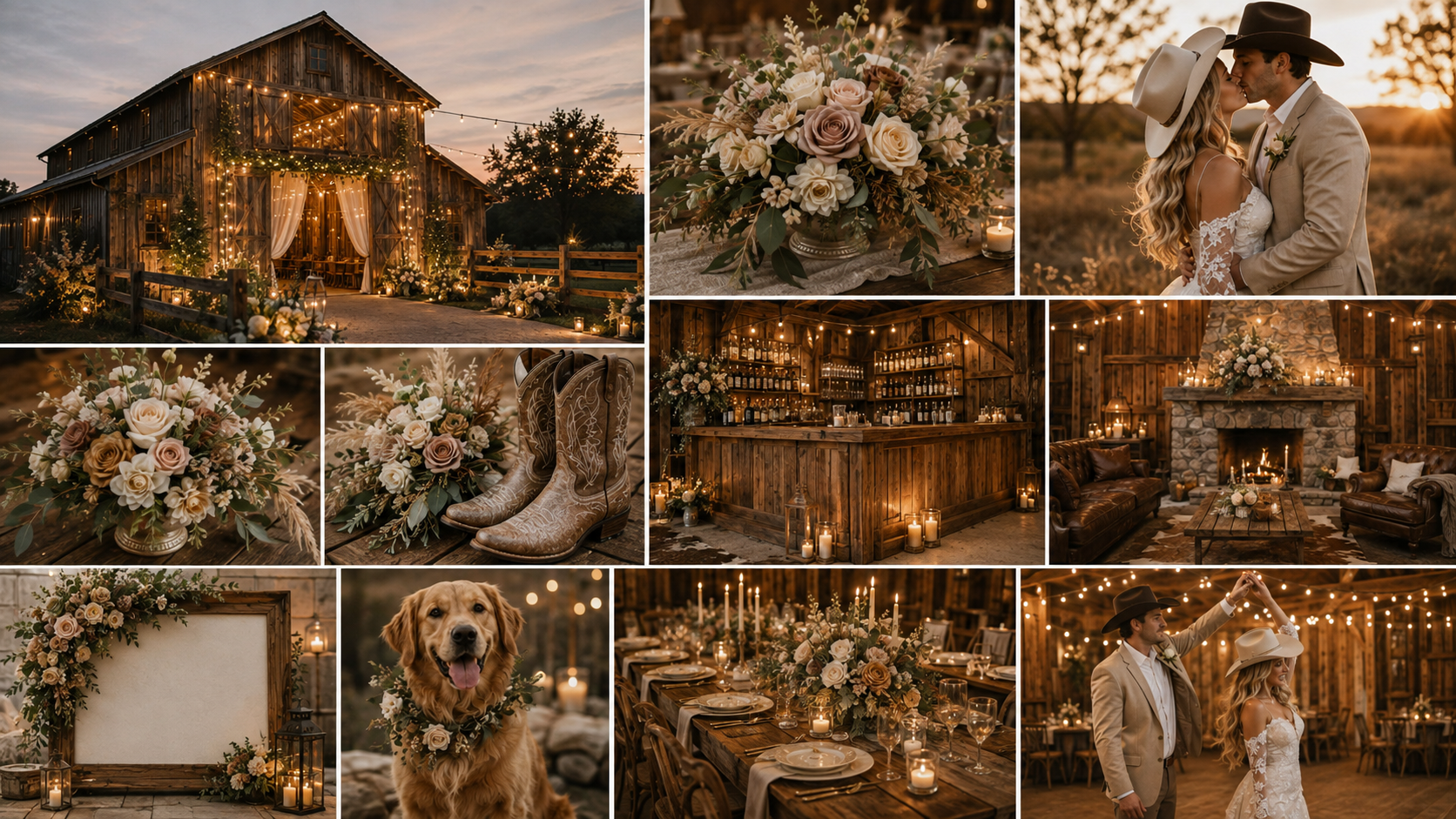
Table Centrepieces and Tablescapes
Swap formal white tablecloths for bare wooden farm tables dressed with linen or cotton runners. The table itself becomes part of the design. Centrepieces work best when they have height variation — groupings of tapered candles in varied heights alongside bud vases and botanical arrangements create visual interest without blocking conversation.
Key materials for a rustic tablescape:
- Raw-edged wood slices as bases for candle groupings
- Glass bud vases with single stems or herb cuttings
- Mismatched vintage ceramic plates for an eclectic, collected feel
- Linen napkins tied with raw cotton ribbon and a sprig of rosemary
- Chair backs dressed with fabric in sage or terracotta, tied with eucalyptus
Ceremony Arch and Aisle
The ceremony arch is one of the most photographed elements of any wedding. For a rustic aesthetic, a wooden or dried twig arch — softened with flowing greenery, dried pampas grass, and seasonal flowers — works beautifully in both barn and outdoor settings.
Rather than cut flower arrangements lining the aisle, consider living potted plants in terracotta pots or wooden crates. They look beautiful, they're sustainable, and you can take them home or give them as gifts afterwards.
Lighting
Lighting is everything in a rustic space. The right lighting can make a plain barn feel genuinely magical; the wrong lighting will flatten even the most beautiful flowers.
The most effective approaches:
- Edison string lights suspended in canopies above dining areas to create a warm "starry night" effect — they also visually lower soaring barn ceilings, making the space feel more intimate
- Groupings of ivory pillar candles inside glass lanterns or on raw wood slices at table level
- Cast-iron or crystal chandeliers suspended from structural rafters for a more dramatic, theatrical effect — the contrast of industrial iron or sparkling crystal against rough-hewn wood is a hallmark of the elegant rustic look
⚠️ Watch Out: Most barn venues are listed buildings or sit in rural areas where entertainment licence conditions apply. Before committing to candles, always check the venue's fire policy. Many barns don't permit open flames; LED alternatives are now good enough that this is rarely a problem visually, but it's worth knowing early.
Welcome and Signage
Rather than printed foam boards and vinyl banners, use reclaimed timber pallets, vintage chalkboards, vintage glass window panes, or framed mirrors for your welcome sign, seating plan, and bar menu. These materials are completely reusable, contribute authentic character, and don't look like someone ordered them from a party supply website.
Rustic Wedding Flowers
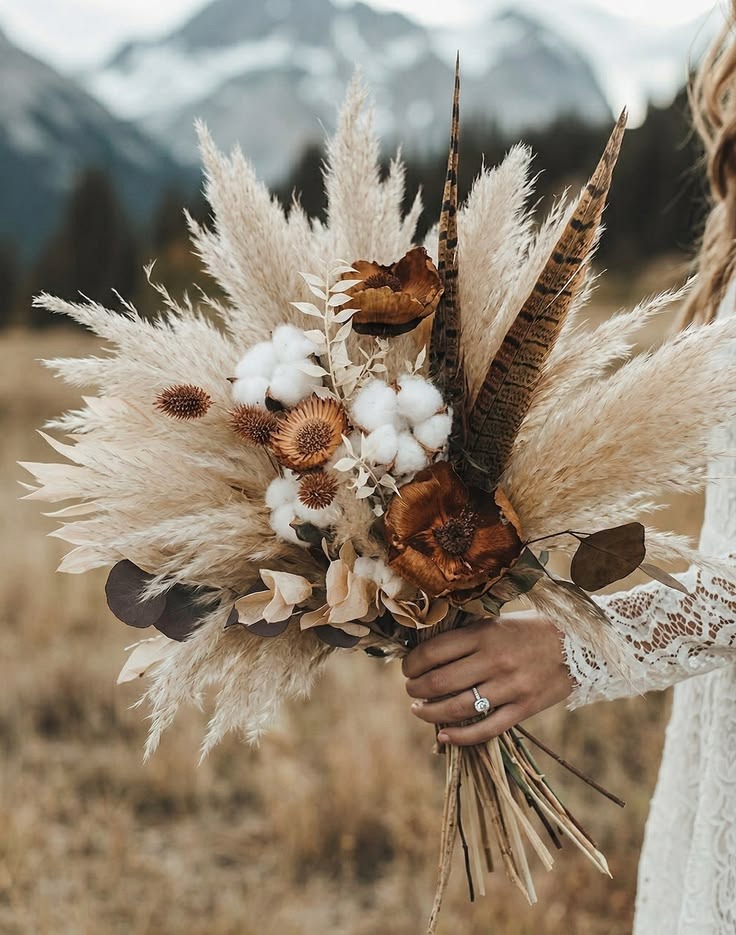
Contemporary floral design for rustic weddings has moved decisively away from tight, geometric arrangements. The look now is loose, asymmetrical, and foraged-feeling — as if the flowers were gathered from the hedgerow an hour before the ceremony.
Building a Rustic Floral Palette
The key is to use a high ratio of foliage and filler to blooms, and to favour texture over uniformity. A strong foundation might include:
- Foliage: Silver dollar eucalyptus, dusty miller, trailing willow, structural leatherwood fern
- Filler: Baby's breath (gypsophila), cosmos, forget-me-nots, lavender, herbs (rosemary, sage, thyme)
- Focal flowers: Dahlias, ranunculus, garden roses, peonies
- Structural elements: Pampas grass, dried wheat stalks, seed pods, dried cotton stems — these add a tactile, sculptural quality that bridges floral design and art
DIY Rustic Flowers
For couples managing their budget, rustic flowers are one of the most DIY-friendly elements of the day. British flower farms sell pre-conditioned buckets of seasonal stems — typically 50–80 stems for £60–£100. Use a mix of focal flowers, supporting blooms, fillers, and foliage (roughly a 40/30/20/10 split) and you'll produce arrangements that look genuinely professional.
💰 Budget Save: Commission your florist to make one professional bridal bouquet and then DIY the table arrangements, bud vases, and greenery. The bouquet is in almost every photo you'll ever look at. The table greenery is background.
Rustic Wedding Attire
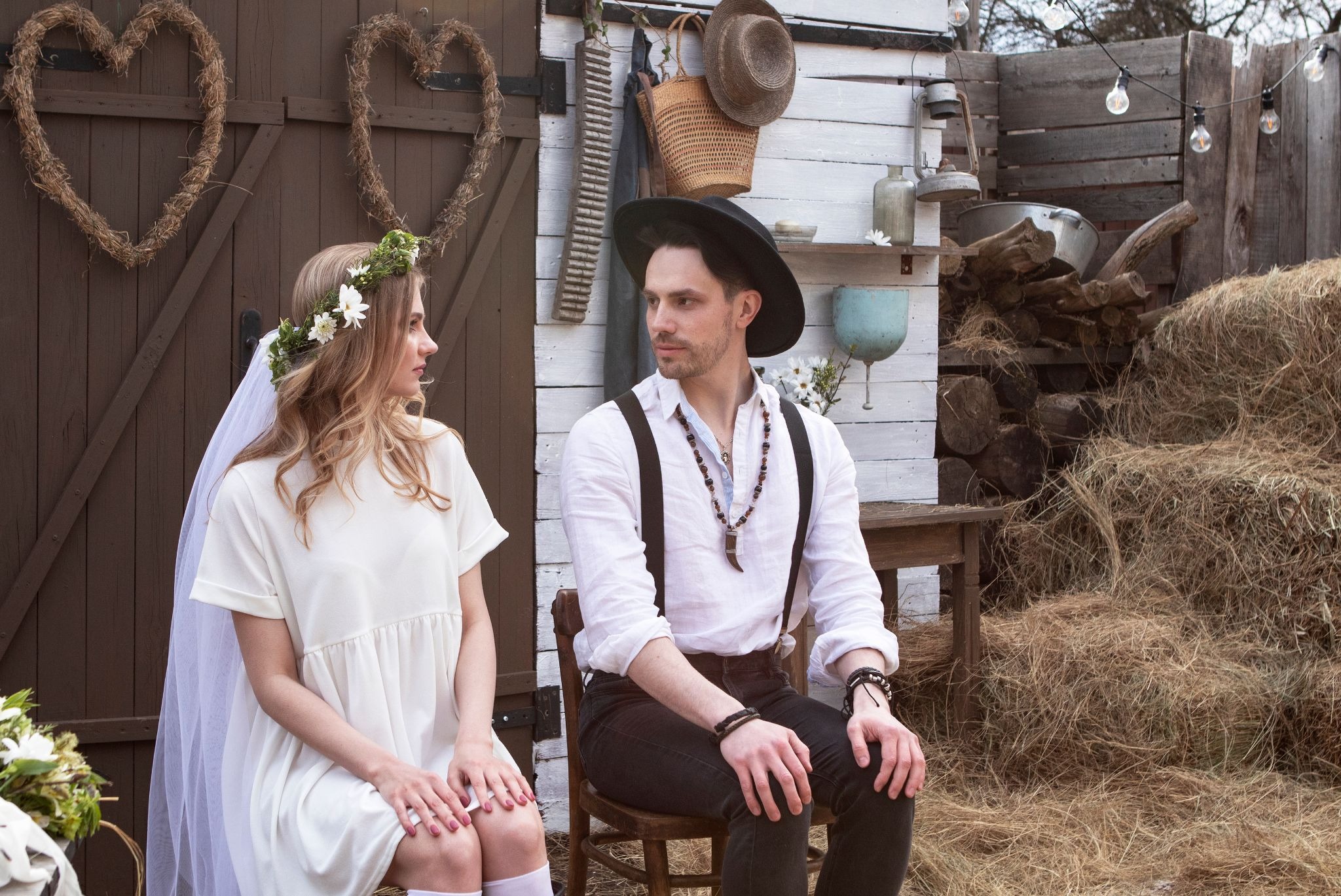
What Is Rustic Wedding Attire? The Bride
The rustic bridal look balances classic romance with effortless movement. The most successful dresses share a few common characteristics: they're made in soft, flowing fabrics (chiffon, tulle, light organza, or lace), they move well in outdoor settings, and they don't fight with their surroundings.
Popular gown styles include:
- Ivory or cream-toned lace, often with delicate embroidery
- Flowing A-line or soft ballgown silhouettes in chiffon or tulle
- Bohemian-influenced styles with fluted sleeves or open backs
- Relaxed fit-and-flare cuts that photograph well in natural light
Hair and accessories: Rather than a structured veil, many rustic brides opt for a dried or fresh floral crown woven with native berries, wax flowers, and trailing greenery. Pearl hair pins, delicate gold jewellery, and a loose, romantic updo complement the aesthetic better than anything highly structured.
Shoes: The practical reality of rustic venues — gravel pathways, uneven barn floors, outdoor meadows — means high stilettos are rarely a comfortable choice. Strappy block heels, wedges, or even embellished flat sandals all work beautifully and are far more practical.
Bridesmaids
Bridesmaid dresses in a rustic scheme work best in cohesive, muted palettes rather than matching uniform colours. Popular choices include sage green, dusty pink, champagne, terracotta, and soft taupe — colours that feel connected to the natural world without being too on-the-nose. Mix-and-matching within the same colour family gives each bridesmaid the freedom to find something that suits her and creates a naturally varied look in photos.
Fabrics like flowing georgette, light linen, and soft cotton-lace work beautifully in both barn and outdoor settings.
What Is Rustic Wedding Attire? The Groom and Groomsmen
Rustic menswear has moved well beyond the navy suit. For UK barn and countryside weddings, the most popular approaches are:
|
Style |
Best For |
Key Details |
|---|---|---|
|
Tailored Tweed Suit |
Autumn & Winter |
Warm, durable, distinctively British — pairs well with a pocket square and heritage boots |
|
Unstructured Linen Suit |
Summer |
Breathable, relaxed, polished — works in warm beige, tan, or dusty blue |
|
Dark Suit with Textured Tie |
Year-round |
The safest option, elevated with a patterned tie (subtle gingham or floral) and velvet bow tie |
|
Waistcoat and Trousers |
Warm Summer Days |
Allows groomsmen to lose the jacket without losing the look |
For footwear, replace high-gloss patent leather with quality leather dress boots, well-polished heritage brogues, or relaxed leather loafers. Personal details — engraved cufflinks, leather suspenders, boutonnieres made from dried wheat and thistle — complete the ensemble without overdoing it.
Dress Code on Your Invitations
Always communicate the dress code clearly to guests. Rustic weddings span everything from "backyard casual" to "rustic chic semi-formal," and guests genuinely appreciate guidance. Lightweight floral midi dresses, elegant lace sheath dresses, and long maxi gowns work well for female guests. Stilettos are impractical on uneven barn floors and outdoor terrain — it's considerate to note this on your wedding website so guests can dress comfortably from the start.
💡 Pro Tip: If your ceremony or drinks reception is on grass, consider providing a small basket of heel protectors at the venue entrance. They're inexpensive, practical, and guests remember the thoughtfulness.
Rustic Wedding Food and Drink
Food is one of the most important tools in a rustic celebration — it reinforces the themes of localism, community, and organic abundance better than almost anything else. The best rustic menus are transparent about their sourcing, often listing the local farms, creameries, and artisan producers directly on the menu card.
Farm-to-Table Dining
Rather than formal plated service with a rigid three-course structure, rustic weddings lean toward formats that feel more generous and communal. The most successful rustic menus emphasise seasonal ingredients served in generous, shared formats:
- Sharing platters and boards: Cured charcuterie, artisanal cheeses, salt-baked root vegetables, wild mushroom tarts served on slate or thick timber slabs
- Communal main courses: Slow-roasted lamb shoulder with garlic and rosemary, wood-fired whole fish, cedar-plank salmon, or slow-cooked pork belly with seasonal vegetables — served in cast-iron skillets or large wooden bowls passed between guests
- Family-style service: Food brought to the table on large shared platters rather than individually plated encourages conversation and creates a genuinely warm, banquet atmosphere
Grazing Tables
A grazing table or cocktail hour grazing spread is now a staple of the modern rustic wedding — and for good reason. Styled on butcher paper-lined wooden farm tables with tiered vintage serving stands, rustic baskets, and marble slabs, a well-designed grazing table is both a visual showpiece and a practical crowd-pleaser.
The format suits rustic venues particularly well: it doesn't require a formal seating arrangement, it keeps guests moving and socialising during the drinks reception, and it photographs beautifully.
Drinks
The bar programme should reflect the local landscape. Consider:
- Herb-infused signature cocktails: Lavender gin and tonic, thyme gin spritz, rosemary whiskey sour — served in charming mason jars or ceramic tumblers
- Local craft beer wall: Vintage barrels converted into an iced tap wall featuring regional ales and IPAs
- British wine or cider: English sparkling wine from Kent or Sussex has improved dramatically in recent years — using it in place of Champagne is both more interesting and considerably cheaper
- Autumn/winter warmers: A mulled cider station or hot cocoa bar with artisanal toppings keeps guests comfortable and extends the atmosphere through the evening
The Cake
Traditional fondant-covered tiered cakes can feel out of place in a rustic setting. The semi-naked cake — where frosting is applied sparingly to expose the golden-brown texture of the sponge — has become the signature rustic wedding cake. Decorated simply with fresh seasonal berries, figs, or cascading wildflowers, it's beautiful, photographically distinctive, and relatively affordable.
Rather than placing the cake on a standard banquet table, use a standalone display:
- A tall log stump flanked by moss and trailing ferns
- A stack of vintage leather suitcases accented with wildflowers
- A single reclaimed wood block or crate on a dedicated cake table
Rustic Wedding Venues in the UK
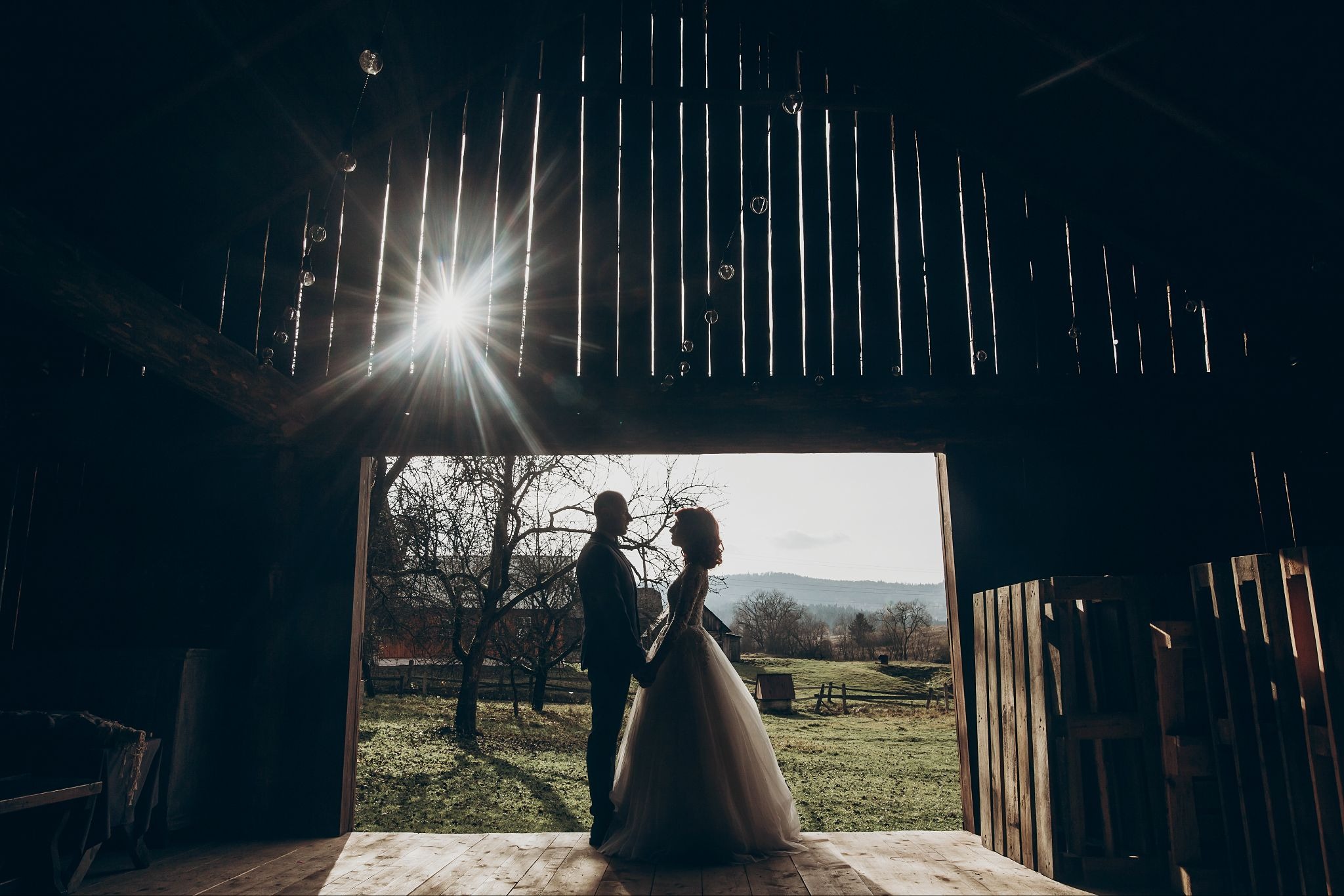
Any venue with genuine architectural character — exposed brickwork, timber beams, stone walls, or beautiful natural surroundings — is a strong candidate for a rustic wedding. The UK is extremely well-supplied.
|
Venue Type |
What It Offers |
UK Examples |
|---|---|---|
|
Heritage Barn |
Exposed timber beams, stone floors, country setting — the archetypal choice |
Cotswolds, Yorkshire Dales, South Downs |
|
Eco Farm |
Sustainable infrastructure, organic gardens, zero-waste ethos |
South Farm (Cambridgeshire) |
|
Tipi / Yurt |
Flexible outdoor setting, dramatic interior, panoramic views |
Available nationwide via specialist hire companies |
|
Woodland / Forest |
Truly organic backdrop, seasonal natural decoration |
Scottish Highlands, Lake District, New Forest |
|
Industrial Barn Conversion |
Raw brick, steel beams, concrete floors — suits a modern rustic aesthetic |
Available in most major UK cities and market towns |
💡 Pro Tip: When viewing venues, pay attention to the existing materials and architecture rather than the décor currently in place. A well-proportioned barn with original beams is an extraordinary blank canvas; an over-decorated one with permanent fixtures may give you less flexibility than you think.
Rustic Wedding Stationery
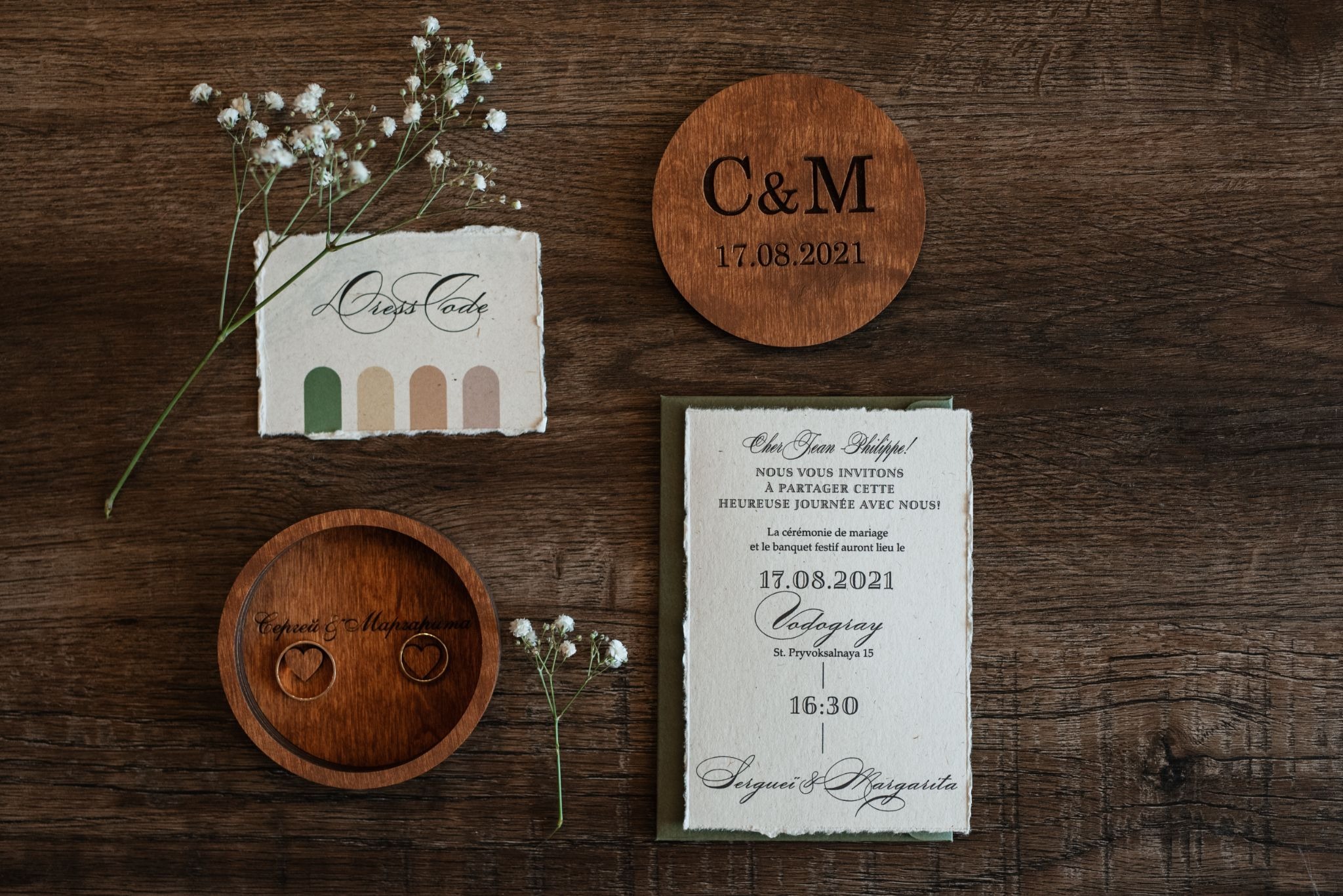
Your invitations are the first impression guests get of the day — and in a rustic wedding, they set the tone from the moment they land on the doormat.
Rustic stationery typically uses tactile, natural stocks: recycled kraft paper, handmade cotton paper with hand-torn deckled edges, or linen-textured card. Invitations are often bound with raw cotton ribbon, organic hemp twine, or a simple wax seal pressed in copper or aged gold. For UK couples, suppliers like Purely Bespoke Design specialise in custom rustic stationery suites that feel genuinely handcrafted rather than template-driven.
Print techniques matter. Letterpress printing on thick stock conveys genuine craftsmanship. White ink on deep, saturated backgrounds — forest green, slate, rich terracotta — creates a striking, contemporary variation of the rustic aesthetic.
For an eco-conscious touch, seed paper stationery is increasingly popular: after the wedding, guests can plant the invitation and watch wildflowers grow. It's a genuinely lovely detail that guests remember.
QR Codes on Physical Invitations
To avoid cluttering the invitation with multiple inserts (RSVP cards, accommodation details, travel maps), consider integrating a dynamic QR code directly into the design. When executed well — printed in matte copper foil, or framed with hand-drawn botanical line art — these feel like a designed feature rather than a technical afterthought. The QR code links guests to a wedding website that handles RSVPs, dietary requirements, directions to the venue, and updates in real time.
Simple Rustic Wedding Ideas on a Budget
You don't need a £20,000 budget to execute a genuinely beautiful rustic wedding. Many of the most effective elements are either low-cost or DIY-friendly:
- Forage your own greenery: Trailing ivy, wildflowers, and garden herbs from your own garden or a local farm shop can fill vases and dress tables for very little
- Buy flowers in bulk: Wholesale flower markets and British flower farms sell seasonal stems at a fraction of florist prices
- Use what the venue already offers: A barn with beautiful original beams needs minimal dressing — spend your décor budget on a few considered pieces rather than trying to transform the space
- Borrow or thrift vintage crockery: Mismatched vintage plates and antique silverware are in keeping with the aesthetic and cost a fraction of hired uniform sets — charity shops, car boot sales, and Facebook Marketplace are excellent sources
- DIY signage: A reclaimed chalkboard or a piece of timber painted with chalk paint is both more authentic and more affordable than a professionally printed banner
- Choose in-season, UK-grown flowers: Seasonal British blooms are fresher, more affordable, and more environmentally sound than imported varieties. Your florist can advise, or check with a local flower farm
⚠️ Watch Out: Some suppliers charge a "wedding premium" once they know an event is for a wedding. When getting initial quotes from non-specialist suppliers (local caterers, hire companies, musicians), describing it initially as a "private celebration" can sometimes get you a more accurate baseline quote. Once you've decided to book, be honest about what it is.
Sustainability and the Rustic Wedding
The rustic theme is unusually well-aligned with environmentally conscious planning — its emphasis on natural materials, local sourcing, and organic simplicity makes sustainable choices feel like design decisions rather than compromises.
A few easy wins:
- Linen over polyester for table linens: Flax cultivation requires significantly less water and chemical intervention than cotton or synthetic production — linen napkins and runners are both the greener and the more beautiful choice
- Living plants over cut flowers for aisle décor: Potted ferns or herbs in terracotta pots can be given to guests or replanted after the event
- Seed paper stationery: Guests plant the invitation, and wildflowers grow
- Farm-to-table menus with local suppliers: List your producers on the menu card — it adds a personal, authentic touch and supports local businesses
- Mismatched vintage tableware: Reduces demand for new manufacturing and adds charm
- Composting and waste management: Work with your venue to set up organic composting and dry recycling; any pristine food leftovers can be donated to a local food bank
Frequently Asked Questions
What is the rustic wedding theme?
The rustic wedding theme is a design philosophy built around natural materials, organic textures, and the warm character of countryside settings. It typically centres on exposed timber, linen, stone, dried and fresh botanicals, candlelight, and locally sourced food and flowers. Modern rustic weddings often pair raw, unpolished materials (reclaimed wood, weathered iron) with refined, high-quality details (crystal glassware, velvet ribbon, luxury floral installations) to create a look that feels both grounded and genuinely elegant.
What is rustic wedding attire?
For brides, rustic attire typically means a flowing gown in ivory or cream — often featuring lace, soft chiffon or tulle, and romantic detailing like fluted sleeves or an open back. Floral crowns, delicate gold jewellery, and practical but beautiful footwear (block heels, wedges, embellished flats) all suit the aesthetic well. For grooms and groomsmen, tailored tweed suits, linen suits in warm neutrals, quality leather brogues or boots, and textured ties or velvet bow ties are popular choices. Guests are typically invited to dress in "rustic chic" — which usually means smart-casual in earthy, nature-inspired tones.
What is a rustic colour theme for a wedding?
Rustic colour palettes are built around nature-inspired tones: warm neutrals (cream, oatmeal, warm white) as the foundation, with organic accent colours drawn from the surrounding landscape. The most popular combinations include terracotta and sage green, dusty rose and ivory, burnt orange and charcoal, sunflower yellow and sage, and emerald green with peony pink. The best palettes are seasonal — autumn weddings naturally lean toward burnt orange and harvest gold, while spring celebrations suit soft lilac and peach. Always anchor any palette in a warm neutral to prevent the overall look from feeling too busy.
What is the rustic theme?
Rustic as a broader aesthetic philosophy centres on the beauty of honest, natural materials and the warmth of imperfect, handmade, or weathered things. In a wedding context, it translates to venues with genuine architectural character (barns, farm buildings, woodlands), decoration built from organic and reclaimed materials, locally sourced food and flowers, and an atmosphere that feels warm, personal, and unhurried — rather than corporate or rigidly formal.
What's the difference between rustic, bohemian, and country wedding themes?
Country weddings lean nostalgic — bunting, checked fabrics, and literal farm iconography. Bohemian weddings are more free-spirited and globally influenced — macramé, layered textiles, floor cushions. Rustic weddings are the most versatile: they share some DNA with both but are defined by their commitment to natural materials and architectural character, with a much wider spectrum from simple to genuinely luxurious. Most modern "barn weddings" in the UK fall under the rustic umbrella.
How do I make a rustic wedding feel elegant rather than casual?
The key is contrast. Raw, textured materials (exposed stone, reclaimed wood, unbleached linen) feel elevated when placed alongside genuinely refined details: crystal glassware, taper candles in antique brass holders, high-quality floral arrangements with velvet ribbons, and structured gold or copper tableware. Lighting is equally important — warm Edison string lights and pillar candles do more for the ambience than any amount of decoration.
Can you do a rustic wedding on a tight budget?
Yes — the rustic aesthetic is actually one of the most budget-friendly themes, because it draws on what's already there: venue architecture, seasonal flowers, natural materials. Focus your spending on two or three standout elements (the florals, the lighting, the food) and keep everything else simple. DIY flowers, borrowed mismatched crockery, a semi-naked cake, and a venue that does the heavy lifting architecturally can produce a genuinely beautiful day for a fraction of what a hotel venue would cost.
What flowers are best for a rustic wedding?
Rustic florals favour loose, wildflower-style arrangements over tight, formal designs. The most versatile choices are: dahlias, garden roses, and ranunculus for focal impact; eucalyptus, dusty miller, and ferns for foliage; gypsophila (baby's breath), cosmos, and forget-me-nots as fillers; and pampas grass, dried wheat stalks, and seed pods for structural interest. For a truly seasonal, budget-conscious approach, work with a local British flower farm and ask what's growing well in the week of your wedding.
How far in advance should I book a rustic barn venue in the UK?
Popular Cotswolds, Yorkshire, and South Downs barn venues can book up 18 months to two years in advance for peak summer Saturdays. If you have a specific venue in mind, move quickly. For less competitive dates — particularly midweek or late autumn/winter — availability is generally much better at shorter notice, and venues often offer significant off-peak discounts.
What should guests wear to a rustic wedding?
The typical dress code for a rustic wedding is "rustic chic" or "smart casual" — smarter than a garden party, less formal than black tie. For women, lightweight floral midi dresses, lace sheath dresses, and long maxi gowns work beautifully. For men, a smart blazer with trousers or a light suit in warm neutrals fits the aesthetic well. Advise guests that stilettos are impractical on barn floors and outdoor ground — flat shoes, wedges, or block heels are a much better choice.